







Welcome back to A Read of Ice and Fire! Please join me as I read and react, for the very first time, to George R.R. Martin’s epic fantasy series A Song of Ice and Fire.
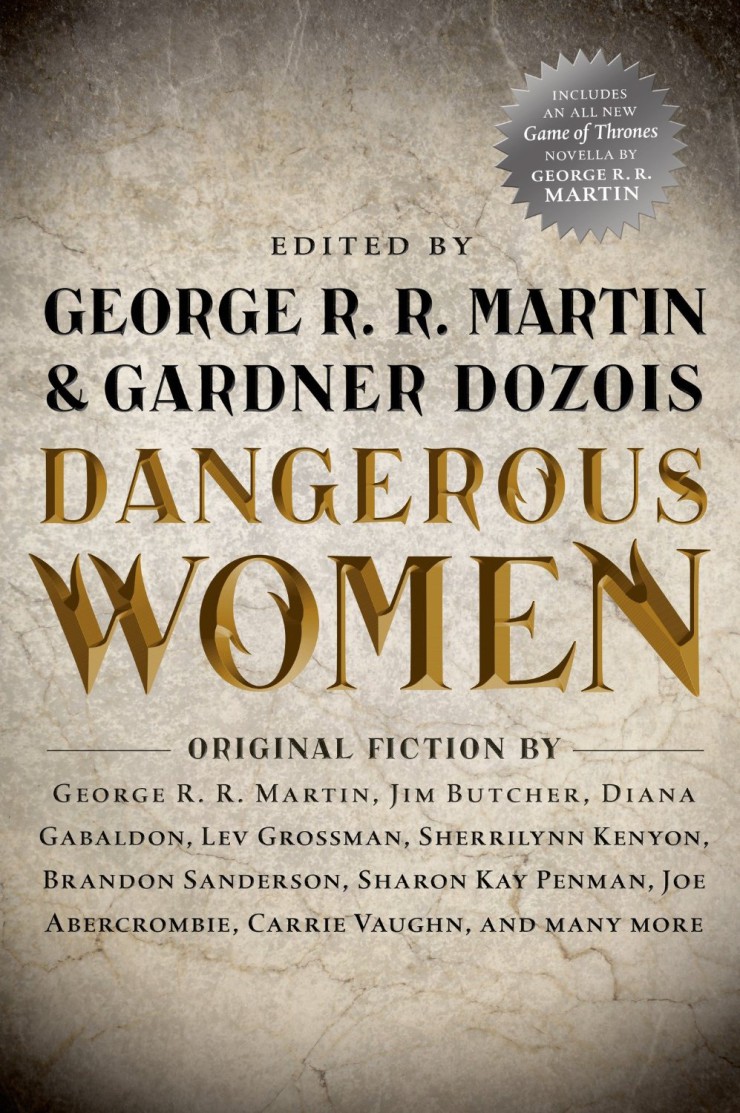
Today’s entry is Part 1 of “The Princess and the Queen, Or, The Blacks and the Greens: Being A History of the Causes, Origins, Battles, and Betrayals of that Most Tragic Bloodletting Known as the Dance of the Dragons, as set down by Archmaester Gyldayn of the Citadel of Oldtown”, (deep breath) which originally appeared in the anthology Dangerous Women, edited by George R.R. Martin and Gardner Dozois.
Previous entries of the Read are located in the Index. The only spoilers in the post itself will be for the actual section covered and for the material covered previous to this post. As for the comments, please note that the Powers That Be have provided you a lovely spoiler thread here on Tor.com. Any spoileriffic discussion should go there, where I won’t see it. Non-spoiler comments go below, in the comments to the post itself.
And now, the post!
[Note: This part covers pages 703-730 in the Kindle ebook edition of the anthology, to the paragraph ending with “The date he chose for the attack was the first full moon of the new year.” Sorry if that pagination doesn’t match your particular edition. Also, please see the end of the post for a scheduling note.]
The Princess and the Queen: Part 1
What Happens
The rather misnamed “Dance of the Dragons” is the account of the internecine struggle for the Iron Throne after the death of King Viserys I between his named heir, Princess Rhaenyra, his daughter from his first marriage, and Aegon, his eldest son by his second wife, the ultimate result of which was the diminishment of both the Targaryen dynasty and the dragons they commanded. The war was unusual in that it was largely fought not on land, but on the sea and in the air, and also via stealth and poison.
When King Viserys died, Queen Alicent and her “greens” (as opposed to Princess Rhaenyra’s “blacks,” so referred to by the color dress each woman had worn to a tourney years before) determined not to announce the king’s death until the question of succession had been settled. Lord Beesbury, the Master of Coin, reminded the small council that Princess Rhaenyra was Viserys’s named heir and the eldest of his living children, but Lord Jasper “Ironrod” Wylde, Master of Laws, countered that the rights of a trueborn son must always come before that of a mere daughter. Ser Otto Hightower, the King’s Hand, adds that if Rhaenyra comes to the throne it will truly be her husband Prince Daemon who will rule, and he and Queen Alicent both aver that Daemon’s first move will be to execute Ser Otto, Queen Alicent, and all her children. Ser Criston Cole, Lord Commander of the Kingsguard, thinks that Rhaenyra and Daemon will turn King’s Landing into “a brothel,” and that her heir, Jacaerys Velaryon, is bastard-born and cannot be allowed to rule. Grand Maester Orwyle points out that crowning Aegon will lead to war. Lord Beesbury declares that he will not forget his oath of loyalty to the princess, and makes to leave, but Ser Criston Cole pushes him down and slits his throat, making him the first casualty of the war.
Rhaenyra being in confinement on Dragonstone, about to give birth, gives Alicent’s greens the advantage, and they move to secure their allies and delay the announcement of the king’s death as long as possible. Prince Aegon at first resists the idea of usurping his half-sister’s birthright, but Ser Criston convinces him that Rhaenyra will kill him and all his siblings if she comes to power, and so he agrees to be crowned. The council assesses their allies and those who are more likely to support Rhaenyra, and send Prince Aemond on his dragon Vhagar, the largest of the dragons in Westeros, to secure the allegiance of Lord Borros Baratheon at Storm’s End by wedding one of his daughters. Soon the dead king becomes too pungent to hide any more, and the announcement is made and Prince Aegon is crowned King Aegon II, and his wife and sister Helaena is crowned queen. Ser Steffon Darklyn of the Kingsguard is not present, having defected the night before, taking with him King Viserys’s crown (Aegon chose to use another one).
Meanwhile, Rhaenyra is in labor, screaming curses against her half-brothers and Queen Alicent and her own unborn child. The babe is stillborn and deformed, and Rhaenyra declares that it was murdered by the news of her family’s treachery. She calls a council of her own, but her advantages at first seem slight against Aegon’s. However, she has the support of Corlys Velaryon of Driftmark, called the Sea Snake, which means she has the advantage of Aegon at sea, and Corlys’s wife Princess Rhaenys points out that they have more dragons, especially if they can find riders for the six riderless dragons at Dragonstone. They discuss their allies, and Rhaenys is sure the Baratheons will stand with them. Daemon hopes to secure Lady Arryn of the Vale, and perhaps even the Iron Islands, though he knows Aegon will be pursuing them as well. They decide to send Daemon on his dragon Caraxes to seize Harrenhal and from there secure the allegiance of the river lords, while Velaryon’s fleet bottles up King’s Landing. Rhaenyra’s eldest son Jacaerys will fly to the Eyrie, then White Harbor, then Winterfell, while his younger brother Lucerys is sent to Storm’s End, where they are sure he will have a warm welcome.
When King Aegon hears of his half-sister’s coronation, he wants her head, and is only reluctantly convinced to send Orwyle with peace terms instead. The terms are generous, in fact, but Queen Rhaenyra will not accept them, and tells Orwyle to tell Aegon that she will have the throne or his head. Aegon is enraged by this, and the war of words is on. Daemon defeats Harrenhal easily, and Prince Jacaerys secures the support of the Vale, White Harbor, and Winterfell with no trouble, but Prince Lucerys comes to Storm’s End to find that Prince Aemond has beaten him there. Lucerys delivers his message to Lord Borros calmly despite Aemond’s taunts. Borros asks which of his daughters Lucerys will marry to secure the alliance, but Lucerys regretfully replies that he is already pledged to his cousin Rhaena, whereupon Borros kicks him out rudely. But Aemond is not satisfied with this, and follows Lucerys into the sky on his dragon, and kills them both, and thus brings to an end any possibility of avoiding wholesale bloodshed.
Prince Daemon, in retaliation, contacts certain low criminals of his acquaintance from his misspent youth in King’s Landing, today only known as Blood and Cheese, who sneak into the Red Keep and waylay the Dowager Queen Alicent and the present Queen Helaena both, with Helaena’s children: Jaehaerys and Jaehaera were six, Maelor two. They tell Helaena that a son is required in payment for Lucerys’s death, and force her to choose between Jaehaerys and Maelor. Weeping, Helaena picks Maelor, and the men grin and behead her older son Jaehaerys instead. Helaena’s mind does not survive this horror, and Alicent takes in Maelor to raise him instead.
Aegon II begins to realize his position is not nearly as secure as he had supposed, and in his impatience ousts Ser Otto Hightower as Hand and replaces him with Ser Criston Cole, who immediately moves against the more vulnerable lords supporting Rhaenyra, including Lord Staunton at Rook’s Rest, who calls for aid. It is answered by Princess Rhaenys and her formidable dragon Meleys, but it turns out to be a trap: the king and his dragon Sunfyre and his brother Aemond with Vhagar engage Rhaenys. She and Meleys do not survive the battle, but both Aegon and his dragon are grievously wounded, and Ser Cole tells Aemond that he must rule in his brother’s stead. Meanwhile Rhaenyra and her allies are thrown into disarray and infighting by the loss of Lucerys and Rhaenys, but Prince Jacaerys makes peace among them. He sends his younger brother Joffrey to Gulltown to keep him safe, and his half-brothers, Aegon the Younger and Viserys, to be fostered in Pentos.
Jacaerys is hesitant to confront Aemond and his dragon Vhagar head on, and decides to find riders for the six unmounted dragons in Dragonstone by searching among the many byblows of the Targaryen lords among the populace in the area, called “dragonseed” or just “seeds”. Many of them die or suffer grievous wounds in their attempts to master the riderless dragons, but eventually all but the two wildest dragons find riders, including a sixteen-year-old girl named Netty. Jacaerys determines that his attack will commence on the first full moon of the new year.
Commentary
Well, it’s definitely an ASOIAF story. Westeros: a continental experiment in proving Murphy’s Law, ad infinitum.
The format’s a lot different, though. I rather feel like (though obviously I could be wrong) that this was pulled more or less wholesale from Martin’s no doubt copious background notes for the main story. Which is sort of a fun thing to contemplate, for those (like me) who like glimpses of the process—the “behind the scenes” aspects of writing, so to speak.
That said, the historical style of the prose, along with the fact that we are being introduced to an entirely new cast of characters, made it a little difficult to get into at first. However, the framework of familiar surnames, and the sort of broad character traits we have been taught to associate with them (Martin isn’t quite guilty of making his noble Houses Planets of Hats, but he definitely has tendencies in that direction), eased the way. I would really not recommend that anyone should read this as their first introduction to ASOIAF, though. I’m definitely glad that I read all of what’s currently available of the series proper and the Dunk & Egg stories first, otherwise this would have been hopelessly confusing, and probably off-putting.
But I did read all that other stuff first, fortunately, if at a glacial weekly blog pace, so I have at least some notion of how all these people fit together and what their deal is. I’m not entirely clear on how long before the events of the series proper this is, so…
Well. Actually, it occurs to me that I can just go and Google that now, can’t I? Golly. So, hang on.
Ah, okay, so this is about 170 years before the events of the series proper, and about 80 years before the Dunk & Egg stories. Cool.
It was interesting to read about the Targaryens at what I presume was the height of their power (or the tail end of the height of their power, anyway), all just casually riding dragons around like it ain’t no thang. Also done like it ain’t no thang: siblings (and uncles and nieces) getting married. Yeek. So much inbreeding, so little time.
When the babe at last came forth, she proved indeed a monster: a stillborn girl, twisted and malformed, with a hole in her chest where her heart should have been and a stubby, scaled tail.
Q.E.D. Although the actual dragon blood may have played a part there as well, I suppose. (Though I’m still unclear on whether that’s supposed to be literally true, though I think it is. And if so, I’m resolutely failing to consider how that, er, outcrossing happened in the first place, because woowwwwwwwww.)
Anyway, the Targaryens are as delightfully unstable as always. It might make me a terrible person, but I found the mental image of Rhaenyra (and wow is that an annoying name to type over and over) screaming insults at absolutely everyone while in labor, including at her own unborn child, to be kind of awesomely horrible, if that makes any sense.
“Awesomely horrible” sums up the Targaryens in general, I think. Though sometimes the emphasis is less on the “awesome” and more on the “horrible,” of course. Like the little digression in this section about their indulgence in “the ancient law of the first night”:
Though this custom was greatly resented elsewhere in the Seven Kingdoms, by men of a jealous temperament who did not grasp the honor being conferred upon them, such feelings were muted upon Dragonstone, where Targaryens were rightly regarded as being closer to gods than the common run of men.
Uh-huh. Well, I’m sure that’s what they told themselves.
Or, hey, it might even be true—people have believed stupider things, and honored even more reprehensible traditions than that of droit du seigneur. Although I must note that most modern historians think that droit du seigneur is a myth made up by earlier historians, who were either (a) trying to demonize the Middle Ages or (b) indulging in a male power fantasy, and that it was never actually a thing in real life.
But naturally a horrible thing that is only an urban legend in the real world would turn out to be completely true in Westeros, because ASOIAF. Lord.
It’s also a neat sort of reminder that Martin is himself playing the role of an obviously biased historian, here, and that therefore we must treat the events told in the story as coming from the equivalent of an unreliable narrator. Heh.
I also have to note that as often as the Targaryens do horrible things to other people, it apparently doesn’t hold a candle to the horrific things they’ll do to each other. That Blood and Cheese business… wow. I don’t even have words.
Anyway, this first part is a pretty deft demonstration of (a) why governments should not consist almost entirely of people related to each other, especially inbred people who are really really related to each other, and (b) how easy it is for things to go from zero to FUBAR in the blink of an eye. Forcing an entire nation to deal with the fact that you and your stepmother can’t stand each other, what a concept.
And just in time for Thanksgiving! FAMILY TOGETHERNESS FTW.
And speaking of: I, like most Americans, will be enduring my own iteration of eating too much food in the company of people related to me next Thursday. Thus, there will be no ROIAF post on November 26th . I will return with Part II of TPATQ (which I pronounce in my head as “Tee-PAT-quah”, because I am odd) the following Thursday, December 3rd.
Ergo, have a lovely holiday week for those so geographically and culturally inclined, and I’ll see alla y’all in two weeks! Whoo!

Was going to comment on the post but more importantly I just figured out why I’m having intermittent Internet issues at work. Every time I try to log in here at tor.com I lose Internet connectivity and can’t get back online for several hours. Took me about 4x to make the connection between the two. Super annoying.
I admire anyone who can read this thing and comprehend any of it without looking at the Targ genealogy on the Wiki of Ice and Fire (or, now The World of Ice and Fire). I checked it constantly and still kept getting lost, possibly because I find battles and military plans booooring to read about.
Rhaenyra’s dragonish stillborn casts doubt on exactly what Mirri’s blood magic did to Dany’s son Rhaego. If such birth defects are a recurring Targ thing for whatever reason, it may be that Rhaego was dragonish all along and the blood magic merely turned him from a living fetus (who may have ultimately been stillborn anyway ) to a maggoty “long-dead” corpse.
Rogue Prince spoiler: ///Especially since Rhaenyra’s brother was similly deformed, IIRC.///
I agree with AeronaGreenjoy @2. My first thought when I heard about the stilborn was Dany’s stillborn son in AGOT. It seems that Targs really DO have dragon blood in them, considering their propensity for the occasional scaly lizard-like stillborn child. I do not want to spend too much time thinking about how such a coupling could have taken place, however….
I remember reading this all in one go until the early hours of the morning, and then having dreams full of dragons.
Which was pretty cool really.
This particular Story came off as FanFiction due to its expository format. Still it is a good Targayen backstory. I wish he would have written another Dunk and Egg tale.
We really need a gene wolf reread … I would love to discuss the ins and outs of trying to figure out his works with people. I don’t agree many times with your interpretations here but always interesting and thought provoking.
@2 AeronaGreenjoy
IIRC, Denaerys is told that Rhaego had been “dead for months” when he was stillborn even though he had been healthy and kicking only days before. When Dany is in the House of the Undying, one of the visions she sees is Rhaego as the conquering horselord he would have been if he lived. I think it is clear that Mirri’s magic killed Rhaego and that the vehicle that the curse manifested itself was through the tenancies already present in Targ genetics.
As to how the Targaryens and other Valyrians manged to get dragon into there dna, I don’t think that it was a literal interbreeding that did it. Rather I think that used blood magic to splice that dragon DNA into their makeup, allowing them greater control of the dragons. I’m sure that they wouldn’t have thought of it as “splicing DNA” but more like “taking in some of the essence of the dragons,” but the results are the same. Their culture of the great families to practice dynastic incest would be to try to reinforce as much of that dragon DNA as possible.
On the homepage link: This is Westeros, where celebratory feasts are not known for easing political tensions.
Well, ya, the Dance of Dragons, the real one. If I hadn’t studied law I never would have realized just how poorly many families get on, and that’s just when money is involved, not crowns.
Sentencia Arbitral de Guadalupe (1486), by King Ferdinand II of Aragon:
So yes, droit du seigneur was actually a thing back in the Middle Ages. If you don’t want to call it a right, you can call it an abuse of power, but it wont change anything.
Wait, what? Nothing on Aemond killing Lucerys, on Rhaenrya (Damn, that IS an annoying name to type) blaming her stillbirth on the others, not even a comment on the Green’s as a faction, or even any of the other characters? I feel like you’re talking more about just the Targs in general and mostly ignoring the actual events. I really hope this doesn’t carry over next week.
Speaking of which, I really think you should do at least this story sooner, like all of it in the course of a week, and not just for my viewing pleasure, but your reading experience as well. This isn’t the disjointed alternating POV style of the main novels, it’s really meant to be read in one go, or at least over the course of a week or so.
@MDNY Well, Drogon and the other dragons were only slightly smaller than horses at the end of ACoK, so I imagine it wouldn’t have been much different from fucking one of them if they did it at the right time.
Lol, now I can’t get the vision out of my head of a Targaryen-ruled Russia, with Rhaenyra as queen dying while her dragon “mounted” her.
Anyways, on a non-bestial note, who are each of you siding with, the Blacks or the Greens?
Leigh, I find it curious that your conclusion is basically that Targaryens are awful and their incest is to blame for everything… when in fact, the people who did most to cause the civil war were Alison and Otto Hightower and Criston Cole – people with no Targaryen blood whatsoever, who didn’t engage in any incestuous relationships that we know of.
@7: No, Rhaego was actually said to have been dead for years. Which is obviously impossible even in theory, and further confirms the rest of what you said.
@10: You got that backwards. “Droit du seigneur was a thing” would mean that it was an actual law or custom. If your only evidence that it was legal/customary is a law that explicitly makes it illegal, you’re doing it wrong. By that logic, someone in the 26th century could take a look into any 21st century legal system and conclude that the laws that proclaim murder, rape, robbery, fraud, treason etc. illegal make it obvious that these things were all legal, customary and accepted in the 21st century. To use an example similar to the droit du seigneur, the fact that sexual harassment is now formulated as an illegal act doesn’t mean that everyone thought before that bosses had the perfect right to force their subordinate to have sex with them or sexually harass them in general, or that there had been a law passed at some point before proclaiming that bosses had the right to sexually harass their subordinates and force them to have sex with them. It just means that there have always been jerks who abused power and did that, and at some point someone decided to make it explicitly illegal. King Ferdinand passing that law simply means that people realized that there were quite a few jerkass nobles in the kingdom of Aragon abusing their power and using it to rape serfs’ wives, and that this had to stop. It definitely does not mean that nobles raping the serfs’ wives was thought to be a sacred right or a legal privilege of the nobles, or that some king or other actually passed a law saying “and English nobles have the right to sleep with Scottish brides on the first night”, as Braveheart would want you to believe.
@12: Err, even if it is possible to fuck a dragon (and no, I don’t think that size is the only problem there…), it would definitely be impossible to breed with them, due to, you know, completely different DNA. Let alone to produce any offspring that are able to reproduce themselves.
Regarding that unreliable narrator thing, I wondered about the 80,000-seat Dragonpit. Is everything bigger and better in Westeros, or is that a strong hint that Maester Gyldayn is telling fairy tales?
@Annara Snow
Probably not, idk though, maybe they can. We don’t know the full wonders of Valyrian sorcery yet. ;)
Leigh; Should have read The Rogue Prince First!!!
Everything else would be a hell of a lot easier to understand!!!
Eh, Targaryens didn’t invent the First Night in Westeros – it was a First Man law that was later also adopted by the Andals and Targaryens as part of their assimilation in the already existing Westerosi culture. So, Starks et al. happily practiced it at the time, too, it wasn’t another sign of Targ awfulness or anything . In fact,according to Roose Bolton in ADwD, some of the Northern nobles are still sore that the law was eventually abolished by the Iron Throne and continue to practice it in secret.
Jory Cassel @12:
You do realize that it was just a typical sexually demeaning slander directed against an exceptional woman in power, yes? We heard the same type of drivel being directed at Dany as part of the Slaver propaganda.
Regarding that unreliable narrator thing, I wondered about the 80,000-seat Dragonpit. Is everything bigger and better in Westeros, or is that a strong hint that Maester Gyldayn is telling fairy tales?
80,000 seats isn’t unreasonably big for an open stadium. The Colosseum held 80,000 at full capacity and the Circus Maximus held about 150,000.
Leigh, I find it curious that your conclusion is basically that Targaryens are awful and their incest is to blame for everything… when in fact, the people who did most to cause the civil war were Alison and Otto Hightower and Criston Cole
Acting in self-defence, though: “Ser Otto Hightower, the King’s Hand, adds that if Rhaenyra comes to the throne it will truly be her husband Prince Daemon who will rule, and he and Queen Alicent both aver that Daemon’s first move will be to execute Ser Otto, Queen Alicent, and all her children.”
And subsequent events didn’t do much to prove them wrong.
@19: You mean, pre-emptive “self-defense” – a very curious concept, normally called “attacking first”. Sorry, that line of defense wouldn’t be accepted in any court. The subsequent events consisted of Otto, Alicent and Aegon trying to usurp the crown from the heir to the throne that had been proclaimed by such by the late king, and accepted by the lords of the realm, and that they didn’t try to openly question while he was alive, and Rhaenyra, naturally, not just deciding that she’s perfectly fine with that. From that point on, she’d have every right to execute them once she became Queen, since, surprise, surprise, that’s the punishment for treason in Westeros, and trying to usurp a crown counts as treason in Westeros just as it did in the real Middle Ages and Renaissance.
I’m not also sure what you mean by “subsequent events”. Spoilers. The subsequent events actually do prove otherwise, since Daemon was clearly not ruling, he was commanding the armies, while Rhaenyra was ruling in King’s Landing; and although Alicent was in Rhaenyra’s custody for months, she was never executed – even though Rhaenyra legally and morally had the right to do it, since Alicent had committed treason every bit as much as her father Otto. /end spoiler
You mean, pre-emptive “self-defense” – a very curious concept, normally called “attacking first”. Sorry, that line of defense wouldn’t be accepted in any court.
Sorry, but it would in fact be accepted in any court you choose. Your right to use force in self-defence does not rely on you letting the other person strike first. If you have a reasonable belief that you are in immediate danger, then you can use force first. So if I point a knife at you and say “I am going to stab you”, but you manage to stab me first, then you haven’t committed murder – you’ve acted in self-defence against an obvious threat to your life.
I’m not also sure what you mean by “subsequent events”
As in “they were right to think Daemon was the kind of guy who murders the children of his opponents, because two paragraphs later he murders some children”.
Plus, isn’t it a bit circular to decide that everything one contender in a civil war does is legitimate, because she’s the rightful queen? Deciding who’s the rightful queen is what the war was about.
@19 @21 @22 @23. “Ser Otto Hightower, the King’s Hand, adds that if Rhaenyra comes to the throne it will truly be her husband Prince Daemon who will rule, and he and Queen Alicent both aver that Daemon’s first move will be to execute Ser Otto, Queen Alicent, and all her children.”
While ser Otto may or may not believe this, I did not believe this for a second. Rhaenyra would have been crowned Queen and maybe Queen Alicent would be sent to Old Town but never executed.
Sorry, but it would in fact be accepted in any court you choose. Your right to use force in self-defence does not rely on you letting the other person strike first. If you have a reasonable belief that you are in immediate danger, then you can use force first.
So Cersei is off the hook for murdering Robert then?
@@@@@24. Niels
Ya, exactly, Daemon probably pissed Cole off at some point as they are both Alpha dogs, and Alicent just wanted her kid on the throne, much like Mace whose ambition has led his house to ruin and invasion by the Ironborn.
This is something the King wanted to prevent, that’s why he had the Lords of the realm swear to Rhaenyra several years before his death. It was all a few non Targs that kicked this thing off, but there is a deeper conspiracy at work with Old Town v. the Targs. Oldtown has been trying to get rid of them since they showed up; anyone from the Reach is suspect.
@22: Yes, please try the “I killed/beat up X because I believed, really I swear I did! that he would have killed me otherwise” in court some time. See how that goes. The only place where that may work would be the society from “Minority Report”.
Your example is not an actual parallel to what happened, since Rhaenyra at no point threatened the lives of Otto, Alicent or her half-siblings, nor did she say she would kill them, until they usurped her crown.
No, they did not say that “Daemon is the kind of guy who would murder children for revenge”, they said he would be ruling instead of Rhaenyra and that he would immediately execute Otto, Alicent and her children, without any provocation. Again, if they had not usurped the crown and if Aemond hadn’t murdered Luke, it’s highly unlikely that Daemon would have murdered any of Haelena’s and Aegon’s children. What Daemon did was terrible, but if he had wanted to murder Haelena and all her children, he would have done just that, since Blood and Cheese were in the position to do it. (Seriously, what kind of security did they have in the Red Keep?!)
Circular reasoning is what you do when you claim that “Otto and Alicent were perfectly right to usurp Rhaenyra’s crown because they were supposedly afraid she would execute them, because she then decided they were usurpers and traitors, after they had actually betrayed her”.
@23: Eh, no. Succession is normally not decided by civil wars. “The King is dead; let’s start another war until the winner is the new king!” It would be truly disastrous and a terrible system if that was the way it went every time a ruler died. I’m pretty sure that no country in the world ever had the “let a civil war decide who inherits” rule, and that every country in the world always did its best to avoid civil wars. (The Ottomans even preferred to murder the rest of a dead sultan’s sons/new sultan’s brothers, just to avoid another civil war, such as the one that happened in the early 15th century between the four sons of Bayezid I.) Inheritance is preferably decided in some legal (or more or less legal way), be it by rules of succession that go uncontested, by election (such as the Anglo-Saxon witans in real life or the kingsmoots in ASOAIF), by an act of Parliament (e.g. Act of Settlement IRL – which the current Queen of United Kingdom has to thank for the fact she’s Queen, the decisions of the Great Council in ASOAIF), by a monarch appointing their heir and the lords of the realm swearing fealty to them (as Jaehaerys did by naming Baelon his heir over Rhaenys, and as Viserys I did by naming Rhaenyra over Aegon and his other children from the second marriage, or as Henry I did with his daughter Mathilda, and in that case, as in The Princess and the Queen, the noblemen swore fealty to her but many went back on it after Henry’s death and backed Henry’s nephew Stephen instead*). Civil war is what happens when there’s a crisis and the system breaks down, because most people would normally avoid widespread bloodshed and massive loss of life as a way to settle succession issues.
Succession should have been settled when Viserys I named Rhaenyra his heir and the lords of the realm accepted her. Why didn’t Alicent, Otto, Cole and the rest try to challenge that while the king was alive, rather than immediately following his death with murder of one of the councilors and a coup d’état?
*Causing the war known as Anarchy to start – an obvious historical inspiration for the Dance of the Dragons.
A lot of the historical context behind the Civil War is gone into in The Rogue Prince, FYI, so you might want to wait till we get there to discuss any pre-war justification for the coup.
Not that there’s much, the children were just being tits to each other.
@Isilel 18
It was a joke.
Yes, please try the “I killed/beat up X because I believed, really I swear I did! that he would have killed me otherwise” in court some time. See how that goes.
Er, it should go really well, if the jury believes it. (I’m assuming you’re not a lawyer?)
Here’s one definition of how self-defence works in US law: “Self-defense is the right to use reasonable force to protect oneself or members of the family from bodily harm, or to a lesser extent, one’s property, from the attack of an aggressor, if the defender has reason to believe he/she/they is/are in danger. Self-defense is a defense to a criminal charge or to tort liability. To establish the defense, the person must be free from fault or provocation, must have no means of escape or retreat, and there must be an impending peril.”
Note that: impending peril.
Here’s another: “The force used in self-defense may be sufficient for protection from apparent harm (not just an empty verbal threat) or to halt any danger from attack, but cannot be an excuse to continue the attack or use excessive force. Examples: an unarmed man punches Allen Alibi, who hits the attacker with a baseball bat. That is legitimate self-defense, but Alibi cannot chase after the attacker and shoot him or beat him senseless. If the attacker has a gun or a butcher knife and is verbally threatening, Alibi is probably warranted in shooting him.”
Those are both US examples but the situation’s similar in England, Scotland and Canada: there is no obligation to allow the attacker to strike the first blow in order to benefit from a self-defence defence.
So Cersei is off the hook for murdering Robert then?
If she were in immediate danger: yeah, sure. In the book, though, she wasn’t even there – the murder happened while he was hunting.
@Narvi 28 Man, why didn’t she read TRP first?
@30 a1ay
re: Cersei
If she were in immediate danger: yeah, sure. In the book, though, she wasn’t even there – the murder happened while he was hunting.
Self defence doesn’t apply here because any sort of danger she was in, immediate or otherwise, was a result of her breaking the law and facing criminal punishment. You can’t claim self defence against that.
If Robert had found out and attacked her in a fit of rage prompting her to kill him, she’d have had a case, but killing him for fear of being sentenced to death in accordance with the law don’t fly…
And her fearing a fit of rage from Robert could have been adressed by her packing her shit and leaving for Casterly Rock, so plotting Robert’s murder clashes with the “reasonable force” caveat in any case. Plotting implies time which negates the immediateness of the threat.
@30: Um, none of that even remotely applies to this case, i.e. “We are usurping Rhaenyra’s throne in self-defense. Really! Because we don’t get along with her, so we’re telling you that she would execute us when she gets the throne. Even though she hasn’t actually tried to kill us, made any move against us, or threatened us in any way”.
That you would even try to justify this as “self-defense” is utterly laughable.
Not having read TRP yet and because this is a retelling (probably dramatised – because so many dialogues and facts that no one would care to find out, e. g. what kind of insults were said during labour) by a (Arch?)maseter, I wonder how much of this is true, eso. justifications and hired assasins? I mean, could some events have been told by untrusted narrator?
Good queen Alisanne wasn’t good at all, stealing crown from king’s daughter just because she weren’t hers. Queen R. doesn’t seem the type that would allow someone else to make decisions instead of her, thus her husband (consort?) hardly could order murder if he were to be king. And why would anyone order murder if greens were like “Yeah, we’ve problems between us, but you blacms are the royal family now so we’re here to serve you”.
P. S. Despite knowing how it all ended from Tyrion’s musings in Book 3, it’s still interesting to read.
P. S.2 Is Dorne part of the kingdom or yet an independent kingdom?