


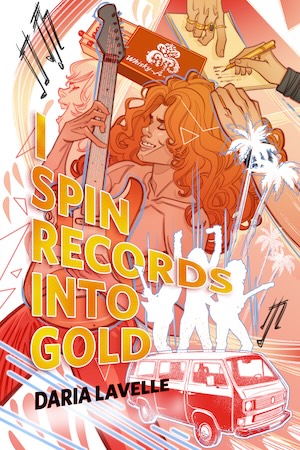

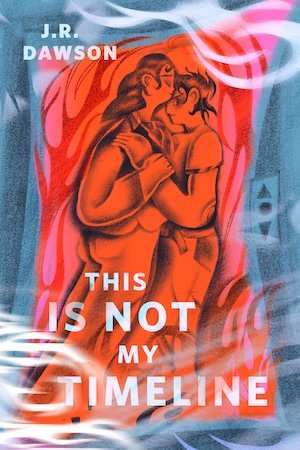
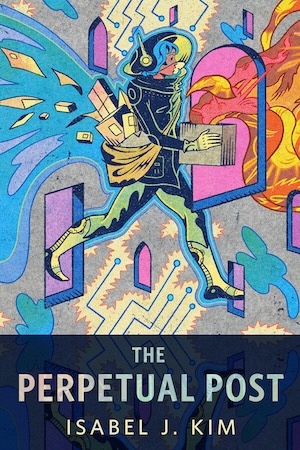



Despite having been an SFF reader for basically my entire life, it was only a few years ago that I learned that anyone can nominate work for, and vote in, the Hugo Awards. The almost-75-year-old Hugos—“science fiction’s most prestigious award,” according to the award website—had a sort of mystique about them, a history that seemed dense, sometimes troubled, and sometimes unimpeachably classic.
I assumed that the Hugos were like the Oscars: Voted on by some sort of body to which one must be invited. I figured that this was an echelon of SFF to which I would never ascend, and was content to follow along with the winners, losers, scandals, controversies, and delights, like any other award situation.
But I was wrong.
There is, from some angles, a bit to unpack about Becoming a Hugo Voter. But first I want to get the tl;dr version out of the way and say simply: Anyone can vote for the Hugos. You register as a member of the World Science Fiction Society for the year, and that gets you voting rights. This year, it costs $50. You can go to the LACon V website and do it, and you should, right now, because the deadline for registration is January 31st.
That’s the important part. If you are willing to spend $50, you—yes, you!—can nominate work released in 2025 for the 2026 Hugo Awards, and you can vote for the winners once the finalists are announced.
I’m telling you this because I think it is good for the award, and for the entire SFF genre, if the pool of people nominating work for and voting for its most prestigious award is bigger and broader and more diverse. I’m telling you this also because I initially found the entire thing, the entire process, the entire World Science Fiction Convention (Worldcon) universe, a bit baffling and tangled, and if I can encourage just a handful of people to become voters by explaining that it’s really not that hard, that will feel like something good. You just have to register as a WSFS member via each year’s Worldcon. That’s it. That’s the main deal. Then you get to vote.
Now. A few more details.
THE VOTER PACKET
Your $50 earns you a considerable perk: Once the finalists are determined, voters receive the Hugo Voter Packet, which may contain full ebooks, audiobooks, movie or TV scripts, essays, podcasts, and anything else relevant. The Hugo Voter Packet is at the discretion of the publishers of nominated work. I can’t make you any promises about what will be in it. I can say that last year, it was such an abundance of riches that I could not possibly get through it all.
The Voter Packet is brilliant, because if everyone has access to all (or nearly all) the work, it levels the field among the finalists to some degree. It is not a matter of who does or doesn’t have additional disposable income to spend on all the nominated works. (There is still the matter of available time to read, of course.) This also, I think, makes for a certain incentive for publishers to participate: If they don’t, then their nominated works may be read by fewer people, and then voted for by fewer people.
CATEGORIES AND RESOURCES
There are a lot of Hugo Award categories, plus the Lodestar Award for Best Young Adult Book and the Astounding Award for Best New Writer.
Do not get overwhelmed by the categories! You don’t have to nominate in all of them. You don’t have to know about all of them. It is perfectly fine to not know everything about everything. I don’t want you to psych yourself out and think that because you don’t know about every SFF fancast, you shouldn’t participate. Your specific knowledge base is yours and it’s valid.
Nominate what you know about. Maybe that’s just novels and dramatic works and podcasts. Maybe it’s every category, Maybe you start small and begin to expand your genre knowledge base as you discover how many more things there are to engage with.
One slightly daunting part of the many categories is that several of them have word counts, and it is not always easy to find out what the word count of a work is. Novels, novellas, novelettes, and short stories have different length requirements. Many magazines and websites now list the word count for their short fiction, which is incredibly helpful. If everyone would list the word count, editor, and creator of any accompanying art, that would be grand.
But if that information is not readily available, you can do a couple of things. One is to check writers’ social feeds; they will often have posts about which of their work is eligible in which category. Very helpful. Another extremely useful resource is the Hugo Spreadsheet of Doom, which is maintained by Renay, a blogger at Lady Business. It is an absolute pile of information, with tabs for each category. (If you want to find more things to read, or watch, or listen to, you could do worse than browsing the Spreadsheet of Doom.) Sometimes, word count for a work is listed next to its title on the relevant tab; there are also questions and answers on the eligibility tab.
Other places to find useful info: Don’t know who edited your favorite books? Check the acknowledgements; most authors thank their editors. Short fiction can be harder, but some outlets list the editors along with writers, and a magazine’s masthead will also tell you who its editors are.
Don’t know who did that gorgeous cover art? Check the back cover or back flap, or the copyright page. You might also be able to find a cover reveal post somewhere that gives you all the details.
Also—this one is a personal plea—the Lodestar Award is for young adult books. Please don’t nominate or vote for adult books for this award! A teenage protagonist does not mean a book is YA. When in doubt, look at the author’s site, the publisher’s webpage, the description, or the details online (most online retailers will note the age range somewhere). There are other ways to know, and I will happily explain them to you, but perhaps this is not the place for an entire sub-post about publishing categories.
When in doubt about any of this, ask! Ask a librarian, ask a bookseller, ask your friend who knows everything about books. (Don’t ask the chatbots, though.) Read the blogs and social feeds of other readers; lots of people post their nominations lists, their recommendations, their suggestions, and those will generally have been carefully checked to make sure the works are eligible in the proper category.
Really, this is all a conversation. An awards cycle is a conversation about what the readers of a genre are interested in, thinking about, avoiding thinking about, grappling with, falling in love with, falling out of love with. What I want is for more people to be part of that conversation.
PROCESS
The Hugo voting process has two steps: First, nominations. WSFS members can nominate anything they like in the many Hugo categories—anything eligible and published in the relevant year. The nominations generally close in the spring, and after a time, the finalists are announced. Then voters get the Voter Packet and the race to read as much as possible before the voting deadline begins.
I find the nomination period more daunting, because I want to know everything and I want unlikely contenders to rise to the top and I always, always have some book I adore that I know isn’t going to be a finalist but I want it to be anyway.
But the nomination period is also where having a bigger, wider, more diverse voting body could be most meaningful, I think. Sometimes, a very small number of votes can make all the difference. You can read the nomination data from last year if you’d like to see exactly what I mean: A single nomination can be the difference between a Hugo finalist and a work that doesn’t make the ballot. You want the Hugos to be different? This is where you make a difference.
(I think it’s really cool that they release the stats—for the nominations and for the finalists.)
A FINAL THOUGHT OR THREE
I love participating in the Hugos. There’s a sense of excitement throughout the whole thing, whether I’m trying to winnow down my nomination list or perfectly rank the finalists. I wish I’d been doing this for years; I wish I’d known that it was open to all who want to pay their fifty bucks.
On the other hand, it can be frustrating. The process is inconsistent. Every year is different; every year you have to register again. This is not an insurmountable difficulty, but it can be enough to put off some folks. What’s more, at this point, I think it’s fair to say that some number of Hugo watchers brace themselves, each year, to see how well things go, from the nomination process to the ceremony itself. There have been several situations, for the past decade or so, that have not been great for the Hugos.
But the Hugos matter because we, the SFF reading community, care about them, and care about the conversation they are part of, along with the other awards and best-of lists and accolades and tirades and essays and lists and punchy little social media posts that somehow travel far and wide. I vote in the Hugos because I want the best for the books I love—the attention and the accolades and the words WINNER OF THE HUGO AWARD on the front cover—and because I want to be part of how this genre is shaped and discussed.
I genuinely hope you will join me.

Last year was my first year voting in the Hugo Awards, and not only did I have so much fun with it, I learned a lot, perhaps most prominently that there are way more magazines publishing quality short fiction than I realized.
I looked at the spreadsheets, and OMG. I want all the books.
And then I remember that I’m a teacher, and I literally have no time from September to June.
So maybe this is number 1 on the list when I retire in 7 (woo hoo!) years?
I purchased a virtual membership days before last year’s convention. I had so much fun watching all the events and joining the discussions on Discord.
This will be my first year voting in the Hugo Awards. To say I am excited is an understatement.
Hey, thanks for writing this article. I’m now officially a Hugo Award voter!
Do you have to participate in nominations in order to vote?
Not at all, and most don’t.
So WSFS membership of a given Worldcon entitles you to Vote at the current one, and Nominate for the current one and the next one.
The logic being that many people buy their Worldcon memberships long after the nomination period has expired – since the nominations end in Jan ish, but the actual convention is in August ish – so they get grandfathered rights to the next one as well.
To actually vote, you just have to be a member of the current year, with the $50 Supporting Memberships being a cheap non-attending voting only option.
The Hugo Packet is usually extremely generous, and well worth the $50.
Thanks! That’s super helpful!
Thanks for the article! It got me to do a virtual membership for the first time. I guess I always thought you had to actually go to the con to participate. How does it work now? Will I get an email or something about the nominations/voting process or do I have to go to a different site to do it?
Worldcons can do it differently, but most likely they will just send a time is about up. Off the top of my head I don’t recall when nominations end. You should be able to find that on the website.
My wife and I don’t usually participate in nominations since we are inevitably behind on our reading. Once the nominations are in they will go through the counting process and publish the list of finalists, usually in April-ish. Hugo packets are never guaranteed since they depend on authors/publishers allowing the items. But even if that goes smoothly it will be a month or two before the packet comes out. You will be informed by e-mail when it is available and how to download it.
I would start reading immediately if you can: some items can be found online by their publishers for free. Do those first. Once the packet is released, download all of it immediately. Then work your way through it. Be strategic. Hit the categories you are most interested in first. Some items will only be excerpts while the rest will be the whole work. Personally I usually start with the novels and work down the fiction size. (My wife does the opposite).
Look at the time you have to read and your reading speed, and then decide if you will read entire works or just portions. I like to read all of the categories I’m voting in, but I admit last year I just didn’t have the time due to other commitments and only read the first 150 pages or so of the novels.
Have fun! It is work to vote intelligently, but well worth the effort.
Do read how the votes are counted. Voting is a strategic exercise as well.
Hey Molly – I am so glad Martha Wells reposted your blog post on Bluesky! I signed up and even wrote a post on my own blog to encourage people (and shared on LinkedIn). I’m beyond excited! http://www.livegreenwearblack.com/2026/01/til-anyone-can-vote-in-hugo-awards-come.html
I am so glad I stumbled on this post! Just registered and looking forward to voting!
This is one of the most helpful articles I’ve read in a long time! Thank you so much for your thoughtful writings on anwards and for the info on how to sign up to participate in the Hugo’s!
So glad to see this! They don’t make it easy to find where and how to register for membership, but I got it.
Been sci-fi since the early ’70’s, almost knocked over Isaac Asimov at a convention, and now get to vote — Thanks!