





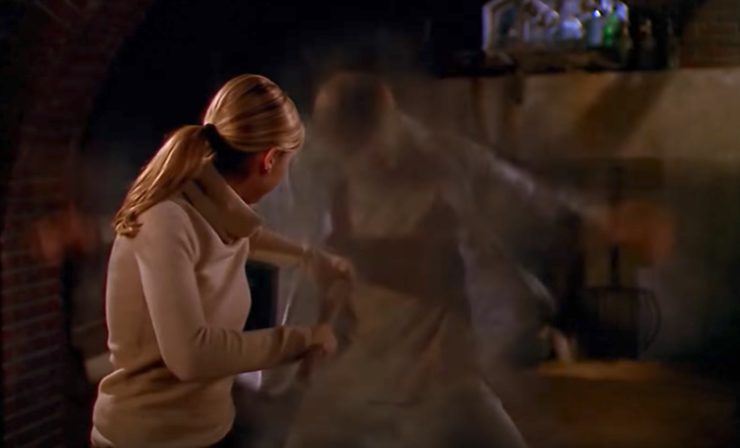
Buffy the Vampire Slayer didn’t invent the monster-of-the-week format, but you could argue that the show perfected the idea. I grant you that it’s an odd compliment to a show that gave us fish swim teams, bad eggs, and worse beer. The thing about the worst examples of that format, though, is that they are ultimately experiments. The hits are born from the same spirit as the misses. “We’ve got to give ’em 22 episodes… let’s hear some ideas.”
Few shows before and since Buffy used that set-up as an excuse to deliver incredible high-concept episodes that often also moved the plot forward despite their seemingly standalone nature. At their best, these monster of the week episodes were creative flexes that not only joined the ranks of the series’ greatest episodes but often dominate such lists. And at the center of all those episodes is, of course, a monster. Funnily enough, they will sometimes play second fiddle to the chaos they cause, but they are the driving force behind some of the greatest episodes in TV history.
15. Hans and Gretta Strauss
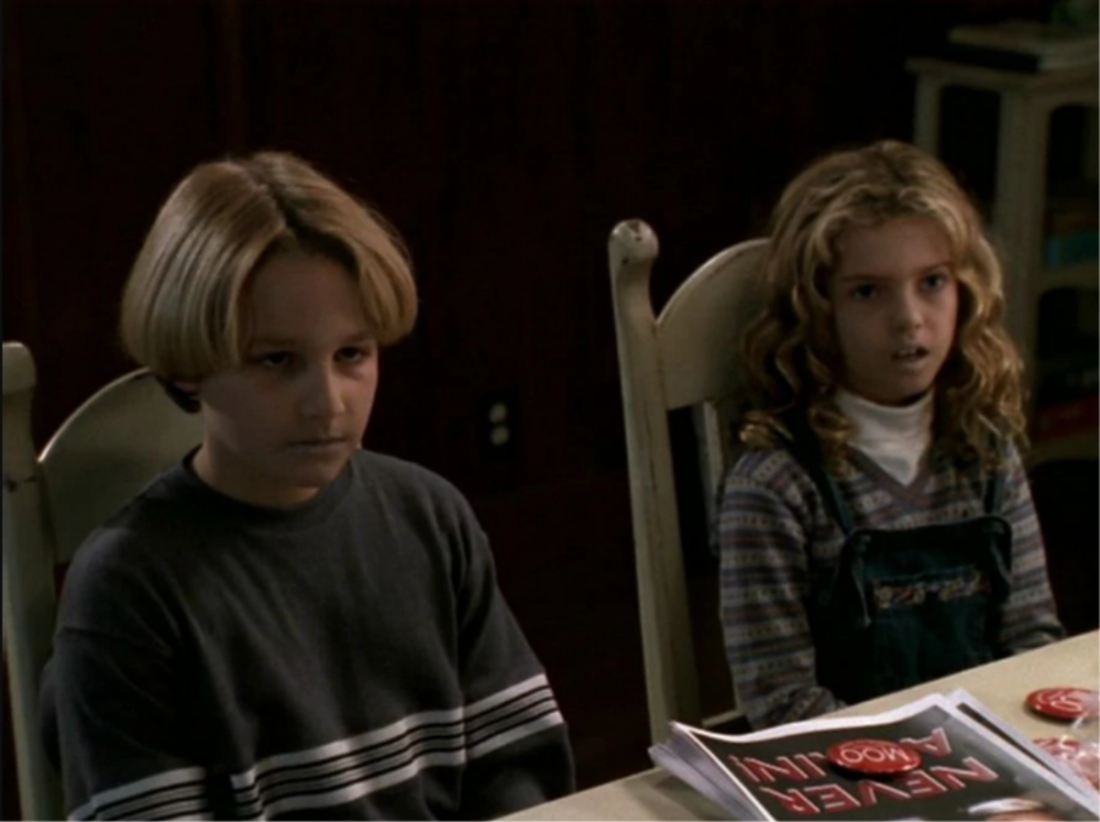
(“Gingerbread” Season 3, Episode 11) Hans and Gretta Strauss star in the best 20-minute episode of Buffy the Vampire Slayer that unfortunately happens to be about 45 minutes long. This is the episode that sees the residents of Sunnydale become consumed by fear after two children are found murdered. The unspeakable tragedy finally forces the adults of the town to wake up and do something about the horror they usually live with, though they eventually take their hunt for all things evil too far.
That escalation and the revelation that the two kids are in fact demons who have performed this ritual many times throughout the years does somewhat diminish the impact of an episode that initially appears ready to break the show’s format and unspoken rules. Still, this episode’s commentary on how easily moral panics can consume us no matter how “civilized” we become rings loud and true.
14. The Giles Demon
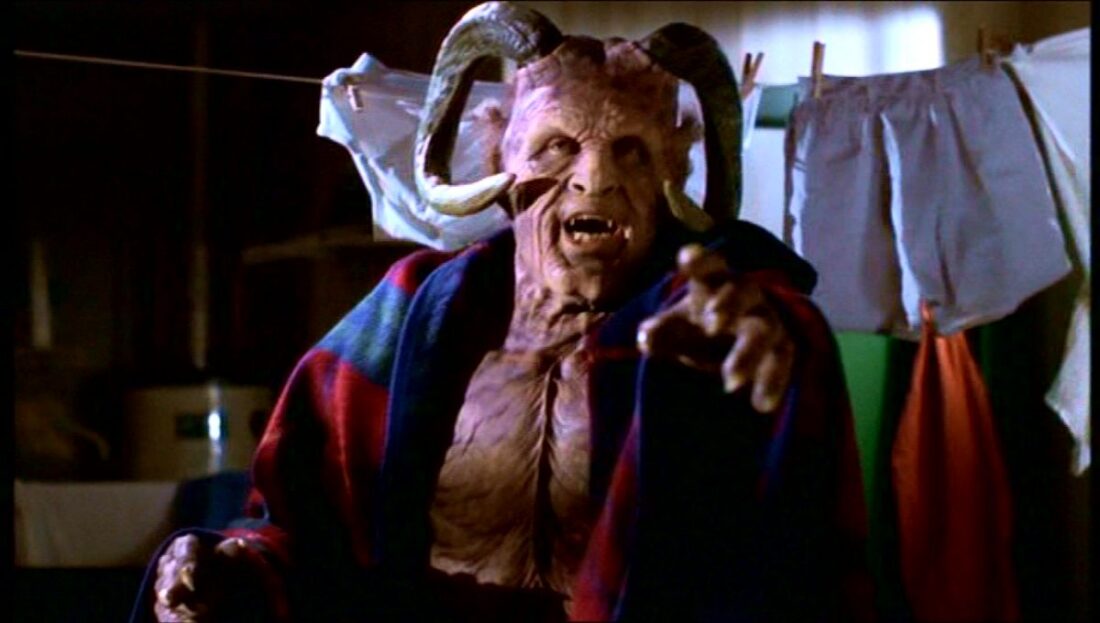
(“A New Man” Season 4, Episode 12) You could argue that the real villain of this story is Giles’ recurring former friend/archnemesis Ethan Rayne (who is always a delight to see). However, this is ultimately a comedy episode, and the comedic centerpiece of the adventure is the demon that Rayne turns Giles into after a few too many drinks.
The Giles demon spends much of the episode desperately trying to convince the Scooby Gang not to kill him. Unfortunately, the only person who can understand him is Spike, who is… less than helpful as a rule. While Buffy is certainly not short on great comedy episodes, this one really takes advantage of the monster-of-the-week format. There is something so glorious about watching Giles as a heavy metal album cover demon gradually put aside his perturbed nature and embrace the brutal, relieving pleasures of being a hell beast.
13. The Wig Lady
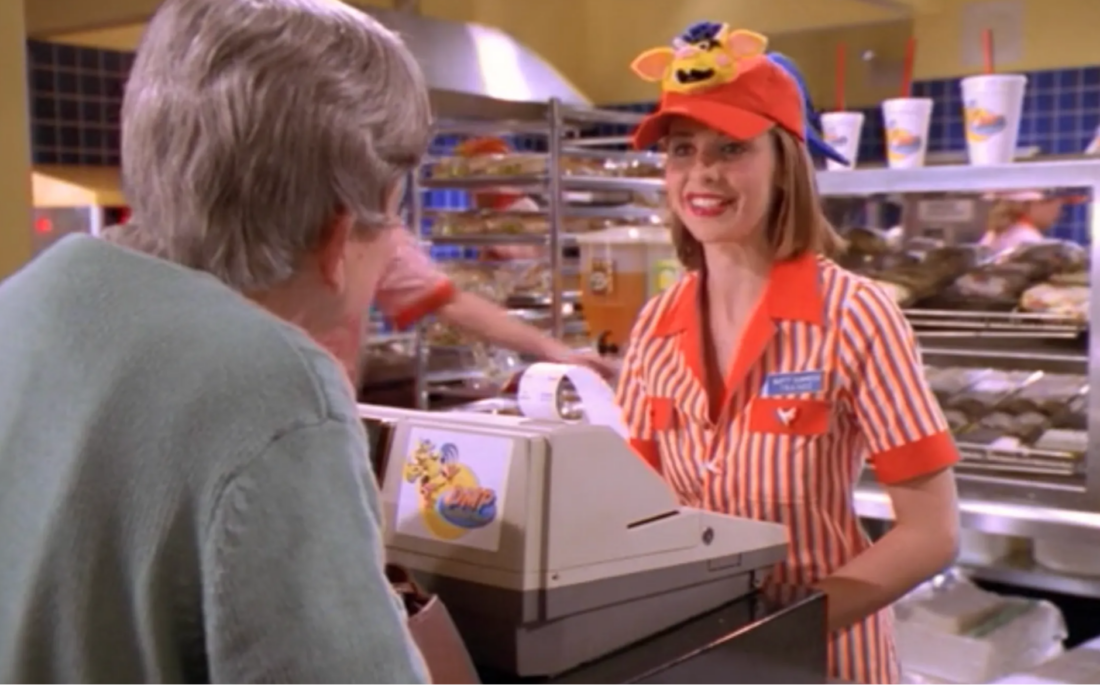
(“Doublemeat Palace” Season 6, Episode 12) Your assessment of Buffy the Vampire Slayer’s sixth season is likely based on your tolerance for pitch-black drama that examines the occasional futility and frequent struggles of simply being alive in the world. It’s quite possibly my favorite season of the show, so make of that what you will.
The most divisive episode of that divisive season is undoubtedly “Doublemeat Palace:” aka the episode where Buffy starts working at the local fast food restaurant. It’s really a story about Buffy trying to deal with the more monotonous horrors in life that can’t be easily defeated by stakes, crosses, and rituals. It’s also an episode about a sweet old lady in a wig who proves to be a Doublemeat Palace regular for reasons other than their surprisingly good coffee and cherry pie. However you break it down, this horrifying look at first jobs and its eventual villain deserve more love.
12. Sunday
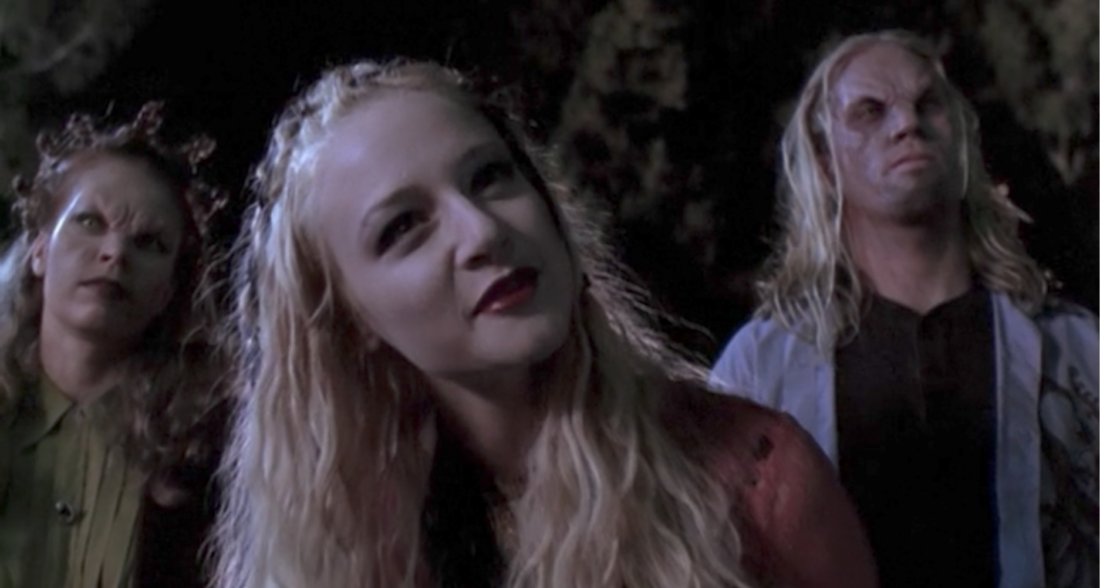
(“The Freshman” Season 4, Episode 1) A long-running piece of fan fiction has argued that Sunday should have been the main villain of Buffy the Vampire Slayer’s fourth season and presented as a former slayer turned into a vampire who torments Buffy. Though the speculation has grown into a false rumor that suggests that was the actual original plan for the character, the persistence of that rumor speaks to the strength of Sunday and Katharine Towne’s performance.
Sunday is the leader of a vampire gang of former college students who are, naturally, out for blood, but also seem to take special pleasure in harassing Buffy and the Scooby gang simply because they are underclassmen. It’s the mirrorverse nature of both Sunday and her gang that lends the character staying power as one of the few vampires that can match wits, might, and presence with Buffy.
11. Billy Fordham
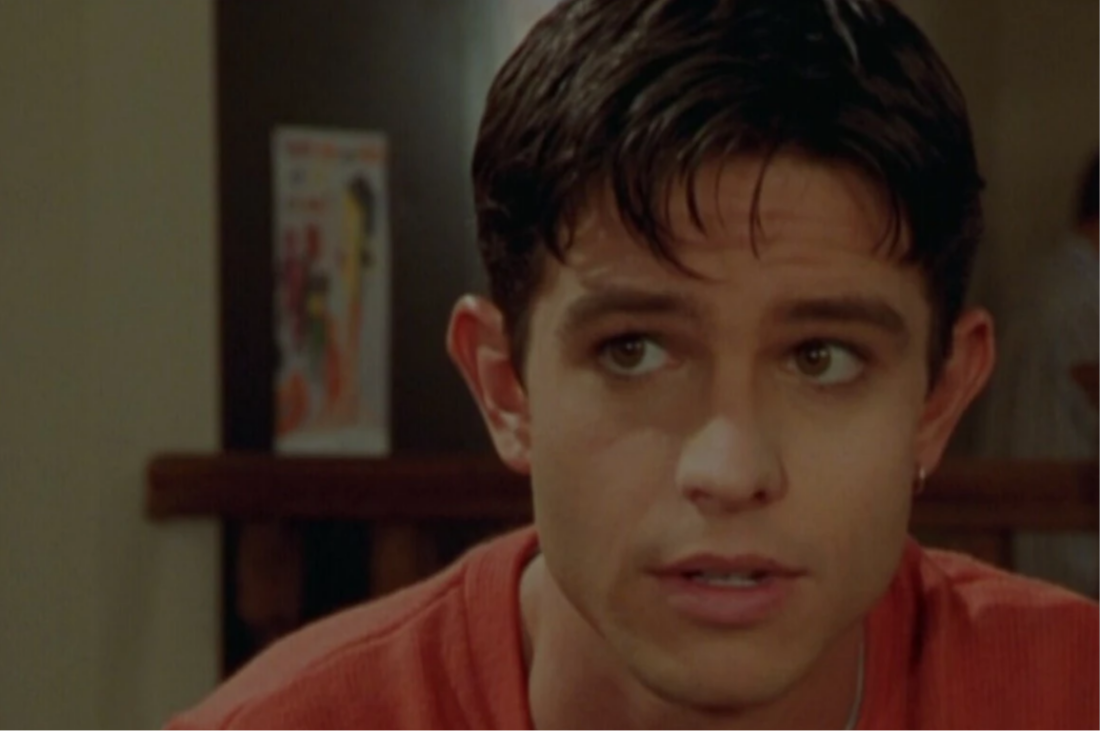
(“Lie to Me” Season 2, Episode 7) There’s a case to be made that “Lie to Me” is the first truly surprising episode of Buffy the Vampire Slayer. Its deceivingly quaint set-up (a former friend of Buffy’s named Billy Fordham is secretly a member of a group of vampire-worshiping cultists) takes quite the turn when it’s revealed that Ford wants to be a vampire in order to live beyond the mere months his brain tumor has left him with.
Buffy couldn’t save Ford in any sense of the word. By failing to do so she is forced to confront both the ambiguous nature of the world and her limitations as a kind of superhero in it. And while the show’s first season wasn’t entirely devoid of memorable monsters, Buffy’s one-off villains certainly got a lot more narratively interesting from here.
10. James Stanley
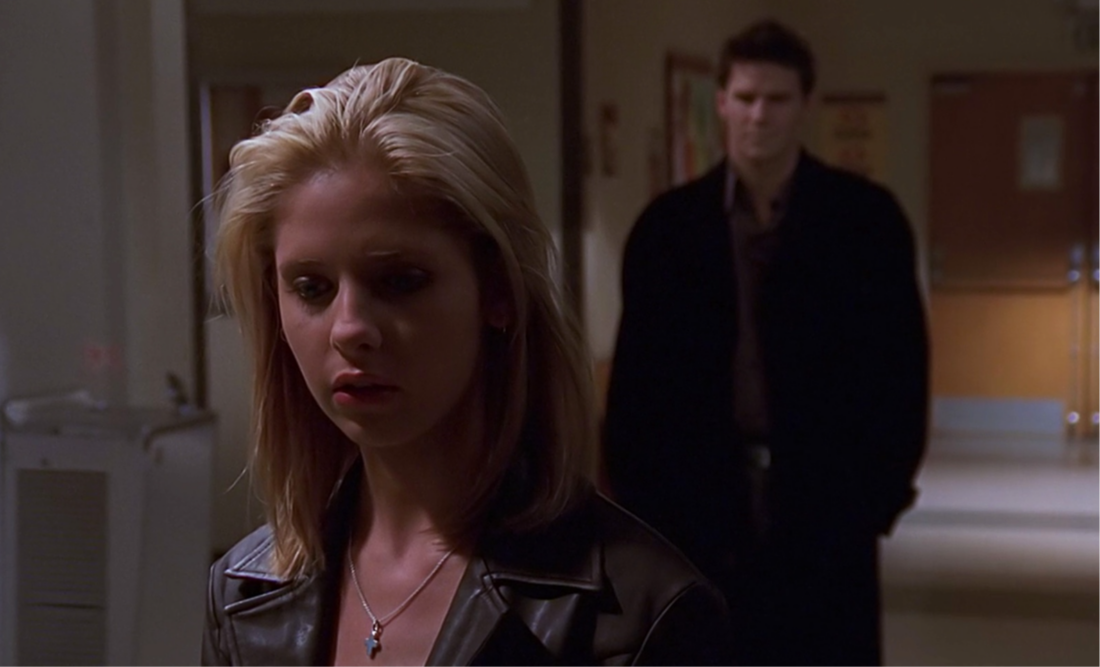
(“I Only Have Eyes for You” Season 2, Episode 19) In 1955, a Sunnydale student named James Stanley shot and killed his teacher and secret crush Grace Newman before taking his own life. Years later, Stanley’s spirit has been awakened and keeps forcing people to re-enact the events of his death in the vain hope of somehow making things different this time.
This is a surprisingly rare poltergeist/haunting episode of Buffy, and the show certainly makes the most of the set-up by packing in as many haunted house (haunted school, technically) moments as you’d expect from the premise. Scares aside, the episode is really about Stanley and both our and Buffy’s unlikely journey to at least better understanding this person who committed an irredeemable act. The scene in which James possesses Buffy so that she can confront her own forbidden love Angel is a particularly effective use of the premise.
9. Ted
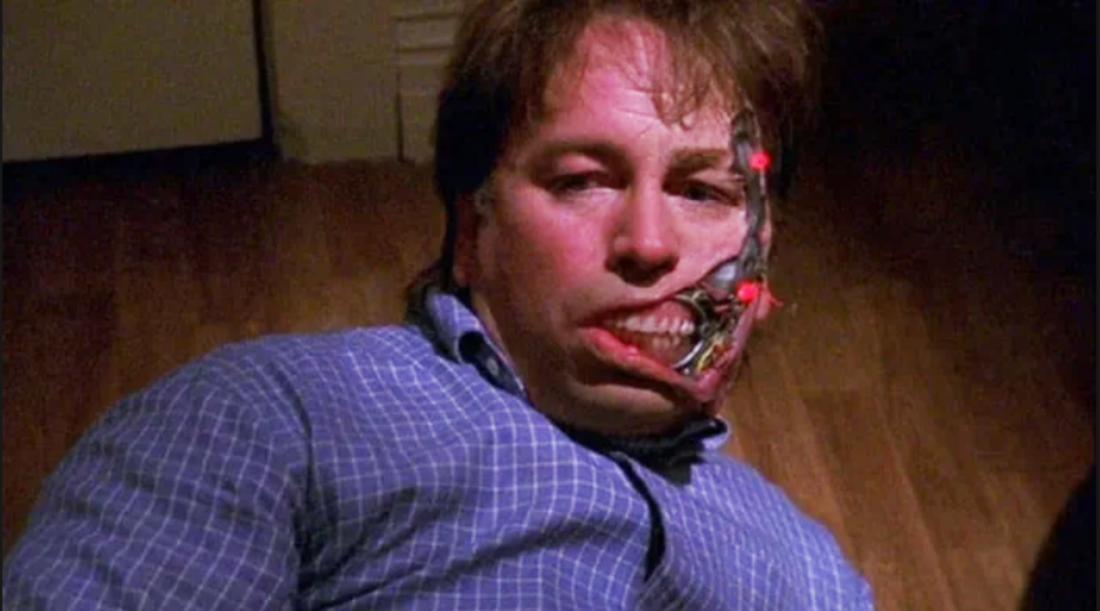
(“Ted” Season 2, Episode 11) The problem with Ted, the villain, is really a problem with “Ted,” the episode. The decision to have Ted be a manipulating stepfather, an excuse for Buffy to confront the horror of killing a human, and, surprisingly, a robot is a real hat on a hat on a hat situation. There’s just too much going on here.
However, John Ritter’s portrayal of Ted is nothing short of legendary. Through Buffy’s eyes, we see Ted for what he really is. Well… not really, I suppose, given that he is revealed to be a robot, but we do see him as both a stepdad trying too hard to instantly be part of a family and an emotionally abusive partner who hides his manipulations behind the low bar of being a “good guy.”
8. Sineya, The First Slayer
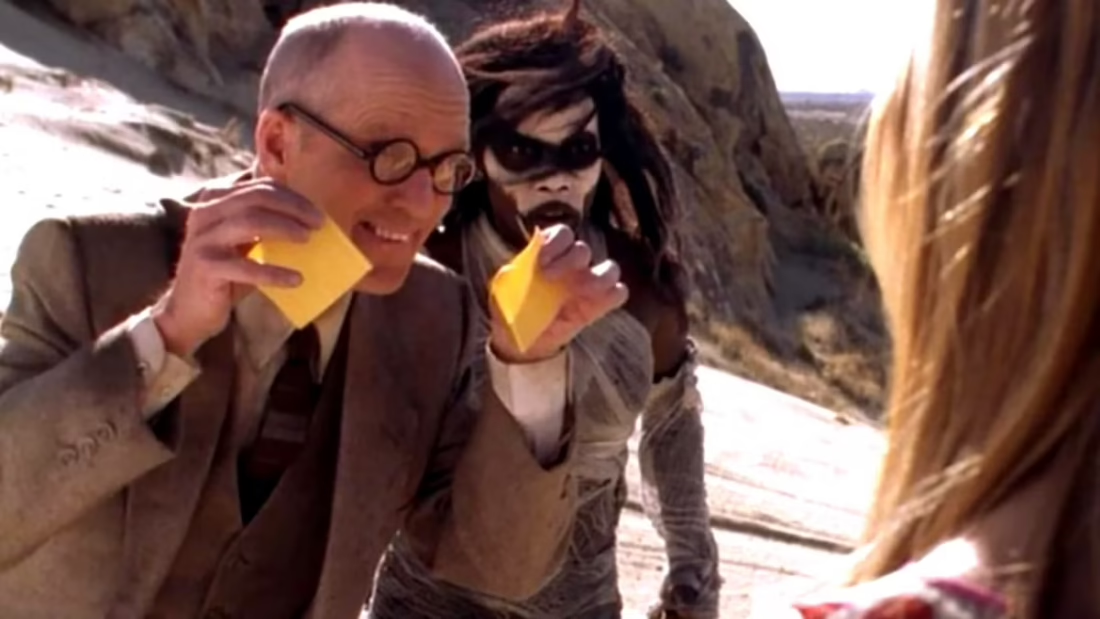
(“Restless” Season 4, Episode 22) “Villain” is a bit of a stretch here given that the first slayer is a victim herself who the gang unintentionally summons and indirectly receives pretty useful information from. Still, the first slayer is briefly the antagonistic force behind one of the best Buffy the Vampire Slayer episodes (no arguments to the contrary will be heard at this time).
After performing a ritual to defeat the creature Adam, Buffy and her friends are pulled into a series of intense nightmares that are both shockingly true-to-life and filled with hints about what’s coming for our heroes in future seasons. At the heart of them all is the vengeful spirit of the First Slayer who challenges Buffy’s slowly strengthening optimism that she is gradually learning to accept her calling while forging her own identity. To be fair, there is also a man holding slices of cheese in all those dreams, but that’s a story for another day.
7. Gachnar
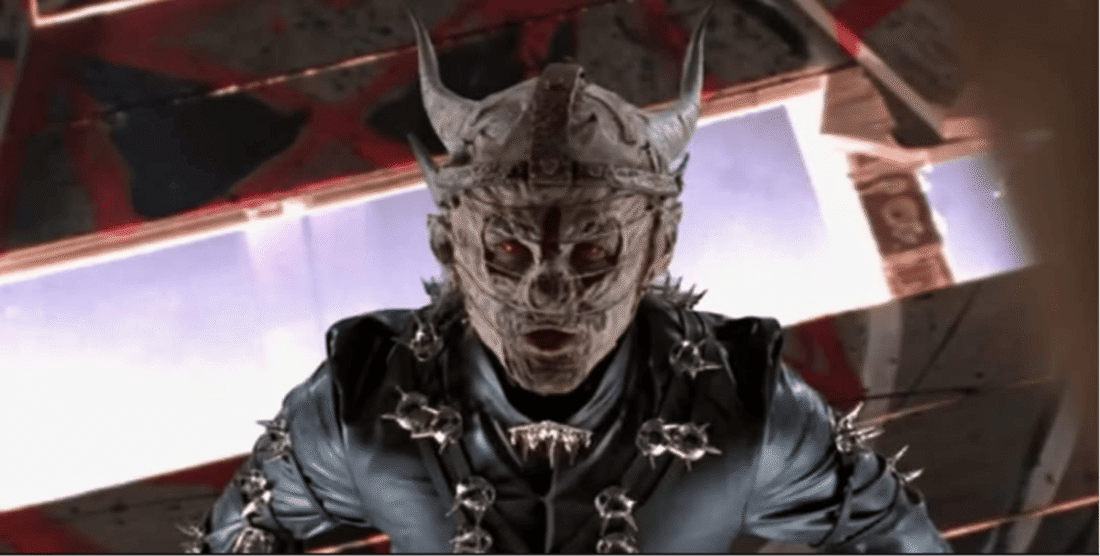
(“Fear, Itself” Season 4, Episode 4) Gachnar is the spiritual star of Buffy’s most underrated Halloween episode, “Fear, Itself.” It’s the episode that sees Buffy and friends attend a fraternity’s haunted house party only to find themselves tormented by the “Bringer of Terror:” the dark lord Gachnar. You perhaps best remember Gachnar for the revelation that he is only about three inches tall.
But before we get to that hilarious ending, we’re treated to a Halloween episode that plays its many scares relatively straight. Gachnar can be bested by a retail fly swatter, but there’s something undeniably creepy about watching Oz confront the fear of killing his friends while he’s a werewolf or Buffy battle the notion that she’s caught in an endless fight that will ultimately not save her. This is also the episode that introduces us to Anya’s fear of bunnies.
6. The Queller Demon
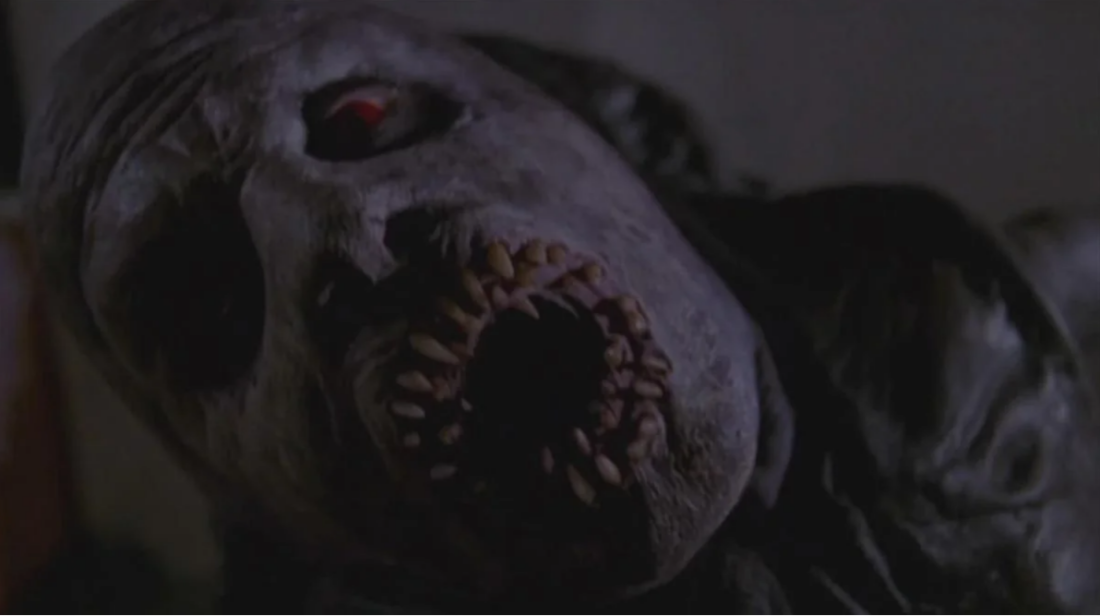
(“Listening to Fear” Season 5, Episode 9) The Queller Demon is a cosmic entity that was summoned in ancient times by societies that wished to rid themselves of the mentally unwell. It is brought to Sunnydale by Ben who is desperate to clean up some of the chaos that Glory’s reign of terror has left behind. Those details alone make the Queller Demon an especially terrifying visiting horror, but the monster’s longevity can be attributed to its design and the circumstances of its arrival.
With its gaping maw full of jagged teeth, the Queller Demon recalls the more viscerally disturbing monster designs we’re more likely to associate with The X-Files than Buffy. Its striking look is made all the more memorable by the time it spends in this episode slithering along surfaces to hunt down Buffy’s mother whose battle with brain tumors has made her one of the entity’s targets. It’s one of the show’s most powerful examples of using a supernatural horror to personify a more tragically familiar terror.
5. Der Kindestod
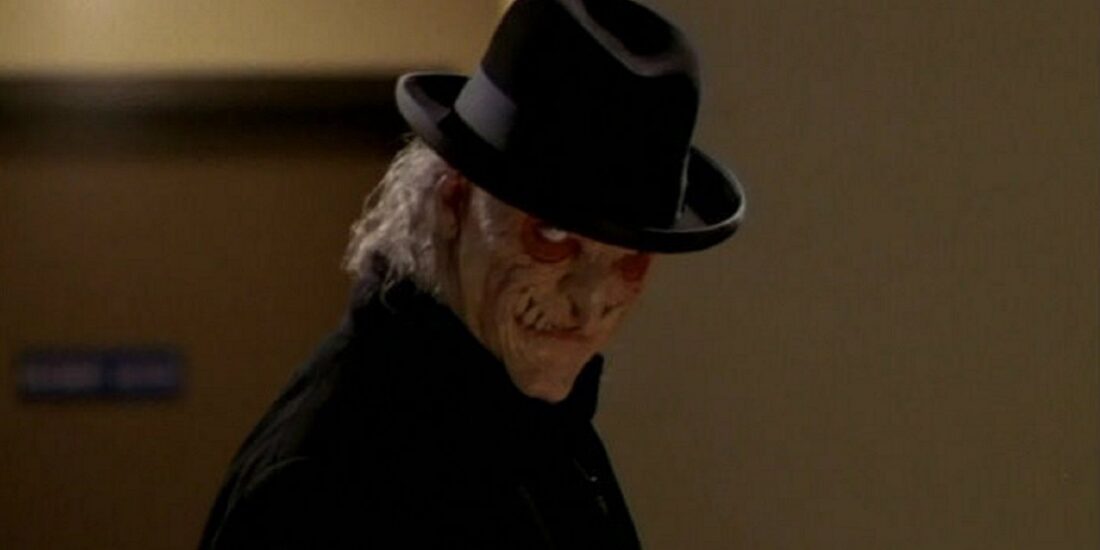
(“Killed by Death” Season 2, Episode 18) Buffy’s second season is when the show really found its feet in terms of blending serialized storytelling with monster-of-the-week episodes. And while quite a few of those monster-of-the-week episodes are outright awful (“Inca Mummy Girl” knows what it did), even the slightly weaker efforts exhibited a push for true horror and creative experimentation that the series would eventually build upon.
“Killed by Death” is one of the best examples of that transitionary period. The episode itself, which sees Buffy encounter a nightmarish presence while battling a high fever in a hospital, is a simple enough story that has little to do with the bigger Angelus plot running during that time. It is really an excuse to terrify us with the design of Der Kindestod. And while Der Kindestod owes a debt to Freddy Krueger in more ways than one, the shot of it wheezing past Buffy’s hospital room as it unleashes a malicious grin en route to claiming another victim is one of the most effectively frightening moments in the show.
4. Gnarl
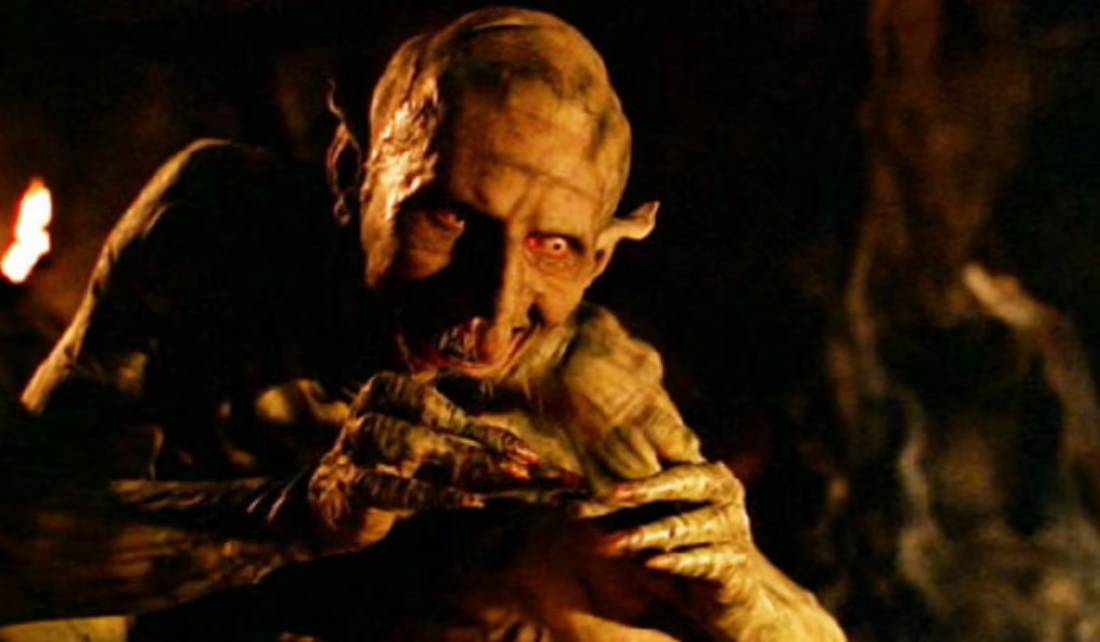
(“Same Time, Same Place” Season 7, Episode 3) Buffy the Vampire Slayer‘s final season is short on monster-of-the-week episodes from both a quantity and quality standpoint. As the series neared its end, the show’s writers perhaps understandably found it difficult to find room for such one-off stories. However, they didn’t say goodbye without gifting us with one of their most disturbing creations, Gnarl.
Gnarl is a Gollum-like creature who not only manages to kidnap and paralyze Willow but also makes her invisible to her friends. A helpless Willow can only watch as Gnarl slowly peels the skin from her body and mocks her fears that nobody is coming to save her. It’s a blunt bit of horror to be sure, but Buffy so rarely presented anything so overtly gruesome. Watching one of our favorite characters be outright tortured with no relief in sight makes this one of the few genuinely hard-to-watch episodes of the show outside of “The Body.”
3. Glarghk Guhl Kashma’nik
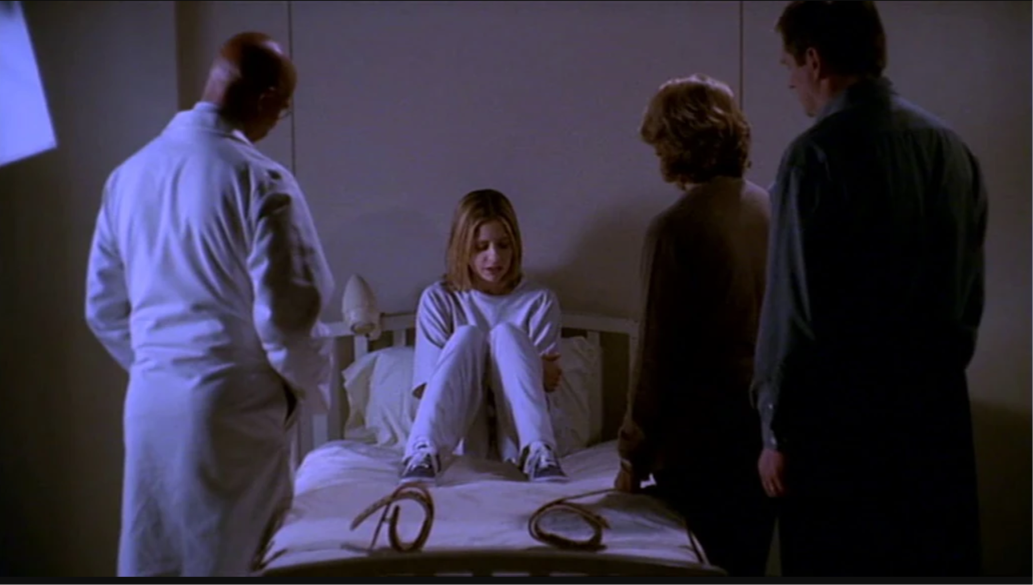
(“Normal Again” Season 6, Episode 17) In a lesser show, the premise of “Normal Again” would rightfully trigger eye rolls and skip episode buttons everywhere. Its central idea (that Buffy is actually a deranged teenager who has imagined most of the events of the show up until this point) is the kind of idea that simply can’t be true unless you’re willing to ignore the entire premise of your series. Here, though, that high concept proves to be remarkably memorable.
The encounter with the Glarghk Guhl Kashma’nik demon that sends Buffy to a reality in which she is not really the slayer is really a microcosm of the show’s sixth season. Buffy is darkly seduced by the idea that none of this has happened. Her mom is still alive, she’s allowed to have a normal life again, and those improbable occurrences (including the arrival of her “sister”) were all coping mechanisms and nightmares. The Glarghk Guhl Kashma’nik’s appearance may be brief, but it ends up scarring Buffy in ways that even more notable monsters haven’t come close to achieving.
2. Sweet
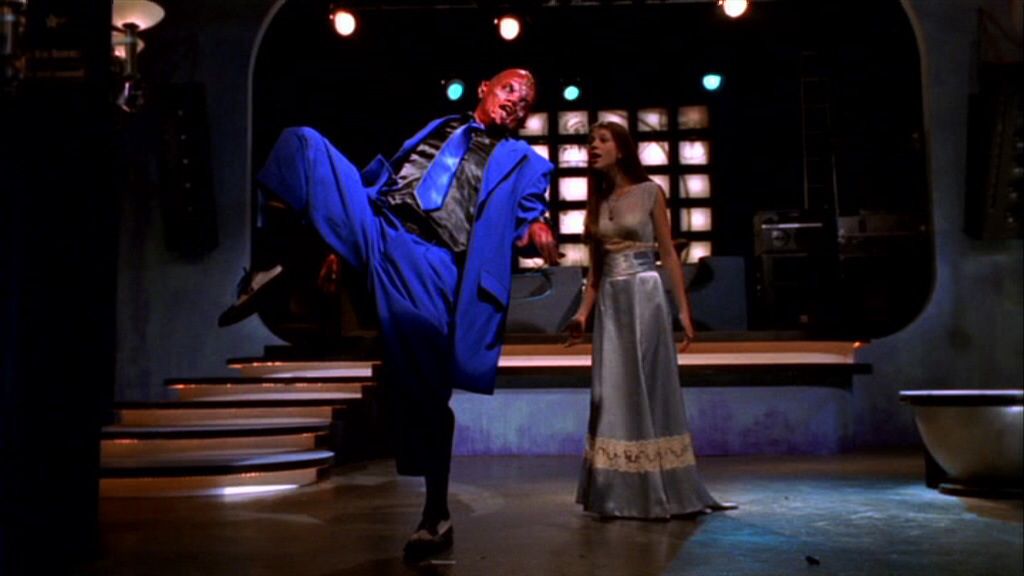
(“Once More With Feeling” Season 6, Episode 7) You won’t break new ground by suggesting that “Once More With Feeling” is the best Buffy episode, but the truth isn’t always revolutionary. It’s not just the standard by which all other musical episodes will be judged; it’s an outright fantastic musical that also so happens to be one of Buffy’s most pivotal stories from a character, plot, and emotional standpoint. It’s easy to forget that it is essentially a monster-of-the-week episode.
Said monster, Sweet, is actually one of the most outright devilish (in the traditional sense) creatures the show has presented. He is also amusingly flanked by nutcracker-esque puppet henchmen and even gets a pretty great villainous musical number (the best kind of musical number). And while Sweet is perhaps not quite the star that this episode’s gimmick is, you have to love the largely charming catalyst of one of television’s greatest achievements.
1. The Gentlemen
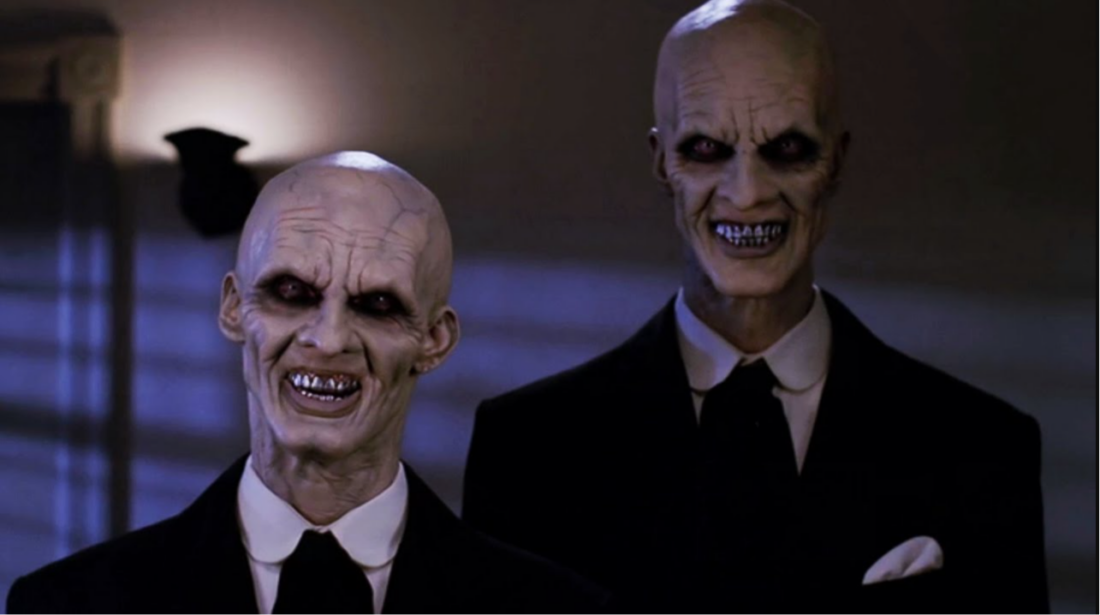
(“Hush” Season 4, Episode 10) I didn’t grow up watching Buffy the Vampire Slayer weekly, but rather came to the show in syndication when I saw a photo of The Gentlemen in the “What’s On” section of one of my Grandma’s TV Guide issues. That small image was powerful enough to compel me to jump into the fourth season of a TV show just to see what the story behind these villains was. Shout out to Grandma for binging the show with me that summer through reruns. Another story for another day.
That’s the power of The Gentlemen as Buffy’s greatest monsters of the week. Yes, “Hush” features a crucial plot moment between Riley and Buffy that changes the nature of their relationship and the season’s main storyline. But this is an incredibly effective standalone story about the outright scariest monsters Buffy has ever featured and how their ability to steal people’s voices leads to a mostly-silent showcase of this series’ incredible creative talents.
There are no Buffy episodes that can match the terror of watching The Gentlemen dissect a boy as he desperately unleashes a silent scream. Yet, there is also something about this episode that (much like The Gentlemen themselves in that moment) really gets to the heart of what makes the show so great.


The last scene of “Normal Again”, where the alternate universe Buffy is sitting catatonic in the hospital… Shudder.
Man, has it really been 14 years since the rewatch?
https://reactormag.com/in-every-generation-there-is-a-chosen-one/
That rewatch needs a good index…
Edit: Found the index:
https://reactormag.com/columns/buffy-the-vampire-slayer-on-torcom/