






When you think about sci-fi and fantasy book-to-movie or television adaptations that you can watch right now, what books come to mind? Chances are extremely high that you’re not thinking about a book written by a Black author. It bears shouting from the rooftop that Hollywood has a race problem. This problem becomes evident when you examine the types of stories tinseltown chooses to adapt and tell to the world… and the stories it leaves on the cutting room floor.
Since 2014, approximately 500 books of all genres have been adapted to film or television. In total, just over four dozen of those books adapted were written by Black authors. Only four of those 50+ Black adaptations were speculative works.
The CW failed to promote its first DC Comics series not produced by Greg Berlanti. This was the 2022 drama, Naomi based on the comic book series of the same title. Naomi was originally created by Brian Michael Bendis and David F. Walker, and illustrated by Jamal Campbell. Co-creator, Ava DuVernay put all of her weight behind the project but the adaptation only lasted one season.
In 2020, the young adult dystopian series Noughts & Crosses by Malorie Blackman was adapted by BBC One and ran for two seasons. The show is currently available to stream on Peacock. The series premiered one week before COVID lockdowns were enforced around the world. When people weren’t busy baking bread, they flocked to their televisions and screens. Viewership for Noughts & Crosses should have been through the roof. The show should have been all the talk around the TV watercooler. Yet if you ask many readers if they enjoyed the adaptation, the response would likely be shock that an adaptation even exists.
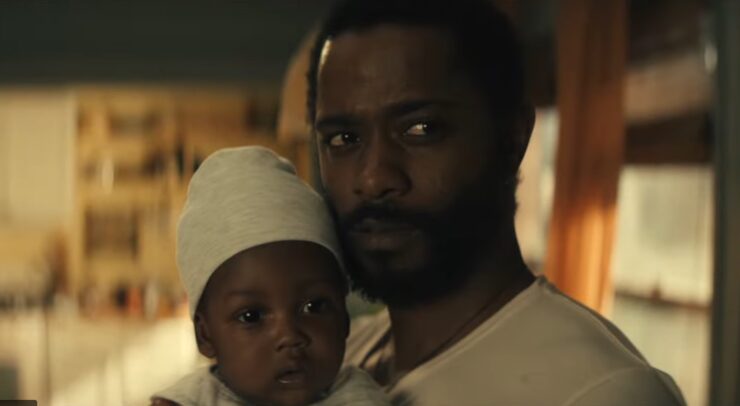
Hulu brought Octavia Butler’s Kindred to life as a mini series in 2022 with the bare minimum promotion. Most recently, Apple TV premiered the adaptation of Victor LaValle’s The Changeling. To see another Black speculative adapted work in the pipeline, we have to travel back to 2000 when The WB picked up DC Comics Static IP for a Static Shock television series. The show was a ratings success and ran for four seasons until it was canceled due to low toy sales. Toy sales.
Beyond that, there is no other speculative work to find among the 160+ movies and television series that have been adapted from books by Black authors. This list goes all the way back to Alexandre Dumas’s The Count of Monte Cristo adaptations, the first of which made its way to the big screen in 1908.
I repeat.
Since 1908, only 160+ adaptations have been made from books written by Black authors and only four of those were speculative works.
Up until 2013, there was very much a “There can only be one” vibe going on in Hollywood, with zero-to-three Black book to screen adaptations releasing each year. 2023 can certainly be seen as the most successful year to date, with nine Black adaptations making their way to the public, The Changeling being among them. The problem is, there is a clear imbalance between white and non-white speculative works being made when there is a huge audience for both more speculative work and more diverse storytelling.
The New York Times reported in 2021 that Hollywood is losing $10 billion by not addressing and correcting its racial inequities. Yet Variety detailed how Hollywood’s promises to be more inclusive in recent years were performative. In other words, nothing, not even the very high racial tension in society in 2020, has pushed Hollywood to want to do better. As far as promises go, it looks as though the promise remains only to push out as many stories rooted in racial injustice and Black pain as possible.
The Black experience is not a monolith. There is so much more to Black storytelling than what we have been given the chance to see on screen. And yet.
Four. We’ve got four speculative works in 116 years of Black adaptations. Meanwhile, in the young adult category alone, over 50 adaptations have been released in the past 20 years, half of which are speculative including but not limited to The Hunger Games, The Giver, The Maze Runner, Divergent, Miss Peregrine’s Home For Peculiar Children, The Fifth Wave, A Monster Calls, Before I Fall, and Shadow & Bone.
If we’re sticking with YA, which is known for its juggernaut success at the box office, there have been a dozen SFF authors who have hit the Young Adult NYT Best Sellers List and yet adaptation traction is not steady. Natasha Bowen. Roseanne A. Brown. Dhonielle Clayton. Tracy Deonn. J. Elle. Namina Forna. Ayana Gray. Jordan Ifueko. Lauren Blackwood. Justina Ireland. None of their speculative works have been adapted.
Many works by the authors above have sold rights, but optioning or buying rights to a book is just the beginning. A Hollywood project is dead in the water until a writer and director are attached. Even then, it’s not a guarantee. So in a world where zombie films and shows are made and released every single year, why hasn’t Justina Ireland’s Dread Nation gotten the big or small screen treatment? We need answers.
It’s 2024. It is time to see Black stories that don’t exist to make white mainstream audiences and Hollywood executives feel comfortable. We are more than racial justice dramas. It’s time to not only option and buy the rights to an array of our stories, but get them into movie theaters, on our television screens, and on streaming platforms.
To put this into perspective: Hollywood would rather greenlight a television series to a movie adaptation that was by definition, a box-office bomb (Vampire Academy, which is a fantastic book series, but its movie adaptation grossed $15.6 million in the box office and it cost $30 million to make the film) than follow through with the production of any Black SFF book. Black writers and filmmakers rarely get second chances because, the fact of the matter is, we rarely get a first.
As far as development hell goes, hundreds of thousands of readers patiently await the adaptation of N.K. Jemisin’s The Broken Earth trilogy which Sony Pictures got the rights to in a seven-figure deal. In 2017, HBO optioned Nnedi Okorafor’s Who Fears Death and three years later, Hulu snagged the rights to Binti. Ava DuVernay has been attached to bring Octavia Butler’s Dawn to Amazon since 2020. These projects are still in development.
Reese Witherspoon’s Hello Sunshine led Book Club has a remarkably solid track record of inclusivity, picking a diverse lineup of books to feature since its inception in 2017. However, based on the books that Hello Sunshine as a production company has adapted, including Tembi Locke’s From Scratch on Netflix, it appears as though the brand’s focus is bringing adult contemporary stories to the big and small screen. So if you were holding your breath for Hello Sunshine to adapt its YA fantasy Book Club pick, Within These Wicked Walls by Lauren Blackwood, it’s not looking good. Even when Hello Sunshine doesn’t pick up adaptation rights, it still puts books in the spotlight that otherwise may not have gotten that mainstream bump. Generally speaking though, where does mainstream support bring us today?
The same book-to-screen adaptation that showed any signs of moving forward and making a huge splash prior to 2020 is the same project that shows any signs of being made today. The movie adaptation of Children of Blood and Bone by Tomi Adeyemi has been in development since before the first book in the series was released in 2018. The creative team behind the adaptation has changed hands, causing a delay in production. However, it was recently announced that Gina Prince-Bythewood, fresh off the heels of the success of The Woman King and The Old Guard, is set to direct the film. Prince-Bythewood’s first Black book-to-screen adaptation dates back to Terry McMillan’s Disappearing Acts in 2000. As an industry veteran, it’s about time Hollywood gave her a chance directing Black speculative work. In fact, it’s long overdue. Especially in a town where a white man (Colin Trevorrow), can make one singular contemporary indie film (Safety Not Guaranteed) and then be handed the keys on a silver platter to direct a film with a $100+ million budget (Jurassic World: Fallen Kingdom).
CNBC reported that in July 2023, six Diversity, Equity and Inclusion Executives in Hollywood left their roles at various companies including Netflix, Disney, and BBC. No one would probably notice if one executive from one company left. But six heads in the same role leaving various companies around the same time? Hollywood, are you okay? You’re not. We know you’re not. So it’s time to take accountability for your part in performative allyship. It’s time to make a change. Do you or do you not want to be responsible for the next golden age of movies and television?
It starts from within. Without a clear vision to execute supporting DEI initiatives, Hollywood seems to have given up on whatever small effort it made to show that it cares about Black storytelling. But enough is enough. The reckoning is here. Black Hollywood is talking (see: Gabrielle Union and Taraji P. Henson). There are countless issues that Black authors, filmmakers, and actors are facing. So let’s add to the conversation and shout until they can’t ignore us. Our stories matter and we are telling them across every single genre. It’s time Hollywood reflected that.
Octavia Butler wrote in Parable of the Sower, “All that you touch You Change. All that you Change Changes you. The only lasting truth Is Change.” Hollywood, are you ready to step up and be the change?
What speculative works written by Black authors do you want to see hit the big or small screen? Share your thoughts in the comments below!

Allegedly an adaptation of Marlon James’s Dark Star trilogy is in the works. Hopefully it survives development and gets a big enough budget to do his settings and creatures justice.
4 in 120 years is NUTS..
It’s unbelievable that The Reformatory hasn’t been optioned yet.
(Unless I missed something)
SK Global and The Mazur/Kaplan Company have acquired a whole slew of novels:
1) Tananarive Due’s upcoming horror novel The Reformatory. Due will script the adaptation with Steven Barnes.
What about The Last Days of Ptolemy Grey by Walter Mosley?
That was already adapted as a miniseries starring Samuel L. Jackson on Apple TV.
Sorry, that was my point. It wasn’t mentioned in the article.
Binti trilogy by Nnedi Okorafor
Patternist series by Octavia Butler
Fledgling by Octavia Butler
“The Secret Lives of the Nine Negro Teeth of George Washington” by P. Djèlí Clark (I’m not sure exactly how you would adapt this story, but the fantasy world in which it is set seems like it would be a lot of fun to see on the big screen).
Still sad that Kindred didn’t get picked up. In every episode there’s a moment where you would go, “That got dark… no, wait, it’s been dark — it got really dark.” But the first season really only hit the first couple chapters, it barely got going.
I agree, it was such a powerful series. I can’t underway it was cancelled after the initial season.
Ugh. I loved the book and had been waiting for the series but apparently I missed that it was happening and now it’s over. Double ugh.
I am onboard with the plan as far as the stage where producers empty a dump truck full of hundred dollar bills on the author’s lawn, but I am leery about trusting any but a small list of movie people to turn the original material into a faithful product. I don’t want to watch The Fifth Season: The Film with Chris Pratt as the lead.
(Did you know there’s a Seeing Ear Theatre adaptation of Kindred? It’s not great)
P. Djèlí Clark has an entire oeuvre that would make excellent TV and/or movie projects.
Tracy Deonn’s Legendborn series seems like it would be so easy to market with its Arthurian angle and setting of young people fighting demons on a college campus. Buffy meets Merlin ! (Substitute more recent shows as applicable; you can tell I haven’t kept up.)
There are plenty of others. Thanks for the essay.
Any of C L Polk’s work! (The Midnight Bargain, the Kingston Cycle, Even Though I Knew the End, or any of their novellas.) They vary in tone so much but they’d all look gorgeous on-screen.
Black Dawn Series (Grievers bk 1, Maroons bk 2 , TBA bk 3) by: adrienne maree brown
I would be all over this
Thanks for this article, Melody…very thoughtful and informative…I wanted to mention Tananarive Due as well, particularly her amazing Living Blood series and am happy to hear that there is some movement on the Reformatory. Of
course, Living Blood was being developed for a long while, and never made it to the theaters.
Very much agree with P. Djèlí Clark! I would also love to see an adaptation of the Library of the Dead series by T.L. Huchu. The audio version is awesome and I think spending an hour with Ropa Moyo each week would be a delight!
Amen, amen, amen! I’d love to see an adaptation of Binti. And pretty much anything by P. Djèlí Clark!
There is going to be a television adaptation of Samuel R. Delany’s NOVA soon. And to tell you the truth, the six executives leaving does sound suspicious to me.
I’d love to see adaptations of P. Djèlí Clark’s Egypt stories. so wanna see Fatma on the screen. wondering who should play her.
While the numbers are still appalling, there are several silent films not included on the list (which only lists two). The history of Black film making in the silent era is so often swept under the rug that I can understand why it gets overlooked.
Gah-I loved The Changeling! How did I not realize it was also a series?! The lack of promotion for stuff that does get made is killing me.
I wonder if the people adapting Children of Blood and Bone are delaying until the book series is finished because they’re afraid of having to write their own ending and having it turn out like Game of Thrones.
But as someone far removed from the industry it’s hard to tell when production delays are deliberate foot-dragging vs. just plain snafus.
Another one I’d like to see adapted is This Poison Heart, but that shares the unfinished series problem.