






The next stop in our tour through the science fiction and fantasy of the 1980s is “women whose surnames begin with C.” The usual disclaimers apply, foremost among them being that, as I am monolingual, I am only covering authors who were published in English at some point.
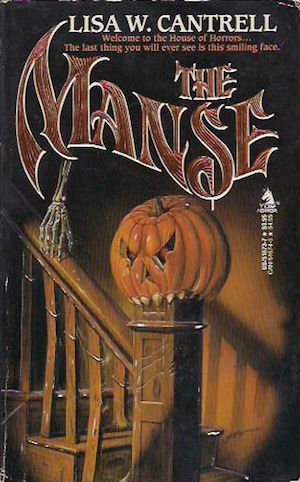
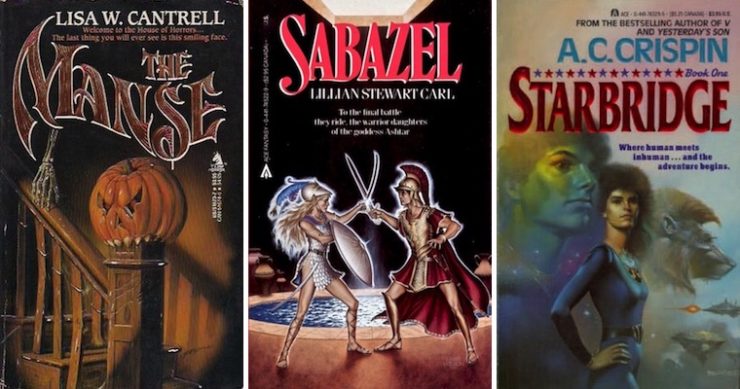
Lisa W. Cantrell was active in the horror field in the 1980s and 1990s. Her novel The Manse, a tale of a haunted house attraction that proves all too realistic, was well received at the time, but if Cantrell has had a novel published since 1992’s Boneman I am unaware of it. This may reflect the hazards of being active in horror, a genre subject to dramatic booms and busts.
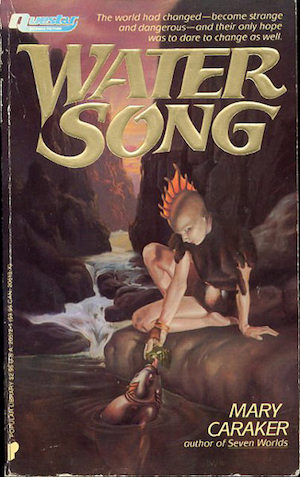
Mary Caraker debuted in Analog in an era when Analog wasn’t much interested in publishing any women at all. Although she has since moved onto other fields, over the course of her fifteen years in SF she published five novels and over a dozen short stories, often touching (as do Water Song and The Faces of Ceti) on ecological themes. The fix-up Seven Worlds draws on the author’s experience as a teacher, although presumably Caraker’s career involved less high-level diplomacy.
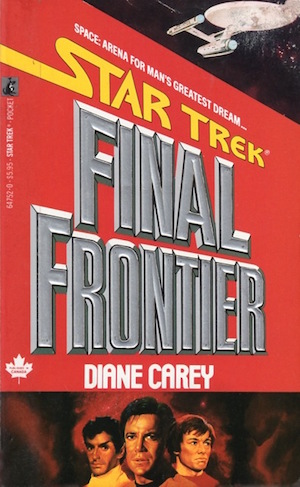
Diane Carey is a prolific author, most often of tie-in novels (particularly Star Trek). She is also active in romance and historical fiction.
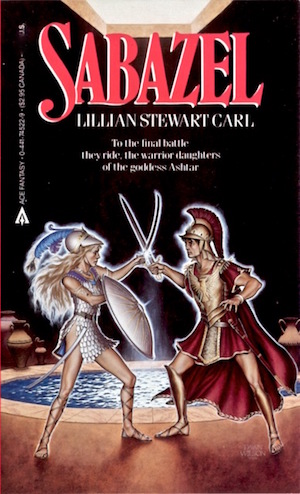
Lillian Stewart Carl is, I believe, currently most active in mystery and romance (genres whose audiences are large enough that SF&F’s audience could be squeezed into their error bars). Her works often feature the paranormal; her publishers may label the books as one genre or another, but most of that is merely marketing. Bujold fans may find her Vorkosigan Companion of interest; otherwise, consider her historically-inspired fantasy Sabazel.
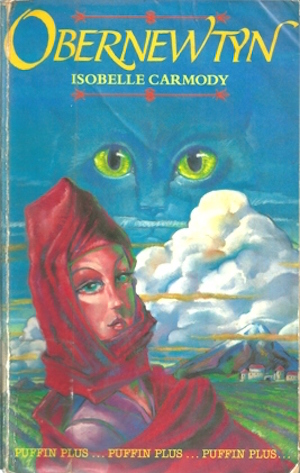
Australian-born Isobelle Carmody is active in the overlapping sets of fantasy, science fiction, and young adult and children’s fiction. One might choose to begin reading Carmody with her 1987 debut novel, Obernewtyn. This book has some superficial similarities to John Wyndham’s The Chrysalids. Both take place in a world scarred by nuclear holocaust and feature a conformist, backward, brutal society, one that punishes those born with mutant gifts. However, Carmody explores themes well beyond the simple solutions offered by Wyndham. There are to date seven books in that series. Readers who finish the Obernewtyn series may find her other series of interest.
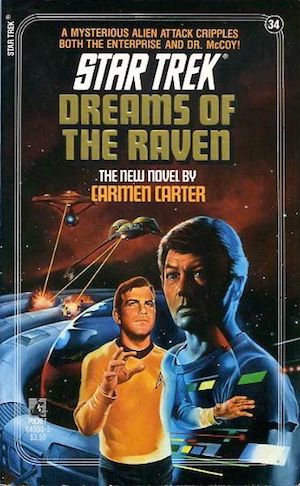
Carmen Carter is an active author of Star Trek novels. Tie-ins are not my forte, so I am unsure where to start with her work.
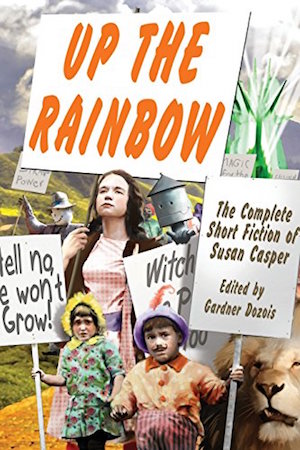
Susan Casper wrote mostly at short lengths, often in collaboration with husband Gardner Dozois. She had a single novel of which I am aware, the posthumously-published The Red Carnival, but readers might want to begin with 2017’s Up the Rainbow: The Complete Short Fiction of Susan Casper.
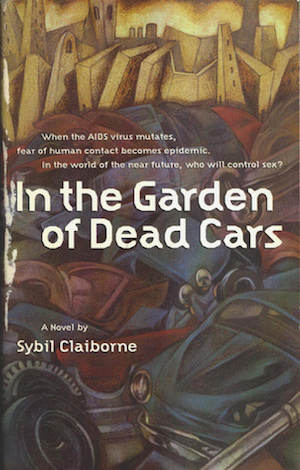
To be honest, I don’t know if Sybil Claiborne belongs in this project or the 1990s sequel (not yet written but gestating). She was definitely writing short fiction in the 1980s, but I could not say if it was spec-fic. Her 1993 dystopia, In the Garden of Dead Cars, is most definitely spec-fic: it was listed on the 1993 James Tiptree, Jr. Award Honor List .
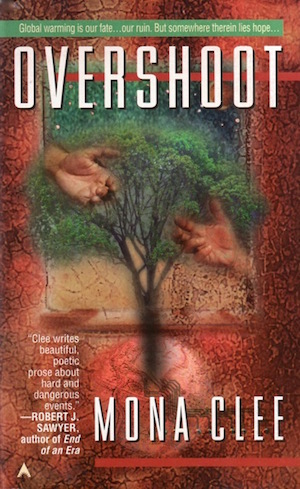
Mona A. Clee began publishing short SF works in the 1980s but I know her from her two novels: pessimistic ecological thriller Overshoot, and the somewhat more optimistic Branch Point, in which time travelers try desperately to prevent a 1963 Soviet-American nuclear exchange, only to discover they’ve replaced a horrific atomic war with even more horrific variations. “Oh, dear, we seem to have made a bad situation much worse,” may not sound like it could be more upbeat than any other book, but A) there is a solution, and B: Overshoot is pretty glum.
Carolyn Clink is primarily a poet, with at least two collections: Much Slower Than Light and Changing Planes.
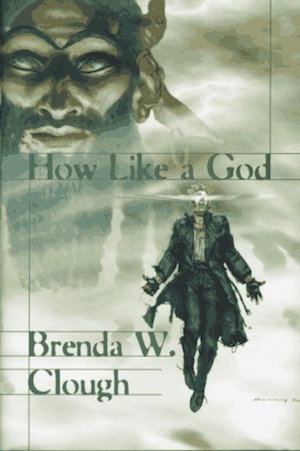
Brenda W. Clough was first published as B. W. Clough . Readers new to Clough should be able to find her 1997 How Like a God, whose protagonist finds himself in possession of godlike powers far more disruptive to a happy life than he may have expected.
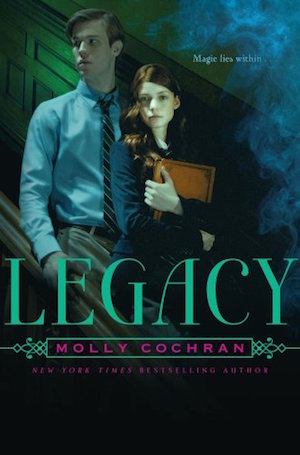
Molly Cochran is a prolific fantasy and thriller author, who often collaborates with her husband, Warren Murphy. Solo works include Legacy, featuring a young witch coming of age in a community of witches.
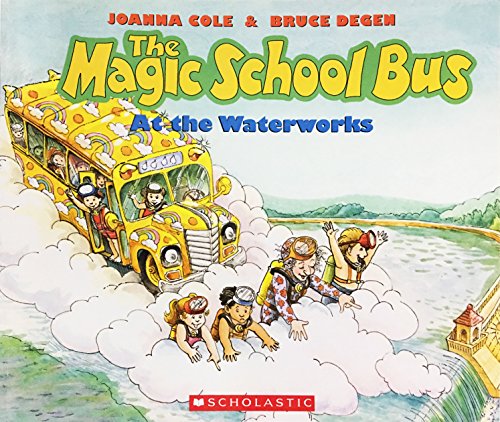
Joanna Cole is the incredibly prolific author of the highly successful Magic School Bus series of fantasy educational novels aimed at younger readers. The series was the inspiration for the highly successful TV series of the same name, as well as a sequel series. I believe the first novel is At the Waterworks. If Ms. Frizzle isn’t actually a Time Lord, she could certainly pass for one.
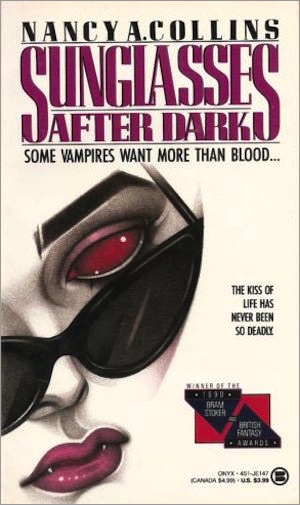
Nancy A. Collins is a fairly prolific horror writer who is active in a variety of media. Her Stoker-winner Sunglasses After Dark kicked off her long-running Sonja Blue series. Medical technology allowed its eponymous lead to survive conversion to vampirism without the usual temporary death; Blue has used the ability conferred by her unique status to deliver necessary rebukes to the vampire community.
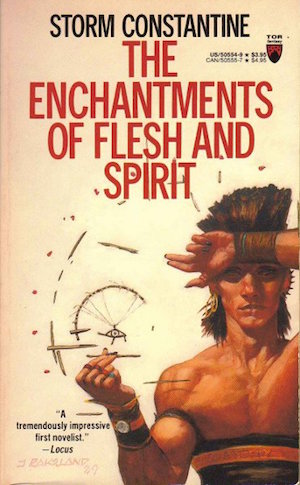
Storm Constantine first came to reader’s attention with her Wraeththu Chronicles (The Enchantments of Flesh and Spirit (1987), The Bewitchments of Love and Hate (1988), and The Fulfillments of Fate and Desire (1989)). She has since written at least 20 more novels. Her work straddles fantasy and science fiction, often examining issues of sex and gender. Constantine is also a publisher; her Immanion Press originally focused on Constantine’s own back list but has expanded to include authors from Tanith Lee to Freda Warrington.
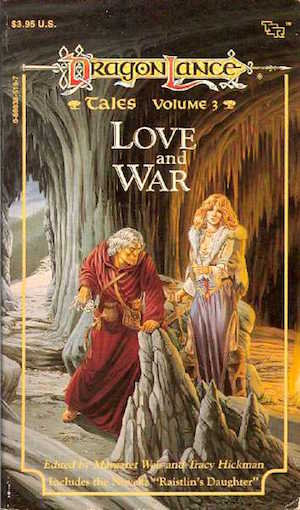
Tonya C. Cook is primarily a Dragonlance author.
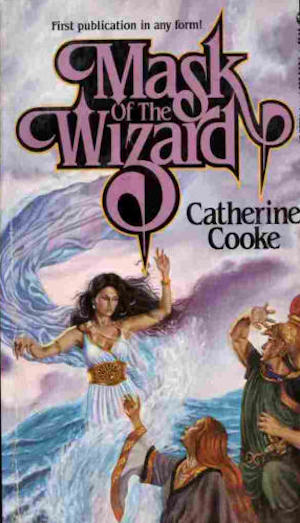
Catherine Cooke penned two fantasy trilogies (Mask, comprised of Mask of the Wizard (1985), Veil of Shadow (1987), and The Hidden Temple (1988), and Winged Assassin, comprised of The Winged Assassin (1987), Realm of the Gods (1988), and The Crimson Goddess (1989)), as well as dark fantasy The Wendigo Border (1995). Most of her backlist seems to be out of print, but readers curious about Cooke’s work can buy the ebook edition of The Wendigo Border.
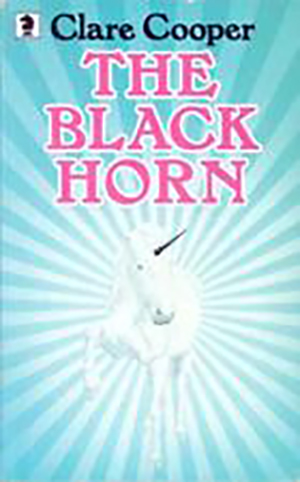
Clare Cooper writes young adult novels, ranging from fantasy like 1981’s The Black Horn to after-the-end SF like 1985’s Earthchange.
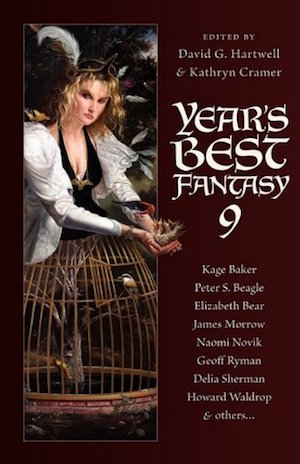
Kathryn Cramer has written short fiction but she may be best known for co-helming The Year’s Best Fantasy from 2001 to 2009 and The Year’s Best SF from 2002 to 2012.
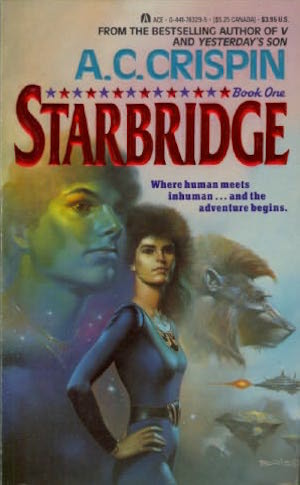
A. C. Crispin authored the collaborative Starbridge series, as well as a fair number of well-liked tie-in novels. Her greatest contribution to spec fic may well be an ancillary activity; with Victoria Strauss she created Writer Beware, a watchdog organization that protects writers from the legions of scam artists who would otherwise strip the naive down to their fillings and bones. One can judge someone by the enemies they make in life. Crispin’s enemies marked her as an exemplary person.
Far more women debuted in the 1980s than in the 1970s. The corollary is that I managed to overlook far more women in the 1980s than I did in the 1970s, which means my lists of shame are embarrassingly large. If you can offer pointers on where to begin with the following authors, please share your knowledge.
Buy the Book
Finding Baba Yaga: A Short Novel in Verse
List of shame:
- Susan Carroll
- Ellin Carter
- Ann Cathey
- Deborah Chester
- Pam Chillemi-Yeager
- Mary E. Choo
- Patricia B. Cirone
- G. O. Clark
- Marcia Cohee
- Marion Cohen
- Valerie Nieman Colander
- Sherry Coldsmith
- Isabel Cole
- J. L. Comeau
- Judith R. Conly
- P. E. Cook
- Susan Coon
- H. J. Cording
- Vonnie Winslow Crist
- Annette S. Crouch
- P. E. Cunningham
- Chris Curry
1: The Tiptree has a structure that seems to confound ISFDB and Wikipedia. There are several different accolades the jury can confer (which ones are, I believe, given at the discretion of each jury). A novel might win the Tiptree. It might make the Honor List. It could make the Long List of noteworthy books. A novel that gets the Award very definitely can be said to be the winner. That does not make the Honor List or Long List “nominees”, or at least it’s misleading to call such books nominees. Other books are also put forward for consideration that don’t make either list. Books that make the Long List should be called books that made the Long List, while a strong argument could be made that books on the Honor List are books that are on the Honor List. It’s not rocket surgery!
2: DAW Books editor Donald Wollheim was the sort of publisher willing to publish women. He was also worried that his readers might not be able to handle the very notion of scribbling women. Hence he sometimes concealed feminine-sounding first names behind initials. (Notably Carolyn Janice Cherry, who disappeared behind C. J. and also had an H appended to her surname. Just to be sure.) DAW eventually dropped this custom. No doubt this increased the number of men forced to retreat to their fainting couches by flagrant displays of femininity. Further research is needed to measure the impact of this development on the fainting couch market.
In the words of Wikipedia editor TexasAndroid, prolific book reviewer and perennial Darwin Award nominee James Davis Nicoll is of “questionable notability.” His work has appeared in Publishers Weekly and Romantic Times as well as on his own websites, James Nicoll Reviews and Young People Read Old SFF (where he is assisted by editor Karen Lofstrom and web person Adrienne L. Travis). He is surprisingly flammable.

If Donald Wollheim had published Janet Morris would we have had “The Fainting Couch of Silistra”?
I’ll see myself out.
I can see that your next series will be called “Fainting Couches of the 1980s”.
I like the Water Song cover. And I’m interested in ecological themes, so perhaps I should try to get a copy?
What an ‘interesting’ cover on Obernewtyn.
Great list. Lots of authors that I’ve either forgotten or never heard of, so more to explore!
I believe Crispin was also involved with later entries in Andre Norton’s immense Witch World canon. For her best known work (I think), whoever thought the novel (or TV series, I’m not sure which came first) should be called V definitely failed to anticipate the World Wide Web. It’s impossible to google a single letter…
Googling V TV series gets you to the right area. Admittedly Googling V novel gets you pages of Thomas Pynchon.
... mystery and romance (genres whose audiences are large enough that SF&F’s audience could be squeezed into their error bars)
Is that really true these days?
This Publishers Weekly article on print sales for 2017 gives the following
for 2017:
SF&F: 7.5M + 5.1M = 12.6 million books sold
Mystery: 12.1M
Romance: 21.5M
Suspense/Thrillers: 21.9M
General Fiction: 41.6M
And then there’s Juvenile SF&F, at a whopping 47M.
So SF&F adult sales are basically equal to mystery sales, and slightly more than half
of romance sales. If you add in juveniles, then SF&F actually dominates.
From this site: US ebook sales (units and dollars) in Q2-Q4 of 2017:
Literature & Fiction 71M $331M
Mystery, Thriller, Suspense 35M $187M (note that this lumps together mystery and suspense/thrillers; going by the print market breakdown, mystery would be about 1/3 of the total)
Romance 51M $162M
SF&F 19M $81M
So SF&F has about a quarter of the unit sales of romance in ebooks, but fully half of the
sales in monetary terms. And it would appear that SF&F sales are roughly the same as, or slightly more than, mystery sales (if we try to disaggregate the thriller/suspense books).
That’s not exactly a case of “small enough to fit inside the error bars”.
Chrysalids. Not “Chrystalids”.
@7 – Fixed, thanks!
Why do footnotes always appear in 3 places? That plugin could be improved.
@2: I tracked down Water Song about 15-ish years ago (based on reading the first part serialized way back when and only later discovering there was more) and remember it as being ‘pretty good’ and certainly as ‘hey that’s an interesting setup’.
I’d class the costume on Obernewtyn’s cover as courtly Christian or Moorish, but since it’s post-apocalypse mutant civil rights, it may be to disguise the fact that her head actually is that shape. Not that there’s anything wrong with that. Per se.
A. C. Crispin also wrote the Han Solo Trilogy, which before it was retconned out of existence was our best source of information on the world Corellia.
I always wondered what happened to Lisa Cantrell, especially since she was highly praised for The Manse. I was excited to see her mentioned here because it may renew some interest in her work. The Manse was a good read, but I need to track down Boneman as well. Would love to know what else she’s done.
I regret that I have yet to pick up A.C. Crispin’s Starbridge series, because her Han Solo trilogy and PotC: The Price of Freedom are among my favorite books of all time.
Some notes:
Diane Carey: Her career in fiction seems to have stalled in the mid-2000s; there’s very little new material since then save for a nonfiction book for pet owners and an odd-looking historical volume called Banners issued by Koehler Books, a house that’s on Writer Beware’s radar as being primarily a vanity press. That said, she’s widely regarded as one of the best of the first major wave of Star Trek novelists.
Carmen Carter: I’m not sure “active” is the right word, considering that The Devil’s Heart (her most recent Star Trek novel) dates to 1993 and there’s no indication she’s published any other fiction since. [Online sources date The Devil’s Heart to 1994, but I have a copy of the hardcover here, and the copyright date is 1993.]
Brenda Clough is an active member of the Bookview Cafe collective, which has a number of her works readily available.
On the Obernewtyn cover – she’s a psychic mutant, so no, her head is perfectly normal. Fantastic series btw, and the cover is fairly apt if oddly execute.
I was about to scream where is Louise Cooper, whose Time Master and Indigo series were 80s delights, but I looked her up and she fell under the 70s, I forgot OGH here kinda missed more than a few when he first started this series.
The “H” at the end of Cherryh was added to give her name a touch of the exotic, I think.
@2 JanaJansen: As I read this post, I was thinking, “I must comment on Water Song‘s cover.” Great minds!
What a lovely cover! Does it say in the book who did the cover art? I’ll probably read the book on the strength of it, but I definitely want to know where I can see more of that artist’s work.
@saavi
It looks like it was Joe DeVito.
Susan Carroll won the RITA for best novel 3 times. That’s the big romance industry award. Some may turn up their noses at romance and their awards, but the books and authors that win RITAs are typically pretty darned good. The Bride Finder was the start of a paranormal / gothic romance series, and it was one of the award winning books.
Susan Coon wrote romances as Susan Plunkett. She did not win awards.
Diane Carey wrote some of my favorite Star Trek novels, but sadly no longer writes. It’s a pity, because she introduced new characters to the universe that I loved as much as the original ones, and I’d have loved to see stories built around them.
@PeterErwin Thanks for posting this. I always find it disheartening when people say that the readership for science fiction is minuscule. It’s good to know that’s not true.
Thank you for these articles, they are such a boon to my life! Your article in the “list of shame” asks where to start with Deborah Chester… The Alien Chronicles and the Ruby Throne are good places. The Alien Chronicles in particular should be read, kind of a spin off of Star Wars without any humans or lightsabers. It follows the adventures of creature slave as she forms a resistance movement against their society’s rulers, and in the third volume kind of turns into the story of Moses meets The Jungle Book as she tries to free her people.
@10/Jake: Thanks for the information!
I looked for Mary Caraker on the Internet and found that she is descended from Finnish immigrants and has also written about Finnish themes. She sounds really interesting. I’m going to get the book now.
Shouldn’t Sonni Cooper be on this list? She published a Star Trek novel in 1983.
In terms of gender ratio, the Pocket Star Trek TOS novels have had a strange history. They started out overwhelmingly female-authored: From the 53 novels published between 1980 and 1989, 36 were written by women, 15 by men, and two by male-female teams. This may have been the reason why some of the women went by initials: M.S. Murdock, A.C. Crispin, J.M. Dillard.
In the 1990s, they achieved gender equality: 50 novels, 21 by women, 23 by men, 6 by male-female teams. Initials were still reserved for women: V.E. Mitchell, L.A. Graf (the latter even stands for three women). Since then, men have taken over. The last two TOS novels written by women were published in 2010. It still baffles me.
#24: The numbers change sharply, though, if you look at the wider spread of the Trek novel franchise (Next Gen through Enterprise) — I went and crunched numbers via Wikipedia’s lists. Unfortunately, most of that analysis is pretty clearly off topic in the comments section of a post about writers from the 1980s, and I am not just sure where it might usefully be posted at present.
OTOH, it’s statistically interesting that of the 21 printed tie-in novels adapting filmed episodes of the various post-TOS live action series, 1980s writer Diane Carey accounts for a dozen, J. M. Dillard wrote two, and “L. A. Graf” penned one….
@25/John C. Bunnell: Agreed, none of the others underwent a change like that. Most of them had more male than female writers pretty much from the start. With the exception of Voyager, which has always been written by women, and still is.
“Unfortunately, most of that analysis is pretty clearly off topic in the comments section of a post about writers from the 1980s […]”.
True, but the comments section of a post about women writers from the 1980s seems a good place to discuss a major writing refuge for women in the 1980s that has simply disappeared. This has always baffled me, and I’d love to hear other people’s opinions on it.
I wonder where you have mentioned Pat Cadigan? She was an important member of the 1980s cyberpunk literary movement headed by William Gibson and Bruce Sterling, with John Shirley as the movement’s “godfather”?
Weren’t her first stories published in the 1970s?
Her first sale was in 1980, and I am delighted that TOR.com has published her latest. Virtually all of her work, starting with her memorable debut novel “Mindplayers” was published in the 1980s, so she should be viewed as a 1980s writer IMHO.
Valerie Nieman Colander wrote an excellent coming-of-age post-apocalyptic novel called _Neena Gathering_. It’s for sale on amazon under the Nieman name.
@13
Openlibrary’s free ebook-lending section has a copy of Boneman (and also of The Manse).
I enjoyed Brenda Clough’s How Like a God and the sequel, The Doors of Death and Life! The former held up well when I discovered an audiobook for it, but unfortunately, there’s no audiobook for the sequel. I should re-read my print copy.
@15/John C. Bunnell: Thanks for reminding me to check Bookview Cafe. Oddly, they sell How Like a God, but not the sequel (I will guess wildly it’s a rights issue), though they have other Clough works.
Catherine Cooke’s “Winged Assassin” trilogy was very good and I was surprised and happy to see her at a convention last year (Worldcon? I forget, now)! One of these days, I WILL re-read these books.
A.C. Crispin’s first-and-only “Exiles of Boq’urain” book, Storms of Destiny, was a great start to an intriguing world with, IIRC, alien races, magic (it seemed), and hints of ancient technology and alternate worlds. Sadly, we’ll never see more of this. R.I.P., Ms. Crispin.
BTW, it’s weird to see an ad for a book by an author whose last name starts with “Y” next to your list of shame for authors whose names start with “C.” ;-)
@29 — Cadigan had stories in Chacal and in Shayol — major semipro magazines (that she edited or co-edited), in 1977 and 1978. I’ll let James adjudicate whether that makes her a ’70s or an ’80s SF writer. Her time editing Shayol in particular is worthy of particular notice in itself — it was a beautiful magazine that published some excellent fiction.
Obviously she is (and remains) a really important SF writer.
I guess this series will not continue? I keep hoping…!