






Unreliable narrators bring me great joy. It’s not the idea that they’re tricking the reader that I find compelling—it’s all the more fascinating when a narrator can’t trust herself. In this way, unreliable narrators are harbingers of horror. What is more frightening than dementia, going crazy, or tipping over that fine line that separates sanity and insanity? And what’s more fascinating that the machinations of the human brain? When unreliable is done well—really well—you can’t hate the protagonist for fooling you. You empathize, and you burn to find out more about how the narrator’s brain works—or in some cases, what or whom is responsible for provoking delusions.
Even when the narrator deliberately withholds from the reader (as in the case of We Have Always Lived in the Castle by Shirley Jackson), it is often justifiable withholding. Still, it begs the question: what responsibility does the author have to be honest with the reader? At what point does withholding information constitute betrayal of your audience? If outright lying or a subtler withholding are integral parts of the story and its characters, does anything go? And when unreliability is used as a device to shock readers (rather than to see a story through its natural arc), is its intended impact altogether lost?
Without further ado, below are five of my favorite novels (a mix of YA and adult) featuring narrators that will shock, frighten, and delight you with their trickery!
Cuckoo Song
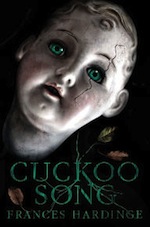 In Cuckoo Song by Frances Hardinge, Triss wakes sopping wet after a mysterious accident that’s wiped her memory. She soon notices slight alterations to her world: an insatiable appetite; a strained relationship with her sister, who fears her; and dolls that seem to come alive. This truly bone-chilling exploration of how families grapple with devastating loss will leave readers questioning who Triss really is and what happened the night of her accident.
We Were Liars
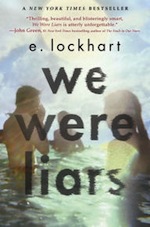 We Were Liars needs no introduction for most; but this suspenseful tale of a girl whose very existence revolves around the happy summers she spends on her family’s private island is one that begs multiple reads for the twists it reveals each time. This novel is where onion similes are born. With layers both beautiful and horrific and tension so anxiety-laden you may need a Xanax, E. Lockhart’s beautiful prose will captivate. Although experienced readers of psychological thrillers may anticipate the truth behind Cadence’s headaches and her family’s grief, the twist will feel no less gratifying (or haunting). Cadence is an unreliable narrator whom you feel for…and whom your heart breaks for.
Code Name Verity
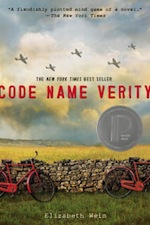 Code Name Verity by Elizabeth Wein is one of the most beautifully-written and authentic stories I’ve read about female friendship in years. Verity is arrested by the Gestapo in Nazi-occupied France when her British spy plane crashes…with her best friend in the pilot seat. The book reads as a confession as well as a recounting of the girls’ relationship and what led to the crash. The narrators are at once unreliable and sympathetic; and even as the “betrayal” of one leads to the death of another, both emerge as tragic heroines.
We Have Always Lived in the Castle
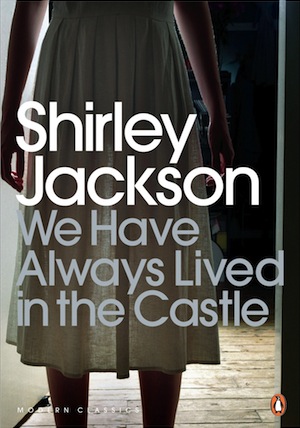 “Insidious” is the best word I can think of to describe the creeping, cold horror that slowly and deliciously unveils itself in We Have Always Lived in the Castle. I don’t want to give much away if you haven’t read it; but this particular books plays directly to my fear of betrayal at the hands of a loved one. (You might note that “betrayal” is a running theme in this post! And it’s the foundation of all great horror and every unreliable narrator.) Shirley Jackson masterfully controls her reveals bit by bit via the eyes of Merricat Blackwood. The overarching mystery concerning the Blackwood family’s isolation at their estate gives way to bigger themes of love, manipulation, ostracism, and the origins of evil. Pick this one up and be prepared to have your mind blown—this is best read on a sunny day with friends in tow.
The Turn of the Screw
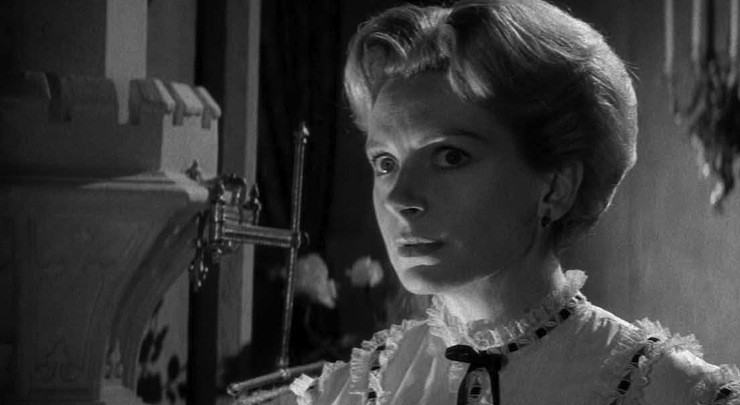
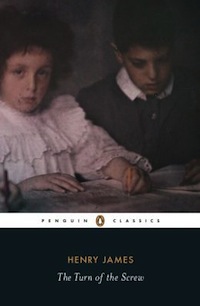 The Turn of the Screw by Henry James is a classic, ghostly tale and the first on this list written by a man! Interestingly, there are no clear answers at the end of this eerie story in which the governess might be mad or might be seeing ghosts. The ambiguous ending might frustrate some readers, but others may see it as a perfect example of open-endedness: either solution is equally satisfying and has equally chilling implications. I’m in favor of an ambiguous ending, because it avoids using tropes such as memory loss or even blatant lying to excuse twists the narrator is concealing. It’s also very, very difficult to set up two equally convincing outcomes, both of which confound a book’s audience.
Go forth and read these mind-bending literary masterpieces that may or may not leave you questioning your sanity!
Avery Hastings is the pen name of a New York City-based author and book editor who can often be found nosing through thrift store racks and lounging in the park with her friendly dog. Despite her burning love for unreliable narrators, she considers herself a solidly reliable teller of truths…at least off the page.

In one way or another, more or less everything by Gene Wolfe…
SchuylerH, yes! Severian was the first character that came into my mind when I saw the title.
When a narrator is revealed to be dishonest solely for the purpose of surprising the reader, I don’t count that as a true or classic unreliable narrator. That’s a pathological liar. A classic unreliable narrator, IMHO, carefully chooses every untruth and every piece of withheld information for the express purpose of achieving one particular overarching goal. The goal may be large or small, but it’s the focal point of the unreliability. Simple bald-faced lying about a particular piece of information, or even several pieces of information, doesn’t necessarily fall into that category.
Furthermore, and I think this may be even more important, a good unreliable narrator isn’t merely a liar. A true unreliable narrator (again, IMHO) is a performer. The lie isn’t just the story told: it’s how the story is told. Unreliable narration is a performance for the audience. Lying is just lying.
Speak of the devil, @ITregillis. I was just going to mention Something More Than Night…
@@.-@: Never heard of that one.
Try The Lace Reader by Brunonia Barry — Towner Whitney, the self-confessed unreliable narrator, hails from a family of Salem women who can read the future in the patterns in lace, and who have guarded a history of secrets going back generations. Now the disappearance of two women is bringing Towner back home to Salem—and is bringing to light the shocking truth about the death of her twin sister.
The book begins:
“MY NAME IS TOWNER WHITNEY. No, that’s not exactly true. My real first name is Sophya. Never believe me. I lie all the time.
“I am a crazy woman…. That last part is true.”
Agatha Christie had a couple, including And Then There Were None and Roger Ackroyd.
Still trying to think of a good SFF one.
The Sixth Sense movie is another one, although the protagonist is not intentionally misleading.
To Say Nothing of the Dog: or, How We Found the Bishop’s Bird Stump at Last by Connie Willis is a favorite of mine.
Christopher Priest also makes use of this: in The Affirmation, you may lose track of reality altogether. I think we can also include Akira Kurosawa’s Rashōmon (based on Ryūnosuke Akutagawa’s story In a Grove), where we are all revealed to be unreliable narrators.
Whole books of Alfred Bester, but also a short story, as the thermometer registers 92.9° gloriously Fahrenheit…
Sandy Mitchell’s “Ciaphas Cain” novels from the Warhammer 40K tie-in line, even the author admits he can’t tell just how unreliable Ciaphas is or which part of his narration is the unreliable part. Is he a good man in a horrible world hating on himself because he fails to live down to the appalling standards of the world he exists in, or is he a dreadful man who glosses over far too much to make himself look good? Or is he both? With another level added on that Ciaphas himself admits he is unsure, and also that the books are presented as his private memoirs as edited by a woman who was both Cain’s lover and also an Inquisitor for the most brutal regime ever to have defended humanity from even worse horrors. With footnotes. Sarcastic footnotes.
A Song of Ice and Fire, although it’s usually subtle.
One of my earliest, and still favorite, unreliable narrators is Corwin of Amber, from Roger Zelazny’s Chronicles of Amber. The man starts with a head injury, and then makes no bones about being part of a family of lying, backstabbing godlings and that as a bardic figure he is used to telling half-truths and lies…and he’s narrating the entire story to another character who he has very good reason to not be entirely truthful towards, despite their connection.
Where do the lies begin and end? With a crazy man in a hospital with a severe head injury, or a capricious demigod mistrustful of a possible ally? The second cycle isn’t any more reliable–at one point the protagonist is stuck in another character’s acid-trip induced Wonderland.
The RPGs later make this unreliability the basis of the tabletop game, with multiple versions of the canon characters and possibilities spun by the idea that Corwin and Merlin were lying, were lied to, mistaken, delusional, and so on. It certainly allows gamemasters and players a lot of leeway to tell their own stories of later generations of Amberites.
Frankenstein has three separate unreliable narrators all nested inside each other.
—Keith R.A. DeCandido
Blindsight by Peter Watts has a great one.
The movie “The Usual Suspects” will leave you reeling at the end!
@1 Yes! Gene Wolf is amazing. Studying for the bar exam right now so not reading complicated things – but if you want a scifi book to challenge you and one that will send you running to other places to see what he is talking about (what is Natrium why does it explode in water?) read Gene Wolf! GREAT stuff.
There’s strong indications that Patrick Rothfuss’s Kvothe is an unreliable narrator. I can’t way to get my hands on the last book next year and find out how everything develops.
Huh. And I had always thought an “unreliable narrator” was a non-omniscient first person narrator.
I’m disappointed that there turned out to be five books on this list….
@20: Every narrator other than the third person omniscient narrator is more or less unreliable, or, shall I say, not 100% reliable. I assume these ones are just particularly or predominantly unreliable.
Some narrators, first or third person, are unintentionally deceiving, while others are honest but may be delusional, or unable to understand what is going on, or aren’t in the position to know everything that is going on so their information is limited, or simply have their biases. Every narrator who is a character in the story, even the most honest and perceptive one, has a bias that colors how he or she presents the events and characters.
@13: The narrators in A Song of Ice and Fire are not particularly unreliable – only up to a point, as much as it’s usually the case in multiple third person POV structure (e.g. The Sound and the Fury by Faulkner, Dinner at the Homesick Restaurant by Anne Tyler…). Since they are not actually narrating the story – we just see things from their POV – we can believe that they really are thinking what they’re thinking (even though GRRM may sometimes conceal some of their thoughts intentionally to preserve a surprise, as e.g. in Daenerys III in A Storm of Swords, the second Astapor chapter) and that what they are witnessing and what is happening in real time really is happening (except for the final two paragraphs in one POV character’s chapter as they are literally going insane). But the way they interpret what is going on is colored by their biases, their knowledge is limited, and their memories may be fallible (there is one example that illustrates this by showing a changed memory of a scene from a previous book that was in the same character’s POV). A more obvious example of unreliable narration is when characters in-universe actually narrate stories to others, as well as the ASOAIF works written in the style of in-universe history: The World of Ice and Fire, The Princess and the Queen and The Rogue Prince. The maesters writing these histories are, of course, trying to present themselves as knowledgeable and unbiased authorities, as historians do, but, as it is usually the case with historians, you have to doubt their truthfulness in some cases because they are obliged to write things that are in line with the official, politically correct version of history (TWOAIF has a few rather funny examples of blatant lies and sycophancy regarding recent Westerosi history), it soon becomes obvious that they have strong biases due to their attitudes (skepticism about magic, in particular) which results in them rejecting the possibility of the existence of beings that we, as readers of the main ASOAIF series, already know are real. Their sources can also be suspect and contradictory – TPATQ and TRP in particular present examples of the “author” citing multiple sources that give completely different versions of certain events, and some of them seem likely to be exaggerated or completely made up for sensationalist purposes, while others were likely to be biased in some way; but in the end, we are left to judge for ourselves which, if any, version is true, or if it was something in between, or something completely different.
@22 Nice thoughts. There are narrators who are unintentionally misleading in ASOIF but more so in Wheel of Time. Mat, for example, is self involved and misses whole pieces of information happening to others around him that would be useful for the reader to know – that analytical/puzzle piece is part of what makes WoT fun to me. The piece here seems to focus on those who are intentionally misleading the reader.
@19 – strongly agree. Kvothe (as himself, as Kote, or both) is potentially the most interesting misleading narrator case in the books I have read over the past few years, whether intentionally, though some form of mental impediment or both. .
@23:
My money is on both.
While there are problems with the work, I found Mission: Earth to be very enjoyable, primarily because it is framed by the narrator telling his version of events to his jailor, and it is so obviously one-sided and unreliable, but Hubbard manages to still let you, the reader, know what’s really going on anyway. Its unreliable narration, but the narrator is so BAD at hiding what really happened, that the audience still knows. I found that particular aspect of the story immensely enjoyable.
Unreliable narrators: Don Quixote
Nabokov’s “Lolita” is told by one of the most unreliable narrators of all time, the pseudonymous Humbert Humbert.
As far as more YA (but very good) books go, the Queen’s Thief series by Megan Whalen Turner heavily uses the unreliable narrator, especially in the first book, The Thief.
@26 – OMG yes. Parts of that book are vile and disgusting, but it was honestly one of the most powerful books I’ve ever read. It stayed with me for a long time.
I was going to chime in and mention Faulkner’s As I Lay Dying (I was really into that book in high school) but I can’t think of any sci fi/fantasy examples that haven’t been given already.
I find it nearly impossible to have a discussion of unreliable narrators in SF/F without giving mention to Gene Wolfe. In fact, I’ve heard his entire Solar Cycle (The Book of the New Sun, The Book of the Long Sun, and The Book of the Short Sun) described as one extended experiment in unreliable narration:
The Book of the New Sun gives us the seemingly perfect reliable narrator, but in the end shows how even he can’t be taken at face value.
The Book of the Long Sun presents with a seemingly omniscient third-person narrator, but reveals the narrator’s identity at the very end, causing the reader to re-think the entire story.
The Book of the Short Sun features a narrator who is in denial and lying to himself.
All of which is handled subtly–in fact, so subtly that you can almost miss it. It’s no wonder that Wolfe is often considered one of the most “literary” of SF/F authors, and also no wonder that many people find him difficult to read–though the rewards are well worth the effort,
How about Kyon for the Haruhi Suzumiya series?
Liar by Justine Larbalestier. Unlike the more common unreliable-narrator story where doubt creeps slowly into the reader’s mind, in this book the unreliability of the narrator is confessed up front from the beginning, but it is more convoluted than it may seem at first.
This book also had a particular problem with the first cover because it was white-washed, calling into question the narrator’s race, which wasn’t supposed to be part of the unreliability. The book was soon reissued with a cover that was more true to the story.
This may have been obliquely mentioned, but there is an Agatha Christie novel in which the narrator turns out to have been the murderer.
(1)There’s always Huck Finn, whom we suspect almost from the start is hardly the naive hick he s’posed to be.
(2)And re Henry James: His Turn of the Screw ending was obviously a butt-covering device. If anyone called him on it, he’d probably say he got the idea from Nathaniel Hawthorne, whose stories (The Scarlet Letter, say) never really end, leaving the reader “sitting broken hearted,” to paraphrase the boy’s room grafitti of my youth: Pseudo endings like: “But Rev. X says such-and-such happened. But then Mistress Goodie swears it was a raven, not an angel. . .” WEB DuBois says what else can one expect in an ambiguous world?
(3)As noted earlier, SFF’s not that much of a venue for so-called unreliable narrators–those who tell us what they saw but can’t evaluate it–since most academies of space-craft and mage-craft won’t grant a degree unless the student has mastered both definitions of “perception.”
What I like about Kyon’s unreliable narrow status is that it isn’t so much that he is lying on purpose as that he is more in a state of semi-willful denial
It’s not a novel, but I’ve never forgotten Zenna Henderson’s ‘One of Them’, from her ‘Holding Wonder’ anthology.
He’s been mentioned, but he bears repeating: everything by Gene Wolfe–including, I strongly suspect, all of the books written in 3rd person as well. The Solar Cycle has been mentioned, as well it should, but the one that always comes to mind first for me is his novel Peace. The number of internal contradictions and outright lies you can catch that book’s narrator in is outrageous, and glorious.
A friend of mine did his undergraduate English thesis partially on Lolita, and he ended up holding that if you follow that book’s internal clues to their logical conclusions, most or all of the people in it (including Humbert himself) don’t actually exist.
It’s surprising that no one mentioned Malzberg’s Beyond Apollo, one of the most underrated sci-fi novel ever.
@23
It seems to me there’s a big difference between an unreliable narrator telling a story in 3rd personomniscient and am unreliable protagonist.
My favourite is Kaaron Warren’s Slights. Horrifying, wonderful — it owned me while i was reading it, and even though that was 5 years ago, it feels like it was just last week.
A favourite of mine is Ian Pears’ “An Instance at the Fingerpost”. An historical drama surrounding a death is told from the perspectives of several different characters, none of whom lie outright, but all of whom omit or rearrange certain facts to present themselves in the most heroic or sympathetic possible light.
I just came across David Herter’s short story (“Islands. . . Capitola”) on this website and I’m about to dig into it, partly because the blurb hints we’ve an unreliable narrator or main character in there.
I read it. Oh God . . .
@40: What a coincidence — I just reread that about a month ago. I read it in the 90s and recently found myself talking about it so much I had to experience it again. (And somehow over the years I had forgotten everything about it, except how much I enjoyed it.) I agree, it’s a great novel.