


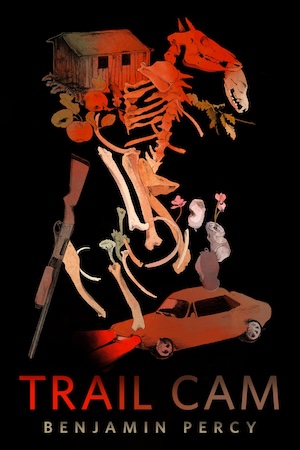
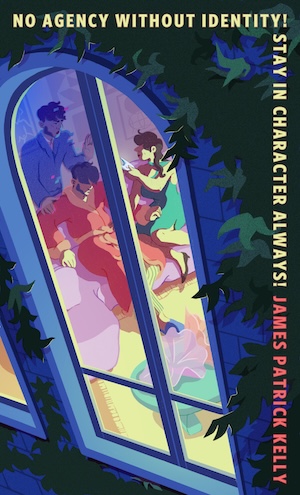
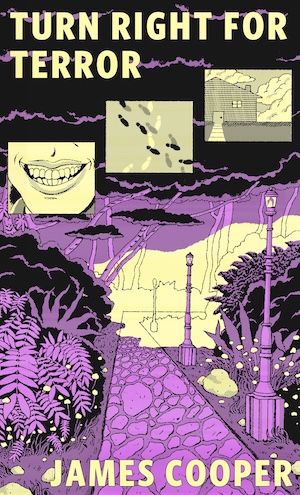
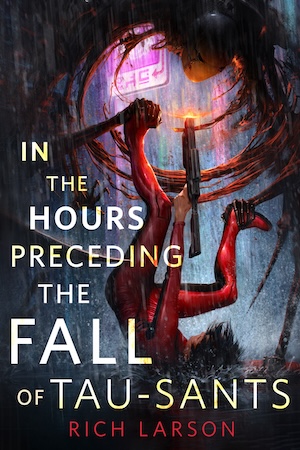



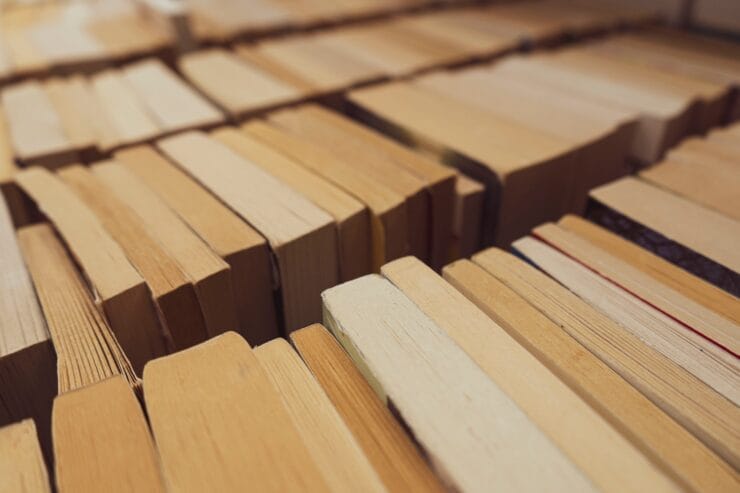
I’ve recently have rediscovered my love of physical media, in particular books. No format is as close to my heart as the humble mass market paperback, whose virtues I would now like to praise for about eight hundred words.
Mass market paperbacks were intended to be cheap, disposable alternatives to proper cloth-bound books. Indeed, paperbacks are so disposable that when bookstores return unsold paperbacks for credit, they only send the covers. The discarded, broken-spined contents are consigned to recycling. So, what’s to love in a format seemingly one step up from trash?
When I was young (he said, adjusting his suspenders for greater comfort and relocating his cane for more convenient waving) paperbacks had a multitude of superlative qualities, of which these are but five. Three were obvious to me even as a teen. Two I only came to appreciate later.
First, of course, there was the price.1 When I was first enticed to collect my own copies of books, a hardcover would run five dollars, whereas a paperback might be seventy-five cents. Five bucks was a lot of money for a kid, whereas diligent scrounging under seat covers might very well turn up three quarters. Paperbacks are no longer seventy-five cents and the price ratio between hardcover and paperback is no longer as dramatic as it was back in 1971, but paperbacks are still substantially cheaper than hardcovers.
Second, paperbacks’ small dimensions are convenient2. More paperbacks can fit on a shelf of any given size than can hardcovers. Shelves for paperbacks can be pegged closer than shelves for hardcovers. Also, a mass market paperback will often fit into a pocket, whereas a hardcover demands a briefcase or backpack. Thus, paperbacks are easier than hardcovers to store and to transport.
Third, paperbacks were ubiquitous3. If there wasn’t a bookstore to hand, any drugstore, convenience store, department store, and/or hardware store was likely to have a spinner rack of paperbacks. Because this was before the age of distributor consolidation, each store was likely of offer a different selection of books.
Fourth, while they were intended to be disposable, paperbacks are surprisingly durable. This is not survivorship bias. Most of the paperbacks I purchased in the 1970s, which I will very grudgingly admit is up to half a century ago even though I myself am still an energetic young man, survive. The exceptions are for the most part books from publishers notorious at the time for exceptionally shoddy products, books that fell apart a few weeks after purchase. Frankly, I am astonished that paperbacks proved so durable—if nothing else, I expected acid-rich paper to dissolve itself—but the evidence in the form of my paperback-covered walls of vintage SF speaks for itself.
Fifth, as I read late 1950s and early 1960s commentary about speculative fiction, the more it seems paperbacks might have saved the genre. As you all know, until 1957 the American News Company dominated magazine distribution. It was liquidated in 1957, dooming a considerable number of magazines, which at that time served as the principal venue for SFF. Earl Kemp’s 1960 Who Killed Science Fiction? conveys the general sense of gloom following this extinction event.
Curiously, the contributors to this book appeared skeptical that paperbacks could replace magazines as SF’s primary venue. Nevertheless, by the time I began collecting, paperbacks appear to have done just that. Which, given that there were a lot fewer SF magazines in 1971 than there were in 1956, is probably for the best, at least from a reader’s point of view.
A recent visit to my local soulless bookselling behemoth suggests that the glory days of mass market paperbacks are gone. Factors such as smaller print runs and the emergence of ebooks appear to favour more expensive physical formats like trade and hardcover over paperback. This is a tremendous pity; it’s a good thing I have walls of paperbacks to console me.
In the words of fanfiction author Musty181, four-time Hugo finalist, prolific book reviewer, and perennial Darwin Award nominee James Davis Nicoll “looks like a default mii with glasses.” His work has appeared in Interzone, Publishers Weekly and Romantic Times as well as on his own websites, James Nicoll Reviews (where he is assisted by editor Karen Lofstrom and web person Adrienne L. Travis) and the 2021, 2022, and 2023 Aurora Award finalist Young People Read Old SFF (where he is assisted by web person Adrienne L. Travis). His Patreon can be found here.


As another fan of the mass market paperback, I think they’ve sadly ceded ground in the face of digital books. That has a whole host of problems, unfortunately (real lack of ownership, price control, access).
Still, I do love going into used bookstores and finding old mass market paperbacks, or aiming for that style when ordering from Thriftbooks.
I liked how paperbacks allowed publishers to put a price on being able to buy a book sooner rather than later. By my day, you could spend 20-30 CAD on a hardcover or wait a year and get the paperback for 10-12ish. Maybe publishers should announce when e-books are no longer overpriced to avoid eating into the hardcover’s sales.
I agree with all of the above!
My SF addiction started with buying Andre Norton’s Catseye at the local five and dime store. Space Cadet soon followed, and 50+ years latwr, here I still am.
Many moves and worsening eyesight means that most of my old paperbacks have morphed into ebooks, but the ones I still have, including that copy of Catseye, are still perfectly readable.
I love mass market paperbacks. My favorite one was my mm Jacob have I loved copy. I had found one in a little store when my parents took our family to the beach at Cambria when we were children. It was my favorite one. Several years later I loaned to a friend and never got it back. Kind of broke my heart a little because it was all wrapped up in my memories of the beach trip. I never loan out books. Ever. The one time that I do.
Definitely the most convenient format for the more-than-casual reader (the one who builds up a shelf or more of favorite books with the intent to reread someday). I think the cost was more like 40 cents when I started buying them (early 1960s). So around the same as a pack of cigarettes back then.
The demise of American News may have pushed more authors into submitting novels, short novels, and long novellas for paperback publication, but it was in combination with the Soviets putting up Sputnik that it saved the genre commercially. At least until the late 1960s fantasy boom could take off. The number of novels in the genre doubled after that 1950s confluence of circumstances.
I agree that most of the very old mass market paperbacks I own have held up surprisingly well. It’s too bad the publishers want to kill the format off. It just means I will be buying fewer books.
Re footnote 2: There is alledgedly a College in Cambridge that constructed some additional storage for the College Library under their Fellows Garden on the banks of the Cam. During construction pumps were used to keep the hole dry, once it was finished and loading of shelves with books started the pumps were removed and the garden restored on top. The Librarian has to keep the contents of the room within certain mass limits to prevent unwanted vertical movement.
Unfortunately my income is also capped, or $10 a book wouldn’t be such an investment risk. :/
Re: fn3. I recently learned the hard way that if you’re going to move a thousand-some books out of a second floor apartment, you definitely want to choose small sized banker boxes over large.
5 I don’t think publishers want to kill mmpb so much as the format is much less economically viable than it was even 20 years ago.
Having worked in bookstores on and off from the ’80s to the oughts, I can say that the demise of the mass market size and subsequent rise of trade paperbacks comes down to two words: baby boomers.
As the boomer population aged, eyesight became an issue with many of them, and trade paperbacks offered larger print that didn’t need squinting at.
Another possibly unexpected advantage of paperbacks: When I was growing up, my local public library purchased genre paperbacks by the pound. At the time, I thought that was nuts, but it was good for getting a representative sample of the field, without filtering.
According to David Hartwell, what killed the mass market paperback in the US market was Walmart, circa the early 1990s. Walmart at that time dealt with hundreds of local wholesalers, and hated it. So they simply stopped doing that and in California switched to dealing with just the two largest wholesalers: and the same in other states.
The effect was a consolidation of wholesalers, which in turn led to loss of institutional knowledge of which subgenres sold best in the wire racks in which neighbourhoods — instead of knowing that the area around a technical university bought lots of SF or a particular dormitory suburb consumed lots of romance, they just stocked the national top 50 titles and shoveled them out indiscriminately. Which led to a huge loss of diversity in the market and a death spiral for midlist authors in MMPB format.
The authors were then saved by the rise of the big box stores (Barnes and Noble and Borders) who shoveled out hardbacks. An author might only sell 8000 hardcovers rather than 40,000 paperbacks, but they’d get roughly the same amount of money from them (hardcovers not only sell for more but pay a higher percentage of the cover price in royalties).
Ebooks rang the changes again, and have their own advantages for authors (no remaindered stock, all sales are final, everything can stay in print effectively forever, instant gratification — ahem, when the reader can find the bloody thing, Amazon have totally broken their ebook search in recent months).
But the decline of the MMPB goes back to the early 00s and doesn’t really have anything to do with boomer eyesight.
(Note that the trade/mass market channels operate differently in other countries; for example, the mass market imploded in 1991 in the UK and there are no mass market books any more, just small trade paperbacks.)
Chapters “corrects” search terms now.
On the other side of the argument, paperbacks are so shoddily printed that some of my friends’ author copies have fallen apart in their unopened boxes. The paper disintegrates and produces a dust that some of us are allergic to, and the paper absorbs odors which is particularly annoying in library books. Cigarette smoke and cheap perfume. Sneeze. The paperbacks I’ve kept for sentimental reasons are in an air-proof container in the deepest, darkest part of a closet to keep them in one piece.
Also, font size.
I think another factor to be considered is artwork. Not sure of the contributing factors, but 70’s – 80s paperbacks would routinely have wonderful cover art by Sterrnbach or Burns or Ellis or Difate or Whelan, whereas hardcover versions when they were even available were comparatively prosaic in design. And it’d be silly to think that this wonderful art never sold the book, or even introduced a fan to the genre.
If memory serves, paperback copies of King Lear and Paradise Lost graced the bookshelf of the Botany Bay in Star Trek: The Wrath of Khan.
Now that’s durability for you!
I loved mass market paperbacks when I was young. It’s easier to find a purse to slip a paperback into than a full-sized iPad. However, I was never comfortable with older paperbacks – the musty paper smell did a number on my sinuses. Now I can’t read even new ones. The print is uncomfortably small and too often the gutters are too narrow, forcing you to break the spine sometimes to read the inner ends of lines. It’s much easier to read on an iPad while you’re brushing your teeth.
@3 I started with Andre Norton as well, but for me it was The Zero Stone and Uncharted Stars. There was a spinner-rack (remember those?) of SF and fantasy at the local book-and-stationery store.
@9: Is there a source for the lower economic viability of mass market paperbacks? Other than that the cover price being less than the other formats, is the cost of printing them so much higher proportionately? But maybe the internal economics of the publishing business is too opaque nowadays.
@12: Not sure if this came from Hartwell, but I have heard that it was the decline of spinner racks and the stores that traditionally had those which did in mass market paperbacks. Which could have been related to distributor consolidation but also to the decline of small “Main Street” stores where spinner racks would often be found: grocery stores, drug stores, news stands, etc. Which mall stores and Walmart would have had some role in bringing about.
One thing I notice on genre Reddit sites is that at least half the books mentioned in the “What Are You Reading This Week?” topics are more than a couple of years old. And the new books mentioned seem to be a handful of titles that many people are reading. How much that has to do with changes in format and how much is just reluctance to check out newer works is not clear to me.
Mass markets were my first love beginning with a copy of Arthur Clarke’s “Islands in the Sky” that I purchased off a wire rack from the corner mom and pop drug store. I pretty much centered my life around mass markets through high school and the first few years of college and you could find a vast array of reading material including nonfiction titles on the format.
I got a job at a college town bookstore in the mid-eighties that was part of a small Michigan chain owned by a rack-jobber that made so much money stocking the mass market racks of gro that they opened stores themselves just to vent some of their cash. The majority of the store’s inventory (outside of a vast magazine section) was mass markets with only a small number of trades in the nonfiction categories. I was only there for about a year when trades exploded and, along with the then new music format of CDs, became the hot new object of yuppie conspicuous consumption. I even recall The New York Times running an article about it at the time and mass markets subsequently began disappearing from stores surprisingly quickly.
While my own library is heaviest with hardcovers and trades I still have a large chunk of my mass markets and of late have been pulling out titles to reread that I first enjoyed while in junior high and high school (I’m working my way through my Zenna Henderson titles at the moment). I have hopes that one of these days the next microgeneration will stumble onto the format and make it a fad for a few years. Sadly the mass market’s days may finally be at hand. Barnes and Noble has crowded their remaining inventories into a small ghetto bay in remote corners of their stores and has made known their intentions to phase out the format in the immediate future. Fortunately the real riches will always be found in a truly good used bookstore.
I love vintage paperbacks (1940s-1980) with a deranged, dragonish, hoarder’s love, and have since the late 60s, when they mostly weren’t yet vintage. This is partly nostalgia, partly because of the cover art (which plucks chords on the strings of my memory, but is often remarkable in its own right). My feelings began to cool in the 80s for a bunch of reasons, partly because the cover designs were blockier and more schematic, and the art coarser (with memorable exceptions like the Timescape series from Pocket Books). Also, paperback prices really climbed in advance of inflation, as mentioned upstream. In 1970 it was pretty common to find new paperbacks for 75 cents–that’s US$1.76 in 1981 dollars (according to the US Inflation Calculator). But by 1981, standard MMPB were running US$2.50, and they only went up from there.
Alas, poor Yore-book. I knew him, Horatio, etc.
I remember when I could finally drive to Denton, TX on my own and visit a small hole-in-the-wall bookstore that had one of the best F/SF sections I’d ever seen. I’d regularly buy $10 worth of paperbacks, which were quite a few back then. For years I always had one with me (if thin enough, in the back pocket of my jeans). I never went anywhere without my emergency MMPB. I still carry one on planes in case some air tyrant won’t allow an ebook reader on takeoff or God forbid the battery go.
When I could afford it, I started buying hardbacks as soon as a valued author’s book came out. Then when the paperback came out, that became my usual reading copy, so the hardback could be kept in pristine condition. MMPB was MUCH easier to carry around. Now, sadly, I don’t buy MMPB anymore. The e-edition has taken its place. I’m also older and the customized print size is much easier to read than most MMPB. I still hunt down valued MMPB of favorites, such as the old Ace Books LOTR and the first Ballentine edition.
The format I despise and try to avoid is Trade Paperback. The size problems of HB with the fragility of MMPB. I have no idea why they became popular.
Let me just say, as an independent publisher of a short fiction magazine who is looking to expand into paperbacks next year, the MMP might end up making a comeback…
Ah yessss. The joys of the department store, drugstore, hardware store, candy store racks! (And don’t forget: Hey, kids! Comics!) I think the first pb I bought for myself was either a Dark Shadows novel or a Doc Savage, probably World’s Fair Goblin. But I still have a few of the Scholastic Book Service book my parents (and my aunt) would buy me betimes.
(The first real HC, as opposed to SFBC volumes, I bought? That would be The Dispossessed. The local bookstore owner let me put it on layaway so I could buy it over a three-week period.)
I still have at least a thousand MMPBs, probably more — I don’t have the energy to count, but multiplying one shelf by the number of shelves gives me 1250, which I find on the high end of believable… but then there’s all the unshelved ones about the house, and I didn’t count the mixed shelves in the foyer, or my short-term TBR shelf upstairs, so I suppose it could be as high as 1500. I’m a hoarder, I am, but have reached a point where I have to dump book — mostly into the local “little library” birdhouses –because my beloved spousal overunit won’t allow me any more space to put shelves in.
That said, I am equally happy with MMPB, TPB, HC, and EB formats, though there are a few writers — maybe a dozen — for whom I will insist on buying physical books when they come out, even though I have to winnow something else to make room for them. There are a couple that I will only buy in MMPB, and only when they show up on the grocery store rack, for reasons even I don’t quite understand. There are others that I only buy in ebook format to save space.
There are a lot of factors that went into the slow death of MMP. Regarding footnote 7, I worked in a bookstore in the ’90s and can say that when publishers announced they were going to start raising the price of paperbacks, the reaction from book-buyers was angry and *loud*. So publishers backed down, and announced that they would find other ways to control costs and keep the price of MMPs low.
Today MMPs are relatively inexpensive, but cheaply made. The spines warp quickly. In some cases they’re warped even before you get them out of the box and onto the shelves. And publishers are slowly replacing MMPs with TPB editions, which cost about as much as a MMP would cost if the price had been allowed to go up with inflation. (Or at least that’s how the math worked out when I ran the numbers before Covid.)
Another win of mmpb: they were cheap enough that some people would either pass them on directly, or store them (so much less bulk) so that an heir would pass them on to a used-book sellers — including those who lugged a van’s worth of books to conventions. I remember, back when I was on more-uncertain footing, coming back from a convention (~40 years ago) with 6 shelf-feet of books I hadn’t read (or wanted to reread) for about $100. I no longer have that kind of space, and these days it’s possible to get almost anything from some library — but at least as late as the 1980’s most novels were coming out only in pb (I remember an author mentioning their surprise when their publisher said ~”You’ve been doing well enough that we want to do your next one in hardcover.”), which many libraries wouldn’t buy due to quality issues (real in the case of construction, debatable wrt contents.)
And mmpb were good for long trips; my suitcase would have been unliftable if it had enough hb for a 2-week trip.
The spinner rack may be dead along with the corner drugstore, but I see substantial book racks in the chain drugstores and even grocery stores. (Our columnist may be old enough to remember when grocery stores just carried groceries….) I’m not sure the total display space has gone down. I do wonder whether large stores think mmpb are too easy to steal.
@22: The size problems of HB with the fragility of MMPB. I have no idea why they became popular. IME, trade pb have hardback-quality paper and better bindings than any mmpb — still glued rather than sewn, but the glue is thicker and more flexible. YMMV.
@10:
Being one of those aging boomers, I disagree with your comments about eyesight. I still find mass-market paperbacks quite readable, in the same way that I find the New York TImes to be perfectly readable. On the other hand, I never borrow large-print books from a library, despite being in that format’s demographic: I find them difficult to read.
For me, contrast matters a lot more than font size.
I would think the Thor Power tools decision, with it’s impact on inventories also had an effect.
I remember that Denton bookstore mentioned in comment 22, at least I’m pretty sure it’s the same one, just across the street from the university’s English and Foreign Language buildings. A significant number of my mmpb’s were bought in that store, or from the same bookseller when she moved to Hurst about the same time I left Denton. That was the first place I could count on to carry lots of SF, especially the then new DAW books with the distinctive yellow spines.
@29: Hartwell commented on multiple occasions that Thor wasn’t actually significant to the publishing industry. At various times he was high enough in publishing hierarchies that he might have known what he was talking about, in this and/or in his comments in @12 about the effect of Walmart, or he might not; unfortunately, he’s not around to ask about evidence. However, I suspect Thor had (even?) less effect on mmpb than on other parts of publishing, because it affected how inventory was valued — and as @0 notes, mmpb were so unvalued that vendors simply trashed unsold copies rather than returning them. (I have heard that there were a lot of copies trashed — that getting back only 50% of the copies that actually made it onto retailers shelves was considered a decent achievement — but I’ve never worked for a publisher such that I’d know about this for certain.)
Not sure if they count as MMPBs, but the Armed Services Editions from the early 1940s have held up very well. I love the shape, designed to fit in the breast pocket of a uniform.
Absolutely agree on Lancer Books!
In my experience the best way to move books is with grocery bags.
Whether paper or the reuseable plastic ones, they make for standard sized, stackable packages and the reuseables have handles. Tape helps with the paper sacks.
And the packaged books are neither too heavy nor too bulky to carry.
I love mmpbs! AndI look back now, in this insane era, at the spinner rack of paperbacks that my high school posted right inside the front door, with special appreciation. Plays, genre fiction, “straight” fiction, non-fiction, everything! And get this: at 25c or 35c (if it was a fatter book) a pop! yes, I’m old.
Like many others here, I’m a big fan of the paperback for simple space reasons – I can fit more books on my shelf space. It’s also why I was outraged when the UK market shifted from A format to B format – A and MMPB are close enough in size to pack intogether. B format requires separate shelves. Apparently it was demand driven, people thought the larger size was higher status. All I know is the new ones no longer fit in my pocket and cost more.
Amusingly you can trace the flow of pb sales channels most easily by the covers – in the old days of spinners, you had lurid Frazetta style covers designed to appeal to the men who drove around and kept the racks full – they liked buxom women so got lots of em.
As sellers moved from spinners and face out displays to Borders and long shelves, the spine design became much more important, and usually thematically linked authors and series books together.
The modern trend to stylised aesthetics isn’t a trend as much as it’s a reaction to needing to have covers that scale well from full size to thumbnail for browsing online. The noisy covers of the 90s look terrible in a thumbnail on Amazon.
Also the best way to move books between flats I’ve found is with A4 copier paper boxes – they’re small enough that even jammed full you can’t actually overload them more than you can lift, while being sturdy and easy to stack.
I sincerely doubt that ebooks will still be readable in 50 years.
“That said, if you’re moving a few thousand paperbacks, use small boxes, not large.”
I have found that the boxes that photocopier paper comes in are the perfect size for moving books, and you can badger your friends and relatives who still work in offices to bring home one or two per week prior to your move.
“the rumored perception that readers are not willing to pay much more than USD10 for a paperback.”
I might pay more than that for a mass market paperback. I will NOT pay more than 10 for an eBook. The way they try to charge 12 or 15 dollars for an eBook which we don’t OWN like we own a physical book (we just LICENSE the eBook, a license which can be revoked at any time) … it’s just WRONG.
You missed one great reason: you can take a mass market paperback to the beach or wherever and not really worry if it gets wet or damaged or stolen, because it’s not a huge investment. I’m not risking a $30 hardcover or a $100 Kindle in a laundromat.
I have a collection of literally thousands of MMPs, mostly purchased new from bookstores.
When I read them I go to great lengths to never break the spine because it will lead to the book falling apart.
For storage I ordered boxes from a manufacturer that were 7″ (the height of an MMP) by 18″. I seal the bottom and fold in the top flaps and store the books vertically where they are protected from air and light. They’re stacked on industrial shelving in my rec room and it’s not pretty but the books are pristine even after decades.
In the UK they seem to have generally kept the paperback-hardcover price differential at around three to one. When I started buying books in large quantities (in the early 1990s), mmpbs were around £5 and hardcovers around £15. These days mmpbs are around £10 (and occasionally a bit more) and hardcovers between £25 and £30, so the ratio seems to have more or less stayed the same. Modern UK mmpbs are far superior to the old ones though, with frequently much more beautiful artwork, embossed covers and they never smudge at all, nor fall apart (almost all my mmpbs with smudging problems or disintegration issues are American imports). The biggest issue with UK ones is how they’ve crept up in size over the years, an interesting choice given the cost of paper and bookstores complaining about shelf space.
On the reverse side of things, UK hardcovers used to be an absolute embarrassment compared to the quality of US hardcovers, mainly down to the terrible binding techniques.
@1: I’d be interested in seeing current stats. I know that there was an explosion of ebooks from almost nothing to around 25% of the market by around 2015, but there was an actual retreat in the ebook market share by 2020. Both physical books and ebooks actually faced a join and much stiffer challenge from audio books, which is where the real surge happened. At least up until the pandemic, physical books seemed to have dealt with the challenge of ebooks much better than expected.
@10: Yes. As someone with poor eyesight even when younger, I found hardcovers and tradebacks to be much easier to read (and still do!). In the UK, in fact, mass-market paperbacks have themselves gotten significantly bigger, now running to around halfway between the standard US mmpb and a tradeback/hardcover in size. That change was very controversial when it happened (about ten to twelve years ago) but seems to have been driven by the perceived need to offer larger font sizes. I have some late 1990s Peter F. Hamilton novels where the font size is ridiculously tiny (The Naked God in particular is 1200 pages of tiny font print, which is not ideal).
@26 — I believe that I am a year or two older than Our Host, and I am not old enough to remember a time when grocery stores sold only groceries (if, indeed, such a time ever was): they not only sold oddities like shampoo and light bulbs, but also magazines and, in some stores, books, certainly by the time I was five.
@32 – I used to have one of those Armed Forces books, a copy of my favorite Steinbeck novel ( the much-maligned The Moon is Down). I wish I knew what happened to it…
@41 – The ratio of a new SFF paperback to a new SF hardback here is down to about 1:1.5-1.7, with outliers.
I love great cover illustrations, and the ones on the mass market paperbacks were the best. That harsh Darwinian struggle to be noticed in the spinner racks drove publishers to hire the best artists available.
And thinking of the best artists reminds me of Frazetta, and my old Lancer Conan paperbacks. They were indeed the worst-made paperbacks in the industry. And the stories were so good, I read them repeatedly, so they didn’t even last until I went to college.
As an academic, I must agree with the poster Mayhem @36 that copy paper boxes (here in the States for 8½×11 size) are great; I have 15 or 20 of those full still (not enough shelf space) together with a few boxes that my previous institution used to purchase paper towels in, in bulk. Those were larger but still able to be carried. I estimated at one time around 8000 books.
Unlike others here, I am replacing them with eBooks as I can, because (while I am concerned that they may disappear) I can’t manage the quantity of books and we would have to downsize if we moved.
Still the best format for reading in the bathtub.
@45: YES!!! 🤣
Yes, yes, and yes. I have many and they’re the format I prefer – they just toss in a bag so easily for reading on the go in a way that other formats don’t. I had some paperback or another with me pretty much at all times as a child!
@26, @42 I was born the same year he was, and I remember buying books, comic books, and LP records from our neighborhood grocer…
Print runs used to be much larger in the old days, which has the odd consequence that it’s often easier to find MMPBs from the 1970s and 1980s than it is to find post-1990 books used.
Having just completed a move, I found egg boxes worked great for my mass market paperbacks. Handles in the boxes were perfect. I also agree that smaller more boxes was more ideal than larger boxes (like the copy paper boxes mentioned.
I have fond memories of my local drug store spinner racks of comics and westerns in my younger days. I also had a couple of good used bookstores were it was easy to get several paperbacks for just a few dollars. Now days, unless it is a favorite author, I only shop used.
Ah, the spinner racks! They fueled my love of Harlan Ellison. I’d picked up a few of Harlan’s collections from the Science Fiction Book Club during high school. My freshman year of university, the local head shop had spinner racks at the front, with all of the Ace paperback Harlan reprints. I’d pick up a couple, devour them, then go back a couple of weeks later for more. Rinse, and repeat, by the end of the year, I’d read just about everything he’d written, to date. And Ace was a quality publisher. They’re still in fine condition.
Re footnote #6:
I remember Lancer PBs. Also Avalon and Airmont, which published such immortal gems as Invaders From Rigel (Fletcher Pratt) and Lords of Atlantis (Wallace West).
(Those predate the Lancers that populated the SF shelves in the bookstore I haunted many afternoons on my journey home during HS. I’m sure I inherited those from my Mom.)
Those were crumbly enough that I resorted to scanning them to PDF in order to preserve them for my library.
@51 – I also bought a slew of Harlan Ellison PBs while in HS. Pyramid published a bunch of his work in the mid 70s, all I think with cover art by Leo and Diane Dillon, including The Glass Teat, The Other Glass Teat, Spider Kiss, Love Ain’t Nothing But Sex Misspelled, etc.
@51 & 52 — I have a bunch of the old Pyramid (and a few of the Ace) editions too. The Pyramids came out when I was in HS. Good times. I still reread the Glass Teat books occasionally.
I’m shocked at the nostalgia for spinner racks… I don’t remember ever buying a paperback from one, just the occasional comic book or Popular Science. Paperbacks don’t even display particularly well on spinners IMO.
I think I am in the same age range as JDN (mid-Gen X) and when I was young and living in Ontario, the places I bought books were WH Smith and Coles, actual book stores.
Personally, I have no particularly strong love for paperbacks. Their biggest advantages to me are one-hand-ability and back-pocket-ability but I get that just fine with ebook readers. I don’t miss having to carefully open the book in order to not crease the spine, especially with the longer and longer novel sizes over the last couple of decades, which also decreased the two advantages above.
I do miss me some Boris Vallejo covers though (The Magic Goes Away is one of my all time favourites). It’s just not the same in black and white e-ink.
54: I think I am what is called a Cusper, just old enough be a Boomer without being old enough to have enjoyed the benefits, only consequences. Older boomers got the Summer of Love [1] and the Sexual Revolution. People my age got to deal with antibiotic-resistant STDs, HIV, and safer sex. When I was a teen, there weren’t many chains that made it into Waterloo, Ontario. I remember being excited when we finally got a Coles, but I still made regular bookshopping trips to Toronto,
1: Yes, I was in San Francisco for the Summer of Love. However, I was also six at the time so it was not an event with personal relevance to me.
55: I was previously unaware of the term “Cusper.” As we did not have most of the Boomer-defining experiences (no “Howdy Doody,” no Uncle Miltie, no Eisenhower presidency; I barely remember the Kennedy assassination); and as the generation-defining people pretty much ignore us; and as we were the first age cohort to really support punk rock — du to all these things and more, I some years ago coined the term “No-Wavers,” and I am willing to die on that hill.
I think we awkward late boomers are also called Generation Jones. However, don’t claim to be Gen X. It riles them.
@55 &56; some good terms there; whatever it’s called, I fit into that late-Boomer grouping myself. Perhaps for that reason I’ve always disliked the simplistic division of people into categories simply because they happened to be born between particular dates.
One advantage of entering my teens in the early 1970s, the time in which I began purchasing paperbacks rather than having to reply solely on the public and school libraries for my SF fix, was that around that time American paperbacks were starting to show up locally. Due to the complexities of various international publishing agreements the Australian market was dominated by British-published books (and still is). While this resulted in SF paperbacks being sold here under imprints like Panther, Pan, Sphere, Penguin, Corgi and New English Library the range of material on offer was narrower than the US output, and British PBs tended to look more sedate – almost respectable! To my youthful eye, the brighter -often lurid – American PBs were much more interesting, and I was very happy when they became much more common here. When I first encountered a specialist SF bookshop circa 1975 (Galaxy in Sydney, which is still around) part of the thrill was that well over half of their stock was American.
Regarding the Armed Services Editions:
“How the Humble Paperback Helped Win World War II – A new exhibition tells the story of the Armed Services Editions, pocket-size paperback weapons in the fight for democracy.” (New York Times, 10/6/2023)
https://www.nytimes.com/2023/10/06/arts/paperback-world-war-ii-grolier-club-nyc.html?unlocked_article_code=lOA8t0mbw1JpSywe6PqDdiygV8r6ijh1rqyiIDZ8iyJv6WDO7QIfC9H7A5NXWdShrB1H-7_46flQ5KAuwEyL-Euu20WtFiPsfrJF7jJ7UplMfWJ8cOnppUdIyV4Sb6c_1ELmZbQHIdsesX3P7fyfB6fdOthomkGHNKl4KIIs7DUhBPDQgbUig58Gbzuja7wp9DUDJCkOuWNJK-n7LffKRWCwZQVg8t_EQs-fNXaM88Bm2tkCstiP2ax_6-iqmVh_0aXRv8ZhToxdeB-aQje5FgQrOZs3hB_zk_UtSUrcoSruRXptkhPQuKmbZOMPHoMJfoRQAPznb0TZAjcA05Op_b30797UYEzqyfiZX1Y&smid=nytcore-android-share
I wonder why this says there are no comments when I can see many?
[added a few seconds later]
For some reason my asking this got the comment count to fix itself.