






“Rumpelstiltskin” is a bizarre story. Really—have you ever thought about how truly strange it is? Like many fairy tales, it’s full of unanswered questions: why would the miller claim that his daughter could spin straw in to gold? Why would the miller’s daughter want to marry someone who’d been threatening to kill her? And Rumpelstiltskin is the only named character in the story, so why is it so hard to guess his name?!
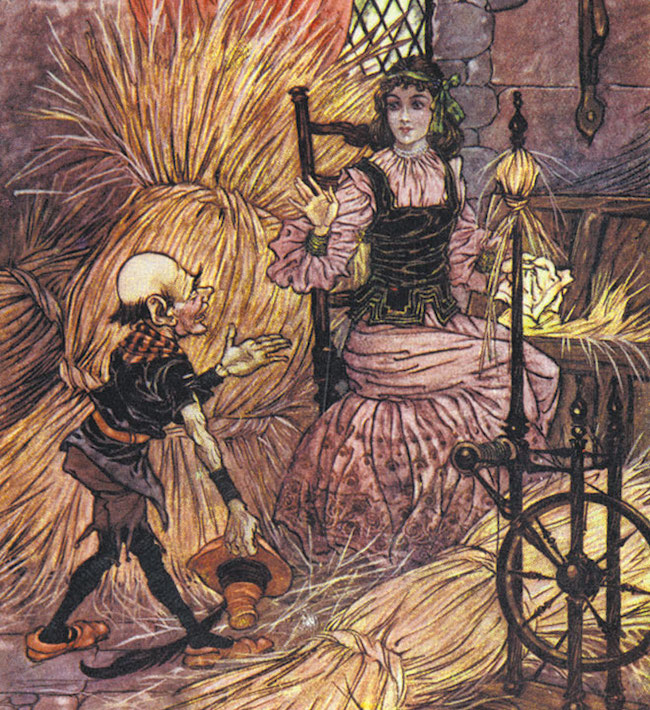
Okay, if you’re not familiar with the tale, here’s the short version: A miller brags to a king that his daughter can spin straw into gold. The king then locks her up in a room full of straw and tells her to spin it all into gold or else she’ll be beheaded. A little man appears and does the task in exchange for her ring, and again the next night, in exchange for her necklace. By the third night the deal changes in a couple of significant ways: the king tells the miller’s daughter he’ll marry her if she’s successful, and she agrees to give the little man her first-born child in exchange for his help, since she’s all out of jewelry. We tune back in a year later when the little man shows up to collect on their bargain, but gives the now-queen the opportunity to get out of their bargain, allowing her three days to guess his name. One of her servants spots Rumpelstiltskin singing a self-composed ballad about the whole story, and returns to give the queen the key information just in time.
Buy the Book
Over the Woodward Wall
Clearly the miller’s daughter and the king don’t have a basis for a healthy relationship: as it’s been pointed out, “Make me some gold or I’m gonna kill you” is a lousy approach to courtship. But for me, the most perplexing thing is that Rumpelstiltskin is generally seen as the bad guy in the story. There are many tales that feature the “magical help shows up three times” conceit, but in the vast majority, these helpers are a force for pure good, functioning as a kind of Dharmic reward for the heroine’s goodness, whether it’s help sorting the oats from the barley or handing over a pair of glass slippers in time for the ball.
There is certainly, as is the case with the best tales, a lot of room to consider this and reinterpret the characterization and wonder if it might be better to peel back the layers and look beyond the appearance of Rumpelstiltskin, who is in fact a magical helper, regardless of how “little” or “ugly” he may be described in the earliest versions of the story. And, to be fair, on ABC’s Once Upon a Time—in what’s probably the most widely popularized version of the character—Rumpelstiltskin is allowed a fair degree of both magic and ambiguity. These updates and remixes spend a lot more time digging below the surface appearances of things, and along the way we find that most people aren’t all good or bad when you get to know them a bit better—not even the mysterious Rumpelstiltskin.
The Rumpelstiltskin Problem by Vivian Vande Velde
Vande Velde jumps right into the sticky issues with this book of six short stories re-envisioning a variety of Rumpelstiltskins. With a short introduction discussing all the ways the story doesn’t make sense, Vande Velde then rearranges and reimagines the various elements of the stories, all in ways that tend to make more sense than the original (at least to our modern sensibilities), some with magic, mostly without. Every character in the story gets a chance to be the hero in turn, all in unexpected and playful ways.
Spinning Silver by Naomi Novik
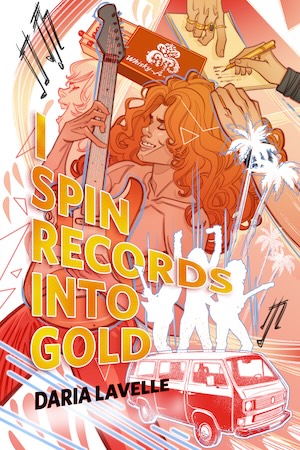
Miryem is the daughter of a moneylender, rather than a miller’s daughter, and she herself is the one to do the bragging about her skills, with a hard-earned reputation for turning silver to gold to back it up. Clever and determined, Miryem takes over her father’s business in ways that are entirely practical, but it’s her bragging that entangles her in the magical, bringing her to the attention of the otherworldly Staryk king, who demands that she turn the silver in his vaults into gold. This is less a retelling than a reshuffling of the motifs of “Rumpelstiltskin,” creating a fresher tale that still evokes the original in charming and satisfying ways.
Never After by Rebecca Lickiss
More a party for familiar characters than a straight retelling of any particular story, this book features one of my favorite iterations of the Rumpelstiltskin character. In a clever play on “Sleeping Beauty” (with “3 sleeping princes,” rather than “a sleeping princess,” surely a typographical error!) to get the ball rolling, this story sweeps together an ambitious wizard, a frustrated prince, and his cousin, a reluctant princess, on a quest to break the spell on the enchanted castle. They get in over their heads and run into many more delightful fairy tale characters over the course of their adventures. The expectations and pressure to behave in certain ways faced by the princess still feel particularly relevant, and the surprise twist in her storyline is one I still find satisfying.
A Curse Dark as Gold by Elizabeth C. Bunce
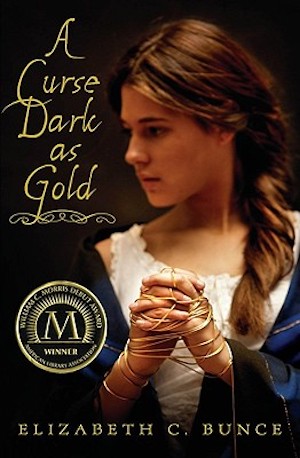
The miller’s daughter, Charlotte, becomes the miller in this YA retelling: after inheriting the mill, she continues to run it, in spite of community and family pressure to sell it. The Rumpelstiltskin in this tale is Jack Spinner, and the sweet and subtle love story is more nuanced than many other books aimed at the same age group (especially when the book was originally published). The “rescue” in this version doesn’t overshadow Charlotte’s own capabilities and gumption, making for an overall satisfying and balanced story. If you haven’t read this one yet, you’re in for a treat.
The Crimson Thread by Suzanne Weyn
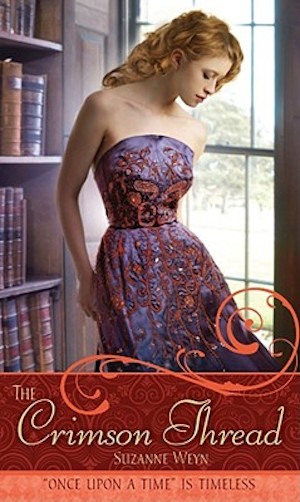
This non-magical retelling is set in 1880s New York City and follows the story of Bertie, a young Irish immigrant who becomes a seamstress in the employ of a textile tycoon. She becomes entangled with Ray Stalls, who mysteriously uses an old spinning wheel and crimson thread to create dresses that look like they’re spun with gold. There’s romance, but it’s sweet and subtle rather than front and center.
And one bonus entry!
Rumpelstiltskin’s Daughter by Diane Stanley
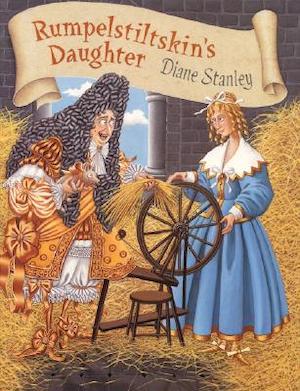
Yes, this one is a picture book and yes, you should absolutely read it. Rumpelstiltskin and the Miller’s daughter run off together (surely “I want to have your baby” is a better pickup line than “Gold or die!”), and a generation later, their daughter meets the king and helps him reorganize his economic strategy. This one is pure gold.
What are your favorite versions and fresh takes on this tale?
Rachel Ayers lives in Alaska, where she writes cabaret shows, daydreams, and looks at mountains a lot. She has a degree in Library and Information Science which comes in handy at odd hours, and she shares speculative poetry and flash fiction (and cat pictures) at patreon.com/richlayers.

Yes, Rumpelstiltskin’s Daughter! It’s a fantastic retelling!
Although just a passing reference, I love the Rumpelstiltskin story in Wrede’s Searching for Dragons. The main characters find a boarding school for lost heirs. Herbert, the guy who runs it, has inherited the family gift for spinning straw into gold. Normally, they spin for someone but are allowed a cut (the ring and necklace the miller’s daughter gives him in the original). It’s also part of the magic that he has to get the firstborn. But, he gets out of it if whoever made the deal guesses his name.
Everyone in the family before him was always able to tip them off and get them to guess right. Herbert, even after a name change, can’t manage it. And, since he’s a good parent and also realizes the kids need a good education, he has to keep spinning straw to pay expenses.
The heroes say that a good lawyer ought to be able to put a trust fun together for the school. He can spin for the fund, so it doesn’t count as spinning for himself.
Ooh, I loved the Naomi Novak, and completely missed the Rumplestilktskin connection. But, years ago, I was very moved by Gary Schmidt’s Straw Into Gold. The king is the villain in this book–and Rumplestiltskin may be protecting both the queen and the prince. It’s lovely.
Any list of the re-telling of Rumplestiltskin’s story has to include Once Upon a Time TV show.
Regards,
AndrewHB
In the English variant of the story, “Tom Tit Tot,” it’s the girl’s mother who’s overheard talking about her daughter. And what the daughter did, was eat five pies — or a dozen dumplings– at once, under the impression that they’d “come again” in time for the family dinner. The mother, out of sheer embarassment at such greed and ignorance in her own child, changes that to “spun five skeins of flax.” (I had a lot of sympathy for the daughter, when I read that story as a child; I’d never heard “come again” in a culinary sense either. The whole thing was very confusing.) The king hears the boast, and is apparently looking for a good spinster as his queen. An ordinary spinster, no gold required, I guess the kingdom produces a lot of flax.
For retellings, there’s Eleanor Farjeon’s The Silver Curlew, one of my favorites as a kid. (Originally published in 1953, available at Project Gutenberg.) And “On Lickerish Hill,” a short story by Susannah Clarke, included in The Ladies of Grace Adieu: a young bride deals with a husband of uncertain temper, an antiquarian and a fairy.
It’s a spoiler to even say it’s a Rumplestiltskin retelling, but Michael Gruber’s The Witch’s Boy is an excellent one.
Sleeping in Flame by Jonathan Carroll is also very good.
Book of lost things-wonderful mix of fairy tales and coming of age.
So happy to see A Curse Dark as Gold on this list! I was going to suggest it if it wasn’t here.
Naomi Novik is not usually my jam, but Spinning Silver is excellent, especially the first section before too much magic creeps in. The descriptions of money lending in a small town are just amazing; and how she deals with the uphill battle of being a money lender, a woman (and I think Jewish?) make Miryem a very relatable protagonist for me. The metaphorical start of “spinning into gold” in this book is creative and really works.
I also second Sleeping in Flame (and am quite shocked it wasn’t listed!).
I never looked at the Rumplestiltskin story the same way after reading Jane Yolen’s “Granny Rumple.”
@1 Yes for the Enchanted Forest chronicles! I forget if it’s part of the Herbert thing, but there’s a passing reference that always makes me laugh, where one of the characters comments on how illogical the whole Rumpelstiltskin premise is:
” ‘…If she could spin straw into gold, then what was she doing living in a hovel? Brainless young idiot [the king], but they’re all like that.’ “
(Or something like that, don’t have the book in front of me.)
@6, @10 — that one has been on my to-be-read list for years but I have yet to track down a copy! I’ll have to get more ambitious about finding it one of these days. :)
Love, love, love The Silver Curlew. It uses the Tom Tit Tot (English) tradition. The real heroine is not the rather stupid Queen Doll, infamous for her ability to eat dumplings, but her younger and much brighter sister Poll. Also Poll’ friend Charlie, who isn’t exactly who he appears to be…
And yes, Rumplestilskin’s Daughter is a treasure.
Actually the story is less strange when you know that it’s actually a VERY old story about Karma-demons. The whole style of the story is how the druids have spread their knowledge by telling metaphorical stories. If you develop a serious karma issue, it will claim your “children” but when you learn it’s “name” you’ll break it’s power that it holds over you. The trigger-pattern of a single karma-issue found in any human may be turned into an asset that may be highly beneficial but if you want to get rid of it the issue will behave like a demon and it will fight you.
Excellent and informative article! I had only a vague knowledge of the titular character from half remembered bedtime stories read to me when I was a child. It’s fascinating to see the many different ways this particular story has been adapted. I’ve got more books to add to my to read list now.
“The moral of the story is… uh… don’t lie to the king about someone else’s capacity for spinning straw into gold? Maybe?”
Spinning straw into gold isn’t remotely weird as a concept when you remember that fibres from the straw of flax are what are spun to make linen thread, and that linen production was a major industry in Germany in the middle ages.
A skilled spinster was almost literally turning straw into gold.
@17- “Or, I guess, it all worked out okay… if you consider being informed that the king who has been threatening to execute you for the last couple days is now instead going to marry you to be a net plus… maybe the moral is that we shouldn’t allow kings the arbitrary power of life or death over their subjects based on overheard conversations?”
@15 – that makes so much sense, psychologically.
@18 – I think that’s gotta be part of where this idea comes from… I’ve done a tiny bit of spinning (wool only) and I do think that’s part of why I like this story so much!
I played around with a short story version combining Rumpelstiltskin with The Emperor’s New Clothes, since it’s all sartorial splendor anyway: The Fool’s Thread (on patreon but open to public viewing!)
There is a variant of the story featuring a girl who hates spinning getting help to to produce vast amounts of ordinary thread. I don’t remember if death threats are involved but the young king is impressed by her industry and offers marriage. Problem; he will of course expect her to keep up production. Solution; the girl introduced her husband to be to her supernatural help, three fairy hags disfigured by their constant spinning. King asks, good Lord, what happened to your lip? Hag answers, oh that’s from spinning. King to girl, you are never to spin again! Girl, meekly, yes, sire.
@@@@@ 4, Amaryllis:
In the English variant of the story, “Tom Tit Tot,” it’s the girl’s mother who’s overheard talking about her daughter. And what the daughter did, was eat five pies — or a dozen dumplings– at once, under the impression that they’d “come again” in time for the family dinner. The mother, out of sheer embarassment at such greed and ignorance in her own child, changes that to “spun five skeins of flax.” (I had a lot of sympathy for the daughter, when I read that story as a child; I’d never heard “come again” in a culinary sense either. The whole thing was very confusing.)
An old culinary phrase urges you to “Cut and come again.”
It describes a plant from which you can harvest fruit, vegetables, flowers, and it will produce more for later harvest.
It also describes a dish or meal so plentiful that the diner is welcome to return for seconds or thirds.
“I vow, ’tis a noble sir-loyn…Ay; here’s cut and come again.” [Swift, Polite Conversation, 1738]
It’s not hard to imagine a youngster getting confused by the phrase.
I was surprised to find a dark fantasy retelling of Rumpelstiltskin in the beginning of Laird Barron’s The Croning. I ended up not finishing the book since something shiny came along, so I’m unsure how relevant that becomes to the story later on, but it was not how I expected the book to begin certainly.
#11 – I absolutely agree about the Jane Yolen story, in which “Rumplestiltskin” is a young Jewish moneylender in an Eastern European town, who feels sorry for the girl and organises help for her, interest free. Then when his wife tries to get the loan repaid the girl screams they want her baby and a pogrom follows. And Yolen says that of all the characters in the story, only Rumplestiltskin keeps his word.
Great list! I like Spinning Silver and I’m also really fond of Hilary McKay’s short story Straw into Gold. …and now it sounds like I’ve GOT to track down Rumpelstiltskin’s Daughter :) re: “the most perplexing thing is that Rumpelstiltskin is generally seen as the bad guy in the story. There are many tales that feature the “magical help shows up three times” conceit, but in the vast majority, these helpers are a force for pure good,” I’m pretty sure by the time you get to the most familiar version of the fairy tale antisemitism is involved. It’s pretty baked in [ugly hook-nosed dude gives you piles of gold for increasingly steep exchanges, and he wants to take your Christian baby] Not sure if it’s cause or effect?
Yes, #25, it does have an antisemitism feel about it. I think Jane Yolen picked that up very well.
About a dozen years ago I wrote a very short Rumplestiltskin, maybe 700 words, set in the tech industry with Patty aka Trisha Miller of Goldstraw Inc; her friend Ram, who’d been bailing her out of trouble since freshman year; and a junior developer on a plane. Horribly dated now but I’m tempted to dig it up and see if it could stand a little cleanup. ;)
I liked K.M.Shea’s Timeless Fairytales series version where ‘Stil’ is the hero
Very interesting discussion and overview of contemporary retellings. The moral questions that were brought up and the dichotomy between good and evil and your little note about how the characters aren’t all good or evil reminded me of an article in aeon that discusses this very thing.
https://aeon.co/essays/why-is-pop-culture-obsessed-with-battles-between-good-and-evilhttps://aeon.co/essays/why-is-pop-culture-obsessed-with-battles-between-good-and-evil
Its a great breakdown of how our understanding and culture have changed as our circumstances have changed and how that relates to the story’s we tell.
Donna Jo Napoli wrote a version called Spinners. It’s a bit dark, but it’s an interesting take on the tale that involves generations of betrayal.
@29, interesting article. I think one reason at least for the shift is we’ve become a lot more negative about theft and violence from ‘others’ over the last century or two while folklore represents an older system of thought where anybody not in your family or community, and some who were, were fair game.
The cruel stepmother stories reflect understandable and widespread concerns about blended families in a culture where assets were family rather than individual property and pretty vital. Real History shows plenty examples of blended families that worked well, but unfortunately it shows plenty of others worthy of a Grimm’s fairytale.
In Homeric times constant raiding and warfare was simply not an issue. It was how the world worked. Burning and looting cities while protecting their own from same was what a proper king or hero did. Women suffered as loot, losing home and family but nobody held their subsequent rapes against them. She wasn’t stained or dishonored by becoming her new owners bed toy. Nobody would dream of blaming her for accepting her situation and trying to improve it by winning her master’s favor. That was just good sense. And if she had the luck to be ransomed or rescued like Chyseis or Helen they returned to their old status. Chyseis remained the daughter of a powerful man and a desirable bride in spite of her rape by Agamemnon. Helen resumed her position as Menelaus’ s wife and Queen of Sparta without a hiccup. Other captive women like Briseis or Tecmessa or even Andromache herself, accept becoming the wife or concubine of their new master. Andromache continues to grieve quietly for Hector while dutifully serving Achilles son Neoptolemus. Briseis counts on the marriage Achilles has promised her and is eager to return to him. A touch of stockholm syndrome there? Tecmessa seems to have developed a real sympathy and understanding for her captor Ajax and demonstrate firm loyalty towards him as the father of her son.