


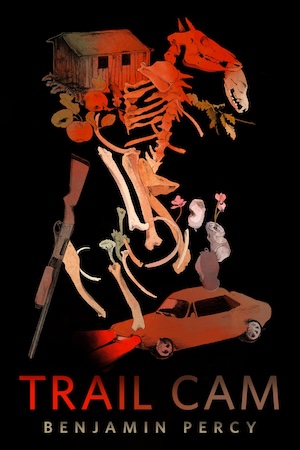
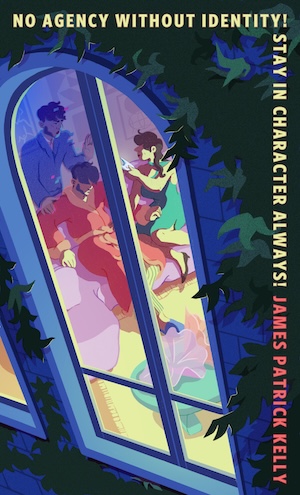
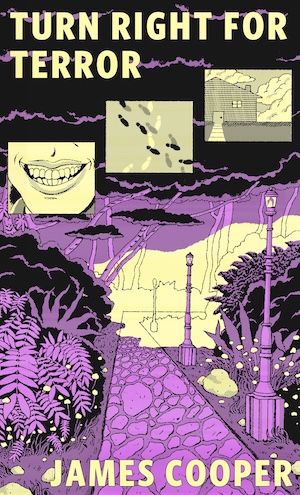
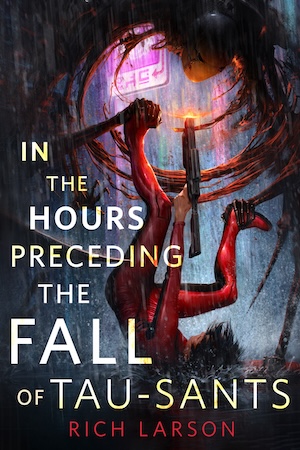




I keep an eye on upcoming releases. Now, I certainly don’t begrudge horror and fantasy their place, but I’m (mostly) an SF guy. What I look for, primarily, is SF. What I see in large numbers is romantasy.
This is not a complaint—anyone who feels the urge to shout at clouds in response to this development would be interrogating the text from the wrong perspective. If some nearby genre is doing well, surely it makes sense for science fiction writers to study why and consider adapting accordingly. Many readers enjoy romance elements in their fiction—no surprise, given that romance has been responsible for something like half of all fiction sales for a very long time—and SF authors should take this into account.
Now, it turns out that many SF authors are themselves the products of romance. Surely, that implies the reverse could be true! SF authors could produce romance! Consider, for example, one of the initial challenges any romance must overcome: finding one or more entities with whom one is romantically compatible.
On the plus side, there are and have been many humans (and an as-yet-uncounted number of romance-compatible aliens) in existence. However, the more exacting your protagonist’s standards, the smaller the number of beings who meet those criteria and the less likely the protagonist is to encounter them1. What is a lonely entity to do, if said entity exists in an SFnal context?
Classic SF produced at least five answers to this question.
One answer is to change oneself or to change someone else until a compatibility condition occurs.
Lester del Rey’s 1938 “Helen O’Loy” provides two examples—well, more accurately one, but it strongly implies a second. The most obvious: the title character, a domestic robot2 transformed by artful kit-bashing into the perfect woman by the story’s protagonist, Phil. It’s just too bad that she falls for his best friend, Dave. Even worse, there’s no possible way for Phil to acquire his own Helen, because where on Earth could he find another mass-produced robot to modify? It’s not as if there were stores that sell mass-produced consumer goods!
The other example in this story: a minor subplot in which wealthy dowager Mrs. van Styler demands that her son’s infatuation for a socially unsuitable servant girl be cured with counterhormones. This suggests that the chemical basis for romance is known, which further raises the possibility that it can be artificially induced. This plot thread is not pursued, which is probably for the best, as it raises the issue of consent. Does the mother have the right to chemically force her son to reject his sweetie? Is the doctor who injects the counterhormone free of blame?
Del Rey doesn’t examine the ethics of involuntarily romanto-forming people. Maybe he felt he should leave something for other authors to explore.
Writers could have their protagonists cast their nets very wide. If one planet isn’t sufficient to ensure a perfect match, perhaps a galaxy could be…
Consider the plight of psionicist Peter Morris, who appears in A. Bertram Chandler’s 1959 “Chance Encounter.” Peter may have an ideal mate, but years of searching the galaxy have failed to find her. Happily, the very psionic powers that have alienated Peter from the mass of humanity allow him to make contact across light years with an alien woman who is perfectly compatible…
Almost.
Alternatively, one could accept that the odds favour one’s true love having lived and died ages ago, or will live and die some time in the far future. This is only a problem for people who have failed to procure a time machine and really, that sort of gumptionless person likely won’t have much luck anywhere in space-time.
Isaac Asimov’s monkish, puritanical Andrew Harlan, protagonist of 1955’s The End of Eternity, seems an unlikely romantic prospect3. Working as he does for Eternity, the all-male agency that controls all human history, Harlan is exposed to people from across time… one of whom, Noÿs, turns out to be perfectly suited to enchant Harlan. Their romance won’t only make the Earth move. It reshapes destiny.
Now, as most romance protagonists do not believe that a suitable match might have died long ago, or is yet to be born, or live at the other end of the universe, one could concede there is some as yet poorly understood factor—biological or cultural factors, or narrative convenience—that constrains them to be born in the same era. That still leaves the problem of finding them amongst billions of people.
This is easily solved, most easily by reducing the human population to a more manageable number. Such as two.
Take, for example, Walter Phelan, protagonist of Fredric Brown’s 1948 “Knock.” Had Walter felt the inclination to look for his one true love4, finding her amid billions of humans would have been very difficult. Happily, the alien Zan murder every human except Walter and Grace Evans. As the humans are imprisoned in the same zoo, finding each other is now extremely easy.
Alternately, one can simply provide a supercomputer with sufficiently detailed criteria and a database of all possible candidates, and it will provide the name and telephone number of the protagonist’s perfect mate as infallibly as ChatGPT summarizes complex legal cases.
One example of how this might work in practice can be found in Cary Bates’ 1971’s “Marriage, Kryptonian Style!” Kryptonians entrust matrimonial decisions to Matricomp, whose track record of perfect matches is unimpeachable. Jor-El and Lara Lor-Van assume Matricomp’s approval for their marriage is a simple formality… only for all-knowing Matricomp to present Lara with a more suitable (and more importantly, legally sanctioned) husband. The consequences could be profound, especially for Superman, who won’t be born if his parents never marry5.
If SF authors can solve a single romantic challenge in so many different ways, surely they can do the same with many other tropes familiar to romance readers. Authors! Riches can be yours if you are up to the task…
- Especially if your criteria are such that nobody qualifies—or worse, one or more of the participants would not survive qualifying. ↩︎
- It’s not really clear why Helen is humanoform in the first place. Perhaps it’s better not to dwell on it too much. ↩︎
- His employers plucked Harlan out of time because his absence would not affect history. This has, I feel, dire implications for his romantic prospects in his home era. ↩︎
- Walter at least has some experience in the field of romance, as he is a widower. ↩︎
- Extramarital liaisons are, of course, not allowed in a Comics Code-approved comic book. ↩︎

The footnotes are missing…
Yes, apologies–this is a new, weird problem, which we’re working to fix at the moment! Update: They should be fixed now.
The feetsnote issue is being worked on.
It has been pointed out to me that not only does romance produce sales, it also produces authors.
The Wikipedia article on “Knock” includes ‘The story won the 2012 Cordwainer Smith Rediscovery Award; James Nicoll, however, describes it as “fairly conventional”.[4] … The [4] Cordwainer Smith Rediscovery Award Anthology — A. N. Editor, by James Nicoll; published May 13, 2017; retrieved May 13, 2017’.
“Love at the 99th Percentile” by Christopher Gilbert features high-tech matchmaking right here on this planet and points out some of the hazards.
Perhaps worthy of this fine discussion is Robert Sheckley’s 1957 story “The Language of Love,” in which Jefferson Toms, unable to put his devotion to young Doris into words, goes off to learn said language. When he does, he comes back and, translating from it back to English, tells her truthfully that he is in fact quite fond of her: which (not surprisingly) does not get quite the desired reaction.
I am astonished a Sheckley protagonist’s plan develops in unforeseen directions!
One obvious solution – or at least obvious to Brian W. Aldiss in The Primal Urge (1961) – is to implant a small electronics module into everyone’s head which makes a light glow on their forehead if they are sexually aroused, thus proving that their love is genuine. What could possibly go wrong…?
H. Rider Haggard’s She considers a secondary difficulty: after
finding your true love, you might then carelessly kill him in a passing
fit of temper. But this is a problem with a simple solution: just make
yourself immortal, and wait patiently for him to reincarnate. It helps
if you have a lost African kingdom to do the waiting in.
Varthlokkur of A Shadow of All Night Falling also had to wait for a long time, although in his case it was because his bride to be wouldn’t be born for some time, not because he killed her and had to wait for her to respawn. He made up for the lack of spousal homicide with other extremely poor decisions, such as stiffing vital employees for no good reason.
Oh, come now! Stiffing good employees for no good reason is a fundamental tenet of modern management practice!
The early music fan in me objects that the true love is not the one and only possible love object, but the not false love. “True” in this context means “faithful, honest, and courageous.” It’s possible for someone who had to bury their own true lover, or whose lover was false, to choose to live single all the rest of their life, but it’s also possible for them to find a new love by and by. Somewhere along the way (I blame Romanticism) the meaning changed to “one and only possible love object.”
And of course there’s the solution in The Compleat Consummators by Alan Nourse – get Consummation, Incorporated to profile and match you up!
SF and romance are perfectly compatible, as are mystery and romance or fantasy and romance. It’s just that past sf was too dominated by things and not so much by people. Asimov’s The Naked Sun had a very minor subplot about Earth detective Baley’s “interest” (crush?) on the murder victim’s wife, but no romance occurred.
More recently, Lois McMaster Bujold had several romances in her books set in the Vorkisigan Universe. There seems to be a romance in Arkady Martine’s two books about the Teixcalaani Empire. Going back in time, Dejah Thoris and John Carter’s romance is a major plot point to the Barsoom books. Somewhere between those books and the present, sf lost its romance. Since romance is a major part of human life, this lack of the possibility of romance crippled character development.
I’m sure somebody of canine persuasion will argue romance is stupid and Real Men(TM) don’t experience it, and writing about such squishy stuff, as opposed to manly stuff like mass murder is much better.
A lot of 1950s SF seems to present marriage as both the worst possible fate and something that absolutely every man should seek out. I am a bit baffled by this.
(Obs marriage and romance are not necessarily causally linked)
Asimov’s “True Love” (1976) features computer matching and (not-coincidentally) illegal use of government computers for personal gain.
I might add that having skeletons which appear to match up is how one surgeon in the Lensmen series thinks Kimball Kinnison and Clarissa MacDougal are great for each other…
There’s always Jeff Renner’s 1964 “The Shortest Science Fiction Love Story Ever Written”: Boy meets girl. Boy loses girl. Boy builds girl.
DIY romance.