






Violence can be a very direct way to communicate. It will come as no surprise that violence can also be quite useful to authors—it’s the chili pepper in many plots.
But consider this: Quiet conversations can be just as dramatic. You can test this yourself simply by softly whispering to any significant others you might have “We need to talk.” Plots don’t require gunplay, or sword fights, or weaponized leaf blowers to entertain and enthrall readers. Consider these five works1.
The Men and the Mirror by Ross Rocklynne (1938)
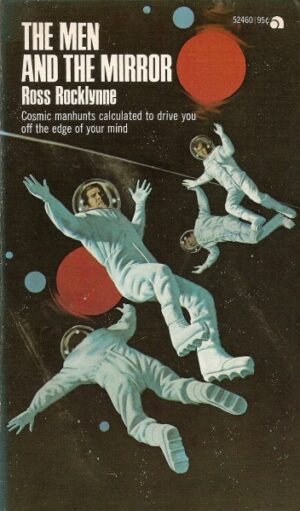
Stalwart space cop Colbie has pursued charmingly roguish criminal Deverel across the Solar System. Episodes in this series usually feature plots that depend on the physics of unique planetary settings. Deverel always escapes, but Colbie is relentless.
Colbie arrives on the as-yet-unnamed planet Cyclops to discover that his quarry is deathly ill. Once Colbie solicitously nurses Deverel back to full health, the pair explore the planet’s dominant feature, a vast concave frictionless mirror onto which one would have to be foolish indeed to fall. Having fallen onto the mirror, the men discover that the mirror is almost but not quite frictionless. The mirror seems inescapable… but is it?
This was the third installment in the Colbie and Deverel saga. Taken on its own, it’s an acceptable problem-solving story. In the context of the other two stories, the effect is either comic or tragic: poor Colbie is fated to never quite catch Deverel2. This was also the final entry in the series, perhaps because the Solar System only has a limited number of physics-demonstrating settings in which the pair could be temporarily trapped.
“The Will” by Walter M. Miller, Jr. (1954)
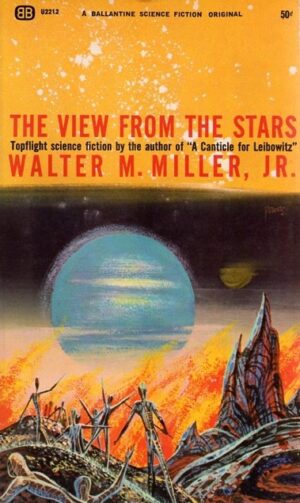
(First published in Fantastic; collected in The View From the Stars) Doc Jules has doleful news for Rod. Rod’s stepson Kenny has leukemia. Without some miraculous medical breakthrough, Kenny is doomed. Nor will the boy and his family have long to come to terms with this death sentence. Kenny has at most months to live.
Terminally ill Kenny takes the long view. Current medicine can’t save him. Inevitable progress means that a cure will eventually exist. Bridging the gap between his present predicament and that distant future cure for it is merely a technical challenge for which Kenny has the key insight. (The key insight isn’t hexapodia, as surprising as that may seem.) Kenny understands something from which Anne McCaffrey’s Moreta would have benefited:
“But Dad, don’t you see? What difference does time make, if you’re working on a time machine?”
Which is why Kenny is, with Bill and Ted, on the list of time-travel aficionados to whom one must compare all time-traveler aspirants. If a traveler cannot match the ingenuity of one young boy or two teenaged dolts, they probably should not have a time machine.
The Songs of Distant Earth by Arthur C. Clarke (1986)
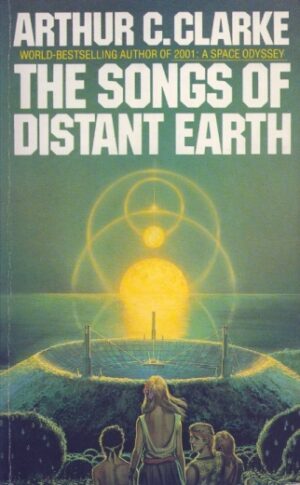
Perhaps the impending destruction of Earth and all on it provoked panic and mass violence… but not for the people of the ocean world Thalassa, fifty light-years from Earth. Provided a carefully curated version of humanity’s cultural heritage by the robot craft that decanted the first humans on Thalassa, the Thalassans are a bucolic, laid-back people who have found the perfect balance between procrastination and sloth.
Into this garden of Eden comes a serpent, in the form of slower-than-light starship Magellan. The sleepers on Magellan outnumber the Thalassans. The visitors possess superior technology. The visitors also have no intention of staying any longer than it will take to replace their debris shield, nor do they intend to greatly inconvenience the locals to do so. Thus, the only real issue is how to courteously manage the ensuing Terran-Thalassan romantic triangles.
There is an on-stage death in this novel but it’s the result of a mishap. Otherwise, everyone is terribly pleasant and polite, relentlessly non-confrontational. Perhaps it goes back to the local love of indolence. Why argue when one can just go fishing?
Twilight Star Sui and Neri by Pan Tokunaga (2020)
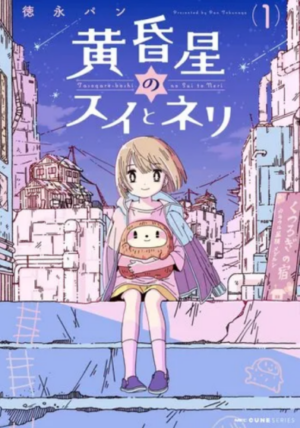
Inexpensive star flight and an abundance of easily settled planets have lured the majority of Earth’s people off-world. The few people remaining on Earth are insufficient to maintain, less alone increase, Earth’s infrastructure. Thus, these few are doomed to inexorable, albeit genteel, decline. Having known nothing else, this does not concern either Sui or her elder brother Neri (who is a talking sloth).
Off-worlder Shida takes a room at Sui and Neri’s Kutsurogi-no-Yado inn. What follows is a largely carefree exploration of Sui and Neri’s bucolic hometown, Tetsunagi.
It’s not so much that Earth in general is an impoverished utopia, but that Tetsunagi is. In fact, it’s pretty clear that had Pan Tokunaga wanted a kidnap and rescue plot, the means to provide it existed. The author did not, thus the amiable tale that ensues.
Seven Days in Silverglen by walkingnorth (2022-onward)
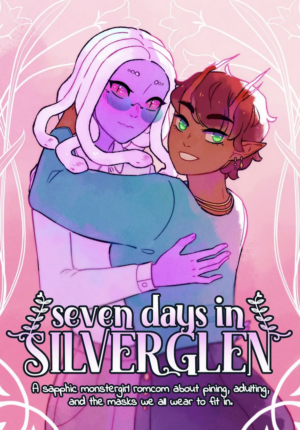
In a world much like ours, populated by creatures of myth, dryad Mira has a problem. Mira wants to join her relatives for the autumnal celebrations in Silverglen. Mira would like to avoid her family’s incessant efforts to interfere in single Mira’s romantic life, or lack thereof. The logical solution? Ask a co-worker to pose as Mira’s girlfriend for the duration of the celebration.
Gorgon Tess is the perfect candidate, save for one or two facts of which Mira is unaware. Tess is painfully shy. Tess is painfully infatuated with Mira. Tess is also entirely sensible, which is why after less consideration than one might expect, she decides to confront her anxieties and agree to Mira’s request. What could possibly go wrong?
One of the contributing factors to Tess’ social anxiety is that one of the features her world shares with ours is bigotry. Some races are considered more equal than others. Gorgons are down at the bottom of the pecking order.
While there are fewer SFF works that eschew gunplay and other forms of intentional violence than those that lean into violence, there are far more examples than the five listed above. Please regale us with particularly fine examples in the comments below.
- I almost included On the Beach, as the events within the novel itself are largely peaceful. However, some people might view state-sanctioned mass suicide as a form of violence, and of course the entire plot is predicated on World War Three having doomed all life on Earth. ↩︎
- It does not help that Colbie immediately forgets his ostensible goal as soon as he discovers the criminal is ill. One almost suspects Colbie values the pursuit, and not its supposed goal… ↩︎


My first impulse here was Spaceman of Bohemia by Jaroslav Kalfař (2017); while there are reminiscences of violence in the Communist past of then-Czechoslovakia, the novel plays out as conversations and ruminations.
And just for funsies, my favorite Roger Zelazny romp, Roadmarks from 1979 just keeps you wondering by shifting perspectives.
Victoria Goddard’s The Hands of the Emperor has one brief bit of violence in around 1,000 pages, the rest of it is about friendship, family, culture clash, and civic reforms.
Mostly. Jemis Greenwing experiences/engages in some in about half the Greenwing and Dart books, although not much
Literally came here for hands of the emperor
This was my first thought too.
I don’t recall any blasters, phasers, bombs, guns, swords or axes in Flowers For Algernon (Daniel Keyes), but I don’t recall that taking anything away from the impact of the story. One things that’s refreshing about the otherwise lackluster appearance of SFF book cover art in recent years is that not every character depicted is waving a gun, sword or axe in the buyer’s face.
There’s the Galleries of Stone series by CJ Milbrandt. The first, Meadowsweet , has no violence at all that I recall. The second has some training for hunting and combat because of one of the races’ culture. The third does include some defensive violence. Mostly they are about family, and taking care of each other, and stone magic.
Mirabile by Janet Kagan might count. I think there’s one fistfight, and some violence defending against an invasive species that’s too aggressive to coexist with, but the emphasis is on finding peaceful solutions.
Anent “The Men and the Mirror”, “acceptable problem-solving story” is quite false, I’m afraid, when the solution is famous for being physically impossible. (Rot13: Vg ivbyngrf pbafreingvba bs nathyne zbzraghz.)
There’s also all these cozies coming out lately; Becky Chambers’ Monk and Robotbooks are utterly violence-free, Baldree’s Legends and Lattes has only a tiny bit in the setup, the premise being that the protagonist has given up a life of violence to open a coffeeshop, as does the (mostly) prequel Bookshops and Bonedust. Arden Powell’s Flos Magicae books are what I think people call romantasy these days, being in a magical version of the 20s, and haven’t any violence in except Winter’s Dawn, involving prisoners, and IIRC there’s a murder in A Thief and a Gentleman.
Chambers’ The Galaxy and the Ground Within has satellites exploding, but due merely to accident. A favorite bit has a group of nonhuman people trying to understand humans’ passion for cheese.
Something more recent than Doc Smith, for a change; Nathan Lowell’s Solar Clipper Trader’s Tales (Quarter Share, Half Share, Full share, and onwards) start out with three books with very little violence (a major character is mugged off-stage, a character breaks an arm in accident). (The 4th book does have enough important violence points that I can’t put the whole series in this category.)
James Hogan’s Inherit the Stars might count – the only plot-relevant violence occurs 50,000 years before the story starts.
This could be a good time to revisit Jo Walton’s list of “books in which no bad things happen”. From that list, At Amberleaf Fair by Phyllis Ann Karr would be a fine choice.
In addition to Monk and Robot, Becky Chambers largely eschews violence in her Travellers series, although there is some non-lethal (but not for lack of trying) in one book and two repressive governments, one human and the other not. There is also a reformed(?) imperialist non-human power.
I do find the cozy sff sub-genre to be a wonderful palliative to milsf, which I have found to be based on the belief violence is always the preferred solution
There’s a couple of violent attacks on starships (resulting in one death and an injury), a mass scene of violent death (by accident), an individual death by negligence, at least two murders, one off the page and one shown, plus an attempted terrorist attack, one character getting beaten up by cop-equivalents, and an ongoing war in the background. They’re excellent books and the violence isn’t the focus, or glorified.
A lot of Clarke’s works in the 1950s-80s were pretty (human-caused) violence-free; Rendezvous with Rama, for example; the only implied violence is via the deployment of the “insurance” weapon by one of the human-colonized worlds, which is disarmed by one of the Endeavour‘s crew …
A fair number of Niven’s shorter works have minimal or no violence in as well; Flatlander comes to mind, and some of Beowulf Schaeffer’s other adventures
Much of the work of Isaac Asimov and Arthur C. Clarke comes to mind…
So glad to see The Will here. I read it some years ago in a Miller anthology and the ending just ruined me. Incredible story.
Off hand I don’t recall any violence in John Wyndham’s The Trouble With Lichen.
and a kidnapping with torture.
There was an attempted murder towards the end, as I recall.
Eric Frank Russell’s AndThen There Were None pits non-violent civil disobedience against a militarized Galactic Survey vessel, with delightful results.
Ooh, a new work by walkingnorth! Thank you!
(Her Always Human, available in print in two volumes and probably still online somewhere, is a lovely lack-of-violence story.)
Cherryh’s Wave Without a Shore sticks with me. There is violence in the story, but the solution is not violent. I think. It may have been 30 years since I read it ..
Ari North (Walkingnorth is also the author of the violence free and utterly beautiful transhumanist graphic novel Always Human: in a future where nanotech “mods” are used for everything from preventing cancer to changing appearance, Sunati meets and falls for Austin, who has a rare syndrome that prevents her from using mods- and which causes all kinds of difficulties for her….
It’s a perfect example of how an engaging story can be completely free of violence.
If only Seven Days in Silver Glen were updating…
From memory, I don’t think there was any violence in Jack Williamson’s “The Humanoids” – at least not _physical_ violence. That’s of little benefit to the humans subject to the “protection” provided by the robots of the title, though…….
Nathan Lowell’s Trader’s Tales from the Golden Age of the Solar Clipper and subsequent trilogies.
M. C. A. Hogarth’s Mindtouch part of the Dreamhealers series has no violence. Just a medical university with different species’ relationships, including various pelted species, and some ESP.
The Blue Chair, by Joyce Thompson. I believe it is out of print (and my library has nothing by her). There is lots of tension in this future, but I think no violence that we witness. Brilliant book, I wish someone would republish it, as I foolishly lent my copy out and it never came home.
My phone contains 69 delightful sci-fi books by E. M. Foner, none of which contain any violence whatsoever. Highly recommended.