






There was no triggering event, but I knew that I couldn’t read The Wheel of Time anymore. Or any epic fantasy stories. This was a literary genre that had defined my entire life but here I was, only 27 years old, well before I started working at Tor, and I felt like the victim of a long con. A sucker who kept buying books that promised a resolution that would never arrive.
2008 was a bad year for epic fantasy in general. Robert Jordan had just passed away, far too early, and while Brandon Sanderson had been named the successor to The Wheel of Time, at that point readers had no way of knowing what that would mean. Patrick Rothfuss’ The Name of the Wind had recently promised a stunningly intimate new world, but it was only just beginning as a series. Harry Potter’s adventures had just concluded. And the latest Song of Ice and Fire book A Feast For Crows was nearing its third birthday, with A Dance With Dragons still several horizons away. Epic fantasy felt abandoned as a genre. And if its creators couldn’t be bothered to keep it alive, why should I, as a reader?
2008 was also a bad year for me. I was struggling to find secure footing in New York City, even though at that point I had been living here for over two years. I drifted from unemployment to menial entry-level jobs and back again. Too poor to afford regular internet access or train fare, I found myself cut off from my family. I watched from a distance as they dissolved. Only two years later my brother, me, and some photo albums would be all that was left. I still have dreams where we’re all together in the house I grew up in. Still.
I grew up in that house reading and watching and playing and pretending and CONSUMING science fiction and fantasy. My identity was determined by genre at a very early age. When I was 11 years old I became so enamored by The Legend of Zelda that I defied my parents’ ban on video games by raising $30 through doing chores, bought the electronic guts of an 8-bit Nintendo from a kid in the neighborhood, then reassembled those guts into a working system. I can’t have a Nintendo, Mom and Dad? Too late, I made one and I would really like Zelda for Christmas, please!
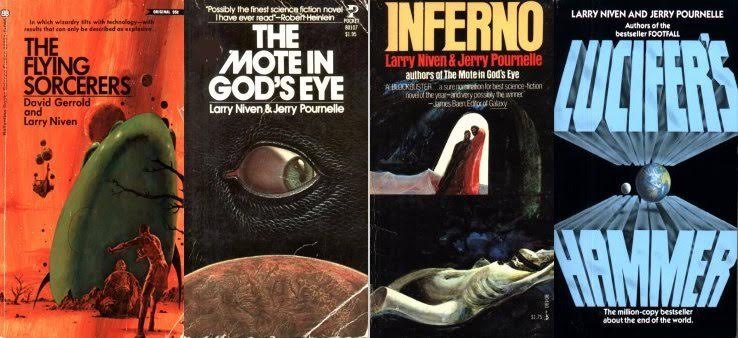
I imagine by that point it had become clear to my parents what kind of monster they had created. My mother was a gentle, supportive, and hilarious person who made this world feel like the best thing orbiting the Sun, while my father left piles of tattered SFF paperbacks under every lamp, on every sun-baked car dashboard, and every greasy workbench. I still associate the sharply tanged smell of rust with Larry Niven and Jerry Pournelle’s books. How was I expected not to want to explore this world and ALL worlds in this kind of environment? My parents wisely relented on their ban of video games. (And even got me an SNES that Christmas.)
I have always been bursting with the desire to explore, to DO something, but in 2008 I was stymied by a lack of basic structure in my life; structure provided by relationships, family, and employment that we often take for granted. I would spend a few days focused on job applications, but nothing would result, and that frustrated energy would go into writing fiction. Then I would lose focus on the fiction, and again nothing would resolve, and that shaky energy would get poured into playing Nintendo all through the night. This behavior was cyclical and it drove me and my partner at the time insane. Over time, frustrated expectations develop into depression, and depression is corrosive. It erodes your perspective, your self-esteem, and subverts the time of those who truly care about you.
Not being able to affect the world around me, even through simple interactions, made me angry as well. I wasn’t accustomed to being sidelined in such a manner. I had a lot of energy, a lot of IDEAS, and I was wriggling all over the place, trying to find some crack in the pavement where I could push through. Fiction in the form of books, television, movies, and video games became incredibly important to me during this period. They were often the only things in my life that offered access and, most importantly, that offered resolution. I could make Mario leap and spin as many times through Bowser’s Castle as I needed to until the Koopa King was defeated and the quest was over. I could watch Batman triumph over Heath Ledger’s Joker. (And Heath Ledger’s Joker triumph over our more insipid social constructs, because when you’re down that kind of nihilism feels glorious even through it is monstrous.)
Epic fantasy offered no such access or resolution, and it hadn’t done so in a significant manner since 2005, when both Knife of Dreams and A Feast For Crows came out. In hindsight, 2008 was simply a lull in epic fantasy publishing, but my perspective at the time was not so generously wide. I could, at best, be described as a pair of glowing eyes hovering in the dark mouth of a cave. The Wheel of Time, A Song of Ice and Fire…their absence was a betrayal, sharp and deep.
Ironically, late 2007 and early 2008 is also when the last TV writer’s strike occurred, leaving a production gap in distraction-heavy television that was several months large. The effect of the strike was largely contextual. I had nothing to pay attention to on TV, and no money to go seeking out new video games, so my focus fell more heavily onto books.

From deep within my cave the subsequent announcements about the progress of The Wheel of Time took on a cynical edge. The final book would be released in November 2009, they said. But then Brandon said he needed to reread the series before he could even start writing it. Then he changed the target word rate to 250,000 words, then 400,000 words. Then it wasn’t coming out in 2009 at all. Then it wasn’t going to be one book, but three. And they were ditching Jordan’s title and calling the last book Tarmon Gai’don. And so on and so on. Although Tor and Sanderson were attempting to be communicative and clear in a way that had never before been attempted with the series, I just felt like I was being toyed with. The Wheel of Time series was already famous for avoiding resolutions. How was it that Jordan’s absence was somehow magnifying that aspect of the series?
So…fuck it. I wasn’t going to read this series anymore. Or any epic fantasy anymore. I wasn’t going to support this type of behavior. I hadn’t read a word of it since 2005 anyway, and now it was 2009 and my life was completely different and horrible and A Dance With Dragons was obviously never coming out either and if I can’t explore this world or these fantasy worlds then fuck it. Fuck all of it.
The World Demands More
Pacing is a constant source of tension within epic fantasy, and mastering it is one of the most difficult lessons to learn for those who create it. In epic stories, the world is essentially its own character, thus the more detail that is brought into a fantasy world, the more that it develops its own characteristics. One of the most joyous moments a fiction writer can experience is when a character starts telling the writer how they’d react to a forthcoming plot development. The excitement an author feels over being able to craft this kind of independence and life makes it easy to overlook that the world that these characters inhabit is a character in itself and thus will also develop its own independence.
Worlds have their own momentum, and that fierce speed can overwhelm the day-to-day life of an author. A Song of Ice and Fire will most likely complete itself, separate from its creator, a circumstance fantasy readers would never have foreseen only 5 years ago. Brandon Sanderson’s Cosmere only seems to make its author faster, to the point where he’s delivering two books when his publisher was only expecting one. Worlds can be terrifying creatures, affecting us all differently.
Robert Jordan very visibly struggled with the momentum of his fantasy world. The Wheel of Time contains a variety of eyebrow-raising structural decisions, some of them genius, and some of them puzzling. The middle portion of the series, books 7 through 10 I’d argue, are riddled with what is known these days as “bloat”: An overly intense focus on secondary or tertiary characters at the expense of the main characters. Bloat becomes a bigger and bigger issue as a fantasy series continues onward, as background characters prove too vibrant to ignore, or a situation arises that can’t be solved via a simple battle. Bloat is not a purposeful choice that the author makes. Bloat is a demand that a fantasy world makes of its creator, and is always supported by the momentum of that world. Bloat is an author attempting to mollify his world and his readers at once.
Jordan’s own negotiations with The Wheel of Time begin in A Crown of Swords, as the reader can see in the sheer number of plotlines that the main character Rand al’Thor, must deal with. Suddenly, Rand must:
- Solidify his rule of the nation of Cairhien.
- Support Elayne’s accession to the crown in the neighboring nation of Andor.
- Deal with the Aes Sedai who captured him.
- Figure out how to interact with the Rebel Tower.
- Make sure the Black Tower isn’t going crazy.
- Stop Cadsuane from driving him crazy.
- Stop his own magic power from driving him crazy.
- Figure out how he feels about Min, Aviendha, and Elayne.
- Figure out the purpose of the Aiel people.
- Hunt down the Shaido.
- Figure out how to stop the endless summer from baking the planet.
- Oust Big Bad Sammael from Illian.
- Unite all the nations of Randland.
- And the Sea Folk.
- And decimate or make peace with the Seanchan.
- …oh, also Padan Fain is still lurking about ready to get slashy-slashy.
This is all in just Rand’s storyline; never mind that we as readers also expected to spend time with Perrin, Mat, Egwene, and Nynaeve. Seven books in, the focus of Jordan’s Wheel of Time had turned incontrovertibly towards its world and away from its characters.
As a result, books seven through eleven: A Crown of Swords, The Path of Daggers, Winter’s Heart, Crossroads of Twilight, and Knife of Dreams, read like one long book. The narrative fractured more and more past A Crown of Swords and came very close to scuttling the entire series. The Path of Daggers and Winter’s Heart feel like one book split into two volumes, as does Crossroads of Twilight and Knife of Dreams. Crossroads of Twilight, despite its amazing title and focus on the growth of the series’ characters, famously stalled The Wheel of Time entirely, consisting entirely as it does of characters reacting to things that happened in the previous book and deciding to do awesome things…in the next book.
Robert Jordan and The Wheel of Time regained its footing with Knife of Dreams. Not only that, but Jordan’s skill as a writer took a noticeable jump. Major character Egwene al’Vere is only present in a single chapter of the book, but that chapter by itself is a masterful work, a “small story” that takes Egwene from the status of prisoner to de facto leader of a third of the White Tower in one unbroken narrative, a tour de force showcase of the strength of Egwene’s character, an entire novel in one chapter, summed up by a single sentence of quiet, overwhelming triumph: “There was honey in the tea!” Indeed.
From my perspective in late 2008 and early 2009, though, the strength of Jordan’s writing was years in the past, drowning a tempest of epic fantasy bloat that had somehow strengthened with his passing. The demands of the world Jordan had created were now so strong that it didn’t matter who was writing it, the Wheel of Time had separated from its creator, and was clearly insistent on extending its length forever onwards. And I no longer wanted to be party to that.
True Love Will Find You in the End
As the release date of The Gathering Storm approached, curiosity overcame my extreme cantankerousness and I checked Brandon Sanderson’s first Mistborn novel (known these days by the subtitle “The Final Empire”) out from the library. I had never heard of Sanderson before he was chosen to shepherd The Wheel of Time, and I was curious what kind of writer he was, but still grumpy enough about epic fantasy to go to the library instead of just buying a $7 mass market paperback that I might not like.
Mistborn is the complete opposite of The Wheel of Time and in its (only!) 400-or-so pages I found a response to my own frustrations regarding epic fantasy. The characters in Mistborn talk plainly to each other, they answer questions put to them…in short, they treat each other with a camaraderie and respect that at the time I found lacking in epic fantasy at large. There’s a chapter very early on where the main character in Mistborn, Kelsier, explains his entire plan to his co-conspirators. Where most fantasy relies on holding back key information in order to cultivate ongoing mysteries, Mistborn goes the opposite way, giving the reader so much information that it would take time to puzzle out all the myriad connections. Sure, Kelsier was trying to overthrow the evil Empire he lived within, but what else might he be up to?
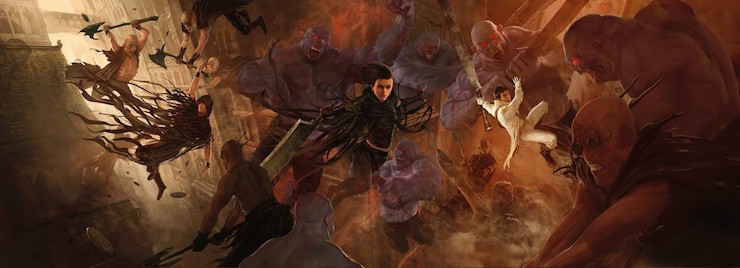
This approach allowed Mistborn to generate a surprise as potent as the first time I experienced Ned Stark’s beheading: the utter failure of its epic fantasy storyline! About halfway through the book, the resistance, freed peoples, and citizen armies that Kelsier and company have been building are annihilated. They take no fields and no last-minute Rohirrim arrive to save them. The main focus of Kelsier’s plan falls apart completely, leaving the reader to wonder just what, if anything, will fill the second half of the book. Brandon Sanderson pulls the same trick again at the very end of the book, killing off both Kelsier and the untouchable and villainous Emperor. Mistborn tore through all of my most-hated fantasy tropes, and all of its plot, in a single book; I had to read the next book in the trilogy, if only to see what could possible happen next. This was the writer who was taking over The Wheel of Time? The Gathering Storm was going to…well, I didn’t know…but The Wheel of Time combined with Mistborn’s refreshing take on the epic fantasy at least promised something interesting.
The conclusion to The Wheel of Time is now in our rear-view and I may now be a bigger fan of it, and epic fantasy, than ever before. A large part of this is due to the stellar ending to the series itself, an ending which manages to refocus the narrative onto its main characters while keeping pace with the world that those characters are trying to piece back together. That The Wheel of Time came to a close in a truly epic fashion goes a long way towards redeeming any meanderings that came before it.
And, surprisingly, it also makes me miss those meanderings. The Gathering Storm, Towers of Midnight, and especially A Memory of Light all operate at breakneck speed. And while there is beauty and wonder to be found in the pages of those final three volumes, there is a subtlety that is missing. To me, that subtlety did not become particularly noticeable until it was gone. It is there if you reread the series. It is stamped upon the very DNA of its writing. It is the methodical, consistent, and flowering prose of Robert Jordan. Jordan writes worlds in slow bloom, but bright colors. His environments feel enormous and ornate. They feel solid, and old. A reader feels the weight of the history pushing The Wheel of Time forward. Jordan is a subtle but evocative artisan, and surprisingly emotional; just look at the titles to the books themselves: “Winter’s Heart” isn’t so much a description as it is a sensation. “The Fires of Heaven” is a grand statement, worthy of the size of the world it depicts. “A Memory of Light” is just beautiful, a four-word phrase that manages to signify the sad and hopeful end of an entire world all at once.
I had to step away from epic fantasy to see this. Or perhaps, I needed epic fantasy as a genre to step away from me in order to provide what I needed, and to grow into wonderful new directions.
I’ve since grown into wonderful new directions, myself. I started working at Tor, for one. I got married, started a new family, went back to school…created the structure I had lost. I’m looking forward to the next Song of Ice and Fire book, even though I feel full up on the series itself, and while I still feel the desire to explore, I don’t feel the need to explore only fantasy fiction. I’ve been locked into worlds before. And it’s no fun.
I can’t forget: There is always another world.
Chris Lough writes about fantasy and TV and running and things on the internet, and a lot here on Tor.com. (And sometimes on Twitter.)

This was a great read, thanks for sharing your personal voyage and how that went hand in hand with the Wheel of Times series. Also, great Zelda story =)
@2 Comment removed: please adhere to our moderation policy, and be respectful of both the author and other commenters even when disagreeing with the content of an article. Thank you.
Sometimes, it is best to just take a break from a specific genre, and you’ve illustrated the reasons for that need. Thanks for the insight.
Thanks for sharing :)
2008 was the year I dropped out of grad school (I guess technically it was 2007 since I made the decision in that December). It’s also the year I got my current job, and got married. I definitely remember feeling the lull in that there were no Harry Potter books, Wheel of Time, etc. I hadn’t really discovered Game of Thrones or Rothfuss yet, although that’s probably a good thing ;)
“Bloat is not a purposeful choice that the author makes.”
The one time I heard Robert Jordan talk about the Wheel of Time, which was in the mid-1990s, it left me with the impression that a series that started out looking like a straightforward conflict between Good and Evil and turned into an endless mass of political complexities in which forward motion was nigh-impossible was a thing he was doing deliberately, informed by his experience as a Vietnam veteran. Which did not make the series any more to my tastes, but made sense to me as a reason why it might come out the way it did.
I say this not having read the conclusion of the series, because I have tried a couple of Brandon Sanderson’s stand-alone books and his prose just does not work for me.
@15 I think Jordan could have done it in three books. Knife of Dreams definitely picked up the pace.
What about Malazan Book of the Fallen? It wasn’t even mentioned in the article. It’s scope and characters are amazing and unlike Jordan, Erikson keeps his pace until the very end. Although, arguably the beginning might bore some people I love every book in the series.
I feel like MBotF is being neglected in many debates about epic fantasy. Is it because it’s almost as vast as The Wheel of Time but came later?
To be honest, that lull in the Wheel of Time was the best thing that ever happened to me as a reader. I grew up reading WoT, over and over and over again, and it wasn’t until that lull and that horrible news that I was forced to start looking for other books. I discovered the absolutely insane amount of talent in the SFF field, and these days, I can hardly bring myself to reread a book twice since I know that there is so much else worth while out there.
Authors I discovered in that time:
Steven Erikson
Scott Lynch
Joe Abercrombie
Jonathan Lethem
Brandon Sanderson
Lois McMaster Bujold
K.J. Bishop (Do yourselves a favor and go read the Etched City now)
And that was just the beginning.
Can we get some image credits?
My wife and I burned out of The Wheel of Time during The Bloat. We predicted that one of the upcoming books would discuss, for 150,000 words, one of Rand’s morning ablutions. When the final book was announced, I restarted the series, finishing all of the previous books in time to read the last one. I never had to read The Great Awakening, and for that I am happy.
I enjoyed reading the series once it was finished, but having to wait for the next volume during The Bloat would tax the patience of a saint.
@17: Yeah, Malazan gets pretty much overlooked by everybody these days, which is disappointing. I think part of the reason is that it was actually delivered on time (10 doorstopper books published in 12 years!) and the series was completed 4 years ago (spinoffs notwithstanding) so nobody’s blogging/tweeting “Where Erikson’s Next Book ARRGGH” all the time like they are with GRRM/Rothfuss/et al. Plus you’ve got the perceived (rightfully or not) high learning curve of the first book, which sees folks looking for handholdy/escapist fantasy often bounce right off of, and others who, hearing that the series is a brilliant postmodern deconstruction of the genre, start in and immediately go, “This is based on a roleplaying game WTF” and toss it aside. :
Just a couple words, the piece was great! I hope one day to read your epic fantasy. I also went to Mist born when I heard the news and very glad I did. Sanderson is and will continue to be one of my favorite writers, having met him a couple times also one of my favorite human beings. As far as other writers give Stephen R. Donaldson a try. You won’t be sorry.
I was @15. I edit my post for grammar mistakes and it disappeared.
What’s up with the comment box this week? Super glitchly!! Self flagging.
@17: A number of my friends love it. But I have not started it due to its “grimdark” reputation. And sharp learning curve. Maybe when my kids are older and I have more time.
What about Malazan Book of the Fallen? It wasn’t even mentioned in the article. It’s scope and characters are amazing and unlike Jordan, Erikson keeps his pace until the very end. Although, arguably the beginning might bore some people I love every book in the series.
I feel like MBotF is being neglected in many debates about epic fantasy. Is it because it’s almost as vast as The Wheel of Time but came later?
@17Terminus: In my case, it’s because I wasn’t at all aware of Malazan until after I started working at Tor, which is a period I don’t cover in this piece. That, combined with my unwillingness to seek new authors out during the “lull” period, was why I didn’t include the series in this article. Erikson didn’t really play into my life until later.
I agree that Malazan is absolutely neglected when it comes to debates about epic fantasy, though. I’m personally hoping that the forthcoming FALL OF LIGHT changes that. (There were a lot of really interesting literary parallels and techniques that Erikson used in FORGE OF DARKNESS that I never got the chance to talk about, too.)
What’s up with the comment box this week? Super glitchly!! Self flagging.
@15. Braid Tug. Yeah, it’s been giving us problems on this end, too. Keep letting us know when it messes up for you. You can also email bugs to webmaster@tor.com.
Can we get some image credits?
@19. Frankie. Sorry about that. I’ve added the ones I have. I haven’t yet been able to locate the cover artists for those editions of the Larry Niven/Jerry Pournelle books. (And I don’t possess those books any longer, sadly.) If anyone knows the artists for those, shout it out in the comments here!
The one time I heard Robert Jordan talk about the Wheel of Time, which was in the mid-1990s, it left me with the impression that a series that started out looking like a straightforward conflict between Good and Evil and turned into an endless mass of political complexities in which forward motion was nigh-impossible was a thing he was doing deliberately, informed by his experience as a Vietnam veteran. Which did not make the series any more to my tastes, but made sense to me as a reason why it might come out the way it did.
@13. EmmetAOBrien. Interesting! I wonder if Jordan meant for that aspect to come through the most in Perrin’s campaign against the Shaido? That leaps out at me as the most obvious “quagmire.” And Perrin does face quite an internal struggle over whether to make war or to build.
Thanks for the kind words, everyone! If it’s not clear in the article, I’m pretty much head over heels about The Wheel of Time and epic fantasy in general these days. I think the genre is healthy, varied, and vibrant, and getting fed up with WoT did, in the end, lead me to a deeper appreciation of it. Jordan really was a master.
Thanks for sharing. I really needed to read this story. I had my bad year in 2010. Still sort of waiting for the happy ending (family, kids, job…) but at least I got rid of the depression and improved my english (the reading part at least) with WoT in original. There are people, you know, still waiting for the second third of KoD here in Czech Republic (it used to go out in two or three separate books each. Then it stopped. Then it started again, from the beginning.)
Anyway, I have this feeling lately, that all my favourite authors are gone. Except for Sapkowski, but he’s not so good he used to be. (Haven’t tried Mistborn yet, waiting for translation this time. Don’t like GoT much.) And, with WoT finished, I sort of don’t feel the need for another epic fantasy. This was the one, ultimate epic series I’ve wanted to read, and read it, and cannot imagine better one. I’ve done a lot of re-reading in last few years. When I start reading new books again, they’d better be something completely different, like a new literary -ism or something.
A very powerful piece of writing, Mr. Lough. I thoroughly enjoyed reading this.
Great article!
WoT put me off epic fantasy for about… 7 years? I gave up on it after book six (I started it when there were only four books – I assumed it would be 5/6 books max. Back then that seemed a reasonable belief) – if the bloat reeeeally kicked in at books 7-10 then I think I made the right decision. I was put off to the extent that I refused to touch ASOIAF for ages on the principle it was incomplete – I feel completely validated in this attitude now but holy shet books 1-3 of GRRM’s series were still incredible enough to rekindle my love of the genre. Rothfuss also feels like someone who could really nail the landing of his trilogy. I am wary of doorstopper fantasy though. Might try Sanderson.
Not so much a comment on the article, which was brilliant, as me simply saying that this part:
“Over time, frustrated expectations develop into depression, and depression is corrosive. It erodes your perspective, your self-esteem, and subverts the time of those who truly care about you.”
You have no idea how much I needed to hear that today. Thank you.
I agree that the Wheel of Time suffered a lot in the middle of the series due to the bloat. I would argue that the ‘bloat’ most people complain about in books 7-11 (I would rate book book seven and eleven as above the others) was a natural consequence of the narrative getting out of control in books five and six. Those books were awesome in themselves, or at least had a lot of awesome in them, but they were among the longest of the series and spun off new plot threads like a dog shaking off water after a swim. I also agree on the subtlety mentioned that is missing, but give Brandon props for completing an almost impossible task in finishing up the series.
Here’s the issue I see with The Bloat, whether purposeful or not: even if a world gets too demanding of an author, or too complex and crazed for the characters, the *job* of the author is to entertain his audience. It’s possible to write complexity without endless repetition (braid tugs, sniffs, skirt twitches, endless ancillary characters who feel the same as one another), and in fact it’s essential. Those middle books, for whatever reason, were BORING. Instead of reading I began skimming paragraphs, then pages, and finally entire chapters, just flipping pages rapidly hoping to find SOMETHING that was even remotely interesting. And it barely worked.
Those entire four books could have been reduced to one book of the same size and lost nothing. That’s the art of a writer, and even more so a good editor. It’s the toughest part of writing, knowing what to cut. And Jordan didn’t have that skill. His editor lost it at some point. I also eventually read the Sanderson finale, and it wasn’t what I had hoped for. Sure, (some of the) plot lines got resolved, people got killed, blah blah. But you know what would have been better? Having a lot of that stuff happening throughout the series rather than just at the end. It’s weak writing to kill off main characters only at the end. Sure, you want to preserve their plotline, but then when you kill a bunch of them at the end it just feels lame. Like the world lost some of its realism. Keeping a long-running epic series interesting is difficult, but that’s what an author gets paid for. When they fall in love with their characters, world, or just their own cleverness they aren’t doing their jobs. Robert Jordan dropped the ball, and his series suffered greatly for it.
Nice article. Could have used a bit more of a warning before that spoiler on FInal Empire, as I’m currently reading that book.
Thanks, Chris, for this piece. Isn’t it amazing how powerful fiction can be in our lives? I finished AMoL a week after it was released, quite unsatisfied. Perhaps my expectations of what I thought the story should be, got in the way of what the story is. You make we want to revisit Mr. Jordan’s masterpiece.
The Hobbit got me into fantasy but The Wheel of Time kept me around, for all my own concerns with the second act difficulties. There was a period of time when, among reading nonfiction and non-speculative fiction and mostly not reading, The Wheel of Time books were the only fantasy I read. There was a time when I didn’t read any at all between Jordan’s last book and Sanderson’s first. Then it came out and I never looked back.
I should also say that The Wheel of Time worked so much better read as a single huge story in anticipation of AMOL than it did in drips and drabs during the books 7-11 stretch. You’re right that four of the books should have only been two books, but so what when you can go straight to the next? It’s a huge number of words all told, but I always found Jordan’s writing easy, compulsive reading. I appreciate Perrin more now with a little maturity and now that I know that damn storyline will end. I recognize that Perrin and Elayne are two of Jordan’s intended six main characters and that their storylines during the Bloat were to that end (I still don’t think Elayne’s worked, except in AMOL itself).
I’m still kind of afraid to start a new multi-multi-volume series that hasn’t finished.
I am not a fan of either author, but am a huge fan of reading and the power of the written word. The ability of an author to get us ‘over the hump’ in hard times, to find some character that is larger than life that we can relate to, aspire to – that is when it gets personal, and the most subtle nuances can endear an author to one reader while driving another way. I am glad that you found your muse, and who knows, I may give Sanderson another try. (I’ve read two novels of his, and just don’t get it. See above. ) 8)
@36. Speed knob
I’m curious, what 2 novels of Sanderson’s have you tried that you felt you couldn’t get into?
I’ve read all of Sanderson’s books I could get my hands on, and I’ve enjoyed them all. Though admittedly when I first read the mistborn trilogy I didn’t really like but as much and found the ending weird (to me). Now having read that series through a second time, I’ve found that it makes more sense to me and I like it better. .
2008 resonated with me personally, also; I went from hitting my stride in a new and complex job to being part of the 3rd and final RIF late that year. I had plenty of time to read for almost a year, and exhausted the SFF that looked interesting. How did I miss Mistborn then?
I opined here years ago that the WoT needed a firmer editor, but other authors who have had success with earlier works (esp, series) are allowed too much leeway in protecting their cherished written words. I think I compared WoT to Azcarraga novelas; the more popular a show is, the more the plot is stretched out. Another victim was the aforementioned Stephen R. Donaldson; his excellent fantasy and SF did not prepare me for the slog that was Fatal Revenant.
I think this article is more interesting in what it leaves out than it what it actually discusses… the WoT deficits are well known at this point and the fact that Jordan would never have been able to finnish the series in three books became obvious to me in the scene where Rand’s visit to Ebou Dar is told in retrospective over a few pages – for Jordan this would have taken a full novel. But if one discusses the WoT in that detail, the most interesting thing at this point of time would have been how similar – or not – Jordans errors are to the situation GRRM has created for himself with his Song of Ice and Fire.
While Mistborn… I guess it can be relativly suprising if you expect standard genre stucture and the books are not bad, but Sanderson has improved massivly in later works and espeacially his prose is still nowhere near to a level of Rothfuss or Erikson.
Which leads to the next point. It has allready been mentioned, that the Malazan Book of the Fallen has been left out here – and it is a very sad tendency that it gets overlooked so often now. Because from my point of view it is the essence of Epic Fantasy – the best that can be done in that genre. 10 massive books with a brilliant story arch over the whole series but still very much self contained for themselves – completed in time and in fullfillment of the original idea. I dont know if there is any other author who ever managed something like that and I am sure that noone did on the level of quality Erikson managed. Sadly even he wont be able to repeat something similar.
@39: This article was not a critique of the WoT as a piece of literature. There are other places to find those. Nor was it a summary of epic fantasy.
It was about Chris’ depression in 2008. It was about his journey with the books and epic fantasy in general at one point in his life. Note the important:
“Over time, frustrated expectations develop into depression, and depression is corrosive. It erodes your perspective, your self-esteem, and subverts the time of those who truly care about you.”
@29: I don’t know what is going on in your life right now. But I wish you luck in handling what life is throwing at you. I hope it turns around for you soon.
I had the advantage of not even hearing about WOT until Crossroads of Twilight was in paper back. I agree that those books a really slow, but when there’s no wait for the next book, its not so bad. I read the first ten three time before I read Knife of Dreams. I’m also a pretty big fan of the way Sanderson finished the series.
@Terminus124, I am now adding Malazan Book of the Fallen to my read list. Thanks for the heads up!
And like @18, I too endorse Lois McMaster Bujold
And while her books make a better whole story arch when read in internal chronologic order, they do not have to be read in order.
However the Miles Vorkosigan saga is best if you read them in internal chronologic order after Mirror Dance. After Mirror Dance, like the Harry Dresden novels, the changes that happen in Miles life and relationships are best read the order they happen. The early Miles books can be mixed up more. However each is its own complete story.
Not a fan of her Sharing Knife set, but anything else she writes is wonderful!
She is also for a fan that is looking for something different. Tor.com even had a re-read of her Vorkosigan books by Jo Walton.
You have no idea how much I needed to hear that today. Thank you.
@29.CainS.Latrani. I’m really happy I could help! Something that I feel gets lost is how powerful external factors are in triggering and nurturing depression. While depression is unremovable part of us, it’s not something we can fight when our environment is unstable. The only reason I was able to emerge from this period was because my friends actively restored structure to my life. Once that stability was restored, things slowly got better. I hope you have some folks looking out for you.
@36. Speed knob. I’m curious, what 2 novels of Sanderson’s have you tried that you felt you couldn’t get into?
I’m curious, too. I bounced right off of Steelheart but I find his writing style on Stormlight Archive quite different. Of course, he spends quite a bit more time on the latter, so maybe that accounts for the difference.
It’s possible to write complexity without endless repetition (braid tugs, sniffs, skirt twitches, endless ancillary characters who feel the same as one another), and in fact it’s essential.
@31.Monkeyboy. One thing I didn’t realize until I was privy to the editing process for books like this is just how much the repetitive elements in later books are placed for the sake of new readers, just in case a new reader starts with a book in the middle of a sequence. (This is why, for example, Davos thinks about his finger bones in every Song of Ice and Fire book he’s in.)
I mean, I agree with you, the repetition is frustrating and could have been balanced better. I was just surprised to find another reason behind it!
Jordan would never have been able to finnish the series in three books became obvious to me in the scene where Rand’s visit to Ebou Dar is told in retrospective over a few pages – for Jordan this would have taken a full novel.
@39.Kah-thurak. Right?!? I would have loved to see a full novel of that, though. My impression was that Rand needed to that kind of humble penitential journey to learn that he needs to look beyond himself and his problems and accept the world that he must save. No sudden-voice-in-the-head at Dragonmount, but a slow build to the Rand Who Heals The Land. I wonder if this is where the storyline regarding his channeling sickness was going all along. That Rand wouldn’t be able to channel until he stopped poisoning himself.
(I may incorporate this into a future WoT article I’m assembling, actually…)
@ReactorChris
Interesting… Rand’s moment of insight on Dragonmount is actually my favourite part of the final three WoT novels… in fact this can be seen as the point where Light actually wins against Shadow (as the Dragon wont be corrupted) and this works much better for me than the ultimately tedious Last Battle (with Rand’s only mediocre showdown with the Dark One).
Also, the parts of the WoT that take place in Ebout Dar belong to the most bloated and boring of the series, so I dont think that I would have liked the novel Jordan would have written about this.
Chris, thanks for this beautiful article!! Almost gave me a lump in my throat at several points…
And as for me…while I acknowledge and fully understand the bloat that took place in the latter WoT books…I enjoyed them all the same. Are they slow and dense and a bit unwieldy to read at times? Yes. But reading them is still simply a delight. I read super fast in general so I almost *need* a detail-heavy, slow read at times. I’m currently re-reading WoT(in Crown of Swords now!) and while I recognize the rapidly multiplying plot threads and the over abundance of unnecessary details…I’m loving it. Jordan was truly a master. Your paragraph at the end(about missing the meanderings…) spoke to me. I agree wholeheartedly but won’t waste more space here simply repeating what you already said.
Going back to your main point – I’ve been making an effort myself lately to expand out of my reading comfort zones(Asimov! Card! Jordan! Rinse and repeat!). Reading the “Girl with the Dragon Tattoo” trilogy a few months back was a great and much needed genre break for me(and made me think and ponder many things I would not have otherwise…)
And your article encouraged me in the pursuit of further expanding(and indeed, gave me that nudge I’ve been needing!). Once I finish my WoT re-read, going to embark on new adventures with new authors. I have a seven book backlog with books by authors such as Zafon, Bujold, Sapkowski, John Green…et al. I also want to eventually try Malazan again. A few years ago, I tried reading it…got about 3/4 through the first book and never returned. It really didn’t draw me in or make me want to read more. But…seeing such glowing reviews here – clearly I was doing it wrong!!
Now I’m almost writing a mini-essay myself, so I shall stop. Just wanted to say, thanks again for this article, Chris – much appreciated.
Hello,
I respectfully disagree with a lot of statements made about the WoT in this article, but I understand it is the author’s opinion.
that being said, the WoT series was meant to be read as one long book, and not like 14 independent novels that make a story. The meat of that is supported with books 6-10. Book one is the exception because it was a book 1 in a work that might or might not get funded to continue.
I loved the series, except book 10, cause hey who want to go back two weeks to cover two weeks, but if you understand the WoT timeline then you get a greater appreciation for how and why things were timed in the series.
I hope you reread and gain a better appreciation.
Felix
@46: There are interviews from Jordan about that. He was experimenting, and admits that the experiment was not the best choice in hindsight.
While the middle books drove me nuts while I was waiting 3-5 years in between them, upon re-reading, they don’t bother me. A friend is reading them for the first time. Since she doesn’t have to wait for the books, the slow down doesn’t seem to bother her either.
@47 It’s been suggested that the book people think is the worst in the series tends to be the first one they waited for. I’d think it’s because there was so little resolution until the last four, so no book had the chance to fulfill expectations inflated by impatience.
I liked the piece as many of the readers here have, as it describes a general pattern of falling in love with and falling out of love with genre fiction. I also loved fantasy and sci-fi in my middle and high school years, but put it away in college and grad school as a childish thing in the Eng Lit world of literary fiction. For years in my twenties and early thirties I read nothing but the official cannon and generally grew bored with it. I had a dalliance with mystery and a much longer affair with historical fiction, but I have come back to dance with the one who brung me: fantasy and SF. I just got to the point where I wanted the enjoyment of story and reading that I first had in my youth. Here I am back to where I started. It is comforting in many ways to know what to expect in a story and still be delighted.
@48. I think I’m an outlier in that case. The first WoT I waited for was Winter’s Heart, which I loved and still love. Storm of Swords is the first ASOIAF I waited for. Maybe that plays into it, though. Those books are both high-water marks in their respective series.
@50 We started both series around the same time then.
I might have been close enough that it wasn’t long a wait for Winter’s Heart, though. I was definitely unimpressed with Crossroads though.
I have to respectfully disagree with this sentiment. An author is still the one at the keyboard or with the pen, the one writing the words. The one choosing those words. Although authors talk about essentially ‘hearing’ the characters and that those characters won’t behave they way the author wants, (I’ve experienced it myself) the answer isn’t simply to abandon authorship at the behest of what it seems these characters want. Usually, the answer is to adapt your story parameters to better fit the character you’ve developed. Or choose to only tell the parts of the story that are interesting. If the character has to wander the world, we don’t have to follow them every step. The author can choose what parts to show.
One doesn’t write thousands upon thousands upon thousands of words over many years in some kind of trance, or through simply listening to the characters. I don’t know if Jordan ever addressed the ‘bloat’ of his writing in terms of defending it or explaining it, so I assume that these were the books that he wanted to create. This was the style that he enjoyed. It was about the fine detail, walking us through every town and village and inn, it was about repetitively exploring gender, it was about watching these characters try to reject their fate or reject being controlled. (Which is fine.) But that doesn’t excuse him from the criticism of the bloat, especially by implying that he had no control over reigning it in. And it doesn’t invalidate the readers for whom that extreme detail simply wasn’t enjoyable, or who each reached their critical mass of lack-of-action coupled with extreme detail, and checked out at their respective points.
This isn’t specifically a criticism of the series, but of the premise that the author couldn’t control it, or manage it’s bloat. We have to accept that the bloat is part of what Jordan decided he wanted to write.
At the end of the day, these are made-up stories. Storytellers can do whatever they want with them.
I have always thought that there were only two too many books in WOT. ACOS and TPOD should have been a single novel. The arcs would have gone from the post Dumai’s Wells to the debacle of Rand flailing against the Seanchan. Then, all of COT could have been distilled down to an amazaing Prologue in WH. Think about it, we would get to check in with and get some moverment with everyone except Rand with each vignette ending ominously wiith some unknown massive use of Power, then move onto the main narraitive climaxing in a reveal of the massive use of Power. Just saying, much more effective structure I think.
@52 The bloat in WoT strikes me as a consequence of authorial and editorial decisions in earlier books. Those decisions limited the choices Jordon could make in future books. The choices were either to keep playing out those plots and the expectations raised or to drop them. Without the high-pressure constraints of the climax to encourage brevity, continuing to let those plots play out appeared to be decided on as the better choice.
It’s also worth noting that two of the characters at the center of the never-ending plotlines had the shortest narrative arc. Perrin had to duplicate the peasant-to-lord trope and he was essentially there by the time he left the Two Rivers for a second time. Elayne had to go from princess (or Daughter-Heir) to Queen; not much to cover there. If you look at the other arcs, it’s no wonder these got dragged out to match the length of Rand or Egwene. The alternative would have been to drop them for three or four books.
Which is something else to learn from WoT, people take different amounts of time to get to the end of their character development and some people have further to go than others.
I must say that I had a very similar reaction to the prose of Sanderson. As I read the last two volumes I found myself going over sentences and rewriting them in my mind in what to me was a more Jordanesque version of the same. Only my need for the narrative to come to a conclusion made me forebear with my easthetic dissatisfaction. (I was also not happy with some of the discontinuities in the characters, for example, compare Mat’s letter to Elaine in Ebou Dar and Caemlyn.) I remember reading that Sanderson had consciously decided not to try to reproduce Jordan’s writing style, which of course is a valid choice if not thet one I would have liked.
Don’t get me wrong I really like a lot of Sanderson’s work and ultimately the supposition that another author would have done a better job of it is pure speculation. We will never know.
@26
Interestingly enough, (since you’re talking about him in the same breath as Jordan and GRRM) Sapkowski is another example of an author whose own work has hit a slump, but who has had a fresh new life breathed into their world by new creators. Sometimes it doesn’t work so well, (i.e. Brian Herbert or Todd McCaffrey) but it’s really cool when it does, in cases like the final WoT books, the GoT TV show, or the Witcher games.
@56 Vorkon, yes I’m talking about him in the same breath, thanks for noticing :). I’ve read Witcher and WoT basically at the same time; both had a big impact on my life – and Witcher is perhaps the reason I don’t like ASOIAF that much; there are, I think, lots of things these books have in common – but GRRM simply doesn’t have the same sense of humour as Sapkowski, who can somehow lighten even the most grimdark moments… Don’t know anything about games though, games in general are not my area.
It may be a bit off topic, but I needed to respond to your comment simply because I rarely meet anyone who knows all of these three authors.
Thanks for this interesting article! I started reading the Wheel of Time when it first came out, then had to wait out those dreaded years in between each volume. Before the first of Brandon Sanderson’s final 3 came out, I spent a year listening to the audiobooks of the first 11 books, to catch up and refresh my memory on what had occurred since I first started the series. I found that those middle books were much more interesting to me in this format, and with the fact that I didn’t have to wait to continue the major plot points. I’ve since listened to the final books in audio too. It was a great decision to have the same narrators from start to finish of the series. I highly recommend them (though, as you might expect, each is 40+ hours of listening, hence why it took me a year to listen to the first 11).
As someone who read the books, and waited years in between books being published, I have to say I still loved the series. I would reread the series each time in anticipation of the new book in the series. So much about the books – the characters, the world building, the magic system – camptured my imagination.
Until Robert Jordan passed away. Until the books were finished by Brandon Sanderson. The resolution – and particularly how Androl Genhald (Asha’man with a talent for gates) almost singlehandedly defeats the arrayed armies of darkness ruined the serious for me. And yes, I’m being facetious. A little bit. The parts written or laid out by Robert Jordan were fantastic – Rand at the end,and Egwene’s story line for example. The parts largely or solely written by Sanderson? Not so much.
And I’m saying this as a fan of Sanderson. I’ve read just about every novel and novella he has written, and loved it all.
I keep seeing this when looking at comments for WoT. People keep getting turned off of epic fantasy, fantasy in general and sometimes even reading for pleasure because of his books (and yes I understand the post author was going through a difficult time and there were other factors in the fiction world). I’m not a fan of the series; attempting to find a reason to finish was how I kept finding comments like this. Personally I think ‘the bloat’ or whatever started at the beginning of the series and never let up but I didn’t start when there was that pause between writers. People need to know that there is more out there than just The Current ‘Popular’ Author (e.g., Martin, Rothfuss, Gaiman), like N.K. Jemisin, Ursula K. Le Guin, Tamora Pierce, Steven Brust, Dianna Wynne Jones, Patricia C. Wrede, etc. It’s sad that WoT makes people feel bored or burnt out or disgusted or unexcited about the genre as a whole, like that’s all there is and that’s all we’re ever going to get and all writers are the same. One reason I like sites like Tor still is because, despite its frequent focus on Martin and Rothfuss and WoT, they still do talk about new stories and new books from different authors. There’s more out there. Ask a librarian.
I’ll probably add to this later, but I worked last night and am just getting up…brain foggy. I grew up reading SFF back in the 70’s and 80’s, and was actually driven away from it due to a high propensity of writers then to merge the genre of horror into sci fi/fantasy. Not the same thing at all; it took cancer and my middle son, and various authors to bring me back,
My middle son and I share similar reading tastes, and he introduced me to WoT as well as Mistborn. My son felt that there was a good degree of misogyny on Jordan’s part-lots of unpleasant women. I liked MB due to the humanity of the characters-even down to the hanging out in the kitchen-type scenes. I have few writers to make magic and magical powers work and make sense as well as Sanderson does in MB; his ability to describe ‘burning metal’ so well as to become a visual. I did struggle through the middle of the second book-I called the Vin/Elend debates the “Sam and Frodo”parts—BUT! Sanderson did bring up many really good ideas about ruling people, people and freedome, etc etc, and Elend’s struggle to realize that there is actually “to nice to rule/be a politician”-interesting to think about.
Rothfuss’ “Name of the WInd” came to me via an Illustration on ETSY, as did it bring me Mark Lawrence’s “Prince of Thorns” I adored the insular world and pace of NotW, but was disappointed with “A Wiseman’s Fear” (after being warned about it) I felt like Rothfuss had read PoT, and wanted a bit ‘o’ crazy for Kvothe, kind of ruining the character.
Prince of Thorns, however, is sheer delight. Except for the end of the third book; Lawrence said that he’d leave the character in a “good place” and I disagree, but I still love the gloriously psychotic Jorg Ancrath, a man who understands headaches. I’m rambling now, so I’ll go and find some tea.
“too,” not “to”
This is an endlessly fascinating topic. Personally, I am still in the burned-out phase. I only started reading the Wheel of Time in 2011, and it was hugely important to me during a difficult time in my own life. I moved through the first 6 books, extremely invested in the characters. I kept going, but by Knife of Dreams, it broke me. I stopped midway through that book for about 6 months before pushing myself to finish it. I still have not made but a chapter into The Gathering Storm, and am not sure if my enthusiasm will ever return. Maybe.
Meanwhile, even when friends recommend books by Rothfuss or other writers, I’m just not “feeling” fantasy like I used to.
I have to admit, I got about 250 pages into the first WoT novel and gave up. I’m not a fan of multiple-volume series anyway. It has been a long time, a VERY long time since I could enjoy epic fantasy(apart from LOTR, which I can read and reread). I loved the first volume of GoT, when it first came out, and read the next couple of volumes, before deciding it had become soap opera. Medieval soap opera, but soap opera anyway. It’s true, as someone says further up in the comments, there are so many amazing authors out there and some of them do stand alone novels or, at most, three volumes. Some do series of which you don’t have to have read the first ten volumes to follow them and enjoy them. If you do go and hunt up the first ten volumes it’s because you want to. There’s something very frustrating about waiting years to find out what happens next. I’m still waiting for the final volume in a trilogy written by a big name Australian writer, during which time a generation of teenagers has grown up and demanded volume 3! And volume 2 ended on a cliffhanger.
Good article, you have good insight into life, and you write very well.
I understand how you have come to your point of view; I disagree, but this is all about opinion, so disagreeing is not only acceptable, but expected.
Sanderson writes like a boy. Jordan writes like a man.
I agree with this article right up until he starts talking about Sanderson. I honestly can’t stand his writing. His concepts are great, wonderful even, but the execution is painful. His characters go into 5 minute dialogues during battles, and the overuse of the word Tempest drives me crazy. I wonder if anyone has counted how many times Jordan used it in his series, vs Sanderson in the last three books. It’s in every single chapter in Mistborn, and also in this article… Brandon come clean, this article was written by you!
I agree with others that WoT was largely great til around CoT, in which it seemed like not much happened, at long length, with a fifty-page bath scene. :-) (The prior few books were also slower, but not so noticeably.) But KoD picked up, and I haven’t really looked back since then.
I also agree with the people who’ve noted that these stories improve when you can read through them. Rereading before AMoL, I had worlds more appreciation for the Mat-Tuon arc that arguably was the centerpiece of CoT. When I’d read CoT initially, I read to learn what happened after WH, and so I mostly missed the gradual play and deepening of that relationship. But reading CoT when I knew the story would progress eventually, I was no longer in a rush and could enjoy the journey. Definitely some books improve after their successors have been published. CoT for sure was one of them.
Have we ever learned who wrote the Rand-visits-Ebou Dar chapter? Thinking back, some of the pacing there (and the moment of the scene, anticipating what comes next) has me thinking Jordan may well have written it, and its speed was Jordan’s own.
If we’re going to talk stylistic gripes re Sanderson and WoT, I don’t feel Mat in TGS was “off” as much as most people do. On the other hand, I consider it a criminal lapse for none of Sanderson or the beta readers to recognize that “burn” as curse never preceded “it”. “Burn you”, “burn me”, and so on, but never “burn it” as exclamation. The phrase immediately stuck with me when I first encountered it in TGS (and in every successive book), and I only verified my suspicions as to its too-late introduction when I finally got ebook copies of every book.
It’s funny how things work differently for different people. Jordan brought me into fantasy and kept me. Sanderson almost drove me away. I find him terrible. Thank goodness for Daniel Abraham and others who filled the void Jordan has left.
I clicked through to the article for the discussion of epic fantasy, then got punched in the gut by your insight on depression and frustration. Depression (coupled with unemployment and introversion) is incredibly isolating and it’s enough to bring tears to my eyes to see someone else who gets it. Thank you for that.
Great post Chris. 2010 was my personal very bad year (well it started in the second half of 2009 and didn’t end until early 2011 actually). I went through a divorce and then got laid off from my job of ten years. But something good came out of that period in my life, I got back into reading. It was one of the things that kept me sane during that time as it helped take my mind off of how fucked up my life seemed to be. I say seemed to be because even though that was a bad time for me I am absolutely in a better place now and much happier.
While I was married the only books I read for myself were the Wot books that came out during that time (WH, Cot & KoD (I think TGS came out while I was going through the whole divorce thing)). I also started reading the Harry Potter books to my daughter but that was meant for us to spend time together doing something, at least until we got to GoF, after that I was reading the HP books as much for myself as for my daughter, lol. Anyways, while going through the divorce I needed something to distract me so I went back to a couple of things that had always made me happy when I was younger, working out and reading. I started by doing my first reread of WoT and I haven’t stopped reading since. Some of the Authors I discovered in that time were GRRM, Rothfuss, Butcher, Erikson and Brandon Sanderson.
I get why some people don’t like Sanderson’s writing. He writes like a normal person, not like a writer. But you know what, that had a huge impact on me. You see, while I was on unemployment and had a lot of free time on my hands I started writing. It was something that I had always wanted to do but that I didn’t think I was writery enough to do. But when I read BS (started with Elantris and then Mistborn right after finishing TGS) I thought to myself that just maybe I could do it too.
Also, While BS might not have the prose that RJ, GRRM or Rothfuss do I think he is ten times the writer that Erikson is. While his world building is amazing as is the sheer scope of the books, SE is a mediocre writer at best. I mean that guy can’t even figure out if he is writing third person limited or omniscient half the time. I’m not trying to bash SE or TMBotF here, its just not my cup of tea, YMMV of course.
One last thing, while I love BS I do think that the last three WoT books were a little bloated themselves. I’ve said it before and I still think that RJ would have finished the series in two, not three, books.
And since I keep seeing Lois McMaster Bujold recommended, I’ve decided to give her a try. What is the name of the first Vorkosigan novel? Or where else would be a good place to start?
@73: I personally prefer beginning with Shards of Honor and proceeding in internal (not published) chronological order (Wikipedia’s got your back here. Read Falling Free whenever you feel like it, and don’t stress out about tracking down the short stories in perfect order. It’s a great series.
Great post!! I’ve discovered epic fantasy only recently, with the excellent The Wars of Light and Shadow by Janny Wurts, and now I’m making up for the lost time (I did read LOTR when I was a teen though), I didn’t know it could be so much fun.
Like the article. I had a similar-ish experience with epic fantasy around a few years before 08. I had given up on WoT and moved on to other things (lots of Swedish noir, sci-fi and non-fiction). 2006-7 was when I came across Brandon Sanderson and he reinvigorated my love of of the genre too, but I only relented and went back to WoT when I heard that he was taking over. Since I’m going to read everything he ever writes I had to get back up to speed. I agree partially about the overall style change, but the series needed it to some degree.
Depression took me another way.
I came to The Wheel of Time late, 2003-4. It was recommended to me by a friend who emphasised that he read little but had found this book, and as I was house-sitting during his holiday, I started …
The first chapters of The Eye of the World were hard going, but caught fire, and by the time of my friend’s return from New Zealand I’d bought my own copies up to Knife of Dreams. Robert Jordan was ill by then but KoD was faster paced so I (as others) hoped that A Memory of Light would still appear.
Mr Jordan died, but I kept reading the cycle, restarting as required.
When Brandon Sanderson was appointed to finish TWoT was about the time that I became ill. I read Elantris and enjoyed it, and loved The Gathering Storm – I took it on holiday and re-read it continuously for three weeks, no other book.
The depression angle is that the standard drugs did not cure my illness: I had to stop work, had to wait two years for my operation, got depressed, but I kept reading WoT, watching Born of Hope (the Ring prequel), but Mistborn didn’t do it for me. I took all three volumes into hospital to read post-op but I haven’t finished Book One four years later.
“Mistborn is the complete opposite of The Wheel of Time and in its (only!) 400-or-so pages I found a response to my own frustrations regarding epic fantasy. The characters in Mistborn talk plainly to each other, they answer questions put to them…in short, they treat each other with a camaraderie and respect that at the time I found lacking in epic fantasy at large.”
You kindled my interest in reading the book…
“About halfway through the book, the resistance, freed peoples, and citizen armies that Kelsier and company have been building are annihilated. They take no fields and no last-minute Rohirrim arrive to save them. The main focus of Kelsier’s plan falls apart completely, leaving the reader to wonder just what, if anything, will fill the second half of the book. Brandon Sanderson pulls the same trick again at the very end of the book, killing off both Kelsier and the untouchable and villainous Emperor.”
… and about 20 seconds later, destroyed it completely.
Thanks for the spoilers!
Good article, but I cant believe there is no spoiler warning for the Mistborn series. This probably ruined Mistborn book 1 for whoever was/is/will read that trilogy. Please consider putting those spoiler sections in a drop-down paragraph. Thanks
I stopped reading Wheel of Time on book 8. I recall feeling like book 8 was so poor in quality that it was not publishable material! I did not feel compelled to keep reading that series, and I don’t regret it. I read book 8 not too long after it was published, so I stopped reading solely based on the declining quality. Now, I have similar feelings about Ice and Fire, and since I can watch the conclusion of the tv series, I care even less about finishing the book series–which I believe is going downhill in the same manner of Wheel of Time. It is a shame, because in the case of the first three books in each series, I felt that I had “discovered” the greatest fantasy of all time. Alas. These authors sabotaged their own legacy. Not all fantasy readers fit the stereotype of the fanboy or fangirl who are unquestioningly loyal to a series. Now that I am older, I have even less tolerance for poor writing and series bloat. Now I only read fantasy series that are completed already–or at least, purport to be a completed. ;o)
I tried unsuccessfully 4 times in my late teens to early 20’s to get into the wheel of Time series. It was quite obvious even to barely out of highschool me that this series only existed to sell more books in the series.
IvI’ never seen a “plot” that was so unfocused or meandering .
I recently tried again and it was worse than I remembered.
In 2008 i was reading dragonlance novels. I read the first book of wheel of time. To be frank. i was going through a long period of finding myself, and Robert Jordans books werent that great. The book that tells you what is in robert jordans books were better. I think some of it has to do with his personal religious views, but some of his story was too detailed. It wasnt as interesting after a few chapters and a lengthy description of a muffin.
Well, just finished WOT and skimmed this. Was thinking about reading Mistborn. Would be nice for you to put some spoiler warnings in there – not even a hint and it’s like “This character gets killed in book 1’s finale”.