





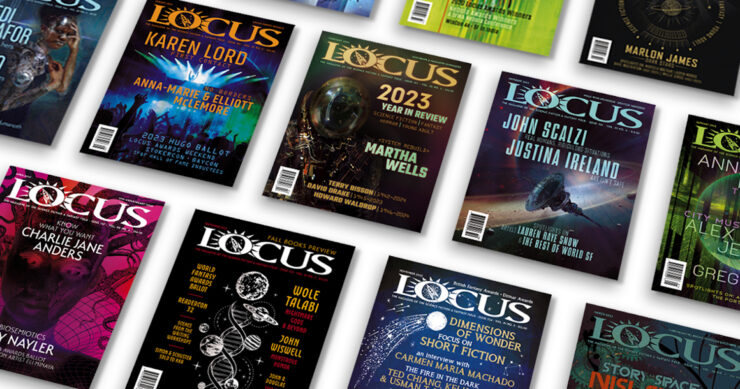
I grew up reading Gardner Dozois’ Best Of anthologies, but had no idea that the vibrant Philadelphia speculative scene thrived only a short train ride from my high school. Finding anything beyond my local bookstore (it was an amazing place) and library (ditto) that connected my love of science fiction and fantasy with community was difficult, in part because I didn’t know where to look. Granted, I was trying to do this before social media or even fan boards were very common (*sounds of dinosaurs roaming the land*).
Once I found those, I discovered online writing workshops, Viable Paradise, and Locus Magazine, and the world opened up.
When someone is new to a city, or even returning to a familiar city that has changed in the time since they last lived there, finding one’s way is sometimes a funny, complex thing. There’s either so much to look at, so many signs and directions, or not enough. Even with a phone and a favorite wayfinding app, it’s disorienting. Plus, one might wonder if they’re missing a lot of the good stuff—the places and people only the locals know about.
Same thing goes for finding our way through genre communities, it turns out. Even for those of us who’ve grown up reading Best Of anthologies, and maybe even those who were practically born at a con, navigating the ever-changing speculative community sometimes feels like a job all on its own.
For those of us who love it here, it’s a complex job, especially as many online wayfinders and apps grow less and less useful for finding our way.
Locus—for me—is a map to us. It is, and has been for many years, a way to find out about new authors and imprints, new events, new opportunities. It is a chance to cheer for friends and peers when their faces appear in the pages, to read about what inspires a writer or an editor, and to watch our layered community grow and change.
From its gorgeous covers to its reviews and the in-person moments (interviews, meet-ups, those amazing photographs of conventions), Locus staff and creators are out there making sure we see ourselves, stay informed—and even find ways to connect on deeper and better levels. They do interviews, take photos, remind us (thank you, Arley) to respond to that questionnaire, and treat our work and us with the care of cartographers.
As a teacher, I recommend that my students investigate the (deeply discounted) student subscription, just to get an idea of the lay of the land. I ask them to check out the profiles of authors they’ve never read before within the pages of a back issue. I suggest they pick an event listing and try to go. Using a Locus subscription is a professional skill, and I want them to acquire it early.
Taken month-by-month, the editorials and articles, the classifieds, and everything in between, is a vital guide to the community. Taken as a whole, over the arc of its ongoing history, Locus is a visceral meta-map of who we’ve been and who we can become.
Locus is important to me because it is our community’s map to us. And every time I open it, I find new places I want to explore.
Locus Magazine is running their annual fundraiser from May 5th to May 31st. Go here to donate, subscribe, or get one of their amazing donation gifts.

Locus is a treasure. Thanks for writing this.