






For the uninitiated—if any of you are still out there—Wicked: For Good is not a sequel. It is a second part, which is to say, it is the second act of the Broadway show. The second act, on stage, is about an hour long. The movie is over two hours. That’s a whole hour in which director Jon M. Chu and screenwriters Winnie Holzman (also the writer of the musical) and Dana Fox could have added character depth, connective tissue, and more to what is generally agreed to be the musical’s weaker second half.
But that’s not quite what happened. Wicked, part one, was a huge-budget, generally charming adaptation of the first half of the musical, buoyed by excellent performances from its leads, especially Cynthia Eriovo as Elphaba, the Wicked Witch of the West. It made missteps—I am still grumpy about what they did with “Defying Gravity”—but it got where it needed to go.
For Good never quite gets there. After a strong opening, the magic begins to leak out the seams in this less magical trip to Oz.
Because this is part two; because this movie has already broken box-office records; because of the specific things about it that fall apart, this will be a spoiler review.
An unspecified amount of time has passed since Elphaba’s climactic confrontation with the Wizard—it’s twelve tide turns, a cute description that may or may not mean “a year”—and either the green girl has been troubling Oz with her resistance, or the Wizard (Jeff Goldblum) and Morrible (Michelle Yeoh) have been saying she has. Whether there’s any truth to the propaganda or not, the result is the same. The people hate her; the printing presses of Oz are clearly working overtime to create the sheer number of banners and flyers that are plastered all over the countryside and the Emerald City; and Elphaba herself is living in a very cool treehouse, undeterred.
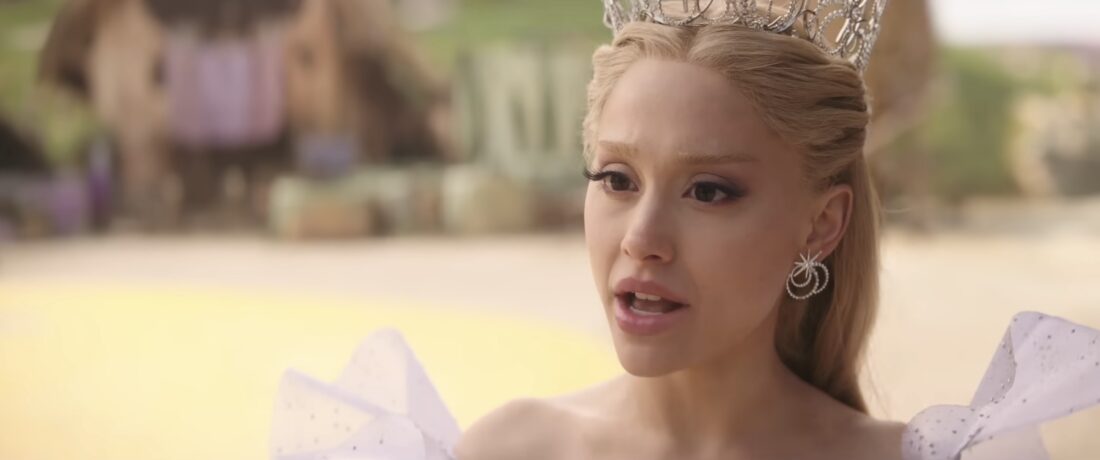
Meanwhile, Glinda (Ariana Grande) is the face of goodness, though obviously it’s not all that good to surprise-engage yourself to a man who’s never been that into you anyway. It’s all part of Morrible and the Wizard’s propaganda campaign: A perfect pink princess needs a perfect handsome husband, no? A wedding will lift everyone’s spirits! And so Fiyero (Jonathan Bailey) gets swept up into Glinda’s bubble—though he is something of a double agent, serving as captain of the Gale Force (get it? Gale?) while secretly trying to find his beloved Elphie before anyone else does.
He actually looks a bit torn up about it. Bailey does the best anyone could with a woefully underwritten part. Fiyero is no longer the loose-limbed playboy from “Dancing Through Life,” who believably charmed every single person at Shiz. He’s now painfully upright, all stiff and soldierly, but Bailey’s face is a gorgeous array of microexpressions. He can’t voice his unease, but he shows it. Most of Oz doesn’t really deal in subtlety, so they don’t notice.
Oh, Oz. I can’t remember a time since Return to Oz in which Oz has seemed like a place and not an elaborate set. You can argue that that makes sense here, that this is a musical, so it might as well look stagey—and I do love the stage for the Broadway show. But film is not the stage. On film you can have scale, a thing which For Good sorely lacks. Every room in the Emerald City is massive, but somehow Kiamo Ko, the castle to which Elphaba retreats, feels small and dark and cramped. As the setting for “No Good Deed,” it just looks unfinished.
Oz just seems small. Big empty rooms, little empty-headed people in Oz. As a rule, everyone in Oz who is not a named character is terrible. Regular Ozians believe every bit of propaganda they are shown. They have no thoughts in their elaborately coiffed little heads. They either cower in fear or cheer on the Wizard’s totalitarianism; the entire guard seems happy to beat sentient Animals and drag people off for imagined crimes. It is not hard to believe, particularly at this moment in time, that large portions of a country’s populace would be absolutely happy to leap to the service of a corrupt regime. But all of them? You only have to look around to realize how absurd—and cynical—that is.
For Good is not here for nuance. It is here for strangely lit spectacle, for beautifully detailed costumes, and odd flashback choices, and often peculiar stagings of beloved songs, and for eventually winding up in the one place that it works well: The space between Elphaba and Glinda, their heads close together, sharing secrets.
To Chu’s credit, he does try to bring the women into each other’s orbits a little bit more than they are in the Broadway version. Glinda is present for Elphaba’s big scene with the Wizard; the little throwback to the Ozdust Ballroom scene from the first film is one of For Good’s moments of joy. The push-pull of their strained friendship leans one way, then the other: Elphaba accidentally ruins Glinda’s wedding, and Glinda accidentally gets Elphie’s sister killed. They have a downright comical fight, everything goes to hell, and Glinda finally has a change of heart. The fully forgettable new song that accompanies this is staged inventively—I kept thinking of Labyrinth—but adds almost nothing, and what’s more, it’s sung in third person, putting Glinda’s awakening at a strange remove.
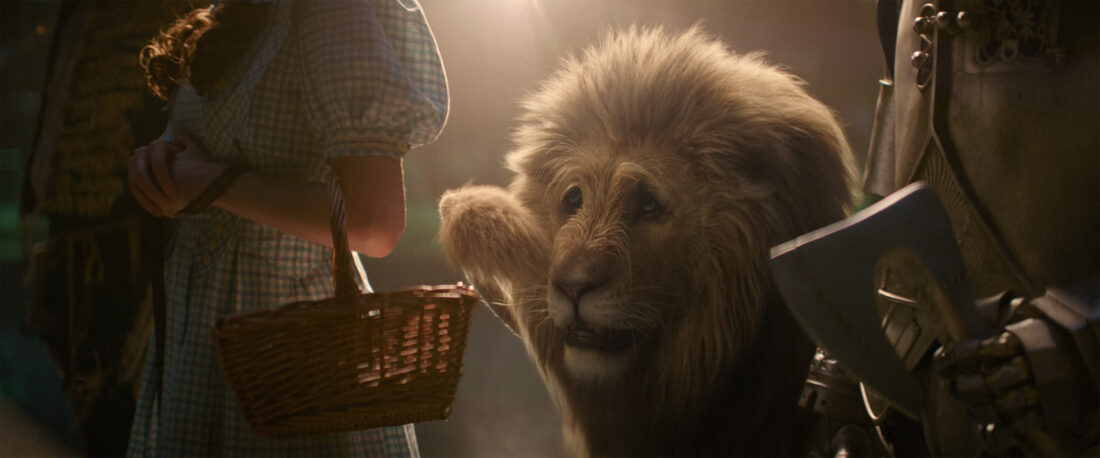
But it’s less of a mistake than Elphaba’s new song. One of the things that works best in this movie is every single appearance of the Animals, the sentient creatures being terribly oppressed by the Wizard. (In Gregory Maguire’s original novel, the sentient Animals get a capital A; whether the movie does this or not I don’t know, but I find it a useful distinction.) They are Oz’s others, threatening simply by virtue of their difference, and in an opening scene, Elphaba frees some of them from enslavement. The Wizard’s soldiers are using bison-like Animals to build the Yellow Brick Road, driving them on with cruelty. This is the only time we get to see Elphaba’s resistance in action. Her fight is not just against the Wizard, but on behalf of the oppressed and different.
You can read this scene as standing in for whatever other trouble she’s been causing since we last saw her. It’s effective, and it’s also just plain cool: The Witch in the skies, the bison-like creatures breaking free, all against the vibrant, inorganic yellow of those blasted bricks.
Those bricks, as it turns out, hide a secret passageway out of Oz. Later, Elphaba comes across a large group of Animals who are heading to whatever awaits them out there. Her new song, “No Place Like Home,” is an argument for staying and fighting for their homeland. “Oz is more than just a place / It’s a promise, an idea / And I want to help make it come true.”
Is it? Since when? Elphie, what are you talking about? The lyrics continue in an even more on-the-nose vein—“When you want to leave / Discouraged and resigned / That’s what they want you to do”—that is, in this country, fully relatable. But it doesn’t work in this Oz, and it doesn’t work in this story. Oz is underdeveloped, a place full of shallow people and corrupt leaders. And Elphaba, in the end, leaves it.
This could work, if we ever saw Elphaba torn about the decision, reflective, considering. I would love to see that. I would love for this movie to stay with her for a quiet moment. Glinda isn’t the only one who has to come to a realization here!
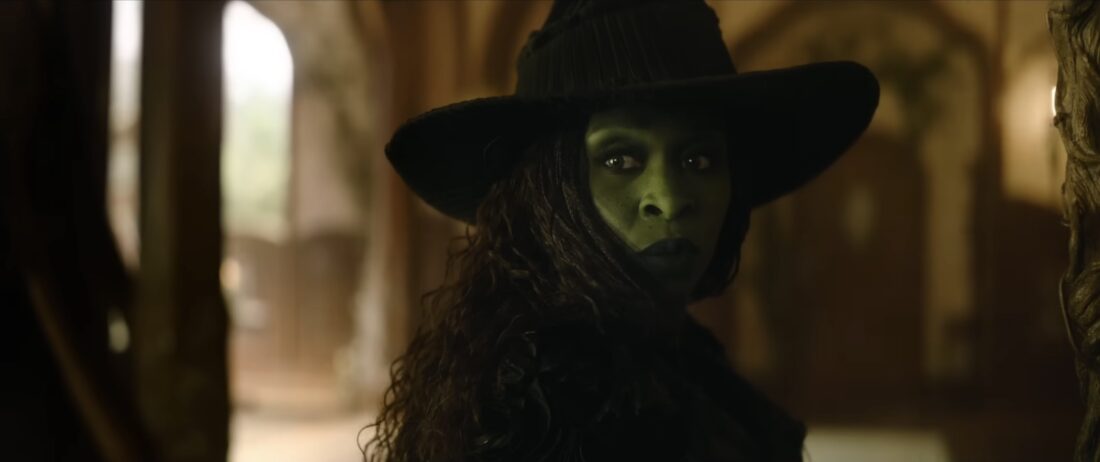
Instead, I think we’re meant to take “No Good Deed” as an incredible flounce, a decision, instead of a panicked response to Fiyero’s apparent demise. It’s a stretch. You can’t take “No Good Deed” literally, because Elphaba immediately does the “good deed” of accepting her fate as Oz’s scapegoat and letting “goodness” reign. The new song manages to be forgettable and simultaneously muddy up the story, all in one scene.
But at least it has Animals, including Dulcibear (Sharon D. Clarke) and the poor Cowardly Lion (Colman Domingo). All of the Animals are delightful, expressive, cleverly imagined; the dour face of Chistery, the lead flying monkey, is perfectly wrought, especially when he shows Elphaba the truth about the Wizard.
In the first film, Elphaba was tricked into hurting the monkeys. Here, she frees them, and they forgive her. This moment is easy to breeze past, but I think it’s important. There is not a lot of forgiveness in Oz: poor one-note Nessa (Marissa Bode) holds her bitterness tightly for no apparent reason other than that the story needs her to become the doomed Wicked Witch of the East (could we not have spent some of that extended runtime on her half-baked character?). The Lion blames Elphaba for his emotional state, a fact which we are told twice. Boq (Ethan Slater) blames Elphaba for the admittedly uncomfortable way she saves his life. In contrast to all this, watching the monkeys flock to Elphaba’s side was more moving than I expected.
Wicked: For Good makes nearly all the same mistakes that the Broadway musical’s second act does, and it musters up a few new ones as well. The problem it inherited is that it is simply too beholden to The Wizard of Oz, the iconic 1939 film. Characters are wedged into awkward shapes (literally and metaphorically) in service to that story, as the movie darts about checking boxes. The Lion, the Tin Man, the Scarecrow, check, check, check. (At least Dorothy is only briefly seen.) Two of these continue the Ozian tendency toward hate. One has no beef with Elphaba, despite the fact that he is transformed into a creature that looks like Ryan Reynolds playing the Beast from the 1980s TV series through a burlap sack. Bless you, Fiyero, you beautiful himbo; you are too good for this world.
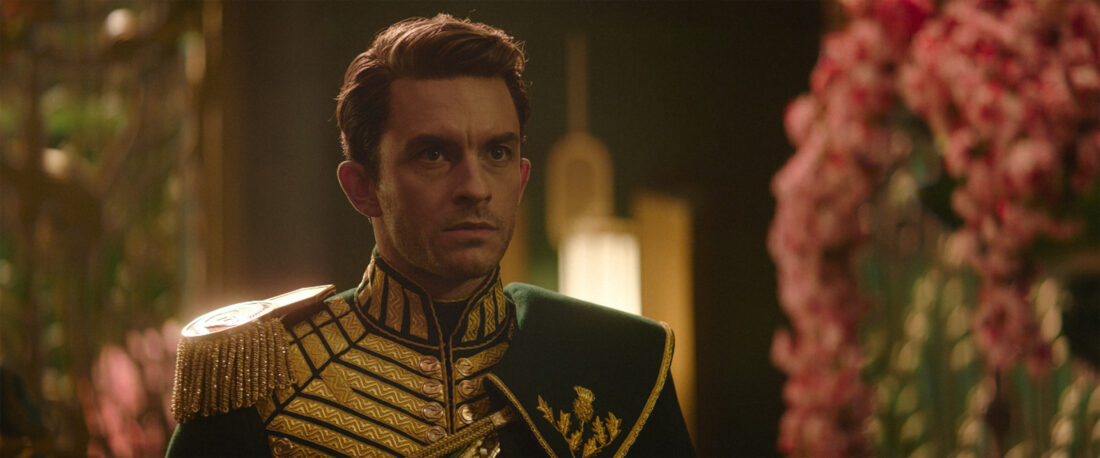
It’s possible I could forgive this movie for quite a lot if so many of the songs were staged differently. “As Long As You’re Mine,” as The Cut reported last month, has been stripped of its horniness. Elphaba sings “Kiss me too fiercely / hold me too tight” while being neither kissed nor held. Erivo’s delivery is as powerful as ever, but I watched this scene with increasing bafflement: What was Chu thinking? (The PG rating, I assume.) Eventually, yes, the two wind up in bed, and to give a fellow some credit, Bailey sells the whole thing. That man could look at a tomato like he will love it forever. But it needs to land—sexily—when Elphaba says “For the first time, I feel wicked.” Wickedly overdressed?
Wicked, in its entirety, has a wryness that’s largely missing here (only Goldblum seems to understand the dark heart of the thing, with his droll performance of a nasty man). Glinda, the Good Witch, is kind of a shit; Elphaba, the Wicked Witch, is the one with the heart. The Good one has to learn to be good; the Wicked one has to choose to put herself first. Isn’t it ironic? Don’t you think? I would love to think it’s ironic. I would love to be able to find that in this film. But Chu’s fixation on Glinda makes it feel as if she’s been the heroine all along—she’s not selfish, she’s just drawn that way! Grande takes from Kristen Chenoweth’s original Glinda all of the pep and sweetness, but misses her sharp edges.
Erivo is still a fantastic Elphaba—driven, passionate, powerful, she stalks through this movie all lonesome and proud, except when she finally gets her friend back. “For Good” is just as it ought to be, and the two women bring it to a heartwrenching close. I believe in them. I just have a hard time believing in the rest of the film, which lurches from place to place, scene to scene, never establishing place or character enough to give you something to hold onto. Elphie and Glinda can’t do it all themselves, but they’re asked to. The actors are up to it! The film is not.
That said, there are things I love in this film. I love the Wizard’s lush dressing gown, and the personality imbued into the animated Animals. I love Erivo’s rendition of “No Good Deed,” which will simply not get out of my head. I love the way Glinda watches Elphaba’s staged death, powerless and from the shadows—everything she hates, plus she’s losing the only person she really loves. I love that the movie makes that love stridently clear, even as it leaves it ambiguous. Grande can cry like nobody’s business, and in the rare moments where Glinda’s gloss wears off—where she drops her peppy voice and speaks from her broken heart—she fills that role in a rich way. If only there were more of those moments.
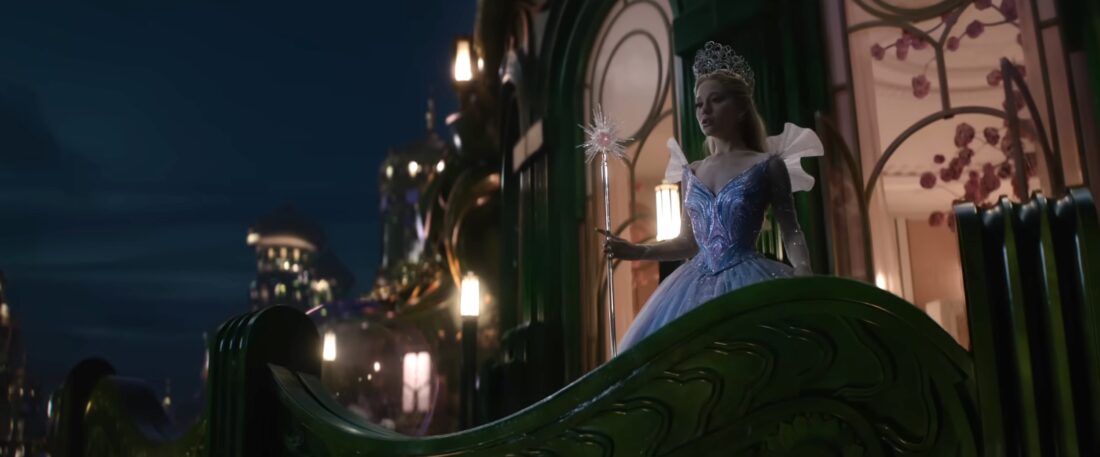
But why is this film so disinterested in the world in which it takes place? Why does the cyclone tear through Oz, and when does it even get to Kansas? Why is the Grimmerie such a MacGuffin? Why does the movie make Elphaba apologize for the flying monkeys so much—a spell she was tricked into doing—and barely ask Glinda to own up to her part in Nessa’s fate? Why is Madame Morrible so one-note? Why doesn’t that big cat eat the Wizard? She clearly wants to. (I know, I know: he has plot armor, and a balloon to catch.)
For Good wants to have it so many ways: It’s about besties, but it’s about besties who are having a (somewhat one-sided) fight about a boy even more than they’re fighting about their political stances. It’s about propaganda and questioning authority and looking out for those who can’t fight for themselves, but it never suggests that the put-upon Animals even could fight for themselves. It’s not afraid to be relevant to our political reality, but in the end, it suggests that the only effective way to fight is from within the system. Your pretty figurehead can get her shit together, but the weird girl with the passionate ideals will have to get out of the way. No one can deal with her version of how to fix things.
If I tilt my head dramatically, in a Glinda-like way, I can see it as the privileged girl finally doing the work and giving the outcasts and minorities a break. If I try very hard to put a good spin on things, like Glinda would, I can see it through her eyes.
Wicked: For Good is a bittersweet story about giving up the things you love in order to maybe, sort of, do what’s “good.” It’s at times deeply affecting and at times unintentionally laughable. And it’s also at once overstuffed and a little hollow, full of frills and frippery that feel as if they’re meant to disguise the thinness of the character arcs and strange sense of both rush and plodding. We’re asked to believe that Elphaba loves Oz, but why? Who could love this pink-and-green Disneyland full of mindlessly cruel people who’ve never had a thought of their own? No wonder she begs the Animals to stay. They’re the only people who might be good company.

I saw both of those in packed cinemas, and the first one, the atmosphere was joyous. The second, segments of the audience were hooting with laughter, and not WITH the movie, The bed scene, it was nigh impossible to hear what was (about to be) going on, and pretty much every later scene with Fiyero received the same treatment. The only character that hit the right notes with this crowd was Oz. The final scene (no spoilers) was greeted with derision. A little unsettling.
Huh the end being met with derision is a little unsettling yes I remember the end of the play being loved when I saw the touring version. Unsure what that says about the mood of the country…
“The Wizard’s soldiers are using bison-like Animals to build the Yellow Brick Road, driving them on with cruelty.”
They appear to be Elasmotheriums, the only prehistoric beast to pop up among the current-Earth-normal animals in the film.
Oh, I love this! Thank you for the detail.
Interesting – I hear the book is very different than the play much more pointed and much more overtly political. I wonder if they were trying, and evidently failing, to do that here. The movie has been hailed by some as the most political movie of the year (for big budget movies that got a lot of play not a high bar – but I expect there are some indie movies that are very upset right now).
So I am unsure on this as I have not sought out spoilers, but I would not be surprised if the death in the book is not staged and the whole I move to another world is a happy supposedly needed stage musical happy ending – the rule seems to be that musicals can’t have tragic endings, which I think is unfortunate (someone with more knowledge on plays than me correct me if this is wrong – but every musical I have seen ended happily guess this is the difference between musicals and opera?)
On “No good deed” I did assume that was a decision when I saw the touring version of the play (which as someone that loves the original wizard of Oz I expected to hate but ended up loving) a decision though not to do what her world saw as good. For loving Oz the candy colored road and the pink and green disneyland is what people loved and still love about the original movie. I don’t think the play works if you don’t have some of that love for the original movie.
And yes the play, and the movie is about incremental change from within the system – how well that works will depend on the individual watcher.
Re: unhappy endings: Hadestown would like a word!
Still loved it.:)