





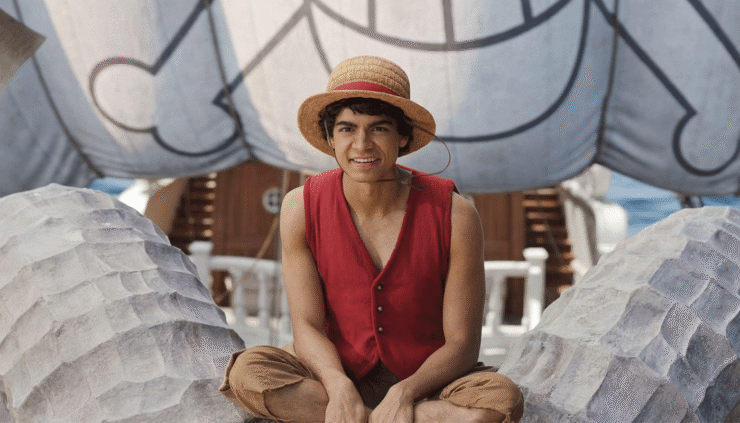
When I find myself caught in the aftermath of abrupt, unexpected unemployment and resigned to spending a month merging with my sofa, eating too many consommé chips and feeling hopeless about my squandered potential, I cope as I have always coped: I decide to make something.
I harvest cardboard from a pile of boxes I have repeatedly failed to collapse in time for recycling day. On the cardboard I trace a plate, twice, and cut out the circles, Then I tear another long strip of cardboard free and hot glue it between the circles to create a squat cylinder. Some part of my brain that has been dormant since the pandemic prematurely ended my cosplay days has begun to spark…
I leave the apartment for the first time in days (and take out the recycling, too). I ride my bike to the nearest Daiso and buy craft foam, hot glue sticks, acrylic paint, and paperclay. And because I am already outside, I take the long way home through the park to see the cherry blossoms. Finally, I return to my cave and craft until my fingers are powdered with drying clay and hot glue is solidifying into little stalagmites on my bookshelf.
My sister calls, and I set down my monstrosity. One highlight of being a sudden NEET is having the time to stream shows with her from afar. We’ve been enjoying a bizarre double feature this spring: we watch an episode of Interview with the Vampire followed by an episode of Netflix’s One Piece. Turns out that Friendship and Adventure on the High Seas is the perfect chaser after wallowing in Toxic Immortal Marital Dysfunction, so we are careful to never swap the viewing order.
“Look! I am making a transponder snail,” I tell my sister. Transponder snails are a staple in the One Piece universe, a race of telepathic gastropods capable of perfectly mimicking speech. Their unique abilities make them ideal tools for seafarers, who use them to communicate with each other from anywhere on the planet. It’s a mostly symbiotic relationship, because the snails’ keepers feed them lots of cabbage. The snails typically dress like their keepers, too; whether this is a result of psychic resonance or, as my sister adorably suggests, the owners sew them into those tiny costumes, is unclear.
While watching One Piece’s pilot episode, full of apprehension, it was not the pitch-perfect casting or the commitment to the story that really won me over. It was the damn snail phones. When I first saw one on Garp’s desk, its shell painted in the fetching blue and white of the Marines, I nearly screamed. “They kept the snail phones! Oh my god!”
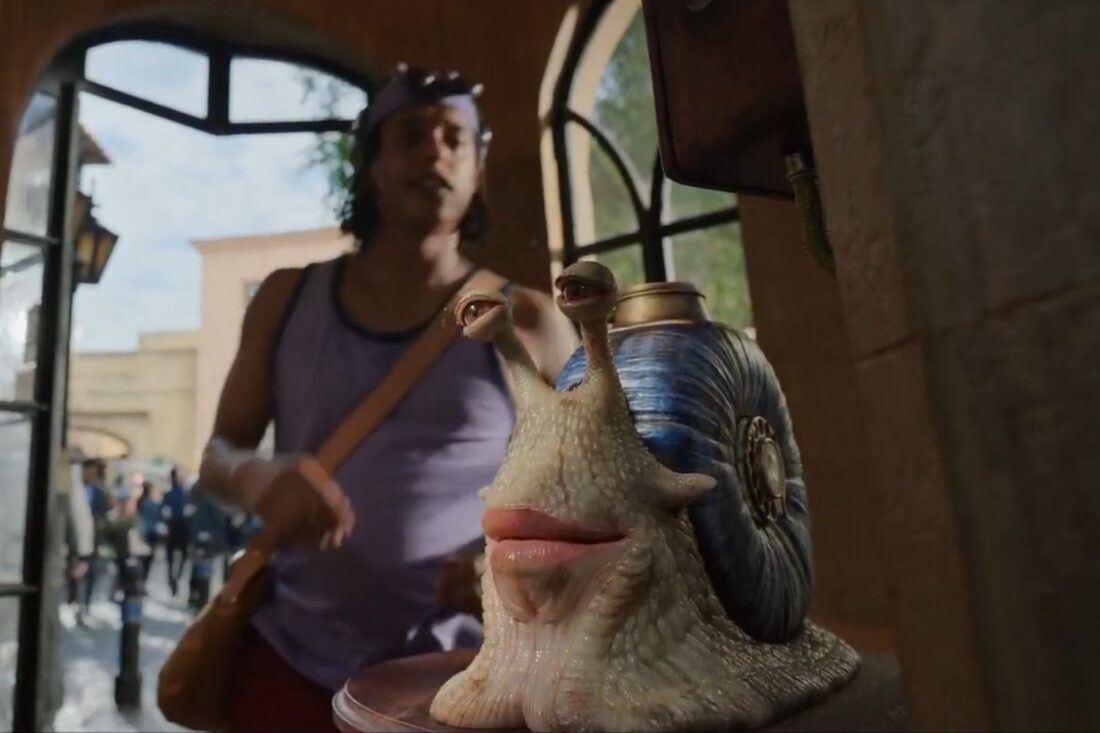
To me, the inclusion of transponder snails signified that, against all odds, this adaptation was going to be great.
I tell my sister that I need to return to Daiso for Styrofoam balls for the eyes, and I need to get false eyelashes, too. I am undecided on the costuming front. I do not want to dress it like me, because no snail deserves to wear my depression pajamas.
“I hope it turns out,” I say.
“I know you. You’ll pull it off. It’ll be amazing.”
My sister has always been my Luffy, an unfailing buoy that keeps me afloat. She does not doubt that my snail will be a beautiful monstrosity. In my darkest moments, from an ocean away, she helps me appreciate being alive.
An Impossible Voyage
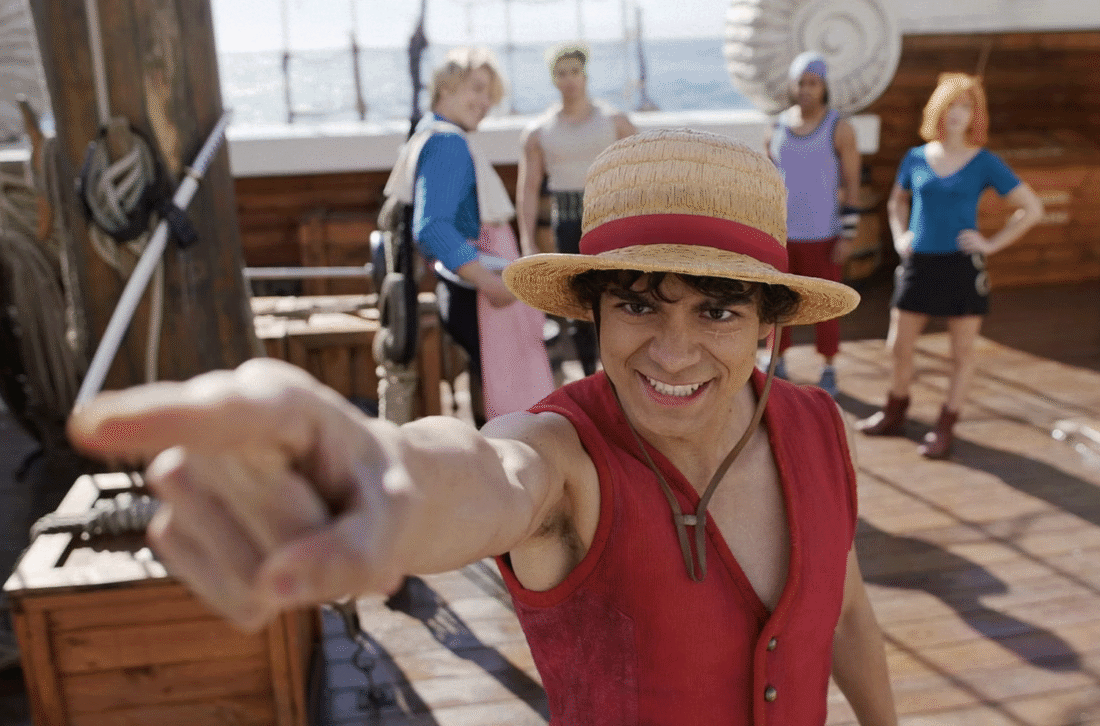
Like millions of people around the world, I have loved One Piece for a long time. I began my obsession in 2010, and binged the entire anime (at that point, a paltry 450 episodes or so) the same summer I attended the Clarion Workshop in San Diego. I remember doodling Luffy on my workshop notes, his scarred, grinning face squished in the margins alongside a wide variety of constructive feedback. I aspired to write worlds as colorful and characters as delightful as Eiichiro Oda.
I kept up with the manga and anime for several years after, but even the most devoted fans will tell you that loving One Piece can be a chore. The anime’s pacing is criminally beleaguered by flashbacks and padded recaps, which seem to be Toei Animation’s main strategy for milking the heck out of this golden goose. The manga is probably the saner option, though that too is one hell of a commitment. As of this writing, there are 1,179 chapters of One Piece. My Good Judy, Bridget, is a diehard who proselytizes reading the manga. “If you read ten chapters a night, you can actually catch up in about three or four months!”
Recently, our conversations inevitably drift from the terrifying state of the world and our awful job prospects into safer waters: extolling the wondrous achievements of the live-action adaptation.
“Did you see the details on Robin’s coat? The fur trim and the studs?” I ask.
Of course she’d noticed them. Bridget and I met through cosplay, but she’s an actual seamstress who works in the fashion industry. Every time she sees wild costume designs in Eiichiro Oda’s manga, her subconscious mind starts patterning, imagining how best to rouche Perona’s skirts or drape Ivankov’s cape, how the pleats of Bon Clay’s singular pantaloons would come together. Seeing a fabulous costume department translating these designs into reality must be incredibly satisfying.
We talk a lot about how much Taz Skylar’s Sanji is an improvement on the source material. Sanji is a great character, but much of that greatness was hampered by tiresome fan service that failed to land even in the ’90s. Sanji is a suave cook with a mean kick and a streetwise sense of justice. But an annoying gimmick had him going full heart-eyes and horny on main whenever any girl got within spitting distance. The live-action showrunners—and possibly Oda himself, who serves as a creative consultant for the Netflix adaptation—revised this characterization and cast the role impeccably. Skylar, a Spanish-British performer with playwriting chops, imbues Sanji’s little flirtations with charm rather than cringe. His smirk is a wonder. Most importantly, Skylar portrays Sanji as a compassionate friend who lets no one go hungry. “This is Sanji as he should be,” Bridget remarks. “It’s like they found the essence of the amazing character he is at heart.”
We have endless conversations like this, conversations about all the correct decisions that make this adaptation sing. Though it feels blasphemous to say aloud, in some ways, Netflix’s live-action adaptation is the best version of One Piece.
Smite me, if you must. I won’t retract the statement.
A Very Queer Crew

Regardless of whether you’re reading the manga, watching the anime, or watching the Netflix adaptation, One Piece is a series that exemplifies the concept of found family. Every character is a traumatized oddball, and when you put a bundle of traumatized oddballs together, you get one fantastic little pirate crew.
For anyone unfamiliar: rather than strictly pillagers and thieves, in One Piece, a pirate is defined as anyone who takes to the seas to pursue a dream, heedless of law or consequence. The world of One Piece is an oceanic planet scattered with unique islands. Those who rule the seas rule everything. Before his beheading, famed pirate Gol D. Roger instilled a lust for adventure in mankind by announcing the start of a pirate era, asking the new generation of pirates to seek his treasure. Orphans, princes, clowns, drag queens, warriors, musicians and goths and superhumans and fishmen and just about everyone other kind of person immediately took to the seas. Among them? A bullheaded young wastrel named Monkey D. Luffy, who once ate a Devil Fruit that gave his body the properties of rubber. Strange? Yes. But also very useful in a fight. Luffy gathers his own crew of pirates under the Straw Hat banner and declares, time and again, that he’s going to become the king of the pirates.
The Straw Hats are the quintessential motley crew, and in the live-action show, so are the people behind them. The main cast is made up of performers from five different continents. Such a diverse cast would usually result in a racist online outcry from a few losers, but those voices were quashed quickly in this case. The cast has been embraced with enthusiasm by the fandom. It is impossible to measure the impact that casting a Mexican as Luffy has had for Latin American fans, or how overjoyed Japanese fans were when darling star Mackenyu took up Zoro’s swords. Then again? One Piece has always been filled with incredibly diverse representation.
The franchisehas a lot of queer fans in particular, thanks to characters like Bon Clay, a twirling ballerina assassin-turned-ally who refuses to pick a gender. Bon Clay’s upcoming appearance in Netflix’s third season is very highly anticipated, bolstered by the casting of Tony winner Cole Escola.
One Piece is a story that encompasses all kinds of love, but rarely involves any romance. Instead, its characters fixate on what they love in a broader sense: the dreams they are passionate about. Although Usopp has a sweetheart back home, he aspires to become a great warrior before seeing her again. Nami, a navigator, wants to draw a map of the whole world. Sanji seeks a mythical ocean and all the gourmet fish he’ll find there. Zoro wants to become the world’s greatest swordsman in order to fulfill a promise made to a departed friend.
And Luffy? He’s considered an asexual icon. Any characters who attempt to woo him are doomed to disappointment. When faced with any stone-cold hottie, our captain is likely to compliment their hat or ask if they’re going to finish their food. Romance does not cross his bizarre, stretchy mind.
In fairness, a lot of things don’t.
O, Captain! My Captain!
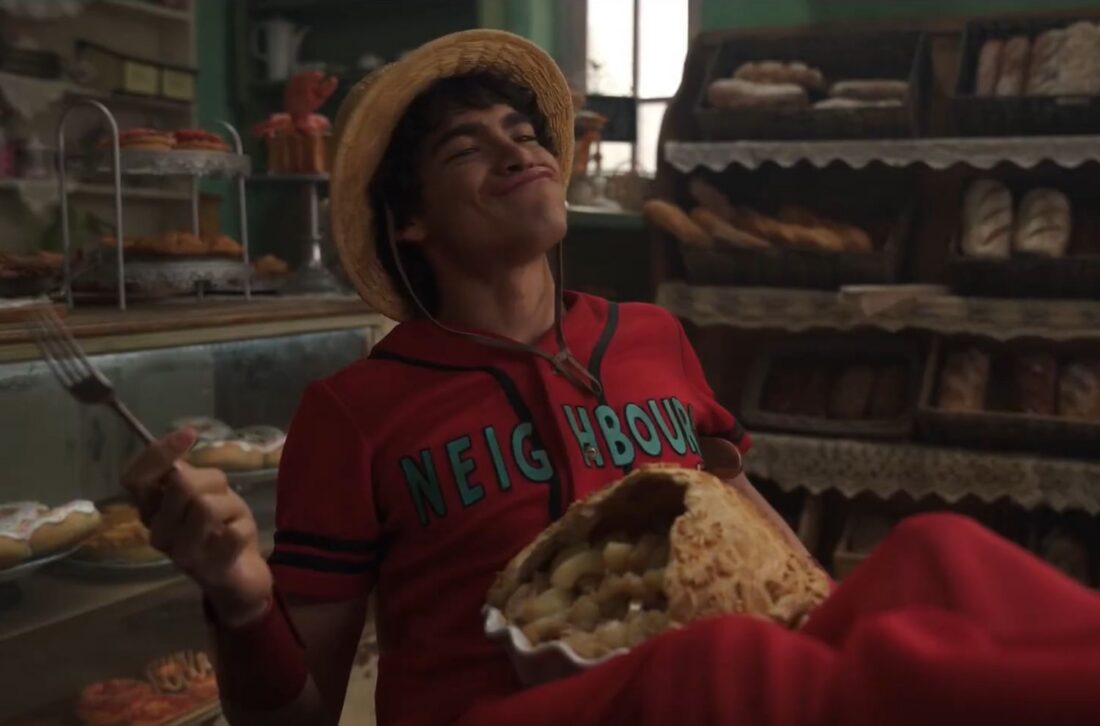
Oda makes a point of never revealing Luffy’s thoughts. Luffy says precisely what he thinks in the moment, or says nothing at all. He is a character incapable of deceit. Though he defends the wronged without hesitation, he also refrains from killing his enemies, because he knows that they, too, have dreams. Luffy is an enigma, the rare shonen hero that never breaks character. If his friends are sad, he punches the offender. If his dreams are dismissed, he doubles down. Canonically, he is often called an idiot. While he is the sort of doofus that literally gets his head stuck in holes and puts everything in his mouth, he’s not stupid. Luffy doesn’t have to think. He has surrounded himself with trustworthy friends who pick up the slack on the thinking front. He does what he feels like doing and that’s usually doing what’s right. Inevitably, people are swayed by his pure determination and essential goodness.
Given all of this, finding the right actor for Luffy was sure to make or break the live-action adaptation.
Fortunately, Iñaki Godoy is about as close to Luffy as a human being can be. He is energetic and a little offbeat and entirely committed to what he does. After the first season wrapped, Godoy learned Japanese so that he could speak to his fans. He went on an 80-day Caribbean voyage to learn more about sailing and navigation. His eyes gleam in interviews, his joy palpable.
As tough a nut as Luffy is, Godoy’s enthusiasm for the role goes a long way towards cracking him. As Oda himself remarked to Iñaki when the pair finally met in person: “When I began writing One Piece, it was impossible to do a live action of something like this… now VFX and technology have improved. I began to think that if I could find a reliable team, it could be possible. But my biggest concern was whether someone like Luffy could be found.”
But Oda recalls laughing at Godoy’s audition tape: “This person was born to play Luffy!”
Godoy isn’t the only perfect fit. Taz Skylar trained for months so he could do his own stunts. Jacob Gibson’s Usopp is the cautious voice of reason rather than a sniveling coward. Mackenyu’s Zoro is understated and magnetic, and Emily Rudd’s Nami provides the right degree of wry exasperation to balance out the rest of the crew. Season 2 newcomer Charithra Chandran, who plays Princess Vivi, brings real acting chops to the program. A special nod to the two actresses and one actor who all collaborate to play Chopper. One’s a voice actress, another’s in motion-capture nodes, and the other’s a big guy in a fluffy suit. Their group effort reminds me of what Andy Serkis and Wētā Workshop pulled off with Smeagol/Gollum 25 years ago. There are fantastic turns by seasoned performers, notably Katey Sagal as Kureha and Mark Harelik as Dr. Hiriluk (those names are far too similar!).
The cast is luminous and gleeful in press interviews, and while cynics may insist that they’re simply promoting the show, their interactions give off a real aura of playful camaraderie. These people love what they’re doing. They get to be in One Piece.
This euphoric atmosphere extends beyond the main cast. On social media, actors in even the smallest roles post set photos and fans flood their comments with affection. Actor Daniel Lasker, who steals the show as what might otherwise have been a throwaway villain, Mr. 9, was a fan himself before he was cast. “I have got to get onto this show,” he told himself. And then he did, and he nailed it with his pinkies raised: “It was a dream come true.”
Netflix’s One Piece really is a dream come true for so many, and even more so because its source material, while immensely popular, has always had detractors.
Boobs on a Stick?

Oda is endlessly criticized for how he draws women, and Toei Animation hardly helps. Screenshots from the anime get constant flak on subreddits like r/mendrawingwomen, so much so that posting Nami or Robin is considered low-hanging fruit—“boobs on a stick” is a frequent accusation online.
But Oda’s approach to illustration in general has always been divisive. Rather than the sleek, attractive protagonists featured in most manga and anime, his artwork recalls classic cartoons and ’80s bombast. It really isn’t to everyone’s taste. The anime’s tropical pastel colors likewise set it apart from gloomier shonens. One Piece is a little tacky, and that aesthetic is love-it or leave-it.
Infamously, Oda began drawing the Straw Hat women in skimpier clothing after a time-skip in the storyline. In my headcanon, I picture an editor telling Oda he should lean into fan service to sell more figures. Oda shrugs, because there are few things as unsexy as One Piece. He tacks muscles onto muscles and inflates some chests and calls it good. Oda draws his men as abs in a jacket or as lanky beans. He draws his women as long-torsoed oddities or witch-faced terrors.
Everyone looks ugly. That’s it. It’s One Piece.
In a medium where art is all too often interchangeable between creators, perfected to sell keychains and stickers, Oda’s signature style never quite fits. I love it, in the same way I loved Tim Burton’s gaunt character designs in my youth.
Bridget and I joke about all the scruffy white-haired sadboys of anime, characters who are often fan favorites. The Satoru Gojos and Killuas and Kaworus and Kaneki Kens. And what about all the moe girls with docile faces that could be transplanted into an entirely different show and no one would notice the misfit?
Meanwhile, Oda is throwing a metal nose on a blue-haired Ace Ventura and drawing a vampire musketeer warlord and putting a cowboy hat on a Ghibli hag-witch.
What does all this discourse have to do with the live-action?
Nothing at all! That’s the glorious thing. All of this is irrelevant when it comes to enjoying the Netflix adaptation. Oda’s art style, a high hurdle for some, no longer factors in. Finally, all those people who said, “I can’t stand his art” have no excuse for missing out on a great story.
Historical Reenactment, or The Gap?
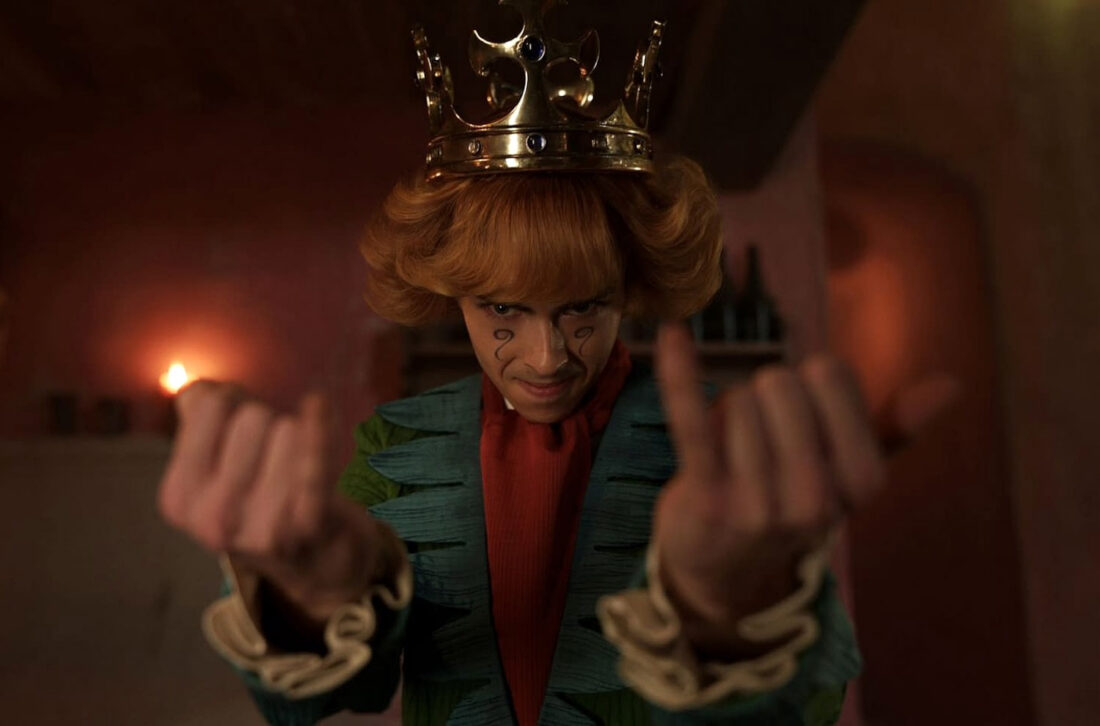
In Netflix’s version, instead of ugly art we’re treated to eclectic, playful costuming. My sister and I have endless opinions on the various wigs and headgear. Highlights include: Zeff’s amazing braided mustache, which bobs when he speaks; Igaram’s curly barrister wig, which hides several cannons in its coils; Ms. Valentine’s Kate Spade mod lemonade ensemble; Mihawk’s impeccable goatee. The costuming, even when it misses a bit, is a huge contributor to establishing a real sense of the world of One Piece. This is a world that’s both similar to and completely unlike our own. Here, anachronism isn’t a thing and fashion rules do not exist. If you want to dress like an evil kitty cat or a demented clown, go off. As drag queens Katya and Trixie Mattel declare in their coverage of the series, “Are we in a historical reenactment, or are we in The Gap?”
Does it matter? I’m buying it.
The same goes for the stagecraft. Practical effects and stuntwork are a huge part of the production. The second season’s third episode, “Whisky Business,” contains one of the best, longest fight sequences I’ve seen in years. Watching Zoro slice up a hundred attackers in a tavern never once grows dull because all of it is done on a real set with real actors using acrobatics and props. The fight choreography throughout the series is reminiscent of old kung fu films. While the fights are far from realistic, they feel so much more visceral because they incorporate very little CGI. When Sanji kicks, he’s really kicking. When Usopp falls, he’s really falling.
I haven’t gone into the set design only because I am close to writing a book at this point. Suffice it to say that they have spent every penny selling these places as real. I have seen behind-the-scenes footage that reveals they built the inside of Laboon the whale’s mouth as a set rather than faking it on a green screen. On a lot in South Africa, they also built a full pirate ship. The Going Merry is real, and recently embarked on a new journey, towed to a new filming location in preparation for season three, One Piece: The Battle of Alabasa.
The music is another labor of love. Orchestral themes nod to an iconic anime opening. The credits feature unique versions of the score tailored to events in the episode, such as a Viking chant added to an episode featuring fighting giants. Doctor Hiriluk whistles the Tony Tony Chopper song in his woodland laboratory.
In a moment that made me teary, much to my sister’s confusion, we meet a pirate named Brook. Brook plays his violin and sings to a young whale. I know what is to come for Brook, the terrors he will go through: when next we meet him, he will be a living skeleton aboard a ghost ship. My sister doesn’t know this, but it doesn’t matter. She enjoys the scene because it is lovely.
Somehow, this adaptation has bridged an improbable gap, appealing to fans and newcomers both. We all know that most live-action anime adaptations truly suck. There are so many ways One Piece could have gone wrong.
At one point, Zoro and a guard stand on an icy wall in a treacherous kingdom and discuss Luffy’s latest reckless attempt at helping a friend.
“I don’t know whether to marvel at their perseverance or shudder at their foolhardiness.”
“Yeah,” Zoro says, plain as ever. “That’s our captain.”
And maybe that’s Netflix’s adaptation, too.
Foolyhardy?
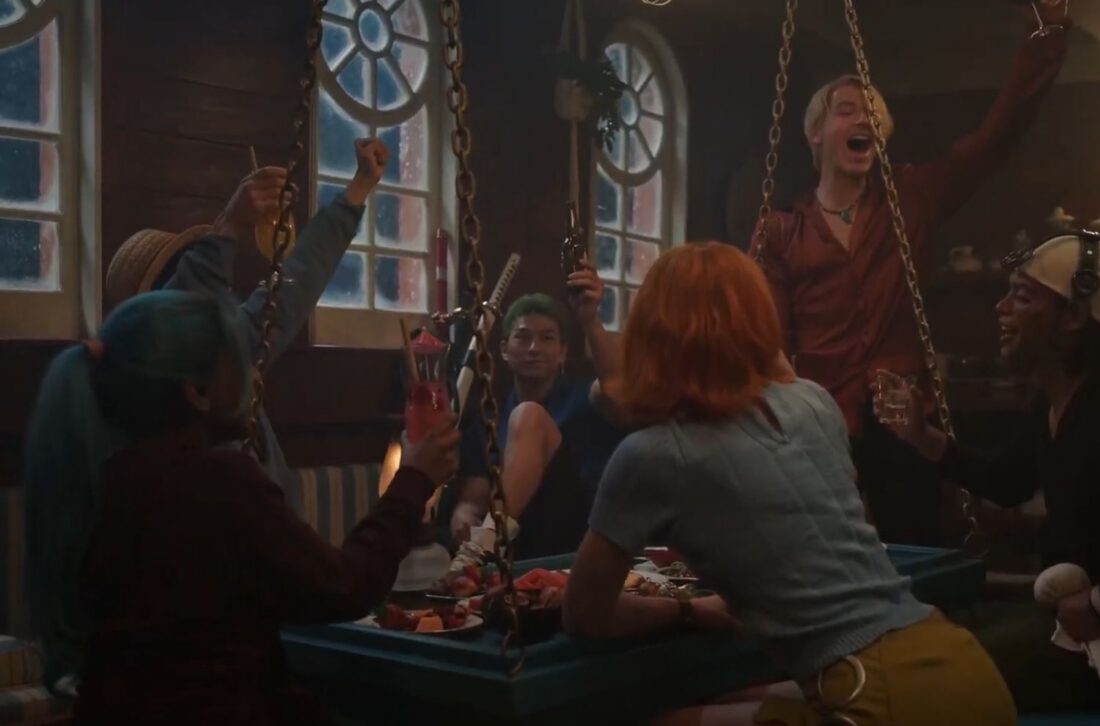
In One Piece, there are good and bad marines, and good and bad pirates. There are lovable monsters and monstrous human beings. The villains are rarely villains in their own minds, and the heroes are outlaws. A huge theme that drives the whole narrative is the idea that a new generation is taking over, and the elders are resistant. The new age has begun, and it’s time to let the youth make what they will of the world. Given how badly the older generations have screwed things up, why not let them try?
The dreams of the Straw Hats are lofty and ludicrous. But so too is the world they are in. It’s a world in which fruits give people body horror superpowers, and a man fights with a sword in his mouth, and giant sea monsters may bite the arm off your substitute father figure. It is also a world where a steel-jawed tyrant has been allowed to abuse his citizens, a nation is held captive by a criminal organization, and the military is polluted by corruption. Sometimes, a ludicrous answer to real problems has a jubilant impact. It is not surprising that the Straw Hat Jolly Roger has become a real-world symbol of protest. Last summer in Indonesia, citizens flew the Straw Hat insignia instead of their nation’s colors to express their discontent. The heart of One Piece is liberation, about defending your friends and facing down fascists and punching them with a rubber fist. It’s about pulling through, triumphant and joyful.
Lately, I have sometimes wondered whether I will pull through. I have seen my dreams as ludicrous and my situation as hopeless.
But.
My dad, who is also smitten with the Netflix adaptation, puts it simply: “It’s a great show. It just gives me hope.”
It gives me hope, too. My dad and I talk about series villains who are modeled after icons of pop culture, such as Miss Valentine, who was inspired by ’60s icon Twiggy. I tell him I hope the show continues long enough for him to meet the terror that is Doflamingo.
“Fans call him Evil Elton John.” I send him a picture of Doffy in all his feathered glory.
“Brian Eno wore boas like that when he was in Roxy Music.” Dad sends me a picture of Eno in all his feathered glory. We agree that Doflamingo is a glam-band nightmare.
If we are finally in a universe where retired dads can watch and love One Piece, maybe we aren’t entirely doomed. Maybe a new generation can redeem an old one, as Gol D. Roger intended.
I tell my dad about my transponder snail.
In the live-action adaptation, the snails look like melting Jim Henson creations, textured with tubercles and airbrushed with care. Someone has individually sculpted little chompers in their mouths. Clearly, the props and prosthetic department, helmed by Jaco Snyman, is fueled by the same determination as everyone else on set. That same determination somehow bled through the screen, pierced my stupor, and got me off the fucking sofa after a month of melancholy.
A snail phone is a ludicrous dream.
I tell Dad I might turn my snail into an office supply holder, so I can put it on my desk at my new job. I have finally begun teaching again, at a high school full of kids who aren’t yet entirely fed up with the world.
“Get your feet under the desk before you put a snail on it.” Sage advice, perhaps.
Then again, I think, thanks to my own Straw Hat Crew and a great new thing to love, my feet are already—finally—there.


This series reminds me of another of my favorite Netflix series: A Series of Unfortunate Events. Both series are unafraid to just be weird.
I can totally see that. And both are based on beloved series for weird folk, too. Netflix sometimes nails it when they give fans the freedom to go bonkers.
I have never watched the anime, but this series is wonderful.
That’s exactly it! They bridged the gap! Any favorite characters?
I really love this series. The whole package is awesome. But Luffy? Just thinking about him makes me smile.
Missing the mark on Luffy would have been unforgivable. But they didn’t miss.
And the villains! Everyone is so eager to chew up their roles and it works because the whole show is larger than life.
Another wonderful article that encapsulates the joyful goodness of Ms. Thomas and the show. Thank you for sharing with us and congrats on the new job!!! Hope my 9 year old daughter has a teacher like you throughout her schooling!!!