





What do you remember when you think of books you read long, long ago? Plot? Character? Setting? Or something more nebulous?
I tend to remember how a book felt, which is about as nebulous as things get. There’s usually one lingering image in my very visual-reader brain, as well. Jo Clayton’s Serroi books feel defiant, a small green girl in a looming landscape. Melanie Rawn’s dragon books are regal, but there’s one image of a picnic that I can never shake, and another of a valley.
Patricia A. McKillip’s The Forgotten Beasts of Eld, on the other hand, is a mountain home, a dragon, solitude, and defensiveness. Rereading the book, which Tachyon Publications just reissued, was a singular experience: marrying those feelings with what actually happens in the book, which both is and is not what I remember.
The Forgotten Beasts of Eld was first published in 1974, and won the inaugural World Fantasy Award the following year. Elegantly written, perfectly paced, it’s a slim volume that nevertheless shares bone structure with much of epic fantasy: an unlikely child, growing up out of the way, turns out to have the power to reshape the world of men.
McKillip took that structure, pared away all the fat, and turned her gaze inward. Sybel, with her wizard blood, grows up on a mountain with a magical bestiary for companionship: the dragon Gyld, the boar Cyrin, the Black Swan, the Cat Moriah, Gules Lyon, and Ter, the falcon. Each is a creature out of myth, held at Sybel’s stone home by the power of her father’s will—and then by Sybel’s. When her father dies, young Sybel remains alone, reading books, sending her mind out in search of one more beast: the great white bird, the Liralen, which remains elusive.
Reality intrudes in the form of Coren, a young man who brings Sybel a baby—her nephew, born of an aunt she never knew, and heir to a throne she cares nothing about. With the help of a witch woman who lives nearby, Sybel raises the child, Tamlorn, until the demands of the world mean that she can’t keep him—or herself—alone on the mountain anymore.
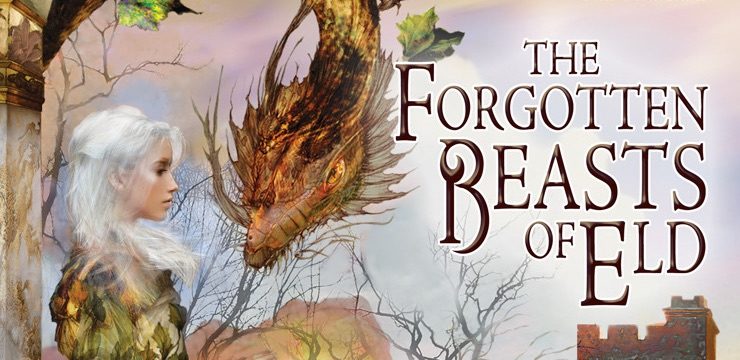
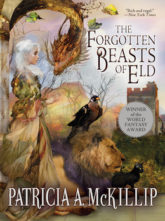
Though the new cover illustration makes Sybel look an awful lot like Daenerys Targaryen, she is a heroine the likes of which I’ve rarely encountered: self-contained, self-sustaining, content in her solitude, greeting adulthood on her own terms. Still, pieces of McKillip’s world resonate with other stories you might know: the forest of Mirkon suggests Tolkien’s Mirkwood; the dark Thing Sybel finds lurking about her house, which scares men half to death, reminds me of the thing called up by the wizard Ged in Le Guin’s Earthsea books.
Like Le Guin, McKillip gives her protagonist power, pride, and a thirst to know things. Sybel knows what she wants, and it has nothing to do with the power struggles of men. She wants the Liralen, and to stay at her home, learning, absorbing, collecting books and creatures. When an insecure king pulls her out of her home and threatens to take away her will, she thinks only of revenge, to the detriment of all her relationships.
You know the feeling you get when a beloved book is going to be adapted, and you want to protect it, to keep it within the frame of your own vision, your idea of what it looks like? I feel that way about Sybel, even as I love the story McKillip spins out for her. It’s a neat trick: letting the reader want one thing for a character while simultaneously convincing her that this life, the one in the story, is the right one.
Sybel’s real battle is with herself, and McKillip’s real magic lies in giving Sybel a story that feels entirely right—which also being entirely the opposite of what I selfishly want for this character. Even now, when I am grown-up and married and far from my own home, I want Sybel to keep her solitude, to keep her interiority, her self-sufficiency, her questing mind. The defiance that shapes how Forgotten Beasts “feels” to me—it’s a defiance that squares off against the world Sybel steps into. I want it all to leave her alone to her books and her familiars.
 This feeling is not entirely unlike the feeling that I, as a bookish tween, had about the world: I wanted it to leave me alone, with a book and a cat on my lap. “You can weave your life so long—only so long,” Coren says to Sybel, “and then a thing in the world out of your control will tug at one vital thread and leave you patternless and subdued.” McKillip tugs forcefully at the vital thread of Sybel’s power, makes her reconsider it, and reshapes her life as a result.
Forgotten Beasts is a coming-of-age story that’s firmly about engaging with the world—about accepting that it’s incredibly difficult to truly hold yourself apart from it. It’s a story about compromise and freedom, and one that takes some difficult, uncomfortable, and heartbreaking turns on its way to a tempered but happy ending. What each character does with the freedom that’s granted to them moves me to tears, every time. Everything epic, the battles and ruling, happens in the background, while in the frame of McKillip’s regard, Sybel comes to understand change, and love, and trying to be the person you want to be while letting others be their own people as well. Intimate, gorgeous, quiet and deep, The Forgotten Beasts of Eld remains as resonant as ever, even if—especially if—it made me feel entirely differently about it this time around.
Molly Templeton is now going to have to read (or reread) McKillip’s entire backlist. Come talk to her about your favorites on Twitter!


I read that book when I was in, I think, 8th grade. About 1978 or so. All I remember is that the Liralen is also the hell beast that scares people to death.
One of those books that I knew while reading it that it was a good, well-written book, but not my style. The Wizard of Earthsea books hit me the same way.
This was the first book of Patricia McKillip that I read. I loved it. I have loved everything else of hers as well. Some not quite as much still all.
I love this novel. It was the first boom of Patricia A. McKillip that I read, and I have since become a big fan. I still think ‘The Forgotten Beasts of Eld’ is perhaps her best book. It is beautifully written, dreamlike, and rather melancholy, like most of McKillip’s work. There isn’t much in the way of action or plot. The focus is on character and mood. As the writer of this essay notes, a reader remembers the feeling of the novel at least as much as they remember what actually happens in it.
I’ve loved this book since I first read it (a long while ago) but the new cover illustration looks like someone tried to clumsily put together a Kinuko Craft-esque collage. Not impressed.
Sybel isn’t waif-like like that cover image. She is very confident and self centered. I can’t remember if she dresses in practical black in the book or if that’s just my image of her. She impresses her new sister in law as being quiet and strong and a good person but one with her own unconventional standards.
For example Sybel is perfectly aware of the iffy way her father took her mother ‘to wife’. It doesn’t seem to bother her, probably because she never knew her mother and her father was very good and loving to her. If Laran had survived Sybel might have been more conflicted over Ogham, or she might have still sided with him. But who knows how Laran herself would have developed? She might have grown out of her fear and maybe Sybel would have drawn her parents closer together. Ogham might have learned to respect his wife and be ashamed of what he’d done to her.
I too thought it was a pity Sybel didn’t go on living in her white house with the crystal dome surrounded by books and magical animals. It would have meant throwing away all her character development of course. I like to think that gradually her animals wandered back to her, missing her and each other as Coren suggests they might, and eventually one of her children settles in the white house to care for them.
Just checked the bookshelf–yup, I still have my Avon mass market copy ($1.75!!!) with the terrible green & orange 1970s cover. I loved this story & reread it several times right after I bought it, but it’s been a long while, so guess it’s time for another reread.
I’ve still got my seventies paperback too. Its cover shows a pale blond girl in a purple scaled dress (?) standing in a forest between Gules and Moriah with Tyr on one side and Gyld’s head hovering on the other connected by his long neck to his body nesting in gold on the back cover with the Black Swan swimming on her lake and Cyrin peering out of the underbrush.
I’ve been gifting this book to teeny-bopers for over 20 years. Any excuse; birthdays, holidays, first communion. “Get ’em young and hook ’em good.”
The prose is just gorgeous, lyrical and powerful, and the book has real depth. And it engages with us in ways that are surprising for a fable, but very similar to the way later McKillip twines magic with the everyday.
It is a book about many things — and one of them is rape. Consent, and power. And it has aged remarkably well (think of the arguments being made by the feminism of the 1970s through to the feminisms of today — how we defined rape as being about power, not male sexuality; how later we understood that the two were entangled in unpleasant ways, how later we struggled with the ways that our desires were also entangled in unpleasant ways, how… I’ll stop here, early 1990s, and just say that it is a book that hasn’t lost its ability to engage. Untouched by the suck fairy, as Jo Walton might put it.
It is a gem, a classic not just of the genre, but of all literature about the cusp of adulthood.
I came to McKillip later in life, in my early 30’s, old enough to know how hard it is to make things look so easy. Her writing is like one of those ribbon dancers in the Cirque du Soleil that look so graceful and elegant. She seems to be tossing off these wonderful stories as though they were effortless. She’s one of those writers where you open the book, turn to the first page, take a deep breath and submerge like a whale into the depths of the story, I have to be really careful with her books. I daren’t pick one up unless I have the time to read it from cover to cover in one long dive.
McKillip’s Heir of Sea and Fire was the first adult fantasy book I ever read … and there rest was history. Are you going to do a re-read of the Riddle-Master Trilogy? Please? Pretty please?
This was also the first Patricia McKillip book I read. I loved it so much I went out and bought the next book of hers I could find, which was The Riddlemaster of Hed. I loved that too right up to the moment I got to the end and realized with horror that it was the first book of a trilogy and I had to wait for the next book.
I’m lucky, I found the Riddlemaster trilogy after they were all written.
Patricia McKillip is my favorite prose stylist of any living fantasy writer. Her work is always so beautiful and lyrical that I want to read it out loud. (Fortunately my husband puts up with this, in moderation.) I think there’s going to be a reread in my very near future!
Marginally related anecdote: in the mid-1990s when I was working in a bookstore, there was an anthology called Lammas Night, edited by Mercedes Lackey and Josepha Sherman. I took one look at the cover and thought, “That is obviously meant to be Sybel,” and reread The Forgotten Beasts of Eld instead.
Yup that’s Sybel all right. But what’s with the fancy low cut dress?
Honestly, I think that you’re just confused by Sybel’s white hair, as it’s mentioned in the book. The cover model is my niece, Jen, who actually looks a great deal like Bridget Fonda and has long white/blonde hair, towhead I believe is the term.. The Deanerys character’s ridiculous braided wig isn’t at all like Sybels (or Jen’s) flowing hair, you’re jumping to the easiest conclusion or simply looking for a quick quip. You’re not looking close enough nor really enjoying the painting. As for the cover being a “a Kinuko Craft-esque collage,” it was, in fact, an art directed piece between the art director and myself. If you were at all familiar with the thirty year body of my work, you’d know better.
Thomas Canty
For cryin’ out loud, the cover art from Lammas Night features FIVE of the titular beasts from The Forgotten Beasts of Eld.
My guess is it was originally designed for Forgotten Beasts and reused. A white haired girl posing with a black cat, a lion, a boat, a hawk and a black swan cannot be coincidence!