






As an author, it’s hard to let go of your words. But authors fortunate enough to adapt their own works can hold onto their stories and help to shape them a little bit longer (and add some shiny new credits to their IMDb pages in the process). But not every writer gets a shot at self-scripting; Hollywood loves to work with familiar names, and sometimes authors lack the skills or experience necessary to translate their fiction into a whole other medium.
So while we eagerly await the upcoming self-adaptations from the likes of N.K. Jemisin (The Broken Earth trilogy); Amal El-Mohtar and Max Gladstone (This Is How You Lose the Time War); and George R.R. Martin (maybe? It’s kind of hard to keep track…), let’s look at six fantasy and science fiction writers who brought their books (and shorter works) to the big and small screen, albeit sometimes with a little help.
Peter S. Beagle
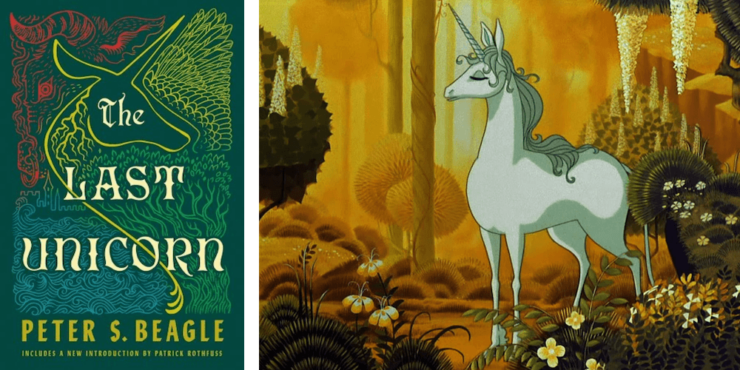
If anyone was going to adapt Beagle’s 1968 fantasy classic The Last Unicorn, few could have done it justice better than Beagle himself. By the early 1980s, he’d already had rough experience with animated adaptations—in a 2007 interview, he recalled being given a “skimpy payment” for a “consultant’s fee” to beef up Chris Conkling’s script of Ralph Bakshi’s The Lord of the Rings (1978) and noted that “I wrote and rewrote that script God knows how many times, eight or nine at least.” But he learned a few things from that experience: “Animation […] hates to stand still. Animation does not deal well with backstory […] it has to move,” he told Fantasy Magazine in 2006.
Alas, he didn’t have much of a say in who ultimately made the film version of The Last Unicorn—producer Michael Chase Walker had sold the rights to Rankin/Bass (most famous for their stop-motion holiday specials like Rudolph the Red-Nosed Reindeer, among other animated films and television shows). In 2014, Beagle told interviewer Aaron Golden that after learning the news he’d screamed, “Why didn’t the hell you just go with Hanna-Barbera?” For years after Unicorn was released, Beagle would say only that “it was better than I expected,” but appears to have softened and gained perspective on the movie in the ensuing decades: In 2011, he admitted to Animag Online, “The bloody thing’s a classic.”
Suzanne Collins
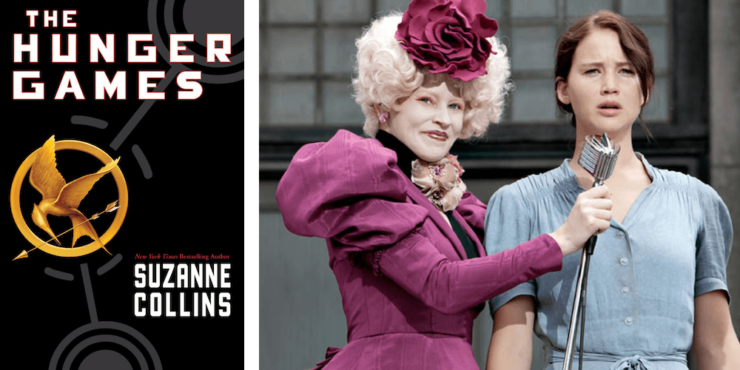
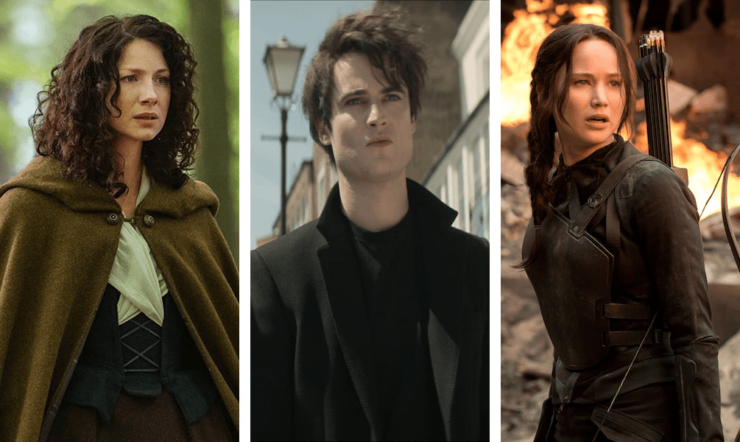
Collins didn’t arrive in Hollywood as a complete newbie after the phenomenal success of The Hunger Games, the first book in a trilogy that includes Catching Fire and Mockingjay: She started her career writing for kids TV shows like Clarissa Explains It All. But when it came time to turn all three books into four movies (Mockingjay is a two-parter), she was able to adapt the first novel into a screenplay. After writing the initial treatments and first draft, writer/director Billy Ray came on board for some additional drafts, and then the director Gary Ross developed their work into his shooting script. “The hardest thing for me, because I’m not a terribly visual person, was finding the way to translate many words into few images,” Collins told The New York Times in 2018. IMDb indicates she also worked on the adaptations for both Mockingjay films, though not Catching Fire, and has received a partial screenplay credit for the prequel due later this year, The Hunger Games: The Ballad of Songbirds and Snakes.
H.G. Wells
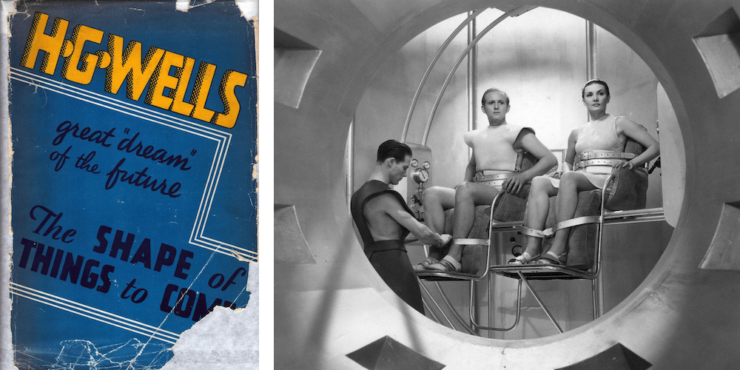
As one of the founding figures of the science fiction genre, Wells was well-established as a hugely successful author of books like The Time Machine and The War of the Worlds by the time movies came into vogue—and he wasn’t about to get left behind by the new-fangled technology. He wrote the screenplay treatment for what would ultimately be called Things to Come (1936) based on his future history The Shape of Things to Come, the novella “A Story of the Days to Come,” and his nonfiction book The Work, Wealth and Happiness of Mankind. Wells had a few odd ideas about how movies should be made: He wanted no credits either before or after the film (only booklets handed out in the theater would reveal who made the movie), he wanted all the music recorded in advance (with the film then shot around the music)—he failed to get his way on either of these points, but he did famously replace one actor (Ernest Theisinger) with another (Cedric Hardwicke) after Theisinger had already finished shooting his scenes. But it was also one of the first SF movies to have a soundtrack release (the score is by composer Arthur Bliss) that became very popular; and the film has been considered eerily prescient in some ways, particularly after the onset of World War II.
Diana Gabaldon
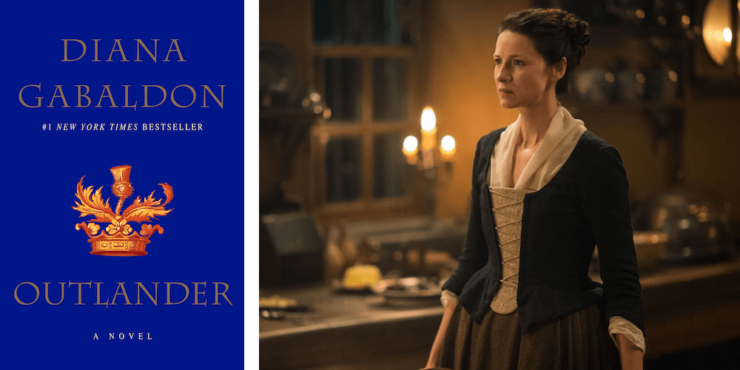
So far, Gabaldon has kept her adaptations limited to one popular and long-running show: Outlander, which since 2014 has been carefully turning her (so far) nine novels into the lush Starz series of the same name. Two of the episodes she’s scripted have aired in full: Season 2’s “Vengeance Is Mine” and Season 5’s “Journeycake,” but as Gabaldon stated in 2021, some of the writing she did for Season 6 ended up being cut or cannibalized due to the COVID pandemic and the pregnancy of star Caitríona Balfe. “The last episode of Season 6 is 608. I wrote Episode 609,” she said. “This script can’t simply be reused at the beginning of Season 7, because it wasn’t structured in the way an opening episode needs to be… They did use a few bits from it…. I did get paid for writing it, though.” The process of scriptwriting, she told Town & Country in 2020, was quite different from what she gets to do as a novelist: “Scriptwriting for television is a great collective enterprise. So while the scriptwriter has a lot of power and can certainly put his or her own personal stamp and a sense of emotion into an episode, you are working from a blueprint, so to speak. [The executive producers] give you this list and say, ‘We need to do all of this.’”
Stephen King
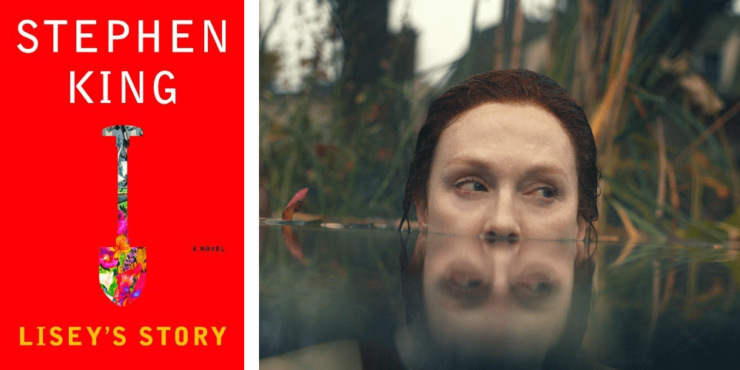
King’s been king of many things during his impressive career, including being involved in various adaptations of his stories or novels. Since 1982, when he wrote the original screenplay for the anthology film Creepshow (which included adaptations of two of his short stories, and also featured his young son Joe and himself in one of the segments), King has taken on roles as actor, writer, producer and director for many of his works. It helps that for many years his stories weren’t taken seriously by many in Hollywood (aside from several forward-thinking directors) and tended to be consigned to the B-movie horror bin. But that slowly changed in the 1980s, by which time King was an established screenwriter. He even wielded enough power in 1997 to assist in the remake of The Shining—providing a poke in the eye to Stanley Kubrick, whose 1982 King-free adaptation had always been a thorn in his side. “The movie has no heart; there’s no center to [Kubrick’s] picture,” he explained in a 2011 TCM documentary, A Night at the Movies: The Horrors of Stephen King. More recently, he was able to adapt Lisey’s Story in 2021, after refusing to let anyone else tackle the very personal novel. “I held on to this one for myself because I thought at some point I would love to be involved with writing it and guiding it to completion, and to be able to do that is a wonderful gift,” he told Entertainment Weekly that year.
Neil Gaiman
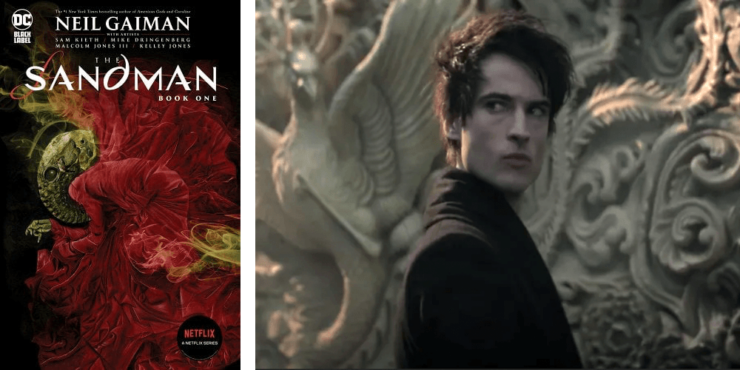
Gaiman has spent his career finding new and interesting outlets for his storytelling talents, ranging from journalism to comics to novels, short fiction, poetry, and, of course, screenplays. He created the 1996 BBC series Neverwhere, which he then novelized. He’s written for TV series like Babylon 5 and Doctor Who, but only recently did Gaiman start tackling his own work, directly developing The Sandman series for Netflix and cowriting the first episode, and creating and writing Good Omens, based on the novel he coauthored with the late Terry Pratchett. Thus far, it seems he’s had a fairly positive experience. “For most of the last three decades, my job has been doing everything I can to kill bad versions of Sandman and persuade people not to make them, and to not be helpful and to not be part of the thing,” Gaiman told Newsweek in 2022. He must have finally found the right time and the right collaborators at last, since both The Sandman and Good Omens are currently heading into their second seasons…
***
These are, of course, only a few of the many authors who have adapted to their own work into TV and movies—tell us about your own favorites in the comments below!
Randee Dawn is a Brooklyn-based entertainment journalist who scribbles about the glam world of entertainment by day, then spends her nights crafting wild worlds of fiction. Her debut novel, Tune in Tomorrow, about a fantastical TV reality show, published in 2022 (Solaris). She’s the co-editor of the anthology Across the Universe: Tales of Alternative Beatles, and has published numerous short stories and novellas of speculative fiction. She writes about the wacky world of show business for Variety, The Los Angeles Times and Today.co, is the co-author of The Law & Order: SVU Unofficial Companion, and curates/hosts Brooklyn’s Rooftop Reading series. Find out more at RandeeDawn.com.

Richard Matheson, The Incredible Shrinking Man.
‘Nuff said,
Michael Crichton springs to mind, although there are fewer instances than I thought where he wrote the adaptation of one of his own novels — basically just The Great Train Robbery, Jurassic Park, and Rising Sun. Also there’s his directorial debut, the TV movie Pursuit, which he directed based on his novel Binary, but was not permitted to write the teleplay for himself. https://en.wikipedia.org/wiki/Michael_Crichton_bibliography#Film
In TV, Larry Niven adapted his own “The Soft Weapon” into the animated Star Trek: “The Slaver Weapon.” Dennis Bailey & David Bischoff adapted their own novel Tin Woodman into the Star Trek: The Next Generation episode “Tin Man.” Diane Duane shared credit with Michael Reaves for the TNG episode “Where No One Has Gone Before,” loosely based on her TOS novel The Wounded Sky, but it was so heavily rewritten by the show’s staff that virtually none of her work remained.
I can also think of a number of comic book writers who’ve adapted their characters and stories to animation, like Dennis O’Neil and Len Wein in Batman: The Animated Series, Chris Claremont in the ’90s X-Men, Marv Wolfman in Teen Titans, and Peter David in Young Justice.
Add to that list Frank Miller for Sin City: the graphic novel and the rather unpleasant movie.
I was just thinking about Gaiman. I don’t follow him much anymore; does anyone know if he’s off prose for good? His last solo, original-material novel is 10 years old already.
The Last Unicorn is a very well done adaptation, to the point that to this day I still prefer it to the book.
Long time Stephen King fan here. I have not read Lisey’s Story, but I simply could not watch the adaptation. Literally couldn’t. In the middle of the third episode or so, I just fast-forwarded to the last one, watched it for the story’s sake, and let it go. I have never done this before or after. It was like watching a fantasy version of Last Year at Marienbad!
@ 4. Puff the Magic Commenter:
It HAS been a long time, hasn’t it?
I was hoping for further adventures of Shadow, but after The Monarch of The Glen that trail has gone COLD. (And the less said about the American Gods adaptation, the better, though I did enjoy some of it.)
I am looking forward to the Anansi Boys adaptation, though. I LOVE that book.
Hideyuki Kurata, who wrote the R.O.D.: Read or Die light novels, also wrote the manga, the OVA series (set after the manga), the TV series (set after the OVA), and the Read or Dream spinoff manga (technically an alternate universe, but also a prequel to the TV series).
Though not strictly speak fantasy or science fiction, William Goldman’s adaptation of his novel The Princess Bride is a modern classic for a reason. There is also William Peter Blatty adapting The Exorcist.
The chronology is a bit baroque, and it was clearly a joint enterprise, but 2001: A Space Odyssey sort of qualifies, as Clarke helped write the screenplay based on his short story ‘The Sentinel’, and also wrote much of the novel at the same time. Not a clear-cut case, I admit, but there’s something there that almost fits the bill.
Good to know that some authors are able to control what happens to their stories when transitioning to screen.
The screenplay for Let the Right One In was written by the author of the book it was based on. Having not read the book I can’t say how it compares, but the movie was so well done that it’s clear the author was able to direct focus to the parts of the book that mattered most to the story.
I believe Louis Sachar wrote the screenplay for the movie adaptation of Holes. I think that turned out very well.
William Goldman adapted his book The Princess Bride into the iconic movie, directed by Rob Reiner.
Re: Gaiman – I think he has mentioned a new novel in the works, but not much detail since he has been quite busy with adapting Sandman, Good Omens, and Anansi Boys.
One other authors (or authors) that should be included is James S. A. Corey (aka Daniel Abraham and Ty Frank) who were very much involved with adapting The Expanse to TV including writing a lot of the major episodes in the later seasons).
James S.A. Corey with the Expanse TV show. Great example of authors successfully adapting their work to a different medium.
How has no one mentioned Clive Barker and Hellraiser (adapted from his novella The Hellbound Heart)? Man was a complete newcomer to Hollywood, and he directed one of the best and most iconic horror adaptations ever!
@8: Though not strictly speak fantasy or science fiction… Lightning sands. Rodents of Unusual Size. A machine to drain life, and a pill to restore it.
Fantasy isn’t just swords and wands….
@17/chip137: I think maybe what sitting_duck meant is that The Princess Bride is, strictly speaking, a movie about a man reading a fantasy novel to his grandson, so in that sense nothing fantastic technically happens in the movie. (And the book is also framed as a retelling of a novel, but not in the same way.)
Neil Gaiman actually began his TV writing career with his own original work – Neverwhere, which was produced by the BBC on a budget that dreamed of being able to afford the kind of shoestrings Doctor Who managed but still managed to be creative, interesting and well-written. He then adapted it into a novel, so his self-adaptations have gone both ways!
I think we need to define successful here. If Just Getting the adaptation done as a different medium is the criteria then Gaiman and sort will suffice. If the criteria is the adaptation being really really awesome, then not having many mangas are s serious miss
I suppose Douglas Adams did it backwards, taking the Hitchhikers radio series and turning it into a book (and then a TV show). Or taking some of his work on Dr Who and turning that into Dirk Gently.
And to tie it into the comments above, one of Neil Gaiman’s first books was: “Don’t Panic: The Official Hitchhiker’s Guide to the Galaxy Companion”. (His first was a biography of Duran Duran, which I suspect he’d be happy to forget ;)
I can’t help but notice how much everyone is tiptoeing around the most obvious candidate for this list, a modern author who wrote a hugely successful 7-novel YA fantasy series, then co-wrote and produced their movie adaptations and scripted three original prequel movies herself. But she’s really made herself into She Who Must Not Be Named, hasn’t she? Even the greatest success in one respect can be tainted by a massive failure in another (like, basic human decency).
@20/Rajith: You have a point about manga authors, but I think that mangaka directly adapting their own work to the screen is so normalized in Japan that it doesn’t stand out as noteworthy in the same way as English-language examples do.
@2 ChristopherLBennett Holy crap, I’ve been a fan of The Wounded Sky since I was about 12 and never made the connection with Where No Man Has Gone Before. The episode really discarded everything interesting about the book besides it’s base premise.
I have to add my voice to the others saying that James S.A. Corey’s work on The Expanse tv show is one of the most successful adaptations as well. One of the things I found amusing about the episodes credited to Franck and Abraham was that they often seemed to be the episodes with the most “new” material in them.
@23/theoneGalen: “One of the things I found amusing about the episodes credited to Franck and Abraham was that they often seemed to be the episodes with the most “new” material in them.”
Doesn’t surprise me at all. I think most writers would rather create new things than rehash things they’ve already written. And most creators given the chance to do a new version of their own work will want nothing more than to change it and make it better, to continue the process of revision and refinement that produced it in the first place.
Or maybe there’s a more practical reason for it. Franck and Abraham already wrote the novels, so if an episode is just adapting material from the novels, it might be considered greedy for them to take writing credit for it when they’re already getting a cut for the adaptation anyway. Better to let whatever writer did the bulk of the adaptation get full credit and pay for the episode. (Similarly, showrunners usually don’t take script credit except on their solo scripts, even though they do the final draft of every script. Since they get a regular producer’s salary anyway, it’s considered selfish to take a cut of the script payment away from the other authors who worked on it.)
Blade Runner was the only (imo) decent adaptation of Philip K. Dick material and that was not a faithful adaptation. The rest were not even in the ballpark as PKD. I would love to see a true in spirit as well as faithful to the text adaptation of UBIK. But I fear the hammy hands of Hollywood.
I feel like Alice Oseman should have been on here due to to fact that it is almost exactly like the books
@@@@@7. Cybersnark
I had no idea there was so much Read or Die. I absolutely adore the OVA and I’ve been meaning to check out the Anime. I’ve tried a few times but i haven’t gotten over the hump of two episodes. I would totally check out a “prequel” manga.
@@@@@25. Sintara
Were you not a fan of Linklater’s A Scanner Darkly? I enjoyed that book and when the movie came out I thought it was kinda brilliant. As for good but unfaithful adaptions. I’m both annoyed and impressed with The Bourne Identity. Great movie but just an awful adaption. It has the theme and name right but that’s about it.
Hmm, I am now reminded of Orson Scott Card and “The Abyss”…
I would add THE LEGEND OF HELL HOUSE (Richard Matheson adapted his novel)
As it happens, I’m just now reading a book that includes the flip side of successful adaptation by the author.
The situation is when an author sees their series adapted to the screen (entirely by other parties) with sweeping changes, so they write it into the series in a subsequent book.
Example that I’m currently reading: from the Hamish MacBeth series by the late M.C. Beaton, Death of a Scriptwriter.
Another example: the Princess Diaries series by Meg Cabot; specifically the character of Tina Hakim-Baba, who wasn’t in the movies, and in one of the post-movie books she says (iirc) that it was due to her father, who didn’t want her in the movie.
I have to put in a vote for Greg Rucka’s beautiful adaptations of his comics Stumptown and The Old Guard. Old Guard in particular hews so closely to the original comics while still making room for changes to make it more cinematic. I’m eagerly awaiting the sequel movie!
@31/Merona: “The situation is when an author sees their series adapted to the screen (entirely by other parties) with sweeping changes, so they write it into the series in a subsequent book.”
That happens relatively often, since screen adaptations tend to be more widely known, so you want to appeal to the screen audience — and maybe you want to make your sequel compatible with the film continuity in hopes that it gets made into a movie too. Arthur C. Clarke’s 2010: Odyssey Two was a sequel to the movie version of 2001 (where the Monolith was at Jupiter) rather than the book version (where it was at Saturn). The sequel to Logan’s Run (which I haven’t read but only heard about) was nominally in continuity with the original novel, but it quickly undid the novel’s ending to set up a status quo more like the feature film’s entirely different ending.
Then there are things like Marvel Comics replacing their white Nick Fury with his previously unknown biracial son who looks kind of like Samuel L. Jackson.
@32. Vavia – My wife and I really enjoyed Stumptown. So sad it was cancelled.
Robert Heinlein co-wrote the screenplay for Destination Moon which was based on his novel Rocketship Galileo.
@33 Certainly the usual situation is that the book writer has no input into the screen adaptation.
The situation I was highlighting was when the book writer gets to vent some of their feelings at seeing their book highly distorted on the screen by referencing it in a later book in the series.
Leigh Bardugo was pretty involved in Shadow and Bone, which was phenomenal!
@@@@@ 35. Merona:
The OG in that regard was Miguel de Cervantes, who in his Don Quixote, Part Two, rants continuously against a copycat who had published an unauthorized sequel five years before.
Ironically, we owe that second part of Don Quixote to this mysterious copycat, because it motivated Cervantes to write his own sequel.
@35/Merona: “The situation I was highlighting was when the book writer gets to vent some of their feelings at seeing their book highly distorted on the screen by referencing it in a later book in the series.”
I actually did that pre-emptively in my novel Only Superhuman. The protagonist spent much of the novel annoyed about a really bad biographical movie based on her that had come out shortly before. I figured if someone adapted the book to the screen and I didn’t like how it turned out, then I’d already built in a metatextual reference to it. (Though it’s been nearly 11 years and nobody’s shown any interest in the film rights.)
Deborah Harkness retained a fair bit of creative control over A Discovery of Witches, the 3-season TV series based on her All Souls trilogy. She also wrote and/or contributed to several of the episodes. I’m about half-way through the second season, and so far, I think it’s a pretty good adaptation.
@23 theoneGalen: I would never have recognized a relationship between “Where No One Has Gone Before” (ST:NG) and Diane Duane’s The Wounded Sky, either. And I have loved that book since it first came out.
Not quite cold — the short story “Black Dog,” in the TRIGGER WARNING collection, is a further adventure of Shadow Moon.
Lois Sachar, Holes
I am ledgend by Richard Matheson 1954 – to I am ledgend with Will Smith.
Book was fantastic, the movie less so, so maybe not in the successful adaptation category, but I didnt hate it :)
@31 Another good crime example of that (that I suspect you’re aware of) is Inspector Morse, where Colin Dexter was so pleased by John Thaw and Kevin Whately’s performances that he changed his mental image of the characters (and the car) and rewrote the descriptions of them in already published books to fit the actors. I think the original Lewis (too young to have read the original versions sadly) was a short, fat man with a moustache, whereas Whately is lanky and always clean-shaven.
Look is Robert Kirkman also one of those who shall not be named? The Walking Dead is in my opinion some of the best television ever done and i know its in the horror genre but come on already. Post apocalypse is a sci-fi concept really and even one of my favorite authors, John Ringo, felt a need to do zombies. Folks are correct about The Expanse for sure. Excellent series and great show.
@43/Stuboystu: I’m reminded of how Batman comics handled Alfred. Originally, he was a rotund, clean-shaven comical figure, but when the first Batman movie serial cast a tall, thin actor with a mustache, the comics sent Alfred away to a health spa to lose weight and he came back looking like the guy from the serial, and that’s been how Alfred has looked ever since.
I’ve actually been thinking of doing something like that myself. My novelette “Aleyara’s Descent” in the current Analog issue scored a cover painting, and while cover artist Eldar Zakirov came impressively close to how I envisioned the featured aliens, despite working entirely from the text descriptions, there are still some differences in detail, notably in the depiction of their dorsal crests. And I’ve been thinking that in future stories, I might suggest that their crests vary in appearance in different ethnic groups, with some looking more like Zakirov’s version.
(There are a couple of cases where I rewrote scenes in a tie-in novel to reflect the cover paintings — in Star Trek: The Next Generation — The Buried Age, I rewrote the scene depicted on the cover to incorporate the scenery details the artist incorporated, and in Spider-Man: Drowned in Thunder, the strikingly dark-and-stormy cover painting actually inspired me to take the book in a darker direction than I’d planned — but those don’t count because the covers were done while I was still writing the books, so it wasn’t a retroactive change.)
@42: I see Matheson was still around when I Am Legend was made, but did he have anything to do with the script? IMDB credits others.
I had to do the same check for Psycho; Bloch did a fair amount of screen writing, but his book was adapted by Joe Stefano. From what I can see, the part of his work that he adapted for the screen was all mystery/suspense, except for the TV episode “A Case of the Stubborns”.
@46/chip137: No, of the three film adaptations of I Am Legend, the only one Matheson worked on was the first, 1964’s The Last Man on Earth with Vincent Price. And he was unhappy with the way the film turned out and chose to be credited by the pseudonym “Logan Swanson.” (The others are Charlton Heston’s The Omega Man and the Will Smith version.)
Incidentally, this thread prompted me to watch The Last Man on Earth (which is viewable in full on the film’s Wikipedia page), and that prompted me to re-read I Am Legend for the first time in decades. The film is actually fairly close to the book’s story and is pretty effective, suffering mainly from being a low-budget Italian production with mediocre acting (Vincent Price aside) and direction.
The book itself is still impressive. What I always liked about it was the clever way it came up with scientific explanations for vampires’ traits and vulnerabilities, turning a fantasy-horror concept into science fiction horror.
One bit in the book drove home to me how much the culture has changed since it was written. There’s a scene where the main character breaks into the abandoned library to do research, and he reflects on how tragic it is that the librarian must have died a virgin. I wondered why he assumed that, until I remembered that at the time the book was written in the ’50s, the cultural expectation was that women only held jobs until they got married, and never had sex until their wedding night. The amusing thing is that the book was set in the 1970s; Matheson failed to predict that that cultural standard wouldn’t even last that long.
Anyway, pardon the digression; I just thought that was worth mentioning.
Depending on your definition of successful… William Gibson wrote the screenplay for Johnny Mnemonic.
@11/darth_sunshine: I recently read the book, and while the book is decent, I think the movie’s much better. The points that the novel elaborates on don’t necessarily need to be elaborated on, and in many respects the movie’s ambiguity about the ending (is it a happy ending or not?) and leaving interpretation of characters to the audience (do we read Eli as a lonely child or a manipulative predator?) makes the movie a richer experience.
Don’t get me wrong, the book is just fine and quite enjoyable. But the movie is a modern classic.