







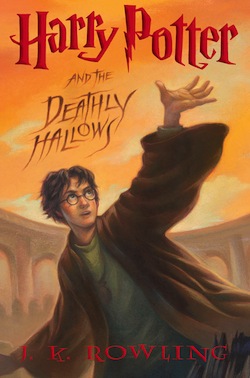
The Harry Potter Reread has to get on because there’s so much time and so little to do. (Wait. Strike that. Reverse it. Thank you.)
This week, we’re gonna get into someone’s most personal memories, and then we’re GONNA DIE. It’s chapters 33 and 34 of The Deathly Hallows—The Prince’s Tale and The Forest Again.
Index to the reread can be located here! Other Harry Potter and Potter-related pieces can be found under their appropriate tag. And of course, since we know this is a reread, all posts might contain spoilers for the entire series. If you haven’t read all the Potter books, be warned.
Chapter 33—The Prince’s Tale
Summary
There is another announcement from Voldemort to the masses, and Harry jumps to his feet, thinking Voldemort has returned to the room. He tells those fighting that he values their bravery and considers spilling magical blood to be a loss. He tells them to dispose of the dead and treat the wounded, then speaks openly to Harry. He tells Harry that he has allowed these people to die rather than face his end. Voldemort says he will wait in the Forbidden Forest for one hour, and if Harry does not appear by then, the battle will continue and he will fight, killing everyone who has hidden him. Ron and Hermione insist that he can’t listen, and the trio exit the Shrieking Shack and return to the castle. Everything is eerily quiet, and they discover the survivors of the battle in the Great Hall, where injuries are being tended. Firenze is badly wounded and the dead are laid out in the middle of the room. The Weasley family is gathered around Fred; Hermione goes to hug Ginny, Ron is embraced by Bill, Fleur, and Percy. Remus and Tonks are laid out side by side, next to Fred. The scene strikes Harry, and he reels back from the room, unable to join his friends or look on who else has died.
He runs up the stairs, finding the castle empty, and doesn’t stop until he reaches the headmaster’s office. When he’s asked for the password, he gives Dumbledore’s name, and the staircase surprisingly appears. When he arrives in the office, he finds that none of the former headmasters are in their portraits. Harry goes to the Pensieve, dumps all of Snape’s memories inside and dives straight in, thinking any other thoughts than his own will be a relief. The first memory he comes to shows Snape at age nine or ten, watching Lily and Petunia play on a playground. Lily keeps displaying her magic to Petunia’s simultaneous dismay and fascination. When she asks Lily how it’s done, Snape finally reveals himself from behind the bush where he was watching. Snape tells Lily that she’s a witch, but she takes it the wrong way, not knowing what he means by it. He insists that his mother is one too, and that he’s a wizard. Petunia demands to know why he’s been spying on them, but Snape insists that he wouldn’t spy on her, as she’s a Muggle. The sisters stalk off, and Harry watches Snape, realizing that he had been planning this moment for some time, but hadn’t managed it the way he’d hoped.
The next memory shows Snape and Lily talking under a tree, as he explains that they won’t be able to do magic outside school once they get their wands. Lily says that Petunia thinks Snape is lying to her, but he promises that they will get their Hogwarts letters, and that someone will come to explain the school to her parents. Lily asks if it matters that she’s Muggle-born, and Snape considers her for a moment before saying that it doesn’t. Lily asks how things are at his house, and Snape says they’re fine. His parents argue constantly, but he’ll be gone soon. He dad apparently doesn’t like magic, or much of anything. Lily worries that they might send dementors to get her if she uses magic outside, school, and Snape explains that the dementors aren’t used for that sort of thing. Petunia loses her footing from where she’s watching them behind a bush and Snape accuses her of spying. She makes fun of Snape’s clothes, and a branch falls from the tree above and catches Petunia on the shoulder. Lily calls Snape on making that happen and hurting her sister, storming off after her.
Next, Snape is on Platform 9 and 3/4 with his mother, watching Lily say goodbye to Petunia—in particular, she’s apologizing to her sister for going, insisting that she’ll try to make Dumbledore change his mind. Petunia says that she doesn’t want to go to a school where people learn to be freaks. Lily’s feelings are hurt, but Petunia doesn’t stop, saying she’s going to a school for freaks, separated from normal people for their safety. Lily points out that Petunia didn’t think this way when she wrote the headmaster and begged him to let her attend; she read his reply and thought it kind. Petunia accuses she and Severus of sneaking around her room, but Lily claims that Snape was merely surprised that a Muggle could have contacted Hogwarts at all. Petunia calls her a freak again, then retreats to their parents. Then Snape is on the Hogwarts express, already in his robes. He heads into the compartment where Lily is sitting with some other boys, and sits down opposite her. She says she doesn’t want to talk to him now that Petunia hates her for their snooping. Snape can’t think why it would matter to her that a Muggle would hate her. He tries to excite Lily about their trip to school, and says that she better be in Slytherin, gaining the attention of the boys in the compartment: James and Sirius. James says he’d leave the school if he got into Slytherin, to which Sirius replies that his whole family has been in the house, and that he’d like to break the tradition. James says he wants to be in Gryffindor like his father, which Snape openly disdains, suggesting that a desire to be brawny rather than smart is silly. Sirius insults Snape for the slight, and Lily suggests that they they find a different compartment. James tries to trip Snape as they leave, calling him “Snivellus” for the first time.
The next memory is the Sorting. Lily is Sorted before Snape, and gets Gryffindor, but she looks back at him with sad smile, and avoids Sirius at the table when he makes room for her. Harry watches the rest of the soon-to-be-Marauders get Sorted before Snape gets Slytherin, sitting down at the table with Prefect Lucius Malfoy who pats him on the back. Then it’s a few years later, and Snape seems worried about his friendship with Lily. She tells him that they are best friends, but that she doesn’t like the people he’s hanging out with in Slytherin. He insists that Potter and his friends are just as bad, citing his “theory” about Lupin’s illness. Lily doesn’t understand why he’s so obsessed with them, and points out that they don’t use Dark Magic like his friends. She also says that he should be grateful, as she heard that James Potter saved his life when he went to the Whomping Willow. Snape is appalled that she could think he was doing anything more than saving his friends. Finally, he blurts out that James Potter likes her. Lily doesn’t care, saying that she doesn’t need Snape to tell her that James is “an arrogant toerag,” but insisting that his friends are far worse. Harry notes that Snape doesn’t seem to care about that last bit—as soon as Lily insults James, he relaxes.
The scene transforms to the memory Harry saw two years ago, his harassment by James, and the moment he called Lily a Mudblood. The next memory is soon after, showing Snape apologizing over and over to Lily outside the Gryffindor common room at night. Lily says that she doesn’t care how many times he says sorry, she has made excuses for him forever, and she knows that he and his friends are aiming to be Death Eaters. Snape insists that he didn’t mean to call her Mudblood, but she points out that he calls everyone else of her birth the same. Lily leaves.
The next memory is Snape standing on a hilltop, and Dumbledore arriving. Snape asks Albus not to kill him, but Dumbledore says he has no intention of doing so. He asks what message Severus has brought from Lord Voldemort. Snape explains that he’s not there with a message from Voldemort and mentions Trelawney’s prophecy; he relayed everything he heard to Voldemort, and the Dark Lord thinks that it concerns the Potter family and Lily. Dumbledore insists that he could have asked for Voldemort to spare Lily in exchange for Harry, but Snape says that he already tried that. Albus is disgusted, so Snape suggests that he hide them all—but Dumbledore wants to know what Snape will give him in return. Snape says anything.
Then Harry sees Snape in Dumbledore’s office following the deaths of his parents. Snape is distraught, but Albus tells him that Harry survived, and that if he truly loved Lily then he only has one option going forward: protect her son. Snape agrees to it, provided that Dumbledore never tells Harry about his feelings for Lily. Albus agrees. The next memory shows Snape complaining to Dumbledore about Harry in his first year at school. Albus insists that he is only seeing what he wants to see in Harry, pointing out that other teachers have the exact opposite opinion of him. Then he asks Snape to keep an eye on Professor Quirrell. The scene changes to just after the Yule Ball, Snape telling Dumbledore that Karkaroff’s mark is getting darker, and that he plans to flee if it burns. Albus asks if Snape will do the same, but he insists that he’s not such a coward. Dumbledore agrees, saying he is a very brave man, and confides that he thinks they may Sort too soon.
The next memory shows Dumbledore in his office, half-conscious while Snape feeds him a potion and mutters incantations to his blackened hand. He scolds the headmaster for putting on the ring Horcrux, saying he must have known that it carried a curse. Dumbledore admits that he was a fool, but he won’t say why. Snape tells him that he can only contain the curse, and Albus asks how long he has. Snape figures about a year. Dumbledore tells Severus that he is lucky to have him, then tells him that these events have made things more straightforward for them. Snape says that Voldemort does not expect Draco to succeed in killing Dumbledore, that the task is simply punishment to Lucius for failing him, and Dumbledore rightly assumes that Snape is the logical successor to the job when Draco fails. Dumbledore asks Snape for his word that he will do everything in his power to protect the students if Hogwarts falls into Voldemort’s hands, and Snape affirms. Dumbledore asks him to befriend Draco and offer him advice and help, though Snape is reticent, since he knows that Draco likes him less after perceiving that he’s usurped Lucius in Voldemort’s eyes. Dumbledore insists all the same, concerned for accidental victims that might arise in Draco’s attempts at murder. Snape asks if he is intending to let Draco go through with his task, but Dumbledore insists that Snape must be the one to do it. Since Dumbledore seems unconcerned by his fate, Snape asks why he doesn’t simply let Draco do it, but Dumbledore is concerned for Draco’s soul. He asks Snape to do him this favor, so that his death can be quick and painless. Snape agrees.
Next, Snape is asking what Dumbledore is teaching Harry, angry that he won’t confide the information to him as well. Dumbledore points out that Snape has to spend time with Voldemort, so it’s prudent not to give him the same information. When Snape insists that it’s a poor plan, since Harry is so terrible at Occlumency, Dumbledore tells him that Voldemort won’t likely try to possess Harry again, as coming into contact with his soul was too painful. Seeing that Snape is still livid, he advises him to come to his office at midnight to explain more. The night moves forward and they are sitting in the office. Dumbledore tells Snape that he must wait to give Harry this information at the last moment, or he will not be able to do what is needed. He tells him that when Voldemort seems suddenly concerned for Nagini’s life, it will likely be the right time to tell him the truth: that when Voldemort’s Killing Curse against Harry rebounded, a piece of Voldemort’s soul was chipped off and latched onto Harry. That piece of Voldemort inside Harry is what allows the connection between them, what allows Harry to speak Parseltongue. And while that part of soul is still within Harry, Voldemort cannot die. Harry must die, and Voldemort himself must kill him. Snape is stunned, realizing that they were never protecting him for Lily, that Harry was being raised for slaughter, and he has been kept alive to die at the right time. Dumbledore asks if perhaps he has grown to care of Harry, but Snape casts his Patronus, which turns out to be a doe. Dumbledore’s eyes are full of tears.
“After all this time?”
“Always,” said Snape.
The next scene shows Snape taking to Dumbledore’s portrait, who comes up with the plan to get Harry out of the Dursleys. He suggests putting the Imperius Curse on Mundungus Fletcher to get the plan across, and tells Snape to play his part in the chase convincingly. The following memory shows him putting the curse on Mundungus, then the next shows him flying with the Death Eaters; one of them has their wand directed at Lupin, but Snape uses Sectumsempra in his direction—it misses and hits George’s ear instead. Then Snape is in Sirius’ old bedroom at Grimmauld Place, crying and reading the old letter from Lily that Harry found later. He takes the final page with her signature and tucks it into his robes. He also rips the photograph in half to keep the part of Lily laughing, throwing the half featuring Harry and James under the dresser. The next scene show Phineas rushing back to his portrait with news of where Harry and Hermione are camping out. (Snape snaps at him for calling her a Mudblood.) Dumbledore’s portrait advises Snape to put the sword in a place where Harry can retrieve it, and not to show himself in case Harry’s mind is read by Voldemort. Dumbledore’s portrait will not tell Snape why the sword must fall into Harry’s hand, but Snape assures him that he has a plan to get it to the boy.
Harry emerges from the Pensieve in the office, and it seems to him as though Snape has only just left.
Commentary
As we get closer to the end, the deaths get more brutal. We just stumble across them with Harry, no preparation, no time to mourn. I suspected Remus’ death the first time I read these books because it’s a common trope to basically “kill off” the previous generation so that the next one comes into its own. I assumed all the Marauders had to go for that reason alone, and made my peace with it, despite Remus being such a favorite of mine. But I didn’t expect Tonks, particularly after Ted’s death. The idea of leaving Andromeda alone with her grandson struck me as a step too far. Yet, there it is.
Harry rushes to the headmaster’s office and shouts Dumbledore’s name. The fact that it turns out to be the password is the final clue that Snape is obviously not on Voldemort’s side.
So. This section. This point where we have to acknowledge that the entire narrative of Rowling’s series turns on a single character who we’ve been condition to hate: Severus Snape.
What we have here, is a fascinating way of approaching a big reveal. We require so much information about Snape in order to truly understand his importance—it’s an info dump of massive proportions. For my part, I feel it’s earned. We’ve always known there was more to Snape, but the extent is what remained a mystery. And having it occur through the Pensieve is necessary because Harry observing Snape expressions and reactions directly are essential to getting into the meat of his character.
But… the takeaway becomes something of a problem. I was victim to it myself when I first read the books. Poor tragic Snape. Of course there was more to him. He did this out of love, tragic love, and it’s such a shame. But Snape is not a white knight ironically dressed in black. He is a character with deep moral complexity, as these flashbacks prove. There are so many things that inform his development and his treatment of others, but that doesn’t absolve him of responsibility. To be fair, I don’t think that Rowling is trying to suggest that it does, at least not entirely. These books turn on the primary theme of love being the most powerful force in the world, even when that love is less than healthy or ideal. The true takeaway is that Snape had such a deep impact on these events because of the depth of his love. Love unto itself (or the absence of it) is of greatest import. We’re not meant to sob at Snape’s misfortune and gather him into our arms. We’re meant to understand that love was always his primary motivation because it continues to be the driving force of everything that happens in these books.
And viewing Snape with a level head, the love that he bears is painful in its blindness.
Let’s start at the beginning: what Snape clearly, badly needed was a different home or loads of therapy as a child. His father was clearly displeased about being married to a witch, and displeased with his son. His family was poor. The fact that we don’t get more background on Snape’s parents is a tragedy because there are many obvious questions to ask about them: Did Tobias Snape know he had married a witch at the time? Why did Eileen Prince marry such a man (who was also a Muggle)? What is the background on the Prince family? Did the disdain of her husband prompt Eileen to be more openly bigoted toward Muggles and Muggleborn magic folk?
Snape’s hatred for his father is clearly one of the prime influences on his dismissal and cruelty toward Muggles. And to that extent, it’s hard to blame him for his prejudices. What’s more, we have no idea if his father was physically abusive in addition to his verbal abuse of the family. With such little attention and care, it’s unsurprising that Snape had certain discomfiting ideas about non-magic people. And his behavior around Lily is couched in desperation; during their childhood, she is clearly the only person who behaves kindly toward him at all.
But it’s the adjectives that get me. Writing off Snape’s spying as a desperate desire for companionship is easy to do, but the words Rowling most often uses to describe Snape’s attention toward Lily are “greedy” or “eager.” There’s a sense of imposition in the language surrounding their relationship, making it clear that Snape feels a covetousness toward Lily that isn’t even appropriate for a romantic attachment, to say nothing of a friendship. What’s more, when Lily tries to correct his bad impulses—like when he hurts or insults Petunia—Snape never really attempts to understand why Lily has a problem with those behaviors. He simply buries them, decides not to show them to her. He doesn’t understand that in order to be a truly good friend (or anything else), he has to care about why Lily wants what she wants, not merely fulfill her expectations on the surface to get what he wants from her.
I think we are absolutely supposed to note that Lily’s friendship with Snape is part of what destroys her relationship with her sister. Severus is cruel to Petunia, emphasizing the differences between them and making the elder sister feel insignificant for her lack of power. He then encourages Lily to snoop around Petunia’s mail, which leads to their final fight. (The Evans parents seem delightfully ignorant of everything going on with their children, and one has to wonder what they were like. We do know that Lily displayed magical ability at a very young age, and their mother’s instructions were to avoid using her powers, but she doesn’t seem panicked over what Lily is capable of.)
The Sorting presents a very interesting conundrum, one that we’re meant to entertain even further when we get to the memory where Dumbledore suggests that Hogwarts Sorts their students too soon. Lily is angry at Snape for being friends with Death Eaters, but the real question is, how feasible would it be to survive an education at Hogwarts without making friends within your assigned House? Who else is Snape going to hang out with? Of course, his fascination with Dark Magic is a problem, and something he also clearly hides from Lily—Sirius told Harry that Snape knew more jinxes than any First Years when they arrives, but Lily never makes mention of it.
And then we come to the more poignant question: If Hogwarts did Sort its students later, and Snape had wound up assigned to Gryffindor or Ravenclaw, what sort of man might he have become? And that’s the 500 Galleon question, really, the one that flashes in neon lights over this whole sequence. Was there a way to correct the path of Severus Snape? Could he have had a happy life, a better future, if he hadn’t spent his school years hanging around with junior Dark Lord supporters? Or had his early childhood already inflicted too much damage on him?
In the midst of this, we’re also meant to note that Snape’s rivalry with James is powered entirely on his end by perceiving James as a rival for Lily’s affections. Again, it’s the sort of thing that makes you feel bad for him for a moment, but the longer you think about, the more icky it gets. Because that perception of James implies that he views the Gryffindor boy as his only block to being with Lily. As though he is somehow guaranteed her affections provided that she doesn’t fall for the “stupid jock.” And all this at a point where Lily has very clearly never shown any genuine interest in James Potter whatsoever. Snape just assumes she must like him because he’s popular, I guess. So Lily is perfect in his mind, except for the part where she—like all other members of the opposite sex—are capable of being swayed by a Quidditch uniform.
What I’m saying is, Severus Snape is basically standing outside the Gryffindor common room holding up a boombox that’s blasting Taylor Swift’s “You Belong With Me” on repeat. He honestly seems to think that if they remain best friends, eventually Lily will come to realize that they’re right for each other. Or worse, he doesn’t care if they end up together, provided no one else has her.
Because that’s really the point, when it comes right down to it. Severus’s love is entirely selfish in nature. He doesn’t care if James and Harry die provided Lily lives because he doesn’t care about her feelings. If he did, he would know that losing her husband and son would be devastating, that she would likely never recover from the loss. If he cared about Lily’s feelings, he would respect her love for James—even if he detested the man—because Lily’s happiness would matter to him. He would love Harry because Lily loved him.
Severus Snape’s life has been largely devoid of love, and I feel for him. Severus Snape didn’t get anything that he wanted out of life, and I am sad for that. Severus Snape spends the rest of his life being used to make up for his mistakes, and that’s awful. But it doesn’t absolve him of his inability to see the woman he loved as the person she truly was. To respect and embrace that person. I’m not saying that he “deserved” what he got. I’m saying he made that bed. His life was largely a tragedy of his own making.
Later, when Snape insists that Dumbledore never tell anyone about his feelings for Lily, Dumbledore is sad to think that he can never reveal “the best” of Severus. Again, I think that Albus is referring more to the power of love here, and less to Snape’s specific brand of it. He also tells Snape he’s disgusted by his request to keep Lily safe from Voldemort at the expense of Harry and James, which is fair, even if it is Dumbledore ultimately manipulating him to his own ends. And it’s so important that Snape spends all of his time referring to Harry as “Potter’s son,” as being just like his father, to excuse his abuse toward the boy throughout Harry’s time at school. He insists on Harry’s lack of skill while Dumbledore continues to contradict him on it, because Snape is determined to impose mediocrity on the kid so he can retroactively apply it to James. (As we know, James did great in school, even if he wasn’t the best behaved student.)
And when Snape finally finds out what they’ve been keeping Harry safe for, and he has a chance to show growth, he does the opposite—he doubles down. That utterance of “Always” seems so romantic with Snape dead and gone, with the knowledge that his Patronus guided Harry to the sword of Gryffindor, and Ron back to his friends. But it still proves that he hasn’t learned a thing, in all this time. You have to applaud Rowling for sticking to her guns on that. It would have been all too easy to soften Snape at the end, to have him say that he had grown to appreciate Harry. But his motivations never falter, and it’s important that they don’t. It’s essential that Snape carry these feelings, these convictions right up until his death. Some readers interpret something tender in that final moment, that Snape asks to look Harry in the eye because he finally wants to acknowledge that part of Lily in Harry. But there’s no indication that we’re meant to read it that way. In fact, we could interpret that moment as Snape simply wanting to see Lily, to see those green eyes that he so adored, right before his death. (The way it is played on film is another matter entirely, which we’ll get to later on.)
Many fans cry foul for the way that Dumbledore uses him through these books, but it makes perfect sense in Albus’s position. Toward his end, he tells Snape that he doesn’t want Draco to kill him because he doesn’t want to harm that boy’s soul, and Snape is furious—what about his soul? But Dumbledore is right; Snape knows why he is killing Albus, that it must be done. Draco would not know, and so the murder would be more damaging to his psyche. This is true of the majority of things Dumbledore asks of Snape. It’s cold of him, yes, but seeing as Snape proved the be his most valuable asset in the entire war, it’s really hard to say that he made the wrong decision.
And at the very end of the chapter, we get one final jab. Phineas calls Hermione “Mudblood” when he reports on their whereabouts, and Snape snaps at him never to use that word. It forces us to recall what Lily said earlier in the chapter, when she called out his hypocrisy for apologizing at his use of the term toward her… when he called everyone else of her birth the same thing. Perhaps then, this was the one true lesson that Severus Snape learned from Lily Evans—that words have power, and you can’t simply pick and choose when they apply.
Chapter 34—The Forest Again
Summary
Harry finally knows the truth, and understands it. He wonders if it will hurt to die, but it doesn’t occur to him to run from his fate. He only wishes he could have died quickly, not known it was coming. He is aware that walking into the forest to meet his death will require a different kind of bravery. He realizes that Dumbledore’s plan was elegant, and can barely find it in himself to be upset at the betrayal. It occurs to him that Dumbledore had wanted him to confide in Ron and Hermione in case of the exact situation they found themselves in—one Horcrux will still remain after his death. He opts not to say goodbye, knowing they will only attempt to delay him. The castle is still empty, everyone still in the Great Hall. Harry puts on the Invisibility Cloak. On his way out, Neville almost runs into him while he’s helping to carry the body of Colin Creevey, who had managed to stay in the castle. Oliver Wood decides to carry him on his own. Harry looks into the crowd, but can see no one he loves. He thinks it’s just as well, and keeps going.
Neville is outside, looking for more bodies to bring in, and Harry reveals himself to him. He insists that it’s all part of the plan, that he’s not actually going to give himself up. He tells Neville that Voldemort’s snake has to be killed, just in case Ron and Hermione can’t manage it. Neville tells Harry that they’re all going to keep fighting, then goes back to his work. Harry puts the Cloak back on, then runs across Ginny, who is trying to calm an injured girl. Harry wants to tell her he’s there, but he presses on. He sees Hagrid’s hut and is inundated with memories, but continues. The edge of the forest is lined with dementors, and Harry doesn’t have the strength to summon a Patronus. Suddenly, he recalls the Snitch, and retrieves it. He presses it to his lips and tells it that he’s about to die, and it opens. Inside is the stone from Marvolo Gaunt’s ring, the Resurrection Stone. Harry understands instantly—he can use the Stone because he’s not trying to resurrect anyone. Instead, they are coming for him. He turns the stone over three times in his hand, and opens his eyes.
The figures before him are neither ghosts nor nor corporeal, like Tom Riddle’s diary form. James, as he had died; Sirius and Lupin, younger than they were at their deaths; Lily, eager to look at him, to be with him. She tells him he’s been brave, James tells him that they’re proud. Harry asks if it will hurt before he can stop himself. Sirius says it’s easier than falling asleep. Harry apologizes for their deaths, particularly for Remus, who has an infant son. But Remus insists that his son will know why he died, and hopes that he will understand. Harry asks them to stay, and James promises they will until the end. He asks if anyone else can see them, but Sirius says him they are a part of him and invisible to all others. Harry tells them to stay close, and sets forth. The warmth of their presence shields him from the dementors, and they head deeper into the forest. Harry feels the dead surrounding him are realer now than his own body feels. He comes across two Death Eaters, but they cannot see him, and assume he’s not coming. Once they retreat, Harry follows them to the clearing where Aragog had lived. A crowd of Death Eaters and Voldemort supporters tend to their wounds. The Dark Lord himself is standing in silence. When he’s told that there’s no sign of Harry, he is surprised—he had expected Harry to come.
Harry pulls off the Invisibility Cloak and hides it and his wand underneath his robes, so he won’t fight. He tells Voldemort he has arrived. He drops the Resurrection Stone, and the figures of his family vanish. The Death Eaters laugh, and Voldemort moves forward. A cry sounds out—Hagrid has been tied to a tree nearby, and is dismayed to find Harry there. He’s silenced in short order. Voldemort calls Harry’s name, “The Boy Who Lived.” Everyone is waiting. Harry thinks suddenly of Ginny’s kiss.
Voldemort raises his wand, considers the boy before him. Harry sees Voldemort’s mouth move, then a flash of light… and it’s done.
Commentary
(A moment for Colin Creevey, as I have nothing to offer on his death aside from shock and sadness. Like Dobby, another presence marked by irritation, who pays the ultimate price for his naiveté and desire to help.)
This chapter is incredibly written. It’s deceptively simple in how it handles a very complicated subject: Harry’s awareness that he must now calmly walk to his death, and how impossible that journey is to ask of anyone. We’re largely in his head, thinking it through with him, and Rowling does a superb job at working through what you might think of in your final minutes. One of my favorite moments is Harry’s dismay over not being able to fling himself into the fray and die fighting. He has time to ruminate on his death, and realizes that it requires a different brand of bravery than his usual Gryffindor bravado.
Very much like the kind of bravery his mother required when she died for him.
The narration comes back again and again to the beat of Harry’s heart, his awareness of such a mundane thing that becomes so precious when he knows it’s about to stop. He also becomes more aware of the world around him, breeze and sounds and motion. He thinks, more than once, how he would like to be stopped by someone, how he wishes that anyone knew what he was about to attempt without his having to say anything.
What Harry is struggling with, ultimately, is a desire to have this choice taken from him. He wants someone to stop him, or he wants to die from acting without preparation. Instead, he has to think with every step about how he is walking right into the arms of the enemy. It is a death that is antithetical to everything in his nature, and that is what makes it frightening.
This bit pulls it all together in a jarring fashion:
Ripples of cold undulated over Harry’s skin. He wanted to shout out to the night, he wanted Ginny to know that he was there, he wanted her to know where he was going. He wanted to be stopped, to be dragged back, to be sent home….
But he was home. Hogwarts was the first and best home he had known. He and Voldemort and Snape, the abandoned boys, had all found home here….
If you needed further proof the Harry Potter understands his destiny, you’re not going to find it. He sees what ties him to both Riddle and Snape—one man his mortal enemy, one who he had thought of as his enemy up until a few minutes ago. He recognizes that they have this in common, and that it is everything.
Then he realizes what the true purpose of the Resurrection Stone is, and he uses it. And in place of all that internal turmoil, Harry finds every word he needs to hear, from the only people who can truly offer them: We love you. We’re proud of you. It won’t hurt. We’ll stay with you. You’re not alone.
So. I’m a sobbing mess.
It’s a beautiful moment, one that only a story like Potter is capable of pulling off. It doesn’t feel saccharine or self-serving. It is something Harry has earned by being this selfless, this steadfast, this brave in a way that he has never had to be. Because he’s not a big mythic muscly guy who exists purely for this purpose, like Beowulf or Herakles.
He’s just a seventeen-year-old orphan, chosen because of a stupid prophecy.
He’s just a seventeen-year-old orphan whose final thought is of the girl he loves, who he couldn’t say goodbye to.
He’s just a seventeen-year-old boy who dies.
But then… it wouldn’t be much of a story if it were simple as all that, would it?
Emmet Asher-Perrin is seriously going to make a fanvid about Snape to “You Belong With Me,” though. You can bug her on Twitter and Tumblr, and read more of her work here and elsewhere.

I really love your ‘Severus Snape Doesn’t Deserve Your Pity’ post, and I can’t stand when people try to write Snape as this tragic romantic hero, so I won’t rehash any of that now, but I was reading this particular chapter at the same time (not literally, ha) as I was reading Amoris Laetitia, which is basically about love/marriage/family life and it kind of struck me in a way that Snape is a person who just never really got the opportunity to learn how to love in a healthy way. It doesn’t excuse his actions, per se, but it’s a really sad thing. One wonders if his disdain for Muggles (obvious from the outset) is in part because of his father. (Hah, never mind, you just wrote that. I wrote this part before I finished the commentary). You have absolutely hit the nail on the head with your observation that Snape is generally not self aware enough (or humble enough, or selfless enough) to look at WHY his behaviors are bad or to work at self improvement.
Also, it always bothered me (and I agree Rowling did it intentionally. I mean that it bothers me about the character in story) that Snape doubles down, as you say – I always caught the exact same vibe. He hasn’t learned to care about Harry, or value him because of Lily, but it’s still just about Lily specifically. And I always felt the same way about the eyes – it wasn’t about Harry at all.
(But I do love that he doesn’t allow Phineas to call Hermione Mudblood, and perhaps it’s still mostly about the memory associated with Lily and how he ‘lost’ her, but I think it is a speck of growth.)
I also wish we’d gotten a bit more reflection about the revelations on Snape from Harry, but I can see why he was more focused on the other big bomb dropped – his required death.
I have never quite gotten the opprobrium heaped on Dumbledore for this specific failing (the idea that he is just using Harry or raising ihm for the slaughter). He didn’t engineer the situation, he’s not responsible for it…I’m not sure what else he COULD do. And it doesn’t mean he didn’t ALSO care about Harry and want to keep him alive for his own sake…I guess maybe that’s the criticism? That the secrecy makes it look like that this was all a lie?
I’m glad you had a moment for Colin because I found that one of the most painful deaths in the series, especially as it was just so offhand (as it was supposed to be) and it just really makes me wonder about his poor parents :(
I love this chapter.
Is there a general consensus on what the ‘spirits’ are? In my own head they ARE real and not just simulations like the portraits (otherwise this scene really isn’t that powerful, at least not to me). But not quite ghosts either. I really wonder how the Resurrection Stone works!
Ah, Emily. I’ve been waiting for this.
I think you’ve nailed Snape perfectly. I think he did love Lily, but he is so damaged that it’s not the kind of love any healthy person would want.
Could Snape have been saved? I don’t know. Perhaps if Hogwarts had the counsellor it so desperately needs, perhaps if Snape could have gone home with almost anyone else over holidays, perhaps if he’d been sorted into Ravenclaw, but then he wouldn’t have been nearly as useful in the war, so… Worth it?
The Forest Again. This chapter makes me cry, the scene in the movie makes me cry, I can’t handle it. This chapter is perhaps what makes Harry Potter such a great character, such an amazing series. He’s not doubting his job, not at all. He’s just wishing it could Be a little easier. (Like Jesus, really) The moment with Neville, the non-moment with Ginny, it’s all part of the regret – not that he has to make this sacrifice, but that he has to make it so deliberately. I love the conversation with his family. It’s fuel for his soul. I love that their love is his Patronus in that moment.
I’m going to go get my book and drown in my tears now. Thanks.
IIRC, Rowling has stated that “The Forest Again” is her favorite chapter. I agree. I could feel my heart beating the first time I read it. Now excuse me while I go finish chopping up these onions…
Colin’s death hurts my soul. I got the same tug in Goblet of Fire when Jeff Rawle/Amos Diggory gives a litany of cries for his boy, the best/worst moment of the film. That stuff never used to impact me all that much until I had children. Now it makes me tear up every time
I pretty much agree with the Snape assessment, as I too have never gotten the ‘tragic hero’ mantle that much of fandom has placed upon him. I know Rowling was really trying to push the whole power of love thing with Snape, but to me it comes across as creepy and not really love at all. I mean it would be one thing if they had once been an ‘item’ and had a falling out, but she is not really even the the ‘one that got away’, I just wanted to tell him to get over it and move on. But it is a powerful and well written sequence.
On another note, this pensieve sequence contains one of the biggest plot holes (or continuity errors) in the whole book: there is no way Snape could have been getting advice from DD’s portrait on how to do the ‘7 Potter stunt’ (and I thought he Confounded Mundugus and modified his memory, not Imperioused him). At the time Snape was the second most wanted man in the country, having accomplished the most high profile ‘murder’ in decades. Voldemort had not taken over the Ministry yet, and I just don’t see how Snape could waltz into Hogwarts, the Headmaster’s office nonetheless, to get secret advice from a portrait. The narrative makes it seem like this is after Snape’s appointment as Headmaster, in which case it seems Rowling may have had her timeline messed up.
I can’t add much more about “The Forest Again”, one of the most powerfully written chapters in the books indeed.
I’ve just noticed the paralelism between little Ted Lupin and… Neville. Both lost their parents because of the Death Eaters and were both raised by their grandmothers. I just hope Andromeda does a better job than Mrs. Longbottom.
The scene where Snape steals the second page of Lily’s letter? Heartbreaking. I’ve always wondered what happened to that page after Snape died. Maybe he was keeping it with him at all times and was buried with him?
I will also add my agreement that Snape is definitely NOT a tragic hero, but simply a tragic story (if that makes sense). One thing that has always struck me though: imagine how utterly and completely ALONE that he must feel after Dumbledore’s death. A pariah to those he’s trying to help (and yes, he’s not helping for not the most altruistic reasons in the world) and a spy for the other side. He made many of the choices that led him to that spot, but it definitely takes a certain kind of bravery to stick it out until the end. Very similar IMO, to the bravery that Harry needed to enter the forest.
Also for anyone looking for at least a little growth in Snape beyond the comment to Phineas about not using the word mudblood, here’s a thing. When asked by Dumbledore “How many men and women have you watched die?”, Snape responds with “Lately, only those whom I could not save.” I’ve always liked that little exchange and I wonder how much him not saving Lily from Voldemort ever translated to legitimately trying to save others from Voldemort. You don’t have to be a heroic figure to do heroic things.
As for the plot hole of Snape not having access to Dumbledore’s portrait; I had never noticed that. I supposed it could be hand-waved with the fact that there were certainly Voldemort agents in the Ministry at that point and someone as capable as Snape could probably get into Hogwarts if he absolutely had to. But it is a little weird.
“He and Voldemort and Snape, the abandoned boys, had all found home here….”
To me, the single most astonishing sentence in all of Harry Potter. Throughout most of the saga, and especially in the last two books, Harry has not only been convinced that Snape is a mortal enemy but that his task is to *kill* Voldemort as the very embodiment of evil. But at this astounding moment he realizes that the three of them are alike wounded children, and that the differences between them are functions of the paths they took. And the result is a burst of generosity such that I fear none of us could ever manage (He’s more generous to Snape than you are, Emily), and it sets up the final confrontation with Riddle as one in which the seventeen-year-old kid tells the Greatest of All Dark Wizards–that he can always change. And then only disarms him, while Voldemort does the killing curse on himself in his own blindness and confusion. I can never come back to this chapter without being both devastated and exalted by it.
Harry’s thoughts of Ginny at his (apparent) end are poignant and a nice callback to chapter 7, yet I think that moment is also very important thematically and as a plot point. It has been stated repeatedly through the series that powerful spells and non-verbal magic require not just intent but clear focus, often needing very intense thoughts or memories (e.g. Patronus). Thus: Ginny is the thought that ensures Harry’s intentional sacrifice becomes a protective incantation.
In that context, the parallels to Lily during her confrontation with Voldemort, and her likely final thoughts, become that much stronger. Furthermore, Voldy gets a beautiful comeuppance, too: since his actions in Godric’s Hollow prevented Harry from forming secure attachments to anyone for more than a decade, it seems fitting that Harry is able to cripple Voldemort near the end partially by thinking of the girl with whom he has/will form the intimate bond that heals that original wound. The power of love indeed!
Moreover, it completes a lovely narrative structure, as it ensures that over the final few chapters of DH each and every one of the people that mean the most to Harry—Ginny, Hermione, Ron, Neville, Luna, Molly, Hagrid, Lily, James, Sirius, Remus, and Dumbledore—contribute something to clear Harry’s path to his final confrontation with, and defeat of, Voldemort, and each of them does so in a manner that befits his or her relationship to Harry.
I was always of the mind that when Snape wants to look at Harry’s eyes – he wanted to look at the last piece of Lilly that exists. I didn’t know that there were other camps,hm.
Love this chapter. So well done and is a part of what makes Deathly Hallows one of my favorite books.
Teddy Lupin, alone with his grandmother – the next generation’s Neville?
It’s funny, I’m feeling an impending sense of dread that this reread is soon to end – no doubt Potter fans the first time round felt this at this point.
I’m a sobbing mess, these chapters do it to me every time. And everything everyone’s said is perfect (I’ve also been drinking, no way I was gonna read these chapters again without a little firewhiskey), from Snape being no one’s tragic hero to poor Colin (raises a glass) to Neville being awesome to Ginny to “I open at the close” to Hagrid, my Hagrid tied to a tree and crying….I need to have another drink and blow my nose.
Snape had some serious flaws, yes- but he did have some capacity to grow, to change. He definitely was aware that his fellow Death Eaters had taken a wrong path, but he likely had only Dumbledore for an alternative by then.
This is the tragedy of Slytherin House; it reinforced the bad tendencies of its members, and corrupted those who could’ve been good, not great. And still failed in only taking “pureblood” wizards.
@Emily: I mostly agree with what you wrote about Snape, but I don’t think that it’s the full picture, because there are some incidents that imply, that he did somewhat change.
1: The one you mentioned, namely that he told Phineas not to call Hermione a Mudblood.
2. He sent Neville, Ginny and Luna to Hagrid for detention to prtoect them from the Carrows.
3. He told Dumbledore that he only watched those people die that he couldn’t save (implying that he saved as many people as he could).
4. He tried to save Lupin’s life during the battle of the seven Potters.
All these things go further than his desire for Lily, and in fact they directly contrast the Snape that told Voldemort to spare Lily and kill James and Harry.
“what Snape clearly, badly needed was a different home or loads of therapy as a child. “
Hogwarts certainly needs a staff of therapists on hand. Consider the psychological shape Harry, Hermione, and Ron are going to be in after going after the Philosopher’s Stone when they’re only 12! All three of them nearly died, and Ron was severely injured and probably thought he might die. And it only gets worse from there! By the end of Chamber of Secrets you’ve had a basilisk slithering about terrifying the students. After this book the entire damn school, even the first year students, is going to have a wicked case of PTSD.
I wonder how much this book was influenced by Britain’s post World War Two condition?
In an alternate universe, Snape would have “gotten over” Lily when the Manic Pixie Dream Girl that sat next to him in Potions finally seduced him. But then she would have dumped him after a month because he kept comparing her to Lily.
I kind of think that when Snape looked at Harry before dying, that maybe he was actually seeing the real Harry for the first time. He says, “Look at me.” and I always thought that was him deciding to finally LOOK at Harry, as he was and not through some filter of his dislike for James.
I love these books and this re-read has brought so many new ideas to my attention. I am really going to miss this.
Yes, Snape deserves my pity. I don’t like him, excuse any of his cruel and/or lethal actions, or think he’s any kind of hero. But I’ll ruddy well pity someone whose life contained so much unrequited desire, so little love of any kind, and so many conflicts of loyalty.
I once read a supposition that Snape’s “Look at me” was intended as asking Harry to look at the real Snape, to see what he really was. I like it, and there’s something to that, but from the first time I read it, and to this day, I subscribed to the theory that Snape was desperate for one more look at Harry’s eyes, which we have been told ad nauseum since early in the first book, are Lily’s Eyes (cue Secret Garden song here).
The first time I read Deathly Hallows, I was still a few years away from becoming a parent, or from losing my dad, but I bawled when reading The Forest Again. Seeing the scene in the movie was the same (although my dad had died by the time that came out). Now, I’m not reading the book, or watching the movie. I’m just reading your chapter summary and analysis, and I’m detecting onions somewhere close. Hands down, the most powerful passage in the books, in this reader’s opinion, at least.
I just had a thought, in some ways Snape would have fit in much better at Brakebills (out of Lev Grossman’s Magicians triology) with it’s emphasis that to do magic you have to be a broken human being.
I would argue that Snape is a tragic hero, but not because of his deep love or romantic soul or anything (which would be wrong for all the reason Emily discussed here). Rather, it’s because of his lost potential. Severus Snape is almost certainly a genius, he is a powerful wizard and the greatest potions master of his generation. He has the will and wit to navigate a complex double agent position with a paranoid maniac who can read minds. Had he lived a healthier life, he could have worked immense good – not just as a piece in Dumbledore’s war, but as a teacher. Imagine generations of students taught by a brilliant potions master who is capable of the kindness he could have learned from Lilly. Imagine Slytherin house managed by someone with both ambition and humanity. If Snape had lived a happier life, hundreds of students would have had a little less pain, a little more learning and wonder in their lives. And perhaps Voldemort would have been denied a generation of servants, as Slytherin house changes from a self-consuming cesspit of The Bad Ones to what it could have been.
But Hogwarts will never have that Snape. Because his father was abusive, because his friends pulled him down, because Voldemort’s influence was already felt on the school. But mostly, because Snape wasn’t able to grow and learn. And that is why he is tragic, because what might have been but never will.
I think the love that Snape had for Lily started as something very common. Most everyone experiences unrequited love at some point, and that first crush can be a powerful one. But what Snape never experiences, and perhaps is unable to experience, is what allows most to get over those crushes: true, shared love. Finding someone to love who loves you back, allowing that love to grow, that’s how we learn what love can really be and how shallow those crushes really are. Maybe if Snape had ever found someone else (yes, it would have taken a talented therapist to get him there) he could have moved on. Love may have been what drove Snape, but it’s tragic that he never knew how much more Love can be.
@23 – Even when one doesn’t find true and lasting love, people generally learn to manage both crushes that go nowhere and rejection. Not winding up in a monogamous relationship isn’t the same thing as the emotional immaturity of not being able to let go of your childhood crush thirty-odd years later.
@5 (& 7) I don’t agree this is a plot hole – portrait Dumbledore can talk from any portrait of himself (the benefit of using famous headmaster or headmistress portraits is mentioned in one of the books – maybe when Mr Weasley is in St Mungo’s? – as there are usually so many of them), so Snape would not need to be in the headmaster’s office as long has he had access to a portrait somewhere.
And Emily thanks so much for this re-read!
I’m mostly just a lurker/reader but I had to chime in today to say how good this reread post is and even the comments are so interesting to read. Thank
Wendy @25:
The actual line is
That pretty clearly means it was the portrait in Dumbledore’s office. That being said, I don’t really see it a as plot hole, since there are any number of reasons that Snape could have access to the Headmaster’s office; not the least of which is that Dumbledore made sure he had it.
@Ursula #24 – You’re right, it’s certainly not the only way. I happen to think it would have been the most likely path that would have helped Snape, but that’s based on my own experiences. I could see myself still carrying a torch for my first crush, 30 years later. Instead it’s more like a candle at this point, or maybe a glow stick. :-) Still there, but nothing like the nice warm fire burning at home.
Hey…have you seen my comments yet?
I wonder how many more students died. IIRC, Harry notes that there are some fifty other bodies in addition to Fred, Tonks and Remus. We know of one certain student death (Colin) and one probable death (Lavender — the book never makes clear if she dies or not). If that is the case, some of the deaths should be students who fought against Voldermort and the Death Eaters. Some of those would likely be characters who at least are named in the series. I would like to have had an acknowledgement in story of the number of students who died during the Battle.
Thanks for reading my musings.
AndrewHB
@20
I had the same response on my first reading of Snape’s “Look at me”, thinking that he referred to the collection of memories. “Look at me, see the truth, know my real story.” It wasn’t until discussing the scene with friends that I even realized most readers assumed Lily’s eyes were the point. (And thank you, now I’ll have that Secret Garden song in my head for the rest of the day!)
Severus Snape is a mean, nasty man with more faults and flaws then you can shake a stick at but for sheer, cold courage he is a match for Harry himself.
Snape WAS becoming a hero, from villain to hero. come on show me a one out of a thousand who is nice to other people, is a good example for students, and is selfless enough to sacrifice himself not just once in a rush decision, but also risk himself by spying for years? So Snape was mean. boohoo. he helped save the world! Call him an anti hero then, something like Punisher in Marvel comics… but saying he was no hero just because he was mean? That’s unfair. And if Harry saw it that way, while he was the main object of all the abuses from Snape, then I see no reason for you not to see it. He was in Harry’s eyes, and there for arguably in JKR’s eyes a hero. Certainly not a classic one, but he wasn’t supposed to be in the first place
I think Snape the person is distinct from Snape the…professional impostor, or who he had to be.
Naturally, he’d probably be a resentful ass, brilliant, possibly accomplished, but ultimately unhappy. So it might seem like he’d be a natural target for somebody like Voldemort to exploit, but he doesn’t want the world to end, or particularly desire the outcome that Voldemort does, you could place that all on a fondness for Lily, or some other attribute, but it is there, and what he does is work among the villainy and fits, because he is more like them.
Still, I wonder if Voldemort HAD spared the Potter family(such as by going after Neville), or at least, Lily, he’d have done as he did.
It could be maybe that young Snape’s not caring for other families, or even the world, comes from a deep hatred inside since childhood – “the world ruined my life, or were was the world when my life got ruined? who cared? who helped me with my anguish? Ahhhh alas no one? than why should I come to the rescue now?” It is childish, but Snape’s old grudges ARE childish, as posted on many threads before, how he and the Sirius never grew up about their strife.
So naturally, Snape would only be willing to be the hero for the ones he cared. Given, there weren’t many of that kind at first, but, as you can see, he did much later cared for “the ones he tried to save”, so there more he’s grown up (not much really), he would shoulder the responsibility and risk himself to save those newcomers besides Lily he cared about. And that’s my point, a hero is not only one who saves everyone (like Harry who saves even Draco his enemy), but a hero is also one who saves despite the odds, despite the fear, the risks- the ones he cares about. There are people out there who are not bad, but they wouldn’t be able to make that bold step and sacrafice themselves even for the ones they love. That makes them maybe cowards, but not bad bad people. So Snape IS a bad person, but still defenitaly is a hero.