






When it comes to a Superman movie, there is one thing that makes or breaks an adaptation: Lois Lane. By virtue of being Superman’s love interest and the voice of humanity through The Daily Planet, Lois Lane offers insight into his motivations that no other character or plot device can. She serves as a steady point from which we can observe Superman. And how she’s portrayed offers a telling test of each film’s emotional stakes and overall vision of heroism.
I just rewatched the major on-screen adaptations of Superman from three directors: Richard Donner’s Superman: The Movie and Superman II; Zack Snyder’s Man of Steel, Batman v. Superman, and Justice League; and finally, James Gunn’s newest addition to the canon, Superman.
And from this movie marathon, I posit that there are three criteria by which we can judge a Lois—and by extension her adaptation.
Lois Lane’s Journalism
Let’s be clear: This is not a test of the quality of Lois’ journalism. Even The New York Times has an article on that. We’re here to talk about the role that investigative journalism plays in developing Superman as a character.
And journalism is important. Don’t take it from me—take it from the editor in chief of The Daily Planet, Perry White. In Superman: The Movie, he bellows that an interview with Superman is “The single most important interview since God talked to Moses.”
Does that make Lois Moses?
Lois Lane makes Superman, at least the public eye. In Donner’s version, she even names him. After he flies away from their first interview, Lois mutters to herself, “What a super man.” Then repeats, “Superman.”
In Snyder’s Man of Steel, it is implied that Lois names him. She gazes at the emblem on his chest (not an S, but a symbol for hope) and begins to whisper the consonant S, before she’s cut off. Not quite naming him, but close.
In Gunn’s version of Lois, she—well, we’ll get to Gunn’s.
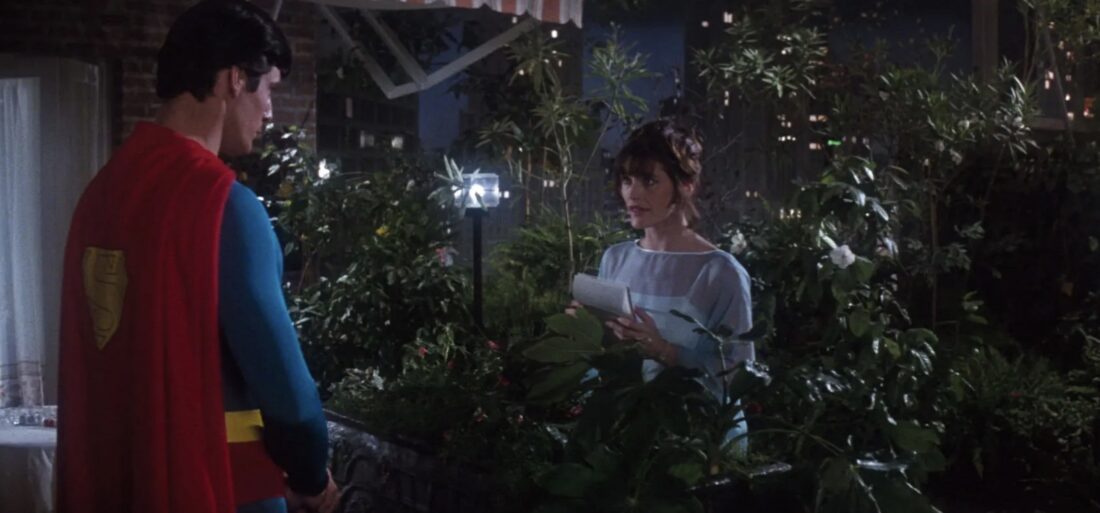
When it comes to Superman’s relationship to the press, each Lois diverges. Lois’ journalism is a gateway to flirtation in Superman: The Movie and Superman II. For the interview, Margot Kidder as Lois meets Superman on her balcony in a periwinkle dress and—per Perry’s urging—asks him personal questions. Lois launches into the interview with, “Let’s start with vital statistics. Are you married? Do you have a girlfriend? How old are you? How big are you?” And to test his X-RAY vision, Lois asks him what color her underwear is.
What can I say? It’s a campy movie. The interview culminates in an article titled, “I Spent the Night with Superman: An Exclusive Interview by Lois Lane.”
For Donner’s version of Superman, Clark’s feelings for Lois are pivotal to his understanding of himself. As Clark, he is a humble man overlooked by humanity, including Lois Lane. But as Superman, he’s important to Lois. Getting to know Superman is the story for Lois, and this plays into Clark Kent’s overall narrative of becoming Superman. By revealing himself to her, he reveals himself to humanity. In this interview, he answers her questions honestly, and does not lie.
Snyder’s version of Superman is much more elusive. “How do you find someone who has spent a lifetime covering his tracks?” writes Lois.
While this voiceover plays, we see her interviewing Smallvillians and others who have witnessed Superman. In a quick succession of shots that lasts about a minute, Lois tracks and meets Superman. Her discovery of Superman’s identity is visually interwoven with a few key moments in Clark’s life, serving almost as a narrative voice to him becoming Superman. Throughout her montage, the scenes intermittently cut to Superman learning to fly for the first time, and flashback to his father’s death. (A death wherein Pa Kent won’t allow his son to save him from a tornado, lest the public find out about his powers. More on that later.)
Snyder’s Lois can’t sell the story to The Daily Planet. Unlike Donner’s Lois, her Perry doesn’t want it. When she reminds him that she’s “a Pulitzer Prize winning reporter,” he responds, “Then act like it,” and adds, “I’m not running a story about aliens walking among us.”
Journalism poses a major conflict in Man of Steel. In Superman: The Movie, the press wants to hear about him and Superman reveals himself willingly. But in Man of Steel, it’s unclear if the public will accept Superman. In Snyder’s adaptation, journalism threatens exposure, underpinning a key theme of Man of Steel not present in Superman: The Movie. Superman is instantly and unquestionably loved in Donner’s adaptation, whereas he’s positioned as freakish and dangerous in Snyder’s.
But Gunn’s Lois does what no other Lois has done before: She questions him.
During the interview, Gunn’s Lois doesn’t throw him softball questions, and doesn’t let him off the hook. “I stopped a war,” he says. She shoots back, “Maybe… How?” When Superman tells her that he held a nation’s head of state against a cactus, she clarifies, “So… torture?”
She questions Clark Kent’s ability to retain journalistic neutrality about Superman. She questions his actions. His morals. She even says outright, “Yes, I would question it.” To which, he exclaims, “People were going to die!”
Compare this to the way Donner’s Lois asks about his motivations, wherein Superman simply answers, “Truth, justice, and the American way.” Gunn’s Lois pushes Superman on “Seemingly acting as a representative of the United States—” which forces him to interject, “I wasn’t representing anybody except for me. And myself. And good, I dunno, doing good.”
Gunn’s take on the Superman interview combines some of the strengths of his predecessors. There is the public disapproval explored by Snyder, and the romantic stakes are as important to Gunn’s narrative as they are to Donner’s. Ultimately, Lois spells out what we’re to make of this tension: “I question everything and everyone,” she says. “You trust everyone, and think everyone you’ve ever met is, like, beautiful.”
This interview scene reveals that she’s willing to risk her relationship to get the story. It escalates into an argument, and the couple seems on the verge of breaking up. Other Loises prioritize either her relationship with Superman (Donner’s Lois) or Superman’s wellbeing (Snyder’s), but this Lois is concerned with truly understanding Superman—his motivations, how he situates himself in the geopolitical landscape, if he concerns himself with human criticism.
She isn’t using her role as a reporter to flirt (cute). Or her poeticism to aggrandize (cool). Rather, Lois’ investigative insistence via interview sets her up as moral North Star. She forces Superman to question and assert his core motivation: Saving people.
It’s been said that Man of Steel is worth its weight in how it aura farms. But one could also argue that Superman doesn’t seem to actually care about human life—at least not individual lives. Redditors have noticed that he leaps over an oil tank rather than preventing an explosion because it looks cool. That’s mostly what Lois Lane’s journalism amounts to in Man of Steel: making Superman look cool. And while I love the campiness of Donner’s Superman, it also lacks friction when it comes to these questions of consequences. And it is that friction with Lois that strengthens the theme of morality in Gunn’s Superman.
Lois’ goal in all three directors’ adaptations remains the same: She wants to know Superman. Donner situates journalism as an opportunity to get closer to the man wearing the cape. Snyder’s Lois states her mission plainly: “I want my mystery man to know I know the truth.” Gunn’s Lois is also intent on getting to know him: She pushes him for an interview and digs deep to get answers. Intimacy is the story for our girl.
Through this intimacy, Lois’ journalism offers key insights into his character. Her observations show us how humanity sees Superman, so the audience can understand the scale of his powers and his motivations. Lois’ interview in Superman: The Movie proves that she could love him, even though she overlooks Clark Kent. Snyder uses the threat of exposure to raise the stakes and leverages Lois’ breathless writing to build up his mythos.
Lois Lane vs. Violence
Lois is a risk taker. She’s desperate to get the story and is willing to endanger herself to get it.
That’s what makes Lois Lane rescues so iconic. She often puts herself in danger, and that gives a lovestruck Superman ample opportunities to save her. Superman (2025) makes a big departure in this regard—Gunn’s Superman never saves Lois directly. Not once.
Compare this to Donner’s movies, which feature Lois held at gunpoint, crushed by an earthquake, chasing a bomb, plummeting from the Eiffel tower, drowning in the Niagara Falls, captured by Kryptonians, etc. And each time she is saved by Superman.
Early in Superman: The Movie, a screaming Lois dangles from a helicopter crash off the side of The Daily Planet, a moment which compels Clark Kent to make his debut as Superman and save the day. Lois in peril marks the beginning of Superman’s heroic antics: Classic, bold, and fun.
But let’s be real, there is nothing like a Snyder rescue.
In both Donner’s and Snyder’s iterations, Superman’s humanity is posed as a major weakness, often leveraging a captive Lois to add an emotional component to his human frailty. Towards the climax of Man of Steel, in a scene that parallels the climax of Superman II, Zod imprisons Superman aboard a ship with a Kryptonian atmosphere, rendering him as weak as a human. To make matters worse, Lois is also held hostage aboard the ship.
What follows is one of my favorite Lois Lane rescues on screen. Lois plummets to earth in a burning escape pod. Superman grabs the pod, they make eye contact through the glass, and Lois calms at the mere sight of him. He punches the pod door off—pow!—and he draws her from the wreckage moments before it crashes to Earth and bursts into flames. Midair, he rolls her on top of himself, so that his body protects her from the explosion and we get a brief shot of her face tucking into his chest. Then, gently, he floats into the middle of a corn field.
It makes my heart pound every time. Snyder crushes the Lois save in every single movie. They are the best, softest moments we get with this Man of Steel. The contrast between Henry Cavill’s otherwise stoic performance, and the care with which he saves Lois in this scene is exhilarating.
But there’s something unsettling about this Superman. A disconnect with humanity that resounds through every movie.
Batman v Superman has one of the most exciting and gritty Lois saves. Terrorists hold Lois captive, the US tries to bomb them, and Superman flies straight into the missile to stop it. Boom! He swoops into where a terrorist holds a gun to Lois’ head. At the sight of him, Lois slowly releases her grip on the terrorist’s arm. She and Superman smile knowingly at each other. Then, Superman blasts the terrorist straight through three walls. Hooray.
This rescue shows that Lois knows she can put herself in peril and Superman will save her. It shows that she knows how he will save her. And it shows that he is indifferent to all other consequences—the life of the terrorist, the geopolitical implications, etc.—if it means saving Lois.
Donner’s Superman makes a similar decision in Superman: The Movie. Spoilers, but Lois dies in this movie; she’s crushed by an earthquake. Grief-stricken, Superman defies nature to save her. He ignores Jor-El’s warning that it is forbidden and flies so fast around the world that it reverses time.
In this way, Lois in peril pushes Superman to new heights. But it also proves that he can be selfish; he cares more about her than anything else. This intense love for Lois makes the stakes feel more real. Indeed, how do you add tension to an action sequence about an impenetrable god? Make that god love something vulnerable.
But we’re missing a big piece of the puzzle. Let’s get into the deep stuff: How Superman and Lois meet in Man of Steel.
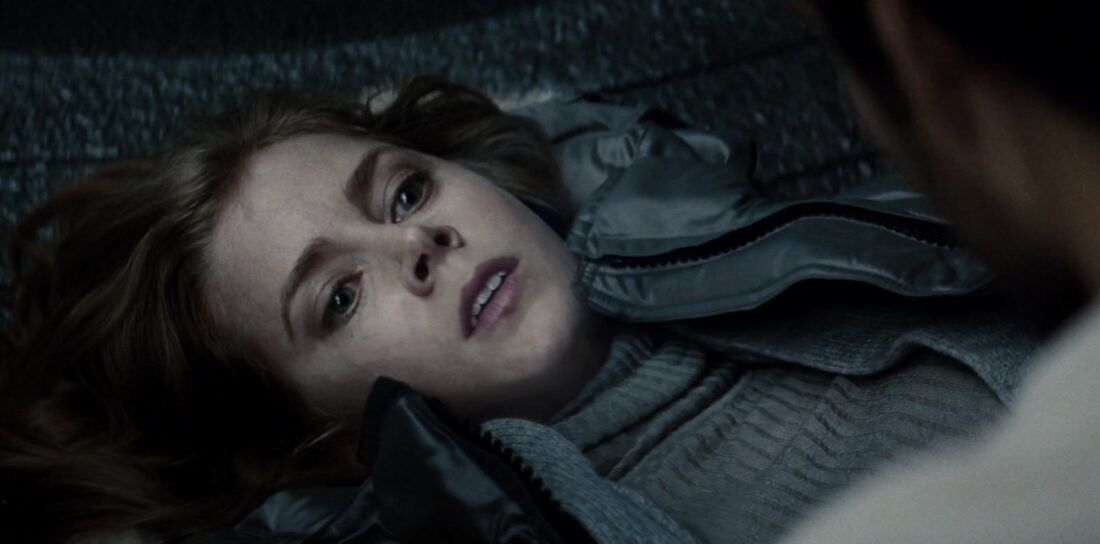
It starts with Lois exploring a mysterious space ship that landed in the arctic where she is attacked by a Kryptonian robot. What follows next is a strange sequence: While she lies injured, sprawled on the ground, Superman subdues the tentacled robot. She is alarmed by him and tries to crawl away in fear. He pursues her, tackling her into place. Holding her wrists, he gives her a reassuring—maybe even patronizing—nod and says, “It’s alright,” which somehow calms her.
Close up of his hands unbuttoning her coat. He then uses his x-ray vision to see that she’s internally bleeding. (Side note: I don’t know why he needed to open her coat for this.) He cauterizes the wound with his laser eyes and the camera cuts to a wide shot of Superman crouched over her prone body, while she arches and screams in pain.
In some ways, it mirrors the interview scene in Superman: The Movie. They are alone shortly after Superman has rescued Lois. There is a sexual undercurrent. He uses his x-ray vision to see a concealed part of her (though in Donner’s version, he sees her underwear). But this scene has violence in the foreground. It’s not news that Snyder has an overall darker approach to Superman, but when that darkness is applied to Lois—one of the few people he shows softness towards—the effect is skincrawling. In all adaptations, we know that Superman is more powerful than Lois: We just don’t often see it demonstrated like this.
Interestingly enough, this scene has a foil in Gunn’s Superman. Early in the movie, we see Lois return to her apartment alone. She hears someone inside and dramatic music underscores the possibility of an intruder. Lois takes up a bat, but she drops it instantly when she sees that it’s Clark. What follows is a famously steamy kiss, the first of the movie. It seems to be in direct conversation with Snyder’s Man of Steel, offering an antidote to the possibility of Superman’s threat towards Lois: He loves her, pure and simple.
Broadly speaking when it comes to violence, both Snyder’s and Donner’s versions pose a stark contrast to Gunn’s Superman, which very rarely indulges in Lois’ peril. Even in her more endangered moments, Gunn doesn’t linger on her. No close ups of her screaming face or last-minute catches before a building collapses on her. What gives? What is Gunn up to here?
Well, that leads me to my last point…
Do Lois’ Actions Matter?
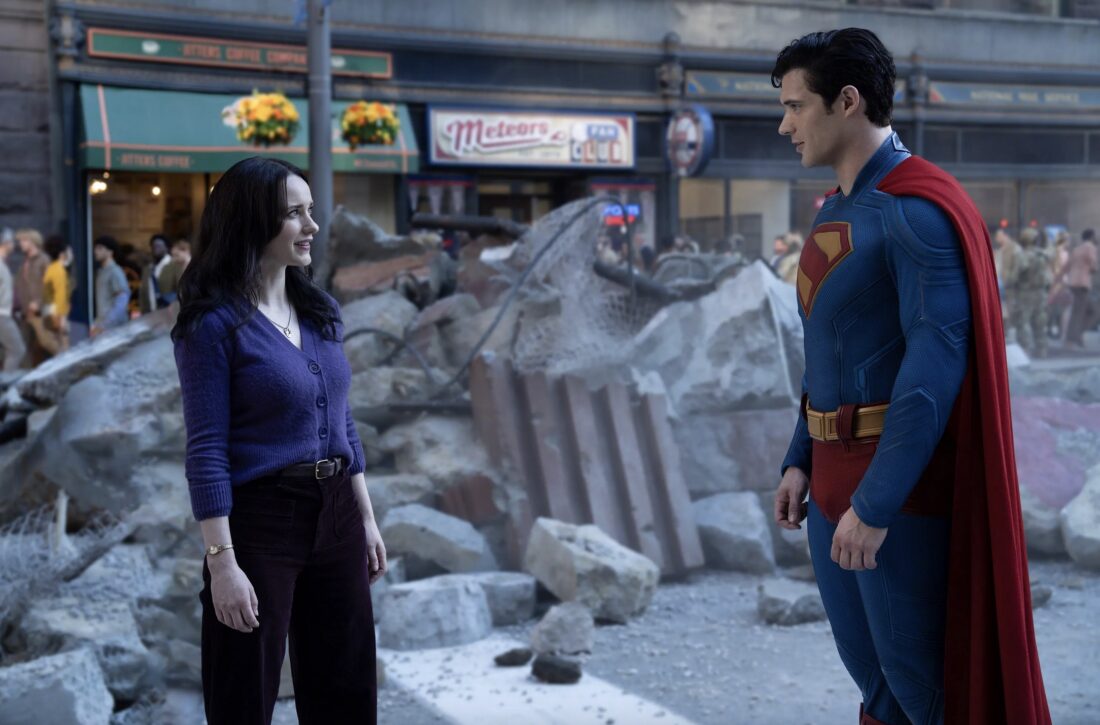
No, not really.
Okay, okay, I’m mostly joking. If we’re talking Donner and Snyder, her actions could have an impact on the narrative. But it depends on how you look at it.
In Donner’s movies, the romance is a major plot point. Many scenes are strictly dedicated to the will-they-won’t-they (think: the honeymoon suite in Superman II).
From a character arc perspective, whenever Lois is in peril she challenges Superman to reach newer, more daring heights—but he struggles to balance his love for Lois with his responsibilities to humanity. In Superman II, Superman is given the choice to get rid of his powers and become ordinary in order to have a relationship with Lois Lane. His Kryptonian mother offers him an ultimatum: “If you intend to live your life with a mortal, you must live as a mortal. You must become one of them.”
But if you view narrative in a comic book movie as action, then Lois takes more of a backseat. The closest Lois gets to influencing the action in Donner’s adaptations is through her journalism. In Superman: The Movie, her article on Superman leads Lex to discover that he’s vulnerable to Kryptonite and cannot see through lead. In terms of sheer action, Superman II’s Lois gets in a few punches. But she doesn’t end fights, which is a pretty good encapsulation of her overall effect on the narrative.
Snyder goes a similar route in Man of Steel. Just like Superman: The Movie, Lois’ knowledge of Superman’s weakness contributes to the rising action. Zod and other Kryptonians kidnap her and read her mind. “I didn’t want to tell them anything about you,” Lois insists. “But they did something to me, they looked inside my mind.”
But like her punches, even this doesn’t really matter. Smiling, Superman reassures her they did the same thing to him—so the plot could have continued without her.
One could argue that she helps free Superman from the Kryptonians in Man of Steel. While being held captive on Zod’s ship, Lois inadvertently summons Jor-El. For this, Jor-El credits her: “Thanks to you,” he says, “I’m uploaded into the ship’s mainframe.”
He then guides Lois through every step of the rescue. Closing doors at key moments, instructing her to pick up guns, where to shoot those guns, etc. As in Superman II, this Lois gets some good hits in. She punches the female Kryptonian in this one, too. But anyone could have put the command key in and summoned Jor-El—it’s Jor-El who controls the ship to free Superman.
I say “anyone” could have done what Lois did because, well, that’s exactly what happens. It’s telling that during the film’s climax, Lois needs to insert that same command key, but for some reason, it won’t go all the way in. Dr. Emil Hamilton pushes it in instead. (Remember Dr. Hamilton? No, of course you don’t. There’s no reason this minor character should get such an important moment over Lois.) So why is Lois even there?
It reveals Snyder’s construction of the man who wears the cape and the world he’s trying to save. Snyder’s is a dark, inhospitable world where regular humans are mostly helpless to defend themselves against more powerful entities. Human actions have no consequence, at least not compared to what Superman can do. Similarly, in Donner’s Superman II, civilians try to stand up against the Kryptonians, only to be literally whistled away.
To be fair, in most iterations, Lois’ influence on the narrative is more internal than external. Snyder does position Lois as valuable because of Superman’s love for her. A scene from Justice League comes to mind: Shortly after being resurrected, a confused Superman fights the entire Justice League, easily overpowering even Wonder Woman and The Flash. Moments before crushing Batman’s skull, Lois arrives. “Clark, please,” she says. He settles, and her embrace seems to remind him of who he is.
In Superman II, Lois represents Clark’s struggle between his responsibilities and his humanity. After he loses his powers, he’s beat up in a diner, and Lois says, “I want the man I fell in love with.” He responds, “I know that, Lois. I wish he were here.”
So, yes. Lois impacts the narrative arc. She forces Superman to reckon with his humanity and poses as an obstacle to his responsibility to protect humankind. It is narrative. It’s just internal and romantic narrative.
But in Gunn’s Superman, the dichotomy between Clark and Superman is never posed. We never see her discover his secret identity, and this narrative choice makes the delineation less important. She teams up with superheroes and journalists alike to save him from the pocket universe and reveal Lex Luthor’s plot. Lois Lane then is an active participant in the lives of both Clark Kent and Superman. In fact, that’s the point: Clark Kent and his deeply human attributes are what make Superman, well, super.
Don’t get me wrong, Gunn’s Lois is also absolutely pivotal to Superman’s internal struggle. She challenges him to be more open with both her and humanity. She challenges him to consider his morality. But that’s not all she does.
Overall this Lois seems to have just, well, more to do. Not only does Clark speak with her at each major beat of the story, revealing his motivations, but she moves the plot forward in a tangible and human way.
She has the observational skills necessary to spot evidence in the background of the “sexy selfies” sent by Luthor’s girlfriend, Eve Teschmacher. And, in a more pivotal moment, she teams up with Mr. Terrific to rescue Superman when no one else will. When they finally escape the pocket universe, a weakened Superman looks up at her, stunned. “You came to get me,” he says.
I love a Lois rescue, but a Superman rescue is refreshing. It allows him to be weak, to need rescue from a mortal human. And that opens up space in the narrative for failure, for human growth.
So Who Wins the Lois Lane Test?
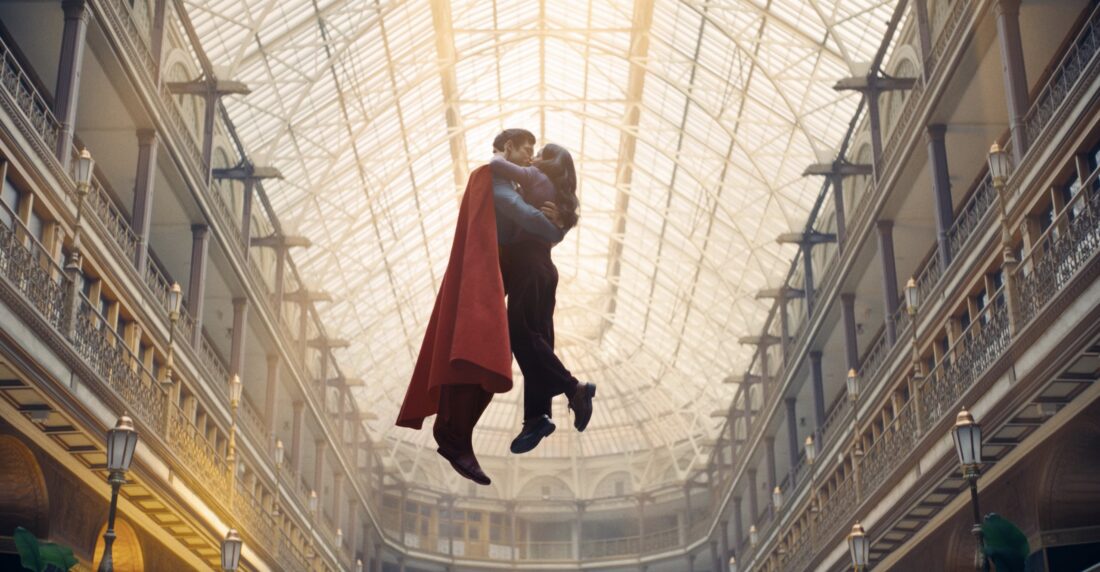
No one, really. Each Superman is different and has his own strengths. But through Lois we can draw major conclusions about how each adaptation conceptualizes power, partnership, and humanity.
The flirty, witty Lois of Donner’s movies reveals an overlooked Clark Kent whose love for Lois can bring him to new, sometimes risky heights. She uses her journalism to get to know a willing Superman, but it is unclear if she’ll accept mild-mannered Clark—underpinning the tension Clark feels between his human life and super responsibilities.
Meanwhile the awestruck, soft-spoken Lois of Snyder’s movies reveals a true god. One who claims to prioritize hope and humanity—though sometimes his own darkness contradicts this stated mission.
And Gunn’s critical, gutsy Lois reveals a Superman deeply enmeshed with humanity. She exposes his weaknesses—both through her questions, and through saving him—and those weaknesses are a celebrated part of him.

Poor, forgotten Superman Returns. Kate Bosworth’s Lois Lane was pretty unlikable to the point of her relationship with Superman being a little puzzling. I liked Brandon Routh as Superman, though. He did serene kindness very well.
It was best not to calculate how old Lois was when she and Supes hooked up in Superman Returns, assume Lois and the actress portraying her are supposed to be the same age.
You told me NOT to calculate how old Lois was in Superman Returns. I didn’t listen. You were VERY right.
Superman Returns is set in a universe (Earth-96 according to the Arrowverse Crisis on Infinite Earths) where events nearly identical to those of the first two Reeve movies happened about 20 years later. So we can presume that the Earth-96 Lois, regardless of the age of the exquisite but badly miscast Kate Bosworth, was the same age at the time that Margot Kidder’s Lois was in those movies, and is about five years older at the time of Returns. Naturally Lois would have needed to be old enough to be working as a professional journalist and to have achieved enough to have won a Pulitzer.
Yeah, Snyder put together some cool Superman Saves Lois scenes, but it’s kind of gross when you consider she’s pretty much the only human Superman ever bothers to save in the Snyder films (I’m not counting the family in the train station because, right or wrong, killing the villain is a different dramatic beat). It’s a shame, because Man of Steel starts with a really interesting Lois who discovers that Clark Kent is Superman before he does.
Fireworks factory?
It’s interesting how much of the modern perception of Lois Lane comes from the Donner movie and from later comics and adaptations that followed its lead. In the early comics, Lois Lane was a “girl reporter” low in the pecking order and trying to prove she could cover serious news as well as any man, and Clark/Superman had no compunctions about using his powers to poach stories from her and keep her beneath the heel of the patriarchy. She became more independent and intrepid in the WWII years, but she was still Clark’s rival and had an unrequited crush on Superman. In the Silver Age, she was mostly defined by that pathologically obsessive crush (and psychotic hostility toward any rival for Superman’s affections, particularly Lana Lang) and her ongoing efforts to prove that Clark was Superman, which Superman continually stymied in ways that usually left Lois humiliated. Over the years, she came to be seen as a major, serious journalist, but secondary in prominence and experience to Clark.
So the idea of Lois Lane as someone who’s already an award-winning star reporter that Clark has to catch up with, and as someone that actually enters into an active, requited romance with Clark/Superman (in reality, not in a dream sequence or cruel prank or imaginary story, aren’t they all), pretty much began with the Reeve movies, and was picked up by the comics in the 1986 John Byrne reboot, which was very influenced by the movies. And one, the other, or both have remained intrinsic to Lois Lane’s characterization in the comics and most adaptations, so that it’s become the norm to portray her as Clark’s partner rather than his rival.
There are a number of things about the Donner movies that I get tired of later productions imitating rather than coming up with fresh ideas, like that damn crystal architecture of the Fortress (as problematical as Man of Steel was, at least Snyder came up with a novel approach to Kryptonian tech). But their reinvention of Lois was easily their best innovation. (The movies also invented the idea of Jimmy Olsen as a photographer rather than the copyboy and cub reporter he was on previous radio and TV series and the globetrotting investigative reporting star that he was in the Silver and Bronze Age comics. But I’m neutral about that change.)
I just rewatched the 3 Superman movies back to back this week. I was just bored by the two newest. (My husband said of the newest, “it’s just like every other Marvel movie.” Yes, he knows it’s DC — that’s the point.) The Donner one was dated, but at least it had a heart and was entertaining. The music is Donner’s was the best.
But I was thinking about the evolution of Superman and Batman in the movies of the last 50 years or so, and while they both started with fairly campy comic book movies, they seem to have taken different paths. The examination of Batman’s character has really been interesting, deepening our understanding of him and his character arc, because people embrace his darkness and come to understand it. But with Superman there just seems to be an attempt to make him what he isn’t, because people are unable or unwilling to accept his inherent goodness. People seem to believe inherent evil is not only possible, but our default setting, while inherent goodness is a childish dream, and frankly to me that’s silly. Maybe that’s why it seems like the new Superman will never really be an examination of who is is, because no one thinks he can be real. And the Lois in this movie feels the same way. To me it all just felt sad.
Honestly, I like the TV shows Lois and Clark and Smallville better than the movies for their characters and for understanding both of them.
“But I was thinking about the evolution of Superman and Batman in the movies of the last 50 years or so, and while they both started with fairly campy comic book movies, they seem to have taken different paths.”
Interesting that people think that. I think that at the time it came out in 1978, Superman: The Movie was seen as a far more grounded and realistic take on its character than the 1966 Batman was. Richard Donner strove for verisimilitude, and the film’s actual slogan was “You will believe a man can fly.” But everything’s relative to its context, so in retrospect we can see the fanciful and campy elements that the film kept. For that matter, the 1989 Batman was seen as a dark, gritty, serious counterpoint to the campy Adam West version, but in retrospect the Burton Batman movies are incredibly campy and fanciful. (You’d never see an army of mind-controlled suicide-bomber penguins in a Christopher Nolan film.)
Anyway, technically the 1960s-70s movies weren’t the characters’ start on the big screen. They both started (in live action) with 1940s adventure serials, and it was 1960s audiences’ ironic, mocking enjoyment of the 1943 serial’s re-release that inspired the creation of the campy sitcom. Superman’s long-form theatrical debut was Superman and the Mole Men, the pilot for the George Reeves TV series, which was actually a fairly serious piece of anti-racist allegory for its day, discounting the incredibly cheap makeup for the titular subterraneans.
I haven’t seen the new Superman movie yet, but my understanding is that it fully embraces the idea of Superman as purely good.
This parallels my observation that a Batman iteration depends on who they cast as Alfred and how he is written.
A quick shout-out to the Lois of the 1941-42 Fleischer animated shorts, who makes her first appearance piloting an airplane to a mad scientist’s mystery lair to interview him at home and is rescued by a Clark/Superman who was sent out to assist her. (Sure, she gets captured and has to be saved, but that’s mostly because who expects a vulture to be capable of tying such good knots?)
Throughout the remainder of the Fleischers’ run, you get a paradoxically regressive/progressive dynamic where, yes, Lois Lane is a damsel in distress, but the only reason she’s ever in distress is because she really DGAF about her own safety and will unhesitatingly climb inside a giant robot’s loot compartment to find out where it’s going or go to town on the control panel of the bad guys’ armored flying rocket car with the biggest wrench she can find.
Honestly, you sort of start suspecting Superman only ever gets to rescue her just because he gets there before she can rescue herself. Or maybe she lets him to boost his self-esteem.
There was actually a backup Lois Lane solo feature in the early ’40s comics where she’d get into adventures on her own and would often escape or defeat the bad guys without help from Superman. The early ’40s were a good time for independent heroines in entertainment, because the men were off at war and women had to fill roles outside the home. Things got more regressive postwar, so we end up with a ’50s Lois Lane who was mainly obsessed with romance. Although Phyllis Coates & Noel Neill’s Lois on TV was still pretty assertive and prone to seek trouble, and there was only one dream-sequence episode that focused on Lois being in love with Superman, unlike the comics’ constant preoccupation with the theme.
I used to think Robert Kanigher was deeply misogynistic, because he wrote the very sexist Lois Lane and Wonder Woman comics from the ’50s and ’60s. But then I read Kanigher’s Black Canary comics from the ’40s, and his Dinah Drake was a really tough, strong, fearless character who was constantly outfighting bad guys and saving Larry Lance from deadly fates, and was never particularly interested in romance with Larry (their marriage was retconned in when they were revived decades later). True, she did get pistol-whipped from behind in virtually every issue so that the villains could tie her up in a deathtrap she would then escape from, but in a way, that showed her strength, because it showed that no man could defeat her face-on and even a whole gang of male thugs had no chance against her while she was conscious. I guess Kanigher was just writing to the expectations of his audience and his market, and strong, action-oriented heroines were more marketable in the ’40s than in the ’50s-’60s.