







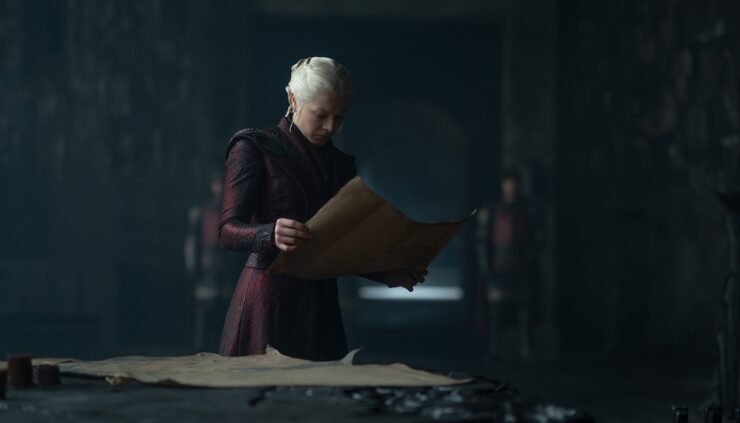
It’s been almost two full years since season 2, with months of behind-the-scenes drama and an entire season of a very different Game of Thrones-related series in between, House of the Dragon is finally back. And this first episode is a real doozy…
If you’re new to my coverage of House of the Dragon, these weekly articles are a little bit of everything—part review, part recap, and mostly an exploration of the ways in which the show adapts its source material: Fire & Blood, George R.R. Martin’s 2018 history of the Targaryen dynasty as recounted by a highly unreliable narrator, Archmaester Gyldayn.
(Note: There will be spoilers for the episode from this point on.)
The Title
The title of episode one is “Salt and Sea, Fire and Blood.” While this phrase is clearly an apt description of the events of this episode and the Battle of the Gullet, it’s also an echo of Corlys Velaryon’s struggle with his legacy from last season. He attempts to name Baela his heir after the death of his wife Rhaenys, but she turns him down, insisting that his heir must be “salt and sea” where she is “fire and blood.” “Fire and Blood” are, also, of course, the motto of House Targaryen, as well as the title of the fictional history from which this series draws its source material.
The episode itself embodies an elemental clash between fire and water, between hasty burning tempers and cooler strategic heads, between the life-giving sea and the destruction promised by fire. And with it, the season is off to an explosive start, filled with contradictions that can only end in violence.
Unraveling the Opening Credits
I will admit that I was a little bit disappointed to see that we are getting the same visual style of credits as last season (given that season 1 and season 2 had radically different opening sequences). That said, I do like the tapestry theme and I will try to rationalize its reuse as indicative of a divide between the season that serves as prologue to the Dance of the Dragons and the seasons that detail the specific events of that conflict. What season 3 does add is a deafening, warlike drumbeat to Ramin Djawadi’s iconic Game of Thrones theme, finally giving House of the Dragon its own remix.
This first episode has, more or less, the same sequence of tapestries as the end of last season, with panels representing historical events—the creation of the dragons, the Doom of Valyria, Aegon I’s conquest, Maegor’s death on the Iron Throne, the reign of Jaehaerys I and good Queen Alysanne, the Great Council 101 AC—and events specific to the Dance of the Dragons—the death of Prince Lucerys, the murder of Prince Jaehaerys, the Battle of Rook’s Rest, and the rise of the Dragonseeds. Instead of showing the Iron Throne at the very end of the titles, the sequence now ends with the Targaryen sigil (and, specifically for our purposes, Rhaenyra’s sigil—the three-headed black dragon) sewn into the end of the tapestry.
Down the Gullet
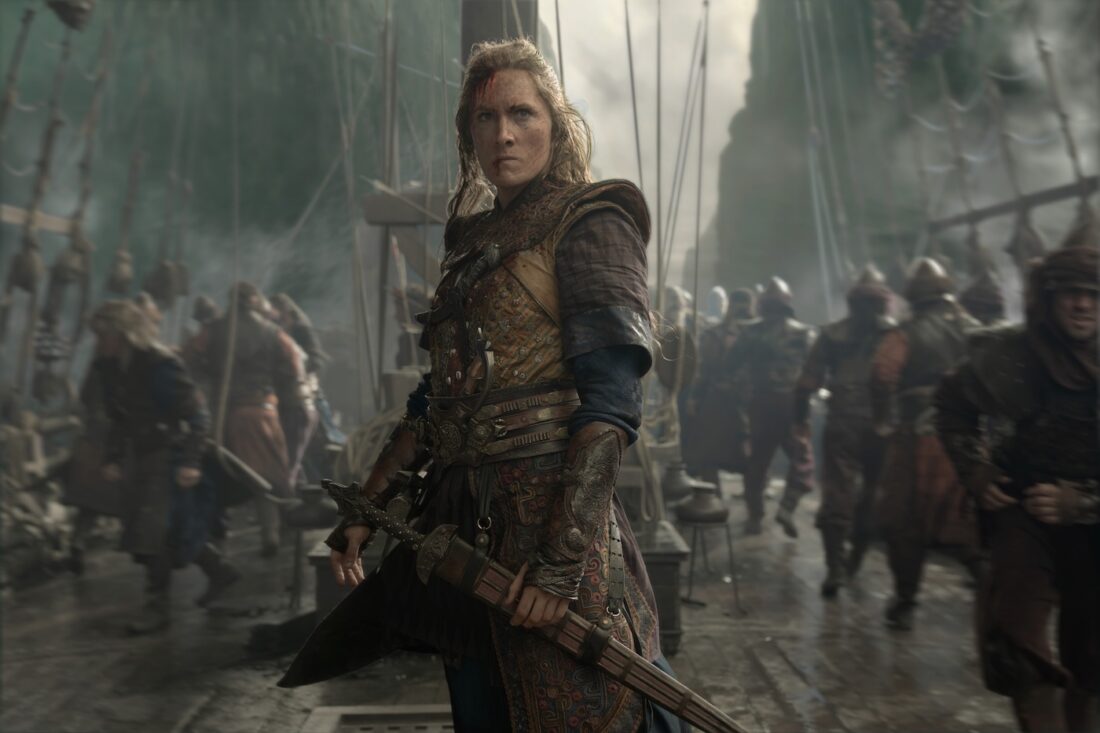
There was a contingent of House of the Dragon fans last season who hated the end of season 2, claiming that nothing really happened during the finale. I was not among them but I do understand that, in many ways, the second season seemed to be building to the Battle of the Gullet only to leave off just before we reached it. Rumors swirled, in the wake of that decision, that the reduced episode order for season 2 had messed with the original pacing of the scripts and forced the Gullet to be moved to the next season. Whether or not that is the case, I will say that the Battle of the Gullet makes for an incredibly exciting season 3 opener, even if it does feel like it is tying off some loose ends from season 2.
It’s been nearly twenty years since the (excellent) HBO series, Rome, opened its final episode with the aftermath of the Battle of Actium, completely eliding the need to show an expensive naval battle. For those last twenty years, a part of me has been itching to see what an HBO prestige TV budget might do with an epic scene of historical ship-to-ship combat. The Gullet does not disappoint (even if it’s not real-world history). So let’s start with a little Westerosi geographic history:
The Gullet is one of two straits that connect Blackwater Bay (and, thereby, King’s Landing) to the Narrow Sea. It is formed by the islands of Dragonstone (Rhaenyra’s seat and the ancestral home of House Targaryan) and Driftmark (the seat of House Velaryon and their castle, High Tide) on the northern end and Massey’s Hook (which we saw briefly, last season, when Aemond and Vhagar burned the town of Sharp Point) to the South. The Northern pass that Corlys and Lohar move through is discussed in the show as a part of the Gullet but seems to refer to the other strait between Dragonstone and the peninsula that ends in Crackclaw Point. In the books, there is no mentioned narrow route but hey, it makes for an awesome set piece and a chance for the Sea Snake (Steve Toussaint) to live up to his nom de guerre.
We get some fantastic and compelling ship-to-ship combat and chaos but a lot of the best parts happen after Sharako Lohar (Abigail Thorn) boards Corlys’ flagship. Thorn was one of the most engaging elements in the season 2 finale and she doesn’t disappoint here, chewing the scenery and credibly playing Lohar as unhinged and audaciously fun in a way that these Song of Ice and Fire shows sorely need to keep from being too grim. It’s a shame to lose Lohar and Thorn for that reason but what a fun ride it’s been while it lasted, and the last shot of her head sinking beneath the waterline, incredulous that she could be killed, was great.
Gyldayn’s description of the battle claims that there are five dragons present—Vermax, Sheepstealer, Vermithor, Silverwing, and Seasmoke. The show cuts the latter three and adds Moondancer to the mix, but that works well to highlight the younger generation of the Blacks and their lack of preparedness for war. There is no mention in the original text of Sheepstealer going rogue and indiscriminately attacking friend and foe but it definitely helps to heighten the tension and set up future strife between Baela and Rhaena. Gyldayn also provides a number of scenarios for how Vermax may have been killed. The show chooses to confirm his theory that he was killed with grapnels, though the choice to attach them to an anchor and drown the dragon is absolutely inspired. Every once in a while, a Song of Ice and Fire show comes up with a really cool, slightly anachronistic piece of tech (that giant scythe blade that swings across the Wall?) and this might be my favorite so far…
And, of course, we end the battle with Jace’s death, accurate to Gyldayn’s description that he clung to driftwood after Vermax’s death but was slain by Triarchy crossbow bolts. Harry Collett always had a bit of a thankless job—portraying Prince Jacaerys as a stereotypical fantasy hero whose job, like Robb Stark before him, was to die in a classic Martin twist and leave Rhaenyra’s future uncertain. But he played the character well and gave us just a hint of that Targaryen madness at the end when he imprisons his mother and convinces Baela to join him.
Uncharted Waters
While I expect the show to continue to follow the plot of Fire & Blood for the most part, there is now such a critical mass of deviations and adumbrations that a lot of this season will likely involve material that is somewhat new to readers of Martin’s books. In this episode, that includes the following elements:
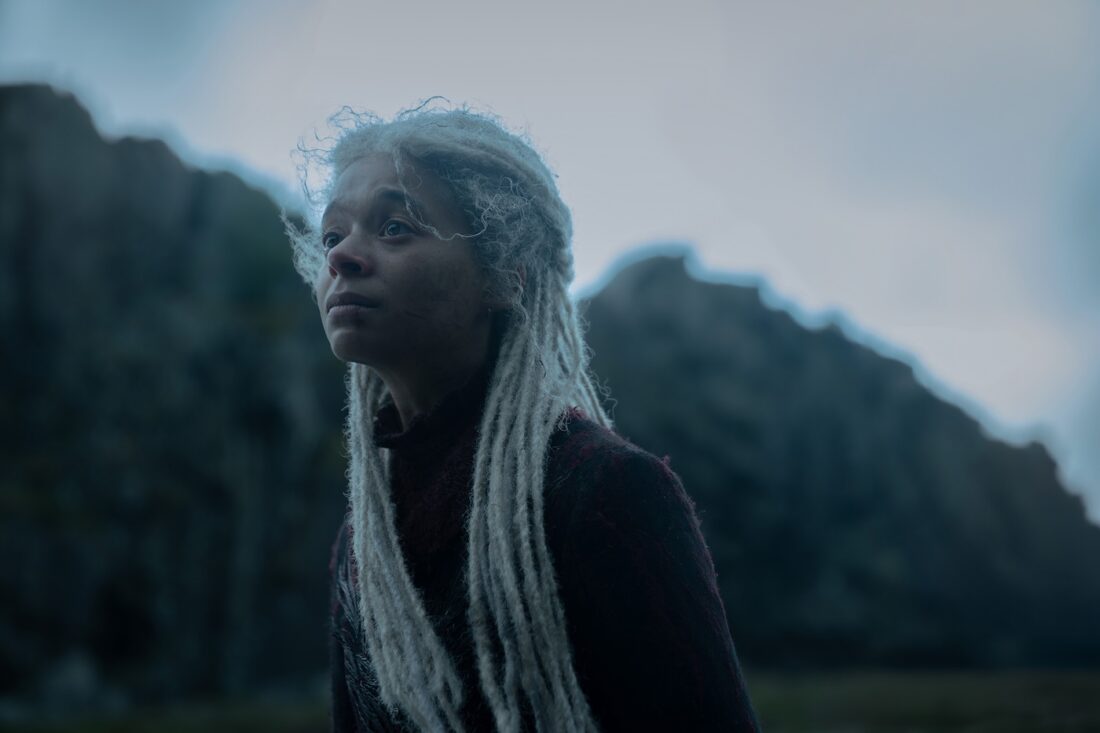
Rhaena, the Fire Witch — As I wrote in my article on the season 2 finale, the show has cut (fan favorite) character, Nettles, and given her plot to Rhaena Targaryen (Phoebe Campbell). There are probably multiple reasons behind that decision. For one, Nettles is involved in an infidelity plot with Daemon later in the book and the show seems to have wrapped up the “Will Daemon betray-Rhaenyra?” question at the end of last season. Secondly, Nettles is the only major character in the Dance of the Dragons portion of Fire & Blood who is, canonically, a person of color. By making the Velaryons (Corlys, Alyn, Addam, Baela, and Rhaena) Black, the show has less of a need to follow Martin’s blueprint when it comes to representation, and Rhaena has very little to do throughout the original narrative. Whatever your thoughts about the Nettles-erasure, the show makes better use of Rhaena—a character that could not be cut from the story.
What we see in this episode is a little nod to the denouement of Nettles’ story in the book. According to Gyldayn, Nettles leaves Daemon and the Targaryen court towards the end of Dance of the Dragons, taking Sheepstealer with her. While her fate is only ever hinted at, Gyldayn suggests that she may have been responsible for rumors of a “fire witch” living in the Mountains of the Moon at the edge of the Vale of Arryn. This episode shows the haggard, starving Rhaena alone in the Mountains of the Moon with only Sheepstealer for comfort. That, combined with the ways in which Sheepstealer nearly kills Baela and Moondancer at the Gullet, points toward an arc that is going to be very different from both Nettles’ and Rhaena’s original ones.
Aegon II, AWOL — Season 3 is covering a portion of the Fire & Blood in which (the always fantastic) Tom Glynn-Carney’s Aegon II is missing from the historical record. Combined with Archmaester Gyldayn’s musing on the strangeness of Larys Strong’s actions and the unknowability of his motives, the show is choosing to fill in both gaps, starting with an intriguing interlude where the plan to ferry Aegon to the Citadel goes awry, leading to both men being captured by Rhaenyra’s bannermen.
While I know where Aegon has to resurface (a plot point that I assume they will not alter, in part because it’s part of the history that the original Game of Thrones show already spoiled when discussing Targaryen history), how he gets there is going to be a mystery, and there are numerous possibilities for the way in which Aegon might or might not intersect with other concurrent plots.
Rhaenyra’s Imprisonment — Ending Rhaenyra’s relationship with Jace on such a sour note is also an invention of the show. Seeing as the death of Lucerys ended season 1 and kicked off the Dance of the Dragons in truth, one might wonder how the death of her eldest son and heir will affect her going forward. But the betrayal prior to his death feels like it will significantly alter her trajectory throughout this season.
Gyldayn tells us that Rhaenyra is remembered extremely unkindly by history—something that’s supported by the way she’s been characterized in later ASoIaF novels and shows. Already she has been given the sobriquet “Rhaenyra the Cruel” (the show’s version of Martin’s title, “Maegor with Teats”). And while previous seasons have argued that the title is largely undeserved—the result of Westeros’ sexism—it remains to be seen if the show will have her live up to that title. Changes and additions to her original story—in this case, the circumstances under which she and Jace parted ways—may well be the key to justifying the writers’ arc for her.
DragonWatch
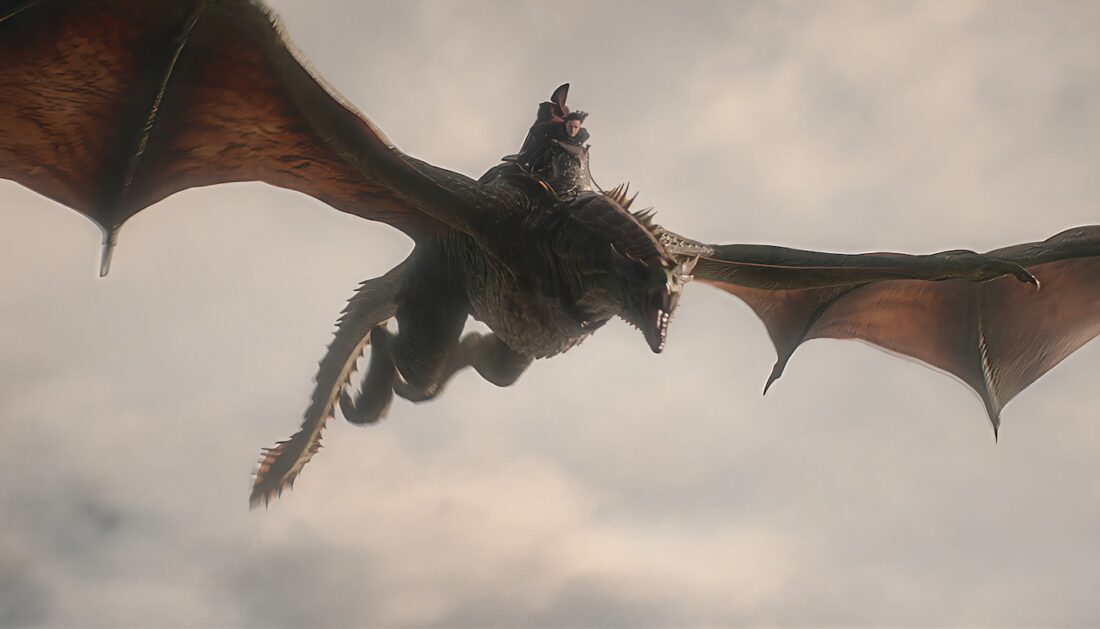
Sheepstealer — We caught a glimpse of him at the very end of last season but this episode has a glut of Sheepstealer glamour shots. He represents one of the show’s best and most unique designs. The Sheepstealer of Fire & Blood is described as being ugly and brown but not much beyond that. He is one of three feral dragons living on Dragonstone; the other two, the Grey Ghost and the Cannibal, are not nearly as important to the story and are probably going to be cut entirely so that leaves Sheepstealer as the only glimpse we are likely to have of what a feral dragon looks like.
They’ve really gone all out with the strange, crocodilian snout, the untrimmed, unruly nails at the end of his wings, mismatched and hoary back scales, and a vitiligo patterning across his body—all of which places the dragon far outside the careful aesthetic that the Targaryens have cultivated with the dragons they’ve controlled and caged for generations. He regurgitates sheep for Rhaena to eat, and has an awkward, loping gait that is singularly unpleasant for his rider. It’s really charming. I’m definitely a Vhagar stan, but Sheepstealer is a close second.
Vermax — RIP to Vermax, Jace’s dragon whose egg was placed in his crib in infancy. Vermax has always looked to me like the most unadorned and standard issue of dragons—the rock hyrax of the Targaryen brood. It’s sort of a fitting design for his rider, since Jace is also a little generic. But we are really truly in the Dance now, with dragons dying left and right.
Moondancer — We get a little bit of Baela’s Moondancer in this episode. Last season the production team described the creature as a David Bowie-inspired punk rock dragon, which is pretty great. The mohawk-shaped crest flattening out when Moondancer goes into a dive is awesome.
…and the Rest! — We get brief shots of Daemon’s Caraxes, Addam’s Seasmoke, Hugh’s Vermithor, and Ulf’s Silverwing. A nice little close-up of Silverwing shows the silvery scales along her back that presumably inspired her name. We also get a brief shot of Tessarion, the Blue Queen, the dragon ridden by the as-yet-unseen Daeron Targaryen (Alicent’s third son, the younger brother of Aegon, Helaena, and Aemond). She looks stocky and pugnacious, which is fun. Hopefully we’ll see more of her in the weeks to come.
Odds & Ends
- There is a truly terrifying bust of Rhaenys serving as the figurehead on the prow of Corlys’ flagship (renamed, in the show, to The Queen That Never Was). It’s a fun but unsettling detail.
- The aftermath of the Battle of the Red Fork opens with Riverlands soldiers decapitating the regimental mascot lion. I do enjoy the way that the historical ASoIaF shows lean into the lords and ladies of Westeros having ridiculous over-identification with their sigils. It’s much more in-line with how Martin writes them in the books and probably a sign that, after 15 years of Game of Thrones on TV, Ryan Condal and Ira Parker trust audiences to be on board with the more fantastical touches that Benioff and Weiss largely eschewed.
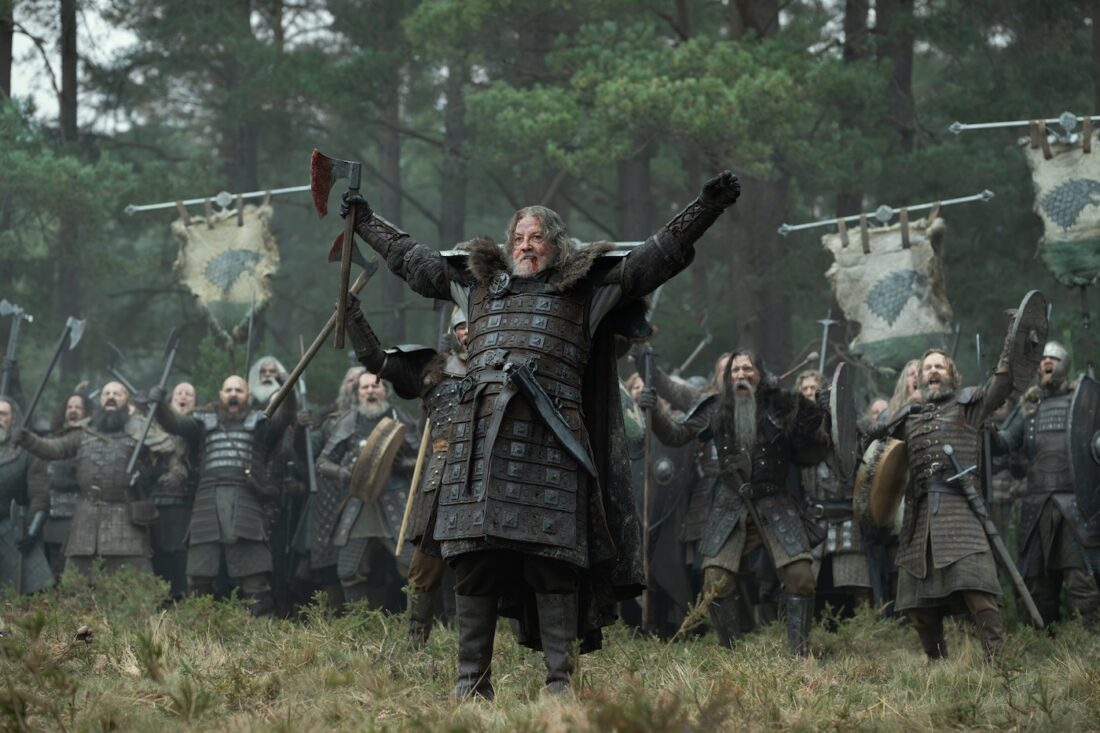
- The head that Stark bannerman and leader of the Winter Wolves, Lord Roderick Dustin (Sons of Anarchy, Braveheart, and Gladiator actor Tommy Flanagan), flings at Daemon’s feet is that of Jason Lannister, current Lord of Casterly Rock and twin brother to Aemond’s Master of Ships, Tyland Lannister (both are played by Jefferson Hall). We last saw Jason at the end of last season, marching towards the Red Fork. RIP to the drunker and less sympathetic of this era’s Lannister twins. Casterly Rock now passes to his son, Loreon.
- Given the original show’s offensive tendency to wield sexual assault as a kind of narrative cudgel, it’s interesting to note when House of the Dragon mentions it at all. Here, it’s a source of tension between Gwayne Hightower (Freddie Fox) and Criston Cole (Fabien Frankel) where the former feels a rapist soldier in their battalion should be punished while the latter, in his despondent haze, remains apathetic. I’m not a fan of sexual violence being discussed or portrayed in any casual context, but I’m always relieved to see a ASoIaF show reiterate that a healthy kingdom punishes rapists.
- The conversation between Ulf (Tom Bennett), Hugh (Kieran Bew), and Addam (Clinton Liberty) about the distinction between knights and lords mirrors one in Gyldayn’s account where, after the Battle of the Gullet, Hugh remarks “we are knights now, in truth” to which Ulf replies “Fie on that. We should be Lords.”
- Rhaena sings a bit of the High Valyrian lullaby that we hear Daemon singing to Vermithor in the season 1 finale. This show really loves indulging the depths of its dragon lore. (Same!)
- Corlys’ bottle of Ibbenese liquor has a bronze relief of a whaling scene on its body. Ib is an island far north of Essos, famous for its whalers, vaguely Inuit in culture, and populated by this world’s equivalent of evolved Neanderthals.
- We get our first look at Ser Ormund Hightower and Bold Jon Roxton, Alicent and Gwayne’s cousin and his bannerman lieutenant, respectively. Ormund is played by James Norton, who you’ve likely seen in a ton of BBC period pieces but who I know best as the voice of Cole in the Dragon Age games. Roxton is played by Joplin Sibtain who is probably most recognizable as Brasso in Andor. As stated above, we still haven’t seen Daeron Targaryen, Ormund’s ward who is marching with the Hightower host.
- Another fleeting glimpse of the satyr-like Green Man, heralding the arrival of Harrenhal’s resident witch. This time it happens in broad daylight and it’s getting harder to dismiss it as a weirwood paste-inspired hallucination. There was always a ton of room for this show to explore Westeros’ pre-Andal Druidic roots and I hope they continue to do so.
- I’m a huge fan of Alys Rivers and the actor portraying her, Gayle Rankin. Her announcing “I’m a witch” in absolute deadpan is great. She’s this show’s Patricia from Widow’s Bay.
- Lohar’s flagship is called the Bitch Fist. Perfect. No notes.
- If you haven’t yet, go check out the red-carpet events for the season premiere. This is, far and away, the most stylish cast on television.
In Conclusion
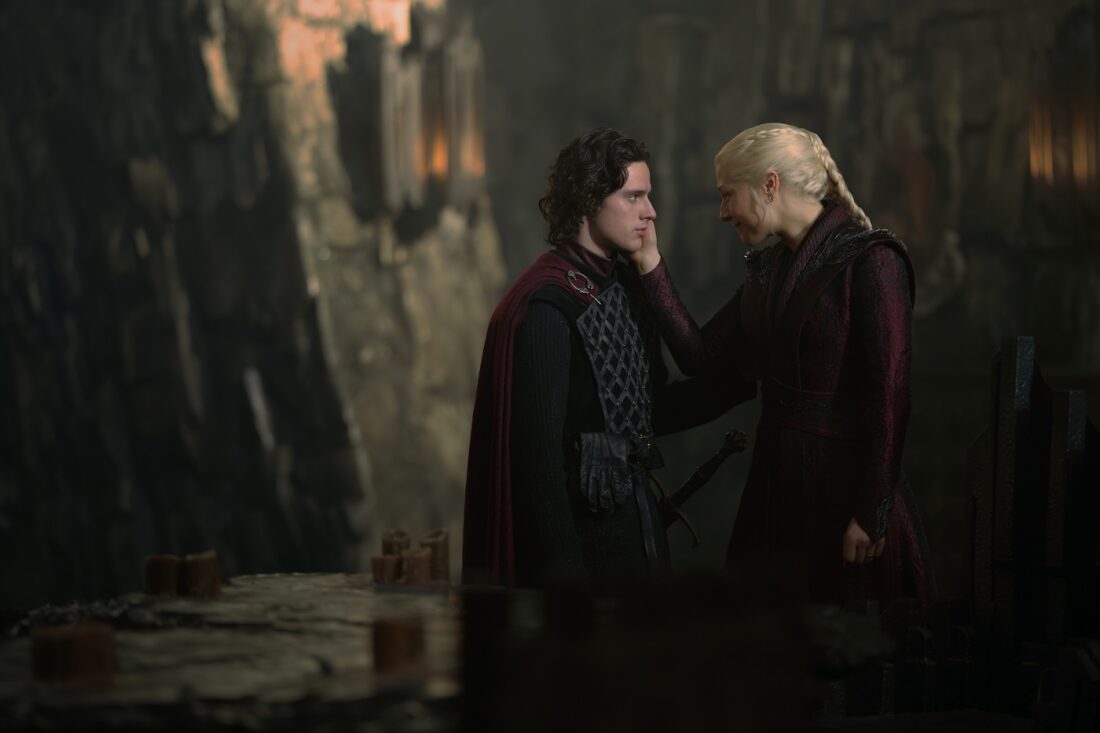
This really feels like it’s going to be the war season, and a brutal and bloody one at that. Part of what people seem to have disliked about previous seasons of the show (again, I am not among them) was the way in which it complicated both Rhaenyra and Alicent and made them into less stereotypical villains—ones viewers couldn’t enjoy rooting against. Or, at least, that’s what a bevy of other reviewers have said. Personally, I think that reaction to these characters and their conflict feels steeped in more than a little misogyny. I’m so happy to have my messy, tragic House of the Dragon back, and to see what comes next.
Having reviewed all of (the mostly great) A Knight of the Seven Kingdoms for Reactor earlier this year, I’m glad that ASoIaF shows can be something other than grim and violent—Martin’s world is capacious and allowing room for levity and friendship is important—but House of the Dragon remains what it has always represented to me: a version of Game of Thrones whose creators clearly love the source material and want to recreate the magic of the original series without the more unpleasant, rapey, and exploitatively shocking vibes. A lot of the show’s success in accomplishing this is tied to the number of women it has put in the writers’ room and director’s chair.
This episode, in many ways, did seem like the culmination of season 2: the Gullet, the finale of Jace’s storyline, the result of Rhaena’s season-long search for a dragon. Obviously, it sets up many more plot lines that will likely dominate the season—a new threat to Rhaenyra in Ormund and the Hightower host, a new threat to the Greens in Roderick and the Winter Wolves, the fallout between Alicent and her children for betraying them to the Blacks, the mystery of wherever Otto Hightower is after the end of last season showed him in chains—but it’s a bit of a transition at the halfway mark of the series and, as an episode, you can feel it pulling in both directions.
At the same time, it also featured one of the most spectacular battles every depicted on any ASoIaF show. And it did so without compromising its characters or emotional through-lines for the sake of cool moments, preserving the classic Martin trope of no one being safe, and managing to both present a spectacle of entertaining violence while also offering a harsh and unyielding critique of war. I loved it!
But what did you think? Are you as thrilled as I am to be back in House of the Dragon’s warm, bloody embrace? Did you think this premiere episode provided a decent payoff for the lack of fireworks at the end of last season? What are you excited to see more of this season? Let me know in the comments.
Man, it’s great to be back!
