






For the fifth and penultimate episode of this season, Dorry confronts her past, Pepper decides his future, and Miss Chris takes a stand.
We begin with Dr. Cleave (Robert Sean Leonard) of the review board. He is ostensibly investigating the death of Coffee—real name Kofi—but is mostly just checking the boxes so he can shut down the unit. Josephine seems lost and worried, Scotch Tape is defensive, the patients will only say “I don’t know what happened. I was in my room.” I’ve given Miss Chris a hard time, but Coffee being executed by the state for the crimes of being disabled and Black has lit a fire under her feet. Good on her for calling out that “hospital brass” treat New Hyde like they “don’t exist at all” until “doo-doo hits the fan, if you’ll excuse my language.” Dr. Anand also has the chance to fight back, but instead he sulks and accepts his fate. The only person with any power at all, insignificant though it may be, sits there. He grows a bit of a backbone after he gets his walking papers, but too little too late. While he may not have an explicit deal with the Devil, he is nevertheless a willing partner. Anand keeps his job as long as he supplies the Devil with souls and the hospital board with cash (i.e. patients) and the moment he can no longer provide either, he is discarded. Violently.
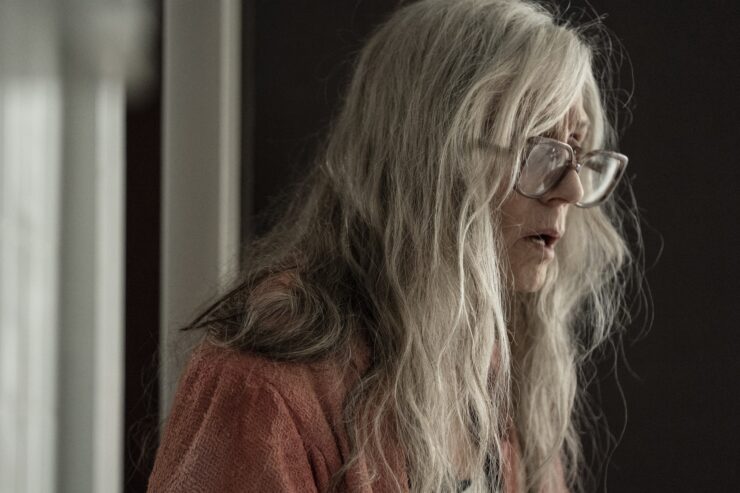
Young Dorry—or Dorinda, as she’s known before being imprisoned in New Hyde—reminds me of Loochie, except when Loochie gets emotional they get violent and when Dorry gets emotional she cries. It’s obvious she has something going on with her brain, whether mental illness, neurodivergence, or some combination of the two is unclear. It’s also obvious that Dorry’s husband, Ralph, is a patronizing asshole. She can’t do anything right. He’s a saint for having put up with her, blah blah blah. To watch him lie to her about going to the eye doctor before a special date at a fancy restaurant and then betray her so cruelly, my God.
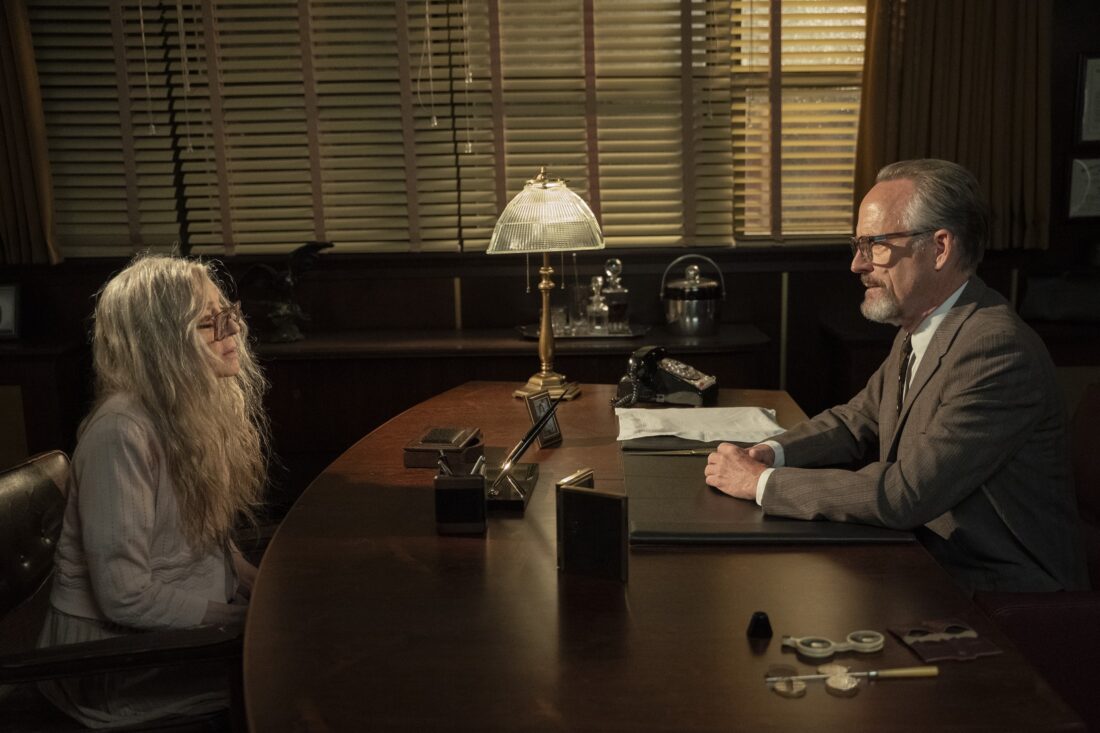
The real Dr. Walter reminds me a lot of Anand. He has moments where he feels bad about torturing Dorry… but it doesn’t stop him from shoving an ice pick into eye socket and digging around in her gray matter. He looks at Ralph like he’s trying to get him to take it back or talk to her first. But in the end he does what every staff member at New Hyde does: nothing. It doesn’t matter if the Devil is real or not. His job is to keep the money/patients coming in and he does his job well. He has plenty of chances to interrupt the process or stand up for his patients, and he takes none of them. Maybe he feels bad about it, but what good does that do Dorry or anyone else whose brains he scrambled?
Speaking of lobotomies, Dr. Walter is likely named for Dr. Walter Freeman, the American doctor who popularized them. In 1936, Freeman was the first to perform one in the US. According to one survey, by 1952 nearly 50,000 people in the US and Canada had lobotomies performed on them; the majority were women, with some being subjected to multiple surgeries. It goes on to say: “Five of the six patients in the case study by Freeman and Watts were women whose symptoms—apprehension, insomnia—seem incommensurate with their treatment, but whose status as women sanctioned it. A patient previously fearful of aging could now “grow old gracefully” and care for her home. She complained of a lack of spontaneity, but her husband praised the changes her surgery had wrought, declaring her “more normal than she had ever been,” possibly the least credible measure of therapeutic success in the annals of history. By 1942, 75% of the lobotomies Freeman and Watts had performed were on women.” Dorry got hers in the late 1960s, about the same time Freeman was banned from performing them after one of his patients died while being subjected to her third lobotomy.
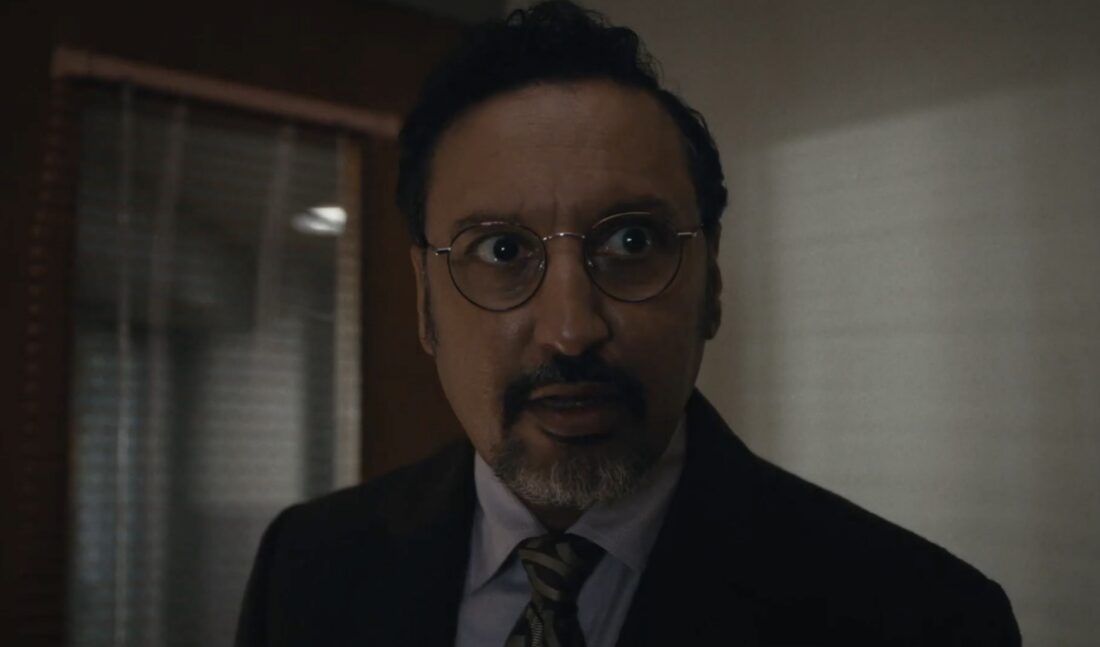
This “now he knows he has to get out” business poses some intriguing questions about what happens if the Devil actually does get out. It isn’t trying to attach itself to the staff or Cleave but to patients like Dorry and Pepper, patients who will be transferred to a new facility. It wants to jump to a new food supply like a tick looking for a new host to gorge on. Setting aside the supernatural elements, facilities like Dr. Walter’s New Hyde are often one or two grants or greedy board members away from crumbling into Dr. Anand’s New Hyde. Even the so-called good hospitals are often bad for long-term patients. Dorry lived through New Hyde in both its good and bad years, and she has the psychological scars to prove it. When New Hyde was good, Dr. Walter used a mallet to crack her skull open and cut a chunk of her brain out. When New Hyde was bad, Dr. Anand overmedicated her and punished her for noncompliance. I’d bet good money if lobotomies were still permitted, Anand would’ve given all his patients one.
These book club choices sure aren’t subtle. The Letters of Vincent van Gogh is a collection of letters from a man in a mental health crisis so severe he cut his own ear off then took his own life. It’s so interesting that Anand resonated with the passage where van Gogh talked about patients “helping each other” so much that he decided to become a doctor at a mental hospital. When I hear that passage, I don’t think “isn’t it nice that the patients were a little family,” but “conditions were so poor at that institution that the only people looking out for the patients were the patients themselves.” Anand inadvertently recreated the same conditions that failed to help van Gogh.
Loochie sees themselves reflected in van Gogh. Both are artists stifled by their mental health issues. Both have violent outbursts they can’t control. Both feel insignificant and isolated. Loochie’s conversation with Nana, especially the part about what Loochie did to their brother, hits so much harder when you know the story of Vincent and his brother Theo. Theo always supported his brother’s artistic dreams, and even when he was hospitalized he never gave up on him. He had syphilis when Vincent died, and it’s widely assumed that Theo’s demise was hastened by grief. That relationship stands in stark contrast to Loochie and everyone else in her biological family.
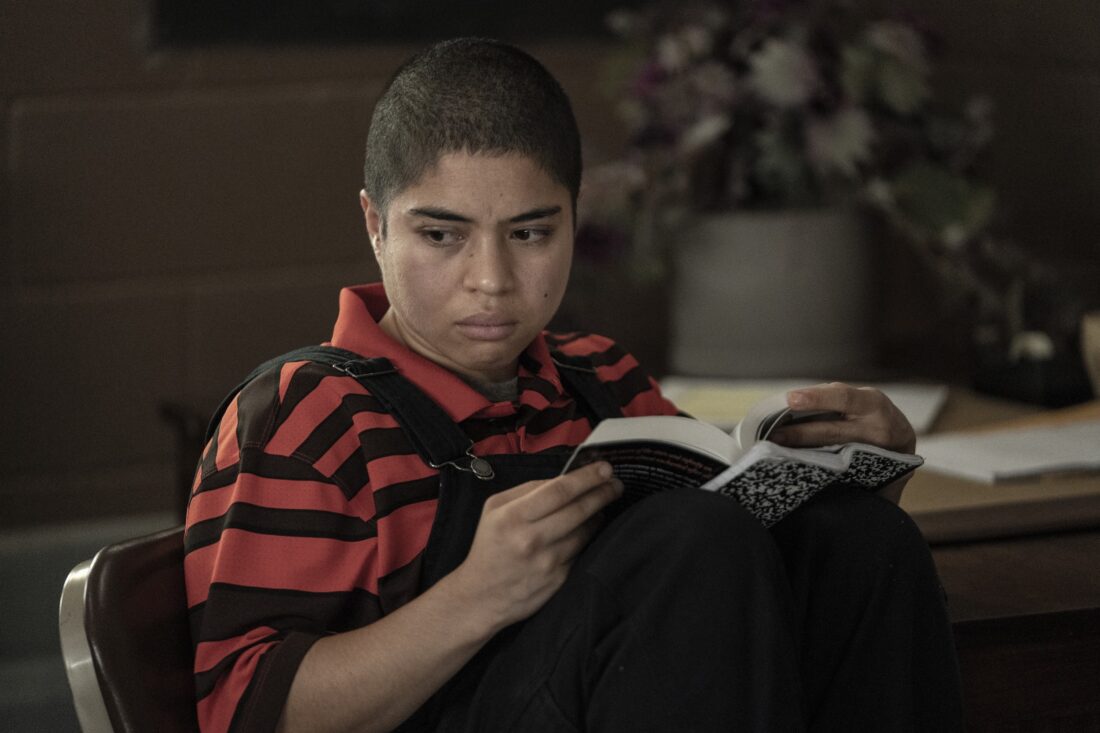
While Loochie is desperate to connect to their family, Pepper is pushing his only biological family away. He doesn’t want what happened to Coffee to happen to Anthony, especially not after last week when the Devil went strolling through Pepper’s guilty memories. Anthony showing up to offer comfort to the dad who abandoned him is so sweet. It’s a strange experience to be the adult child of a deadbeat dad. You spend your childhood longing for the attention of a man who doesn’t want anything to do with you, but by the time you become an adult you realize you wouldn’t be the person you are if he had been in your life. You want the dad who didn’t exist but don’t want the man who did. In Anthony’s case, he’s lucky that Pepper turned out to be a pretty decent guy who made a shitty choice he regrets and is now trying to repair that damage.
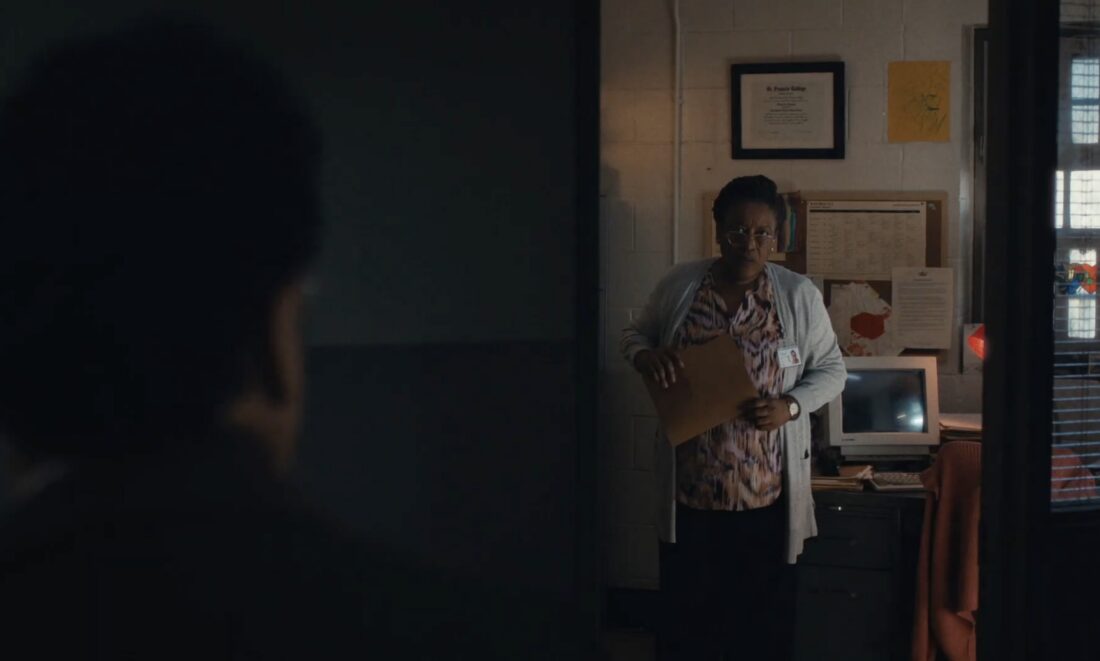
The-Devil-As-Louie gave Pepper various names for the malevolent force haunting New Hyde, and Miss Chris gives us another: duppy. Duppy are creatures from Black Caribbean folklore, based on supernatural beings from West African folklore. Miss Chris is smart enough to back out of Arnold Visserplein’s (Stephen Bradbury) room, but foolish enough to tell that duppy her big plan for trapping it in Northwest. Never tell the enemy your plan!
Dorry has a complicated relationship with men. Ralph treated her like she was disposable. Pepper thinks he’s smarter than her. Anand thinks she’s a pathetic nutcase. The Devil (who isn’t a man per se, but often takes the form of men) thinks of her as nothing more than a cog in the machine that funnels food into its maw. Coffee was her only male friend who wanted nothing from her but companionship, and now he’s dead. Dorry has blood on her hands, but so do the staff and so does Pepper. Dorry didn’t cause the violence at New Hyde; she was forced by men and the Devil to do things against her will. But she also made the choice to try and stop people from stopping the Devil. She was compliant, she did “his dirty work.” She had good intentions, but people were hurt in part because of her.
Maybe wherever the patients get moved to will be better than Northwest. Maybe it’ll be worse. Maybe intervention wouldn’t have mattered because it’ll be more of the same; new wing, new staff, same forced compliance and underfunding. Coffee might still be alive if Pepper had been compliant or Dorry had interfered earlier, but that life would have been as empty as Dorry’s. Before, Coffee and Dorry were alive but not living. Is half a life better than none, or would you rather go out early but on your terms? Coffee was murdered for trying to help his friends. Would he say that was a fair trade? Dorry took decades of suppressed rage—at the patriarchy, at the men who abused her, at herself—and fought back at the cost of her own life. Was it worth it? It’s up to Pepper, Loochie, and Miss Chris to make his sacrifice mean something..
Next week we find out if Pepper’s final boss fight is successful or if Loochie is right that they “ain’t going home.” The finale is going to be a doozy!
Quotes
Cleave: “How long did you know the deceased?”
Dorry: “Which one?”
I know that’s not supposed to be funny, but I admit I cackled.
Final Thoughts
- The opening shot of the flickering bulb and the blood spatter is so haunting
- Hey! It’s Wilson!
- The young man staring at Dorry when she arrives at New Hyde is a young Arnold. The way he looks at her makes me wonder if the Devil was in him back then? Maybe he uses Arnold’s body as a vessel now?
- Josephine does an excellent horror movie scream.
- I’m soooooo excited for a Loochie, Pepper, and Miss Chris team-up.
- That can’t be all we get of Robert Sean Leonard, can it?
- Poor Scotch Tape. The guy has been first on the scene for so much death.
- If the Dr. Walter we keep seeing is actually the Devil in disguise and Arnold his (unwitting?) henchman, then who is the third entity in what Dorry and Coffee called the holy trinity? Was it Dorry?
