








Pour one out for book Lestat’s many travels. I had been so looking forward to the flashback version of his quest to find Marius, and while I understand why it’s been cut—a lot of locations, not a lot of plot!—I really was looking forward to watching Sam Reid carve messages in stone walls.
But this is a small complaint. “New York” continues Lestat’s linear flashbacks while, in the present, he and the band hunker down in what he calls a 7,000 square foot coffin in order to make a record. It doesn’t go quite as planned. Or maybe it does. Like every episode this season, this one is so tightly woven that it is almost hard to pick apart. You can’t talk about music without talking about Claudia. You can’t talk about Armand without talking about Daniel. You can’t talk about Louis without talking about basically everyone else. There is simply so much. The density of this show, the way every scene is doing 14 different things, is just glorious. I’m already excited about rewatching the first six episodes before the finale and seeing what I missed the first two times.
For now, let’s start in the studio, where Lestat is saying “Again.” (Somehow this reminds me of Moira Kelly in The Cutting Edge: “Toe pick!”) The band is not getting it. The band is not playing their instruments like metaphors. Alex, oddly, is eating meat and drinking whiskey. Lestat does not want to answer anyone’s questions. He wants to get it just right. He wants to get it just right so badly that he will fling himself into the alley over and over again in order to sing the word “alive” while literally on the edge of dying. This is a whole different kind of rockstar excess.
Meanwhile, Sofia has taken over the Christine role, Christine and the rest of the gang having been dismissed and paid off in order to support the story that Lestat really died when shot by the man with the unlikely name of Beau Riddley. We will miss you and your terrifying competence, Christine. Lestat stays in the studio, likewise to support the tale of his demise. His impending resurrection as vampire Jesus, onstage for one night only!!!!, will likely have much stronger effect on the world than the fans—mourning the loss of his songs and his hotness in unsanctioned Daniel interviews—expect. The songs are no longer subtle: “Make! More!” the band chants, uncertain what it is they’re insisting that one make more of.
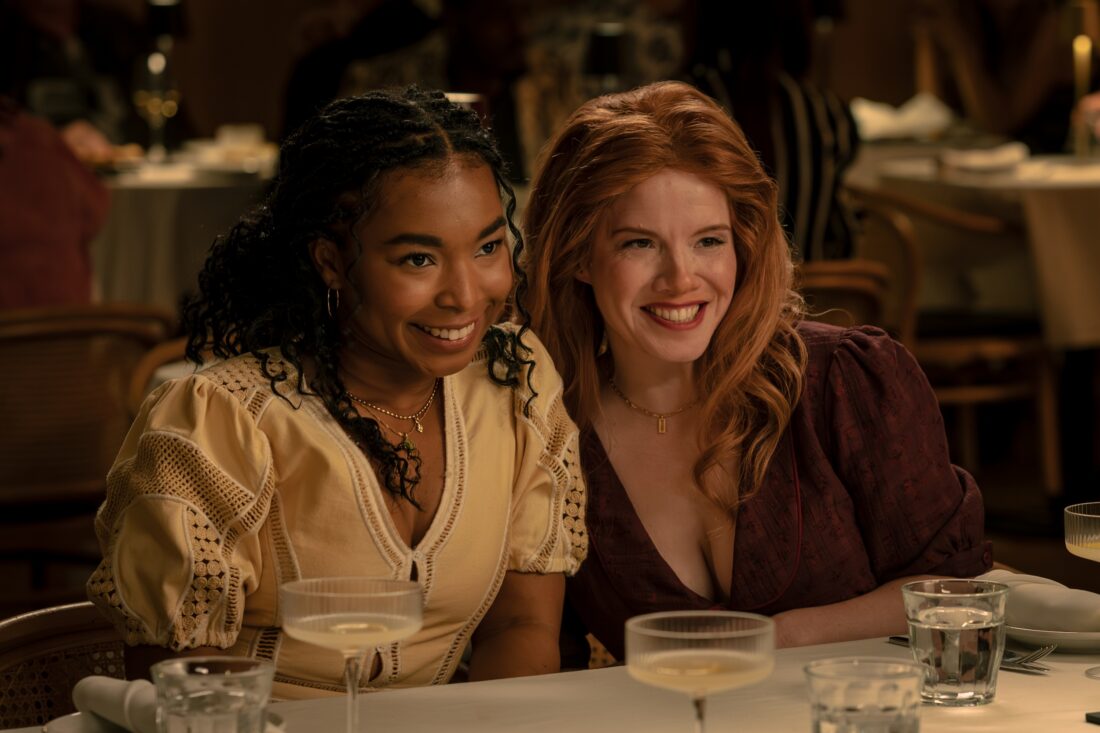
Across town somewhere, Louis is in deep with his role-playing Claudia stand-in, having now enlisted a faux-Madeleine as well. The wig! The accent! I don’t know how anyone in that scene kept a straight face. Awards for all. But when not-Claudia and not-Madeleine start making out, something changes for Louis. Jacob Anderson’s face is a tangled mystery: unhappy, not angry, but something complicated and messy is going on there, and I can’t quite decide what it is. He is a wonder as an actor.
There are two Louis and not-Claudia scenes, and in the second, Regina asks him to demonstrate his time-freezing powers on her by saying “Make me a stone,” which is a very upsetting phrase coming from the woman who looks exactly like the vampire who wrote “I feel nothing” in her journals. One suspects that experience was too freaky, as the next time we see her she’s back at the diner, faced with another vampire who has questions of his own.
I love that Regina goes back to work when she needs some “real real” as a break from her vampire role-play. But I love so much more than when Louis begins to get lost in it all, the only person he can possibly call is Lestat. (Louis’ ghost walks out of the recording studio; Louis the man requests Lestat’s presence.) Lestat tries so hard to say no—mad at Louis for not calling after he was shot; trying to say he’s busy with recording—but he can’t. Whatever Lestat’s role in the not-a-play that led to her death, Claudia was still his fledgling. The three of them were a family—a fucked-up, murderous, fraught family, but still. There’s no one else whose judgment Louis could borrow when he wants to know if that woman is, somehow, Claudia.
And yet: If you believe Armand, this might not be real at all. If you believe Armand, who says that Louis is “methodically cruel,” then this could be Louis wishing to inflict on Lestat the same confusion and grief he feels. His reaching out could be fully manipulative. I don’t, as a rule, believe Armand about much of anything. But his perspective on the last 50+ years does, maybe, put some of Louis’ behavior in a different light.
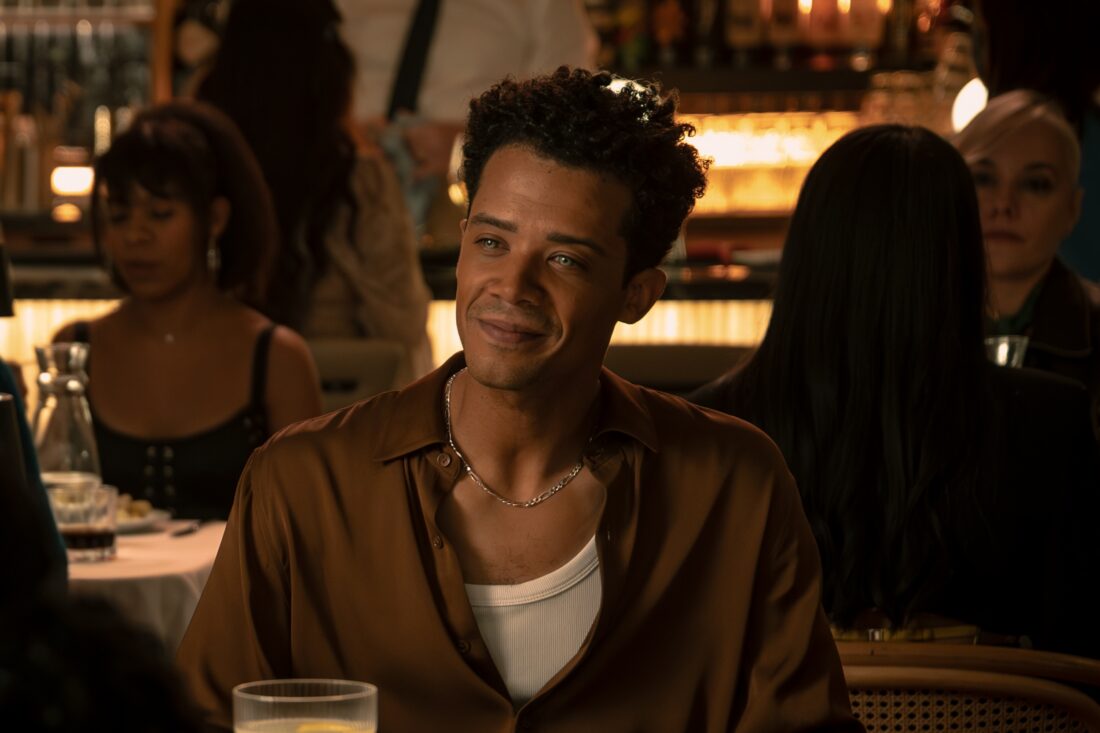
Or does it. Like I said last week, I know that Daniel and Armand are a canon couple in the books. But I still can’t help but watch the gremlin from a skeptical angle. Everything he says, I want to poke at, especially when he possesses some random Great Conversion-obsessed vampire in order to talk to Daniel. (Armand has never been straightforward a day in his life.) Yes, he knows the details of Daniel’s life. He could have gotten those from reading Dan’s mind before his turning. Yes, he loves to be controlling, so it tracks that he might have done all the things he said he did. But I still don’t see love. I don’t emotionally buy the tale of five decades of following Daniel around and then coming home to update Louis on the man’s progress or lack thereof.
On the other hand, I also did not for one second believe Louis when he called Armand the love of his life, so maybe this has been a half-century game they’re playing with one unsuspecting Pulitzer Prize-winning journalist.
One thing at the heart of Interview with The Vampire Lestat, all three seasons of it, is the question of how much you can really ever know someone—and the mirror image question: Is the person you think you are the same as the person that your loved ones know? How a person is and how a person seems can be in perpetual conflict, as we see played out over and over again on these densely gorgeous shows. (The shot of Lestat, as dressed by Louis’ memory, in the “previously on”—it’s truly like he’s a different person.) When no one character has to be constantly consistent, they can truly contain multitudes. We get Armand the lover and Armand the murderer within 30 minutes of each other. Louis the desperate and Louis the cruel. Lestat the cocky bastard and Lestat the lonely manchild who wants to die.
And Lestat, face to face with the Claudia who isn’t. Lestat in a plain black hoodie is surprising enough, but this Lestat, almost plain-spoken, straightforward, is like yet another version of himself. He is so clearly rattled, even before he gets back to the studio. It’s classic: He tells Louis it’s not her (to protect him?) and then goes to write the song that will herald the transformation of his band. Parts of “Stained Glass Eyes” are shot like a music video, like the direct opposite of his music-video mockery of Magnus: Here the feelings are real, the vocals raw, the lyrics opaque but also not. “Don’t break that stare.”
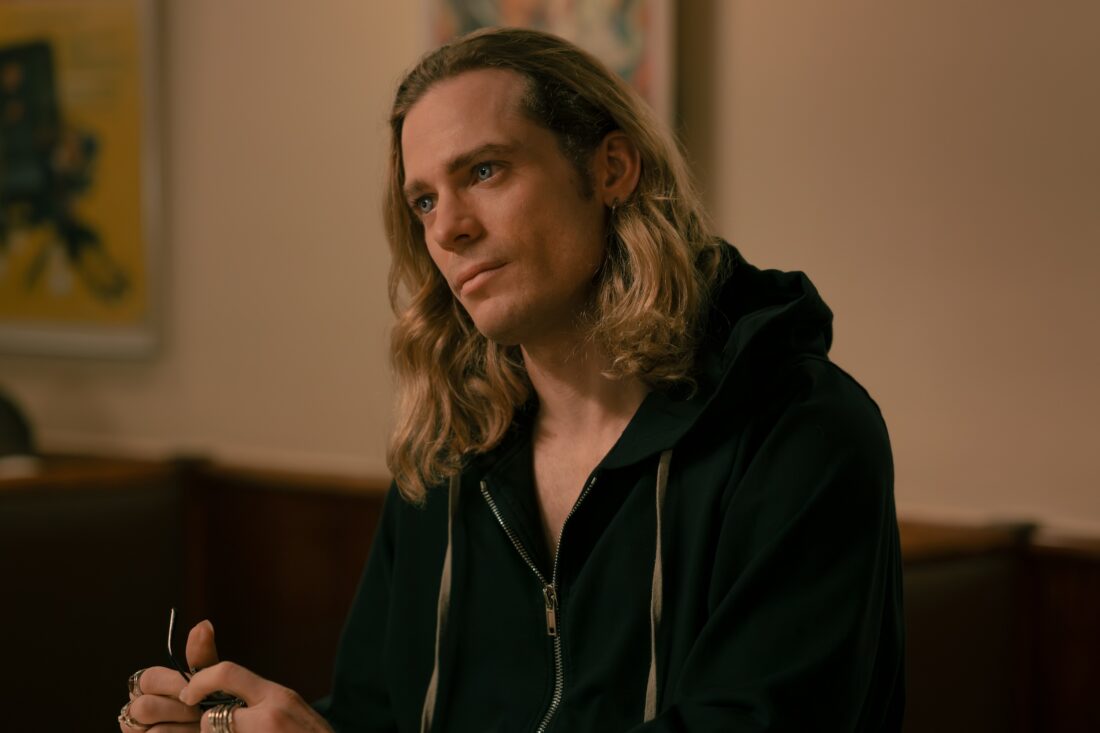
Armand says in season two, narrating the events of the play, “The last thing she saw on Earth was him.” I would never have guessed that would lead us to this heartbreaking scene, with ghost Claudia staring at Lestat as he records her song. Stripped-down Lestat; stripped down instrumentation; laid-bare feelings. It’s an astonishing sequence, beautifully performed. Louis is trying to make a stranger into Claudia. Lestat makes art of his grief and complicity.
And then there’s Sam, with that look on his face in the recording booth, knowing exactly what the song is about. I keep wondering what Lestat thought was going to happen when he went to Paris. The way he said to Armand, last week, that it wasn’t a play, but a trial. Did Armand tell him it was all just for show? To shame Claudia and Louis and make them suffer a little? Did he think that because he survived, they would, too? Will the flashbacks take us that far?
For now, the continuing flashbacks take us, finally, to Lestat’s meeting with Marius, which is in some ways just like the book (Marius digging him up) and in some ways quite different. He isn’t selected to watch over Akasha and Enkil, in the book; he is brought to meet them by Marius, who continues to tend to his vampiric ancestors long after Lestat is gone.
But this is a good change, I think, not least because of the wonderfully detailed and cluttered set where the ancient vampires lie (its messy richness is echoed in the cluttered and cozy recording studio). But even better are all the great lines the setup gives Lestat, and the way having a purpose takes him all the way from “I don’t want a job. I want to die” to his enthusiasm about an ice cream scoop. (Scoooooop.)
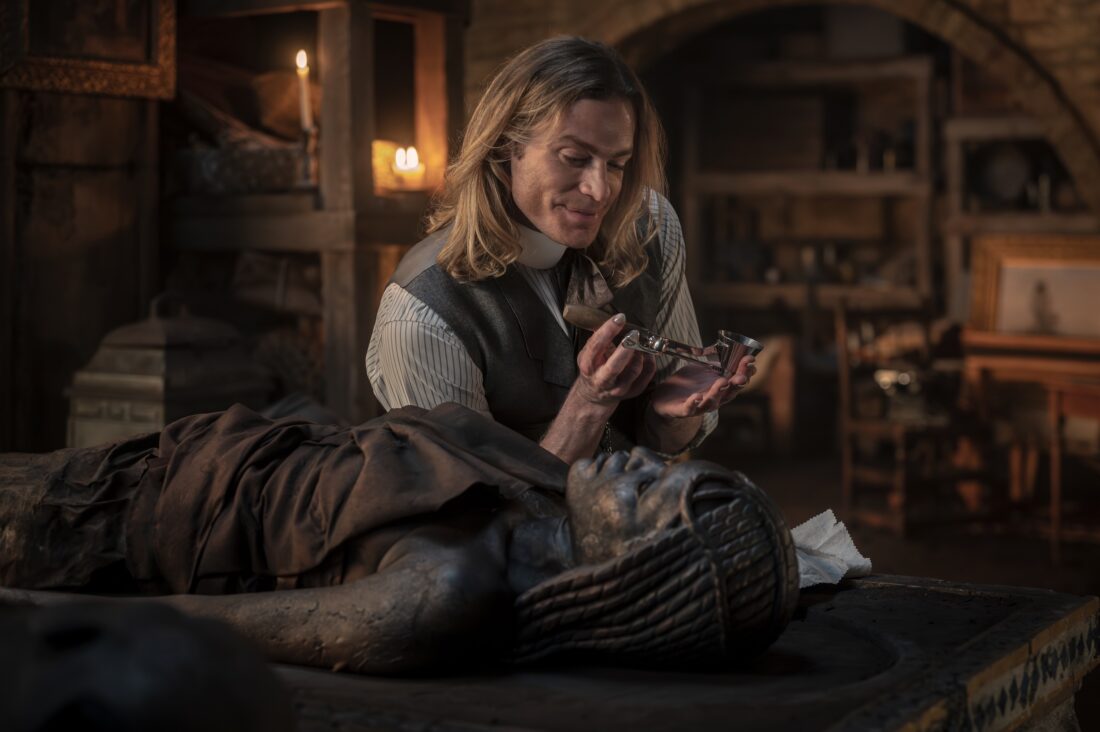
Writers Rolin Jones and Hannah Moscovitch are not subtle about the way Lestat replaces his desire to please Gabriella with his desire to please Akasha. He does not bring her nine thousand sticks, but he brings her shiny things, and he educates himself in the process. (Gabriella would never understand this. She saw only her own boredom with his childish play.) His time tending the vampire queen is how he came to be a self-taught musician: She liked music, so he learned to play it. We don’t see all of that, but we see the depressed man shift from “I don’t know how to play” to detailing the musical movements of a symphony—and then flying into a rage when he scratches the record. Lestat does not like mistakes.
So naturally he makes a big one. Don’t give her blood, Marius says, and some time later, Lestat ignores the warning, giving her blood lipstick. (Always the show pony!) The entire climactic scene here is painful chaos: Marius telling Lestat he’s unworthy; Lestat spinning in place, caught up by Akasha’s blood; and Akasha herself (an intense Sheila Atim) speaking, speaking, almost chanting, asking question after question like a person possessed.
This Marius (Christopher Heyerdahl) is not a gentleman eager to tell Lestat the story of his own making and history (which is very interesting!) and the backstory of Akasha and Enkil. No, he’s a man who’s been doing a job for a very long time and is tired of it, ready to pass the responsibility to someone else. He has also made a very large mistake on the job, and says that he is the reason why there are so few vampires: Because he drank a drunk guy and didn’t get Those Who Must Be Kept tucked away from the sun in time, and if they burn, all vampires burn. This is an important detail, no? And honestly seems like a bigger mistake than giving Akasha a bit of blood. (Was there anyone around to berate Marius? Who did he take over the job from?)
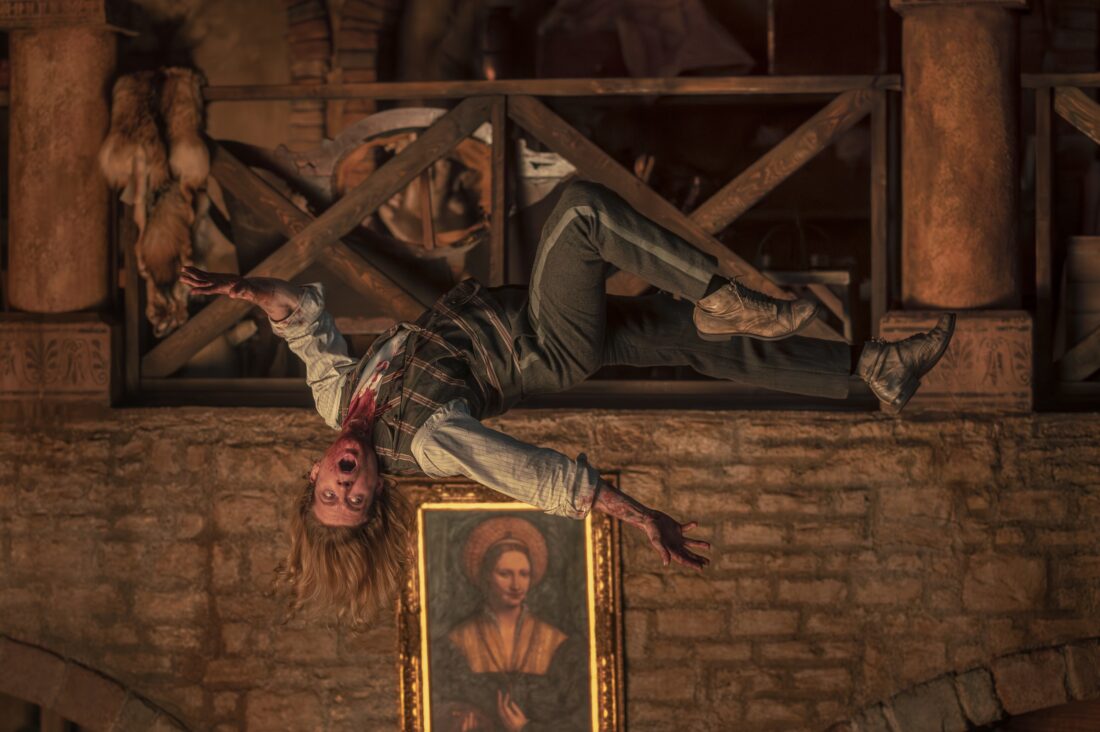
The important part of the story, to Lestat, is that his Akasha-tainted blood is dangerous, the source of his temper (despite the fact that he displayed said temper before he drank it!) and his worst impulses. This is what he tells his remaining three bandmates after Larry walks out and they all unite to proclaim they’d rather be vampires than quit. (Magnus did say there was a drummer at Lestat’s table of muses and ghosts.)
Do we buy this? I am not sure I buy this. I think he’s trying to avoid more fledgling disasters and/or not wanting to be tied to any more vampire children and/or just preferring to be the only vampire onstage. But it’s exactly what Gabriella wants. Make more, indeed. (There are three vampires in that recording booth, and three supplicants, and I guess we’ll just have to wait and see how that all plays out.)
At any rate, the band has a new sound, and it is designed for vampire ears. Vampires understand metaphorical instruments, obviously. I would have had a bone to pick with the idea that “Stained Glass Eyes” was that marked a departure from the other songs in any way but its emotional honesty, but this change in sound isn’t just a shift to more piano. It’s something bigger and deeper than that, and I am very curious what it will mean for the show. (New title sequence, maybe?)
I don’t know how to end this, because this episode ends with a gasp, and yet there is one lingering ghost in the room I haven’t talked about yet. But first, I think, we put Larry to rest.
The first thing Armand says to Larry is exactly the same thing Alex said to him earlier in the episode: “Terrible goalie, but a total shredder with an axe.” How much of drunk, meat-eating Alex is Armand? (Is it fun for a vampire to puppet a human while they’re eating and drinking? Like an echo of things they can no longer enjoy?) But the next thing he says, he also said to young Daniel Molloy: “Rest.” He did not then mind-fuck Daniel off a subway platform, though.

Armand does not even look pleased with his decision, after this horror. (That poor woman across the platform!) He looks maybe distracted. Is he just trying to stop the band by killing the guitarist? Is it an attempt to balance the scales, if it happens after (in theory) the rest of the band are turned? He clearly doesn’t believe that Lestat is dead, or he wouldn’t be worried about it. What are you doing, gremlin?
And the last last thing for this week: In his opening narration, Lestat pauses and says, “But I, Amel, digress.”
You can read this one of two ways:
It is not actually Lestat speaking, but someone called Amel.
Lestat is directing his narration to someone called Amel, and just interjecting the name quite oddly.
Neither makes a ton of sense at this point in the narration. The name “Amel” does not appear in the book The Vampire Lestat. (Did I buy an ebook just to search this for confirmation? I did.) But at the end, as Akasha rants and chants and asks endless, endless questions, Amel comes up again: “And who arranged it? Did Amel?” she asks. She says “Amel” at least two more times.
This is very teasing. If you would like to know just who or what Amel is, you can look at the Vampire Chronicles Wiki. I think it would be rude and spoilery to say too much, but I did want to point out that weird little phrase at the beginning, because when I didn’t have the captions on, it slid right by me; I assumed it was just a little Lestat-ism that I did not catch.
I don’t even have theories so much as questions, at this point, and they tie back to questions I’ve had since the beginning: When did Lestat record The Failures and why are the album numbers recited by someone else (Canadian director Guy Maddin)? Why does Raglan James, of all people, react so drastically when the second auction lot is revealed? Why is a bottle of Lestat’s blood included? And what has happened to everyone?
We are not even halfway through the albums that make up The Failures, which really suggests there has to be a second (or fourth, depending on your counting) season. Can worldwide disaster strike in the next two episodes? I kinda hope not.
LITTLE SIPS
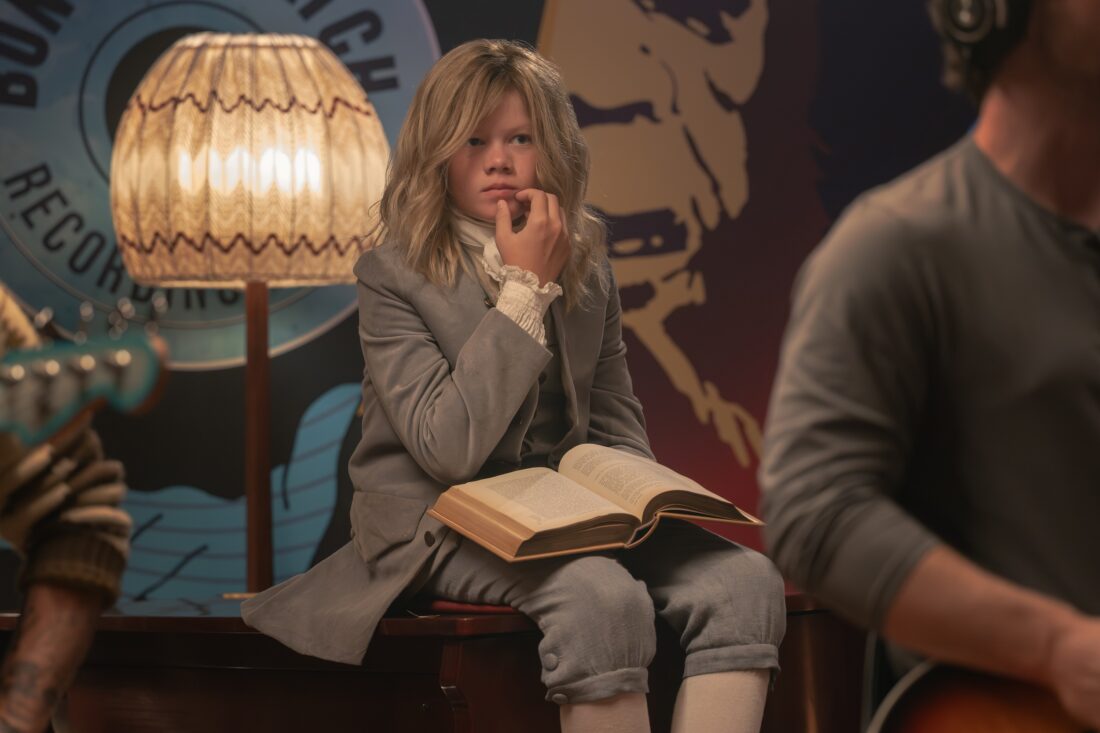
- Such an interesting table Lestat set! For a minute I thought it would overlap with Magnus’s description of the people at the table, but I don’t think that included Marie Antoinette or the cabbages.
- My wish for the finale to play out like the climax of the novel seems to be coming to delicious fruition.
- There are such rich parallels this episode; one of my favorites is the shift from Lestat being a dick to Sam about the job (that he presumably isn’t excited about) straight to Marius telling Lestat about the job (that he definitely doesn’t want). Lestat’s job turned out to be life-changing. Perhaps Sam’s will as well.
- If Louis’ hotels are actually for vampires, but there aren’t enough of them to fill them, does that mean he’s banking on the Great Conversion?
- Did Daniel actually get so distracted by Armand promising a walk in the sun that he didn’t register what Armand said about Gabriella, or was he performing that in order to avoid giving Armand the satisfaction of having shocked him? We haven’t seen Daniel do much conniving yet, but I think he has it in him.
- Lestat briefly but effectively demonstrating to Gabriella that he has also learned the art of withholding, phew.
- When Lestat says “Stop performing,” is he talking to himself, or to Regina?
- “If you were the first, then who made you? Why do we exist? Why do we endure at all? And why did she leave me? Am I evil? Is my evil sanctioned by nature or divine error? Where is God?” Lestat just running through all the hits while talking to Akasha.
- I didn’t entirely understand Nicki yelling random numbers at Lestat while he was trying to record “Big Boss,” but ghost Nicki is clearly not satisfied with anything.
- Little Lestat is quite present this week, stumbling over his Thomas Aquinas just before “Thomas Pitty He’s a Whore” reaches out. The passage he was reading is curious: “How is it they live in such harmony, the billions of stars, when most men can barely go a minute without declaring war in their minds?”
