





When Orbital won the Booker Prize in 2024, arguments cropped up like weeds: Was it science fiction? Was it most definitely not science fiction? If not, why not; if so, why? I’m still thinking about those discussions. I’m hung up on the recurring discourse about what literary fiction is and what it isn’t in relation to SFF. I still want to know if you can draw a line between “romantasy” and “fantasy with romance.” Is which genre term comes first indicative of where a book falls on the spectrum? I dunno. I don’t know anything.
But while going in these loops of is/is not, knowing/not knowing, I stopped and asked myself: Does it matter?
Does it matter what genre something is? Does it matter to you when you’re reading? When you’re looking for a new book? When you’re reading about books? Do you think about the genre or subgenre or handy-dandy tropes-turned-tags when you’re reading or shopping?
I am genre-indifferent at many of these times. But the world at large seems to feel otherwise. There are newspapers that put their SFF coverage into occasional columns, if they have it at all; there are outlets that publish “All this week’s new books!” lists that never include SFF books. There are, still, somehow, people who act as if genre writing is not “real” writing, and reading it not “real” reading. (SFF books that have gotten so big they’ve become mainstream are the allowed exceptions, of course.) All these things demonstrate the fact that genre-specific spaces are necessary. We need Locus and Strange Horizons (and this very site!) and blogs and social media lists made up of all the people who read SFF.
Genres need their own awards because general literary awards are not going to recognize genre. Genres need their own readers and reviewers because too often, general literary critics don’t recognize what they’re looking at when they read genre fiction.
I don’t particularly like any of these terms, and I don’t even really like the way I’m using them. I was trying out “mainstream” instead of “general literary,” but that didn’t work either. What “mainstream” means in books changes all the time. When I was a kid, everyone read Dean Koontz and Stephen King. Now they still read Stephen King, but they also read Rebecca Yarros and George R.R. Martin. Or James Patterson and Sarah J. Maas and Suzanne Collins. We’re mainstream! Except when we’re not.
Here is what frustrates me about genre conversations: the way they so quickly become us vs. them. What might begin as a discussion of topics or tropes or themes or approaches to fiction so often becomes a hierarchy or a series of sweeping generalizations. These are right, and these are wrong, or at best less right. Literary fiction is about midwestern professors trying to sleep with their students, and fantasy is about feisty princesses who can do their rescuing themselves, thank you very much. Neither of these things is true (except when they are).
At Strange Horizons, Ada Palmer has a very interesting argument that SFF writers are historians. There is so much to like in this piece, which cleverly manages to be very smart about worldbuilding while only using the word “worldbuilding” twice. She has intriguing thoughts about power and changing the world, and if I do not particularly like the phrase “advance claims”—as in, stories advance claims about how the world might change—she does step back and say that she could use the word “teaches” there instead. I would go a little further and say that books about the world changing explore possibilities about change, or ask questions about who might manifest it, and why or why not. I like my SFF to ask more questions than it answers.
But my pushback really came in here:
[O]ne nearly-universal characteristic of contemporary mainstream literary fiction (as nearly-universal as technology is in SF or magic in fantasy) is a focus on a powerless character making an internal journey to come to terms with the world.
Do I love a book in which a “powerless” character goes on an internal journey to come to terms with the world? Sure do. But is this a universal trait of literary fiction? Well. How do you define “powerless,” and what constitutes “the world”? (I also don’t think SFF is only about changing the world, and in fact I’d love to see more SFF that wasn’t operating with such large stakes, but that is a topic for another column.)
But I suppose it could look like a litfic trait if you’re setting litfic up in opposition to SFF. Us versus them. What our books do versus what their books do. I bristled here because of how it creates an either/or situation. As Roseanna Pendlebury noted on Bluesky, “But if litfic is universally characterised by the ‘coming-to-terms’ definition, and SFF by ‘the world usually changes’, as Palmer focuses on, they can never cohabit. The definitions /are/ mutually exclusive.”
This is hard for me to argue with, in a way, because of how I read, which is across this line and around it. I am especially interested in books that defy the idea that SFF and literary fiction are mutually exclusive—books like Confessions of the Fox, and Cloud Atlas, and The Ministry of Time, and North Continent Ribbon, and a whole lot of YA books that will only muddle this discussion of genres further. I don’t read any genre all that differently from any other genre. I read books about people dealing with situations and feelings and other people; sometimes they change the world, and sometimes they change a small corner of it, and sometimes they themselves are changed. Sometimes all of that happens at once. Sometimes the books’ authors are clearly, intentionally wedding their work to a lineage of other works, and sometimes the lines of influence are less clear.
But Palmer’s definitions did make me wonder: Is this why SFF readers can seem reluctant to read books that appear to be “literary” even when they’re using the same devices as SFF? Why general readers are sometimes resistant to accept that SFF that has reached the mainstream—The Handmaid’s Tale is a classic example here—is, in fact, SFF? Are expectations actually the defining factor between the genres, if there is one? Is that the real deciding line between which climate-fiction novels get published by SFF imprints and which come out on the literary side, with minimalist covers?
I can’t define literary fiction. At swordpoint I might say it is made up of the books taken seriously by award committees and higher-brow press; that it might be said to depend more heavily on the writer’s prose style than genres that are more plot-centric; that it frequently takes place in the real world and considers real-life concerns and the hows and whys of a person moving through their world. But if you asked me again in a week, I might argue with myself.
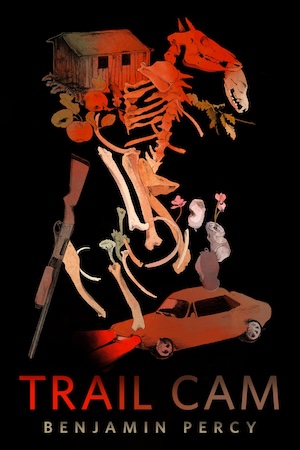
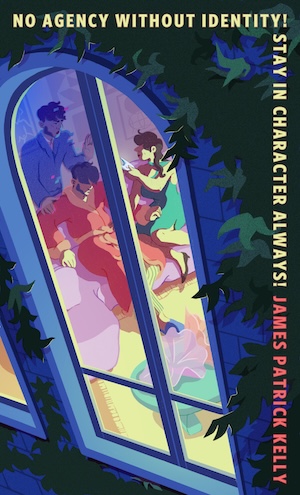
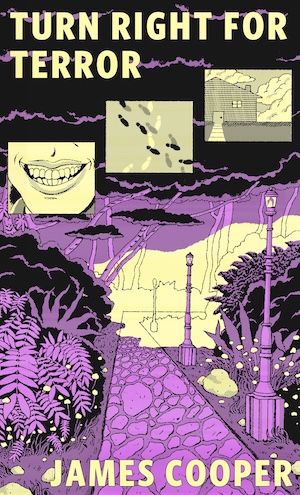
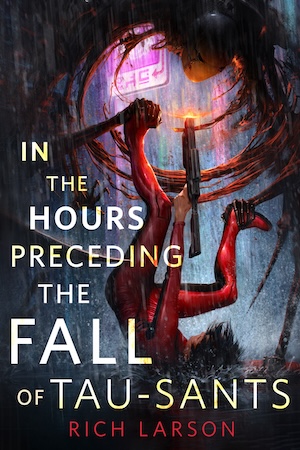
I have a faint memory that bookstore sections were once sometimes labeled “general fiction.” This, one might argue, is too broad. Too general! Anything could go in there. And yes, it could. But readers are sophisticated now. We know how covers are designed to get genre across in a single glance. Blobby colors: highbrow, has a blurb that calls it “important,” ambitious in some way, destined to be reviewed by the New York Times. Mostly black background with an elaborate serif font, ornate florals/daggers/vines, faintly William Morris-inspired background: romantasy or dark academia, depending on how much black is used. Cartoon-like illustrations in bright colors and simple lines: contemporary romance. I won’t go on. (But I want to.) If you put a regular reader in front of a shelf of books, without looking at the backs she will probably be able to pick out which ones are of interest to her. We are all so well trained.
Still, “general” may be more useful than “literary,” given that the implied superiority of “literary”—anything not “literary fiction” is clearly less literary, no?—is doing no one any good.
I can’t define science fiction, or fantasy, and I don’t really want to. But I do want us—whatever “us” my fellow genre readers feel we are a part of—to consider not being in opposition to “them.” To use genre terms as descriptors rather than buckets with the lids tightly glued on. These things should be tools, not dividers. Fantasy, romantasy, cozy, thriller, cyberpunk, dark academia, the rest—they’re nebulous clouds, overlapping, shifting, moving across the sky of public opinion.
We can, and maybe we should, read the same books differently. Orbital can be science fiction and not be science fiction—be a story about humans in space, doing science, and also a story in which humans are small and the Earth is large and they are absolutely not changing it, only watching it. Their tech is realistic, as I understand it; they do not appear to be from the future. But Earth is a planet, and observing a planet is a science fictional activity.
All of these things can be true.
None of this is to say that genres shouldn’t or don’t exist, or that we should stop categorizing things; we would do that anyway. If genres didn’t exist, we would invent them (see also: the ever expanding lists of sub- and micro-genres!). But there is a long history of us vs. them when it comes to SFF and litfic, and the more I read, the more I think we are policing those boundaries too closely. I understand why SFF readers want to claim some things as ours and reject some things as not-ours, especially when we have long been looked down on by people who think they don’t read genre. (I believe that literary fiction is a genre, even if I can’t define it.) But I also think that defensive streak does us little good.
And yet, I find I get most invested in the idea of genre in defense of it. I resent the beloved outlets that seem to only cover SFF as an afterthoughts; the lists that simply don’t bother to include it; the people who act as if it can never live up to some specific literary measure and refuse to be shown examples of things that do, in fact, live up to all kinds of literary measures. I resent the people who will take the worst example of an SFF cliche and pretend it is a definitive example of anything. As if there are not terrible books in every genre. With any given genre, you have highbrow, you have lowbrow, you have every brow in between. SFF has pulp, and we have poetry. It’s what I love about this nebulous cloud of a genre.
But I want to reject that defensiveness. I want to reach out instead of closing off, to extend a welcome to the readers who think that genre, any genre, is only one thing, to show them how it contains multitudes. Is it so difficult to think that a literary fiction reader could love Ancillary Justice or Rakesfall or The Spear Cuts Through Water? Are SFF readers ignoring Interior Chinatown or The Bone Clocks or Jonathan Abernathy You Are Kind because they might be in a different part of the bookstore? Are we not going to claim Station Eleven as SFF? What do we do with Annihilation? Who gets to call dibs on Zone One? As the meme asks, why don’t we have both?
If we must define genre, though, I think I will go with Ted Chiang, who said in The Believer that genre is “an ongoing conversation. Genre is a conversation between authors, between books, that extends over decades.”
Some people will reject that conversation (looking at you, Ian McEwan); some will bound enthusiastically into it; some will be wallflowers, or think they’re at a different party. Some will stumble into a conversation they might not be aware has been going on for decades. But the conversation continues, the guests change, readers start new offshoot conversations. Genre means everything; genre means nothing. Reading SFF means holding the possible and the impossible in your head at the same time. Can we do that with genre, too?


The way I see it, genre is a descriptive label, not a prescriptive one. And its only purposes (which are really the same thing) are:
The problem arises when they are treated like hard and fast rules, not guidelines. I mean, one of the greatest genre writers of the 20th century, Roger Zelazny, regularly wrote books that not only crossed the line between sci-fi and fantasy, but utterly obliterated it. You end up with arguments about what is “real” $LABEL when the only important question is, “Will people who like other books classified this way like this one?”
These days, my only real issue with genre labels is when they are used to describe the quality of a book, not its contents (e.g., “This isn’t sci-fi/fantasy/horror… it’s LITERATURE!”).
There’s long-standing resentment on the part of the skifferati that those darn literature people view SF contempt. I think patient zero might have been Damon Knight, who took offense to Arthur Koestler’s “The Boredom of Fantasy”, which appeared in Harper’s Bazaar in 1953. In Boredom, Koestler asserted
Koestler wasn’t the only author from outside SFF to snipe at SF. About the same time as the Koestler piece Raymond Chandler wrote
But Chandler’s comments were in a private letter while Koestler’s were public. Thus, war to the death between SFF and Litfic, not SFF and mystery. Just as well, as those mystery people are far too familiar with guns and knives and poisons and heavy stone gargoyles pushed from a height for comfort.
Vonnegut’s 1974 “I have been a soreheaded occupant of a file drawer labeled “science fiction” … and I would like out, particularly since so many serious critics regularly mistake the drawer for a urinal,” suggests Koestler had company in his comments.
Le Guin resisted Handmaid being classified as SF because she used an odd and very narrow definition of science fiction, despite having been moderately well-read in the Weird Tales end of things as a kid.
Is that really an accurate characterization of Le Guin? My understanding is that she _complained_ that Atwood used a too restrictive definition of sci-fi to get out of calling Handmaid’s Tale and other short stories science fiction (e.g., https://www.theguardian.com/books/2009/aug/29/margaret-atwood-year-of-flood).
Augh! I only just now see I had a total brain fart: I typed Le Guin when I meant Atwood.
(The connection is that when Atwood reviewed SF in public, she reviewed safely respectable SF like Le Guin)
I know that a romantic fantasy could be a different genre altogether :-)
“We don’t care about labels, Carol. We’d just like another book from you.”
There’s an old joke that the difference between noodles and pasta is… $10/plate.
The difference between speculative fiction and science fiction is where the book gets shelved and what awards it gets nominated for.
After years (decades) of working in (and shopping in) bookstores, I’ve come to one inescapable conclusion: there are only two classifications, fiction and non-fiction; genre is merely marketing. Good luck explaining that to a publisher or a bookstore manager, though.
Genre is just marketing labels. Don’t sweat it.
I admit I’m in the camp that resents litfic, and I think it has to do with litfic’s attitude towards itself generally and towards SFF specifically. I find that litfic is sooooo focused on “the importance of the human experience” (whatever that means) that it comes off as pretentious to me. For me, any book that’s like “This book is so important to our times” automatically gets points docked. There there’s litfic’s attitude towards SFF; litfic takes tools from SFF without acknowledging that that’s what it’s doing, and then expects praise – in the form of awards – for being “innovative”. It’s disrespectful.
Using Chiang’s definition of genre as an ongoing conversation, it’s like litfic barges into SFF conversations, makes them all about itself, expects to be the center of attention for re-inventing the wheel, and then gets pissy when SFF points out “Hey, here’s the long history of the wheel you think is brand-new and innovative.”
Yes! I think the vital part missing from the Chiang quote (which may well be in the larger piece) is that genre is not a conversation between writers and books, it’s a conversation between readers and readers. Some of those readers write, some of them publish, some borrow from libraries or buy in hardback. Some readers teach the next generation of readers. Some readers have immense power and some never say a word. But all of that is the conversation that is genre.
I admit I get frustrated when, as DigiCom observed, folks treat genre boundaries as hard-and-fast rules, leading to endless debates on what constitutes “real” SF or whatever. I belong to at least one FB group where, I swear, every third post is about whether such-and-such rates is actually SF or not. Which leaves me grumbling about why some folks are SO determined to sort everything into neat little boxes.
Meanwhile, since I’m feeling cranky tonight, I always roll my eyes when I see SF fans looking down their noses at fantasy and horror the same way the literary establishment has been known to look down on SF, often using the very same tactic of damning a genre by its most hackneyed examples.
“If it’s horror, it must be trash. If it’s not trash, it’s not horror.”
Sound familiar?
See also discussions of romance.
See also the universal shunning of erotica.
As a film nerd, as well as a bookworm, I find that people who say “I hate all horror movies” almost always have a favorite movie that fits nicely within the horror category. And people who would never read “erotica” will happily read romance with more explicit sex scenes than an entire edition of “Year’s Best Lesbian Erotica.”
As much as I avoid books marketed as “literary fiction,” I love to make genres as inclusive as possible. Everyone’s welcome! And then suddenly your favorite gory “thriller” is outed as actual horror. Or your latest book of high-minded epic verse is identified as under-the-radar fantasy. Then there’s no pedestal upon which to stand and gaze down in disgust, because the ground is all pedestals now.
The basic division is between fantasy and “realistic” or “mimetic” fiction. Fantasy involves the reader in a world other than what that reader could encounter in real life, because that world has aspects that don’t exist in the RL world, that can’t be found in documentaries, that didn’t exist in the world of the reader’s parents, grandparents, etc. In realistic or mimetic fiction, the reader is involved in a world that matches the RL world in all important ways, even if the characters are fictional and the town names and street names don’t match ones on a map. The physical laws of that world are the same as the ones we recognize, the time period is more recent history or the present day, the countries are the countries we recognize from whatever time period is being portrayed, and the societies and cultural mores match what is contemporary for that time period and country. Sometimes the exact year and geography are left purposely vague, but otherwise there is nothing fantastic in the content. Fantasy is by far the older branch of fiction, most likely originating before there was even any writing. Realistic/mimetic fiction is a more recent invention. Almost all other genres are subdivisions of one or the other of those two. “Literary” fiction is a subdivision of realistic/mimetic fiction, but so are many romances and detective stories, but you can have literary fantasy just as you can have romance or detective stories cast as fantasy. 1984 is definitely fantasy (future time period, countries not on the map, technology slightly more advanced than what existed in 1949, different social structures, etc.) but it has a powerless character forcibly made to adjust to his world. I guess the forcible part violates the “internal journey” clause? All “science fiction” is fantasy, just a subdivision in which the fantastic aspect is provided by imagined technologies rather than magic or surrealism or different physical laws or strange, unrecognizable countries and societies.
I love the idea that fantasy is the oldest form of fiction. It’s not surprising, but I had just never thought of it in this way. Thank you for the insight!
You make a few good arguments here. I think that genre matters for some people, but it shouldn’t.
You mention Orbital. For me it’s a good literary novel with light sci-fi touches.
As for the books by George R.R. Martin, what can I say? They are literary, historical in a way, dramatic, funny, etc. He is such a good writer that even if he wrote silly children’s rhymes, I would read and enjoy them too. When someone is able to write hundreds of pages in which nothing much happens and keep me turning the pages without a break from start to finish, they are a master storyteller, no matter the genre.
A good story with excellent writing is the only thing that matters, I believe.
Although if I hear the song “The Bear with Hair” one more time, I’ll do something other people will regret. <G>
Genre is relevant to me in that I was exposed to “modern literary classics” and endless New Yorker short stories as an impressionable youth. I never again want to read a tale about the terribly realistic glum shadow of contemptuous white male middle aged infidelity in the American suburbs. And far too often, when I dip my toes into SFF that has “earned” a place at the Booker Prize table (or whatnot), it has been a very realistic and recognizable bummer with a little SFF thrown in that is also somehow a bummer.*
I don’t dislike sad endings or books that grapple with the hardest parts of being human or sapient. However, genre conventions (horror, romance, SFF, erotica, whatever “Mapp and Lucia” is…) give me the space that I need to face the truth that they (at their best) are presenting to me. I feel that genres give me a gift by stating intentions and then blossoming within those intentions, or upending them in a wonderful way.
Even the “realistic literary” books that I love have a hint of the otherworldly. Is Moby Dick truly a “mimetic” novel? Does All Passion Spent by Vita Sackville-West not glow with a hint of fantasy? In what way is Maurice not a lovely romance with a perfect happy ending?
When I can seek out every own-voices BIPOC queer monster-hunting body horror detective novel in the world, why would I be mucking around in reality? What can “literary fiction” do for me that almost every favorite book I’ve ever read can’t? If it’s a great genre book, then no amount of literary gravity or weighty realism would be better. For me.
*Caveat: Every human is their own individual doing their best. I can only speak for myself and from my own experiences. I have no room or ability to say anything beyond what I see and know, certainly not to pass universal judgement on another human’s work of art or preferences. I wish it didn’t have to be said.
I guess you could argue that a book in which literary style is the priority and in which the story does not conform to other genre expectations (ie, SF, Romance or whatever) automatically counts as Literary Fiction? So while The Big Sleep or Jonathan Strange and Mr Norrell might each constitute a stylistic tour-de-force they don’t qualify as Literary Fiction but as genre fiction with a strong literary bias.
I’d also make a distinction between ‘Literature’ with a capital L – ie, tried-and-trusted classics – and contemporary Literary Fiction which seems to me to be a clearly defined genre while constantly pretending it is not (but how would I know? I rarely read Literary Fiction).
I love Ada Palmer’s take on the genre and literary fiction device because it felt deeply accurate. The claim from this article that this then forces genre and literary fiction to be “mutually exclusive” and “not cohabit” is demonstrably false.
For the examples you list of “Ancillary Justice or Rakesfall or The Spear Cuts Through Water,” these stories all pull of the miracle of doing both: telling stories where individual characters out of place in systems of power can fight back and change the world in significant ways, while also going through dramatic internal transformations as they witness the extent to which there are parts of society and its machinations that they fail to change or fight against. This is why Ancillary Justice is about a ship killing the emperor… even as the myriad instantiations of that emperor remain, and the ship is forced to work for hire that same ruling body in the sequels; why The Spear Cuts Through Water tells the story of lovers who are chosen to overcome monstrous ruling figures through the lens of an audience member in the inverted theater and the ghosts surrounding our protagonists, always layering and reinforcing these more overtly dramatic present or magical conflicts with the seemingly more mundane lived experiences of those caught under empire’s sway; how Rakesfall (and the author’s other book, The Saint of Bright Doors) is always showing that the world and its stories are bigger than just the narrative we are told within the book, and considers how the leveret is co-opted by technocrats even as they and Annelid resist them in other contexts.
I struggle with a lot of the genres and classifications of books these days, but yes, especially the judgements that go with them. “Book club lit,” “beach reads” and “women’s lit” (I abhor that one) are seen as lesser somehow. It doesn’t stop people from enjoying them, thank goodness, but it irks the heck out of me. Same with YA. That should be a recommended age range, not a commentary on the writing “acceptability” or high-browness (is that a word?) or a catch-all for EVERY book written for that age group. When goodreads awards comes out every year in November or so, the categories included (and the books they assign those categories because of the categorization, not the book itself) is one of hottest topics among my friends and I. I will rant for hours about how I disagree with them (so I guess they spark discussion, at least?).
But point is, I want genres to guide my book selection genuinely, not because they think it will sell if they call it such and such.
For a recent example, Poet Empress was marketed as a romantic fantasy and while I would say it is about love, it most definitely is not about romance. If you read reviews, so many were disappointed because it isn’t what they wanted or expected and I just find that sad because marketers are disappointing people on both sides; the ones who read it looking for something else and the people who would probably love it, but might not find it at all. I had ended up moving it up my to-read list only because Robin Hobb wrote a review stating that it wasn’t as it being advertised (and why she thought it so much better than expected).
Genre has only 2 matters for me: Purchasing (as in wtf is it) and ‘YA’, which I dont ignore in my TBR , but can sometimes be a little too YA.
More (most) important is the synopsis.
If it sounds like an interesting story, I’m interested!
As far as SFF ‘respect’ ?
Hows about this: yur cell phone. Wouldn’t exist without SFF. Yur welcome.