









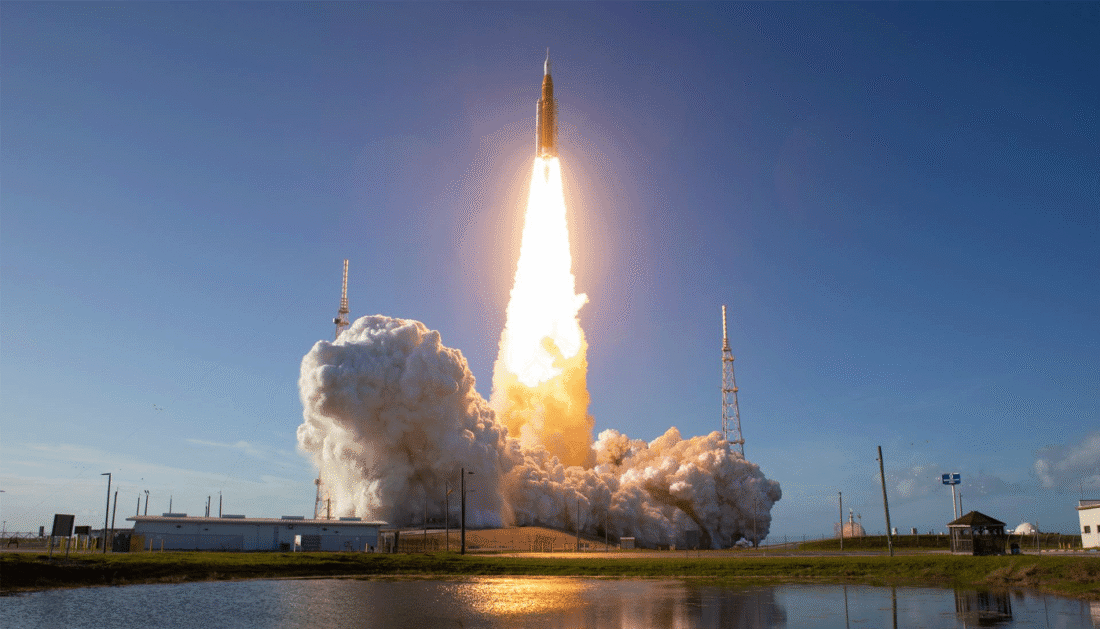
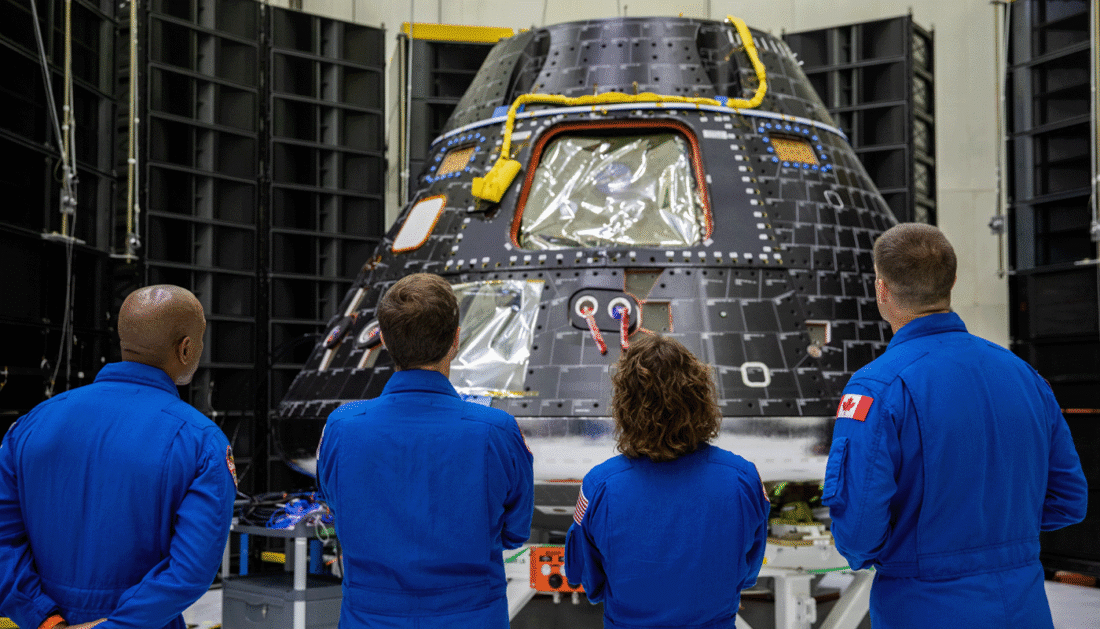
On April 1, 2026, an SLS rocket with 8.8 million pounds of thrust lifted off from Kennedy Space Center in Florida, starting the Artemis II mission. The rocket carried four astronauts and their ship Integrity into space, then boosted them into a high elliptical orbit. After one 24-hour revolution, Integrity passed close to the Earth and fired its main engine to send it on an eight-day loop beyond the far side of the Moon, where the crew observed terrain never before seen by human eyes. On April 10, Integrity again approached the Earth. It re-entered the atmosphere at Mach 35, enduring temperatures of 5,000° F before deploying its parachutes and splashing down off the coast of California.
Meanwhile, the internet buzzed with likes and shares of the CAPCOM (Capsule Communicator) station at Mission Control in Houston, Texas, where sharp-eyed observers noticed an operator wearing a Sailor Moon badge lanyard. Behind the console sat a plushie of Sailor Moon’s cat friend Artemis.
Mission Control is supremely technical and coldly rational. Its finest controllers earn the label “steely-eyed.” Space is unforgiving of errors and inattention. Human lives and billion-dollar national assets hang in the balance. The demands and the stakes are paramount.
Sailor Moon, on the other hand, is light fantasy entertainment that’s mostly about the emotions of eighth-graders. Its target audience is even younger. When we first meet Sailor Moon, she’s a walking contradiction of every principle that Mission Control holds dear.
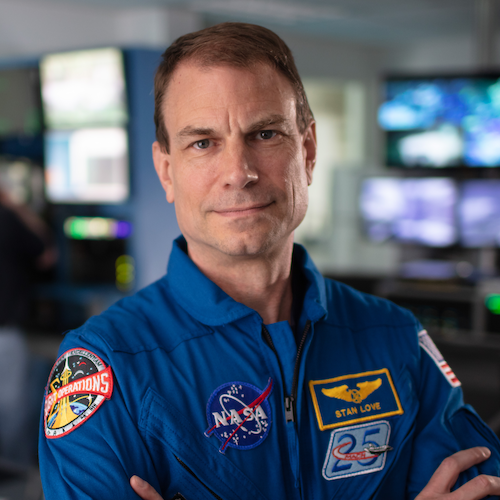
I was the CAPCOM who wore the badge lanyard and brought the plushie. In anticipation of possible questions (hopefully not in the context of disciplinary action) it may be worth explaining why, despite the glaring nonconformities, Sailor Moon should appear in Mission Control.
Why Sailor Moon appeared in Mission Control: Explanation for Anime Fans
I’m an anime fan. IYKYK.
Why Sailor Moon appeared in Mission Control: Explanation for Everyone Else
I’m an anime fan. (I’m also an astronaut with CAPCOM experience spanning three decades. I’ve earned a Ph.D., worked in Antarctic field camps, flown on the Space Shuttle, and done spacewalks.) Long ago I found a space-themed anime badge lanyard that was safe for work—a requirement that cuts out a lot of candidates. I wore it while preparing to support Artemis II, then chose to “fly as we train” by keeping it for the mission. Sailor Moon’s white guardian cat shares a name with the program, a coincidence too good to pass up. Despite the seriousness of our work, there’s a sliver of room for fun in the Flight Control Room. Other controllers display whimsical mascots at their consoles. I reckoned I could get away with two small tokens of self-expression while also presenting a strategic Easter egg to show other anime fans that they’re represented in unexpected places, that celebration of art and emotion is compatible with high performance in a challenging technical endeavor, and that childlike interests needn’t indicate a childish person.
Then the pictures went viral.
The response astounded me. I worried that I’d made a mistake. But after some thought I realized that Sailor Moon belongs in Mission Control. She and we represent many of the same ideals. In particular: guiding principles, teamwork, transformation, wonder, beauty, and humanity.
Guiding Principles
The Foundations of Flight Operations were developed after the 1967 Apollo 1 fire killed three astronauts. After that tragedy, Flight Director Gene Kranz famously instructed his controllers to write “Tough and Competent” on their blackboards. Over the years those words were expanded to the current credo, displayed in flight controllers’ offices and in the lobby of their building. It’s worth reading.
Foundations of Flight Operations
1. To instill within ourselves these qualities essential to professional excellence:
Discipline. Being able to follow as well as to lead, knowing that we must master ourselves before we can master our task.
Competence. There being no substitute for total preparation and complete dedication, for space will not tolerate the careless or indifferent.
Confidence. Believing in ourselves as well as others, knowing that we must master fear and hesitation before we can succeed.
Responsibility. Realizing that it cannot be shifted to others, for it belongs to each of us; we must answer for what we do, or fail to do.
Toughness. Taking a stand when we must; to try again, and again, even if it means following a more difficult path.
Teamwork. Respecting and utilizing the abilities of others, realizing that we work toward a common goal, for success depends upon the efforts of all.
Vigilance. Always attentive to the dangers of spaceflight; never accepting success as a substitute for rigor in everything we do.
2. To always be aware that suddenly and unexpectedly we may find ourselves in a role where our performance has ultimate consequences.
3. To recognize that the greatest error is not to have tried and failed, but that in the trying we do not give it our best effort.
Discipline, Competence, Confidence, Responsibility, Toughness, Teamwork, and Vigilance. It could be the motto of a superhero.
Or a magical girl.
Sailor Moon’s transformation scene ends with “In the name of the Moon, I’ll punish you!” There’s Confidence and Discipline, friends.
Her healing powers save people at death’s door and break curses afflicting millions. Her attacks vaporize bad guys. That’s Competence.
She risks her life to protect the people she loves. Responsibility.
She develops the Toughness to take a hit, overcome distress, and win the day.
She recruits other girls to her cause and leads them. That’s Teamwork.
She learns to expect trouble even when things are calm. Vigilance.
In personality, skills, and costume Sailor Moon couldn’t be more different from a spacecraft operator. But the same principles guide us.
Teamwork
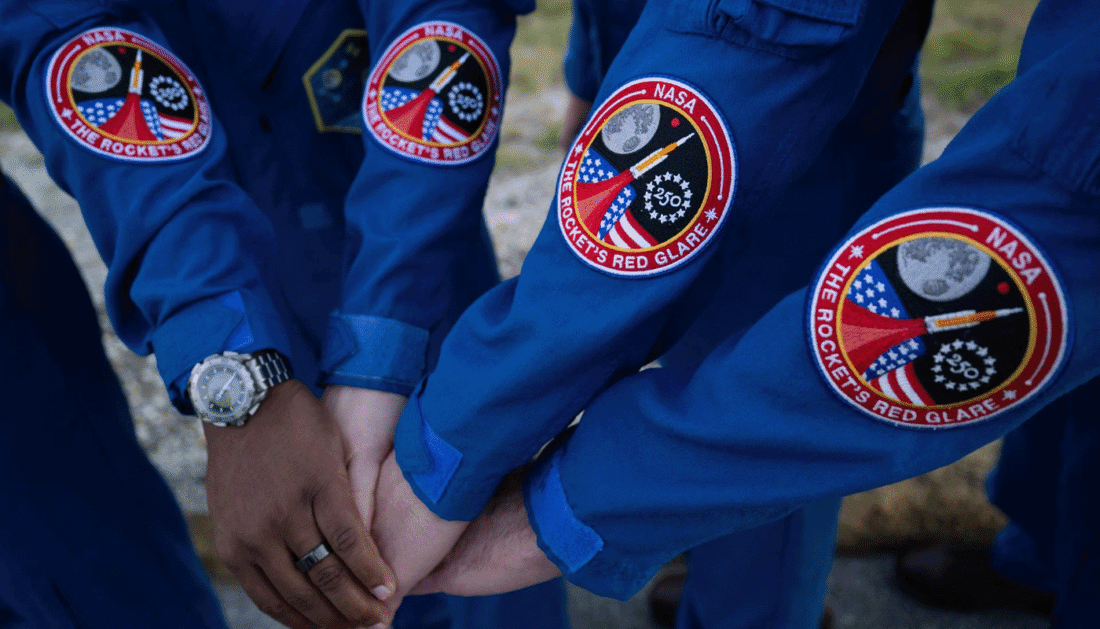
Teamwork is just one of the Foundations, but it deserves special mention. New astronauts learn that “the three most important things in space flight are teamwork, teamwork, and teamwork.” Spacecraft crews are teams. Mission Control is a team. They work together as a larger team. (CAPCOM’s unique task is to unite the flight and ground teams.) Astronauts and flight controllers practice teamwork and technical skills equally, knowing that space missions succeed only if the players work together.
Like us, Sailor Moon is all about teamwork. As soon as Usagi Tsukino establishes her alter ego, she starts building her team. Each of her recruits is excluded from society in some way. Making friends with them exposes her to social damage—a big deal in any society, but especially in Usagi’s homeland, where group acceptance is treasured.
Usagi looks past the traits that alienate her teammates. She recognizes their strengths, befriends them, and bonds with them. Under her leadership, they trust one another with their lives, put each other’s well-being above their own, and cooperate to defeat world-threatening foes. Their Sailor Planet Attack combines their powers for extra effectiveness.
There’s another parallel between the Sailor Senshi and a flight control team. Each of the Sailors has a special area of expertise. Mercury, Mars, and Jupiter manipulate water, fire, and electricity. So do EECOM (life support), PROP (engines), and MPO (mechanisms and power.) Might the appropriate Sailor Senshi someday watch over those consoles?
Transformation
Central to magical girl shows, and key to their appeal, is the transformation scene. Under threat, the hapless schoolgirl twirls around. Surrounded by flowing ribbons, she gains an attractive costume with matching accessories. When the special effects subside, she’s still the same person–only better. It’s fun to watch someone transform into an improved version of themself. And it’s fun to imagine doing the same ourselves.
Sailor Moon’s transformation scene takes a little under sixty seconds and repeats in every episode. But there’s another transformation that’s worth exploring. I’ve described how Sailor Moon demonstrates the essential traits of astronauts and flight controllers. When we first meet her, however, she has none of them. Just in the show’s first five minutes she fails hard in all seven categories. I can almost picture her creator, Naoko Takeuchi, ticking items on a checklist:
Usagi oversleeps on a school day. Discipline? No.
She blames her mother for it. Responsibility? Nope.
She falls down the stairs. Competence? Sorry.
She wails about the resulting sore backside. Toughness? Absent.
She grabs the lunch her mother made for her without a word of thanks. Teamwork? Hardly.
She describes herself as clumsy and a crybaby. Confidence? Not today, but honorable mention for an accurate self-assessment.
She trips over a cat on the sidewalk. Vigilance? Definitely not. At least she apologizes to the cat.
Sailor Moon’s transformation from clumsy crybaby to brave superhero plays out over many hours of screen time. It’s more important than her costume change, and more realistic. Actual transformation isn’t a fantasy with talking cats and magical accessories. It takes years of work in the classroom, at the gym, at home, or in the workplace. Progress can be discouragingly slow. There are failures and setbacks.
This is exactly what we sign up for when we undertake to become spacecraft operators. “To instill within ourselves these qualities…” means these qualities aren’t there to begin with. My private name for Mission Control is “The Forge of Souls.” Working toward flight controller certification stresses people to malleability and pounds them with a hammer until they’re sharp and strong. The transformation of a magical girl mirrors the self-improvement, the overcoming of setbacks, and the striving toward perfection of ordinary people becoming astronauts and flight controllers.
Wonder
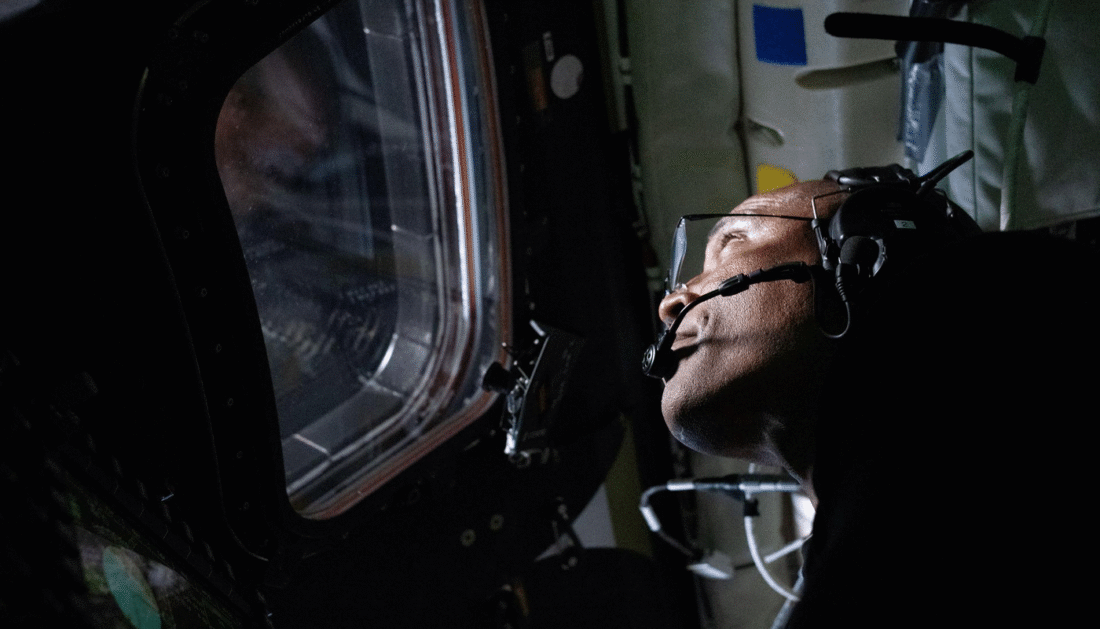
Weightlessness. Black skies. Riding rockets ten times faster than a rifle bullet. Seeing firsthand the curvature of the Earth. Sixteen sunrises and sunsets in a day. Watching continents and oceans glide majestically past beneath you. Seeing the Moon as a spherical world, and its features as places. Weathering the blowtorch heat of re-entry and returning to Earth from the heavens.
Astronauts personally experience these wonders of science, technology, and nature. Engineers create the marvelous ships that make their voyages possible. Flight controllers participate through telemetry and camera feeds. Working in human spaceflight pays in pride and paychecks, but most of all in wonder.
Wonder draws people to space flight. It’s also one of the things that draws people to anime. Sailor Moon scores high in wonder, with talking animals, magical transformations, mystical attacks and defenses, teleportation, time travel, and reincarnation. (Other wondrous shows include Paprika, Kyousougiga, Flip Flappers, Dimension Bomb, and the films of Hayao Miyazaki.)
Beauty
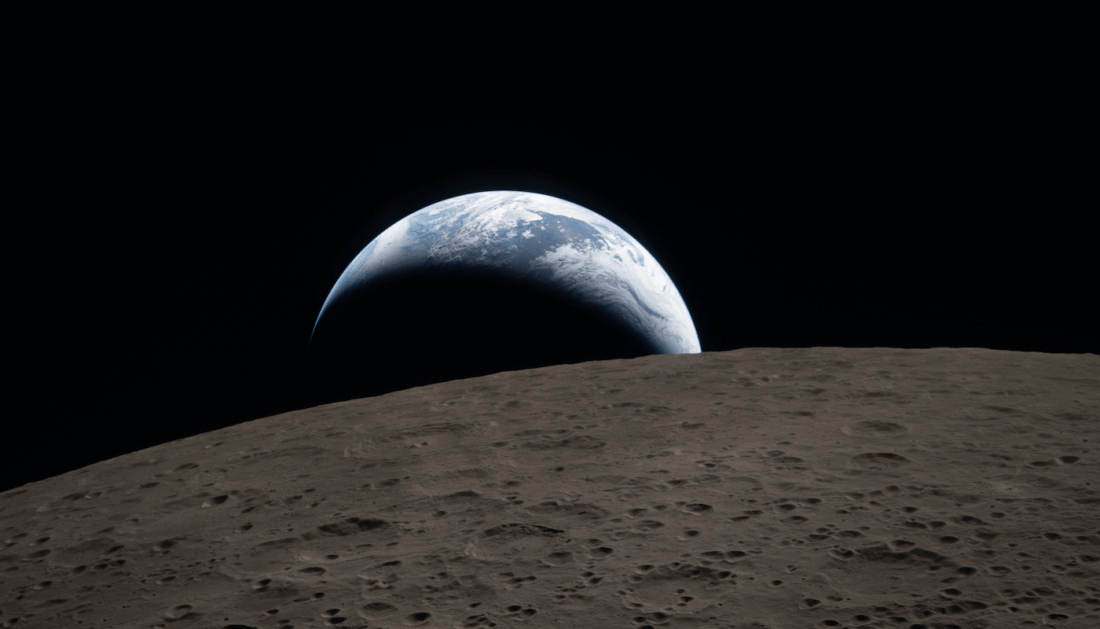
Wonder travels hand in hand with beauty. The best anime combines beautiful art and excellent animation. Sailor Moon scores well in both. See also Frieren and the films of Mamoru Hosoda, Makoto Shinkai, and the late Satoshi Kon. The beauty of anime is no accident. Its subjects, patterns, styles, and colors reflect centuries of Japanese art. Its characters are designed to trigger human neural pathways of attraction. Its frame rates are deliberately adjusted for reasons both practical (each picture costs time and money) and perceptual (even when the frame rate is faster than the eye can register, different frequencies change how we see movement.)
Space flight is beautiful, too. When astronauts on the International Space Station have spare time, which is not often, they spend it in the Cupola, a dome with seven windows and its center aimed down at the Earth. Watching the planet roll by underneath is a sublime experience. Our world bursts with color and change. Add a camera to capture time-lapse and low-light imagery, and new beauty emerges. There’s never enough window time before technical duties call.
You don’t have to be an astronaut to share in the beauty. Mission Control has no windows, but high-definition video from the ISS is displayed on the front screens. One of the hidden benefits of working in the control center is glancing up from your computer and seeing stunning vistas of red deserts, snowy mountains, shifting green auroras, or turquoise tropical seas. NASA shares the beauty of space flight with the public. ISS cameras stream surreal and breathtakingly beautiful videos for anyone to watch.
Humanity
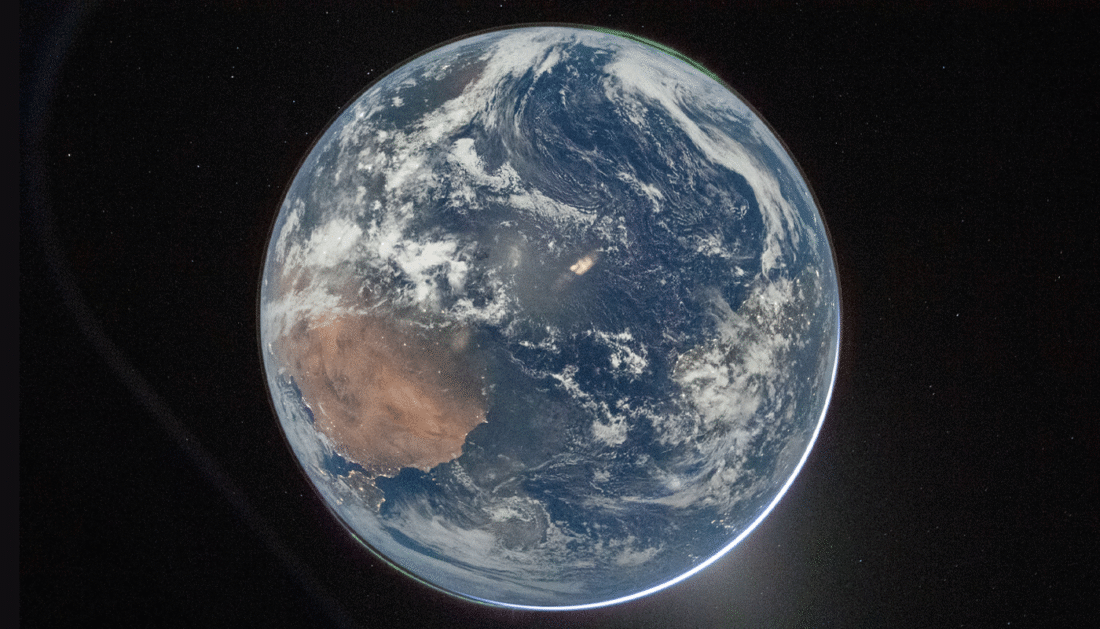
Emotion is central to the human experience. This doesn’t change when we show up at the office, the control center, or the launch pad. Flying in space is one of the most profound emotional events of an astronaut’s life. Astronauts who previously paid little attention to environmental concerns have returned to Earth and promptly founded ecological non-profit organizations. Others describe powerful feelings of connection with something greater than themselves. During Artemis II, the crew proposed naming a lunar crater “Carroll” after the commander’s late wife. At that moment, the only dry eyes on the spacecraft or in Mission Control were those of Artemis the cat. It was one of the mission’s defining moments. And it was a deeply emotional one.
In fiction, we’re drawn to characters and situations that we can connect with emotionally. Anime provides a wealth of them. Many shows feature a character with a crush on someone and insufficient courage to tell them so. Plenty of people can relate.
Sailor Moon and her paramour form a romantic partnership easily, with no blushing or stammering. Instead, she invites connection with her viewers by being honest about her failures in school and elsewhere. Everyone has failed at something in their lives. Because we share Sailor Moon’s shame in failure, we can share the triumph when she later succeeds.
In summary, Sailor Moon lives by the guiding principles of human spaceflight. Like astronauts and flight controllers, she accomplishes nothing without teammates. Her transformations mirror our own as we grow in our lives and careers. The wonder of her story is the same force that draws people to gaze at the heavens, and then build the machines and the skills to go there. Her beauty is that of the planet we orbit and the universe we explore. And her humanity adds a crucial emotional connection to the rational thought that enables human space flight.
The Artemis II CAPCOM didn’t bring Sailor Moon into Mission Control.
She’s always been there.
Note: This essay represents the author’s personal opinions. It does not represent NASA’s views, nor does it imply an endorsement of Sailor Moon by NASA.

An eloquent defense of a proposition that ought not require defending – but one that’s worth making precisely because Usagi is a character that so many of us identify with from the non-magical side of our lives. And there’s this: Sailor Moon‘s place in world-wide pop culture today is nearly as ubiquitous as that of a certain world-famous beagle who went to the moon and back in the heyday of the Apollo missions, and who was regarded with fond respect by many of NASA’s finest. (One of my favorite cartoon images from that period is the one in which Snoopy, en route back to Earth, points out to the reader from atop his doghouse/spaceship, “You can tell I’m returning because I’m facing the other way.”)
Well done, sir! And thank you, as another favorite Peanuts character once said, from the bottom of my socks, because the bottom of my heart isn’t deep enough.
One of my favorite things about the livestream was it showcased the astronauts as people, rather than heroes on a pedestal, and I delighted in seeing Artemis the cat in Mission Control because it demonstrated that everyone there, in a very high-stakes environment, is also a person with a life and interests outside of work. And, yes, also the absolutely delightful serendipity of Sailor Moon belonging perfectly.
What a beautiful essay!