







Part of the appeal of college campuses is that they feel so safe. Here we are, bright-eyed co-eds playacting adulthood across manicured quads and cafeterias where other people do our dishes as long as we put our trays in the right place. Nothing that bad should be permitted to happen in a place where there are flyers for 7pm improv shows and people get in shouting matches about Quentin Tarantino movies. It’s a place where the line between being a child and a grown up is blurred and stretched, a protected bubble of control for teenagers and for graduate students still clinging to a world where someone can give you a good grade and a gold star and tell you that you’re very, very smart.
When things get murder-y, something has gone very, very wrong.
In our new novel, The Arcane Arts, we alternate perspectives between a professor and a graduate student, both brilliant scholars of a complex, mathematical system of magic. (Is it strange to be writing this in the first person plural? There are two of us—Dana Schwartz and Dan Frey, the brain and the other brain behind S.D. Coverly.) What begins as an intellectual partnership quickly becomes romantic as they focus their attention on a very, very illegal branch of magic that allows you to compel and control other people. And in the midst of all of that, our heroine, Ellsbeth, is investigating the murder of her younger sister, Bertie, who died under mysterious circumstances at the college the previous year.
We loved the chance to explore the world of dark academia—rituals, Latin chanting, ivy, red brick. If that sort of thing excites you too, here are five more murder-y books exploring the dark side of campus life.
Ninth House by Leigh Bardugo
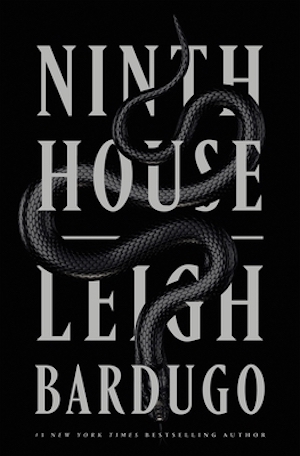
The first book of Leigh Bardugo’s epic series introduces readers to Galaxy “Alex” Stern, a girl gifted—or cursed—with the ability to see the dead. This talent makes her an invaluable member of the most important, and most secretive, of the secret societies at Yale, whose members all have mastered different types of magic. But unfortunately for Alex, she also becomes embroiled in a deadly conspiracy rooted in an ancient evil lurking in New Haven—something somehow even worse than entitled frat boys. The book’s sequel Hell Bent continues the dark ride into, naturally, Hell—and the third and final book of the trilogy, Dead Beat, comes out this fall.
A Deadly Education by Naomi Novik
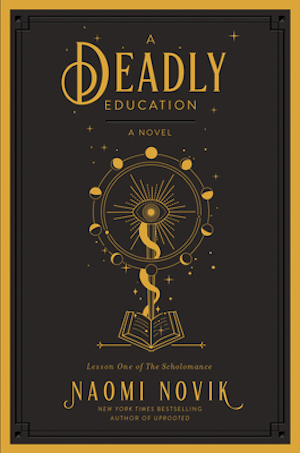
“Magic school” is a well-trod trope in fantasy, which writer Naomi Novik reinvents and subverts with this original, entertaining book. The story follows Galadriel (or “El”), a new student at the three-year magical academy known as The Scholomance, where the criteria for graduation are simple: don’t die. Of course, that turns out to be incredibly challenging, in an underground campus infested with monsters, where murdering your fellow students is de rigeur. The book feels like it was born out of someone reading young adult novels about magical adventures, exploding with frustration over the fact that realistically, students would be dying left and right… but rather than just complaining in the comments, Novik went and wrote an entire trilogy of fun, bloody, thought-provoking books of her own.
Never Let Me Go by Kazuo Ishiguro
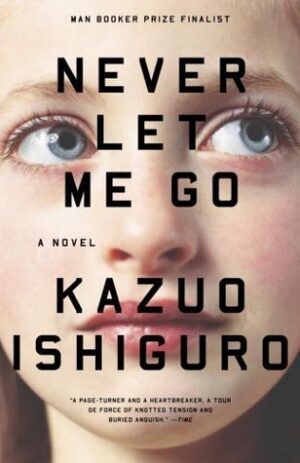
This novel takes place at a boarding school, not a college campus, but it feels so central to the canon of dark academia that we felt it would be sacrilege not to include it. Though it begins as a study of a seemingly ordinary trio of friends at a bucolic English school, Ishiguro slowly reveals the sinister truth behind the facade of normalcy in one of the most heartbreaking and unsettling books I (Dana) have ever read. The “murder” on this particular campus is of a very different sort than in most of these novels, and even more terrifying as a result. To say more would be a spoiler, but even if you know the “twist” (now that it’s been out for years and made into a movie) the emotional ride is just as compelling; if you haven’t yet, read this one as quickly as possible.
Bunny by Mona Awad
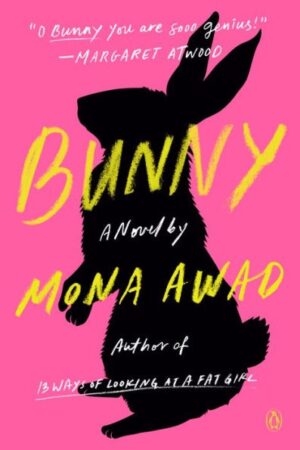
A poisoned makeup bag of a novel. It feels like drinking a bottle of rosé laced with LSD in the best possible way. Our protagonist Samantha is a student at an elite MFA program, populated by a clique of rich, beautiful girls who all call each other “Bunny” and engage in ritual summoning and conjuring of humanoid creatures they kill when they tire of them. They always say to kill your darlings, don’t they? The book convincingly brings Mean Girls high school dynamics into the Ivory Tower, providing a surreal send-up of academia and trendy lit “it girls” from the brilliant Mona Award, who writes pitch-black dream-like novels like no one else. And—if you’re a fan, the sequel We Love You, Bunny, came out recently.
Babel by R.F. Kuang
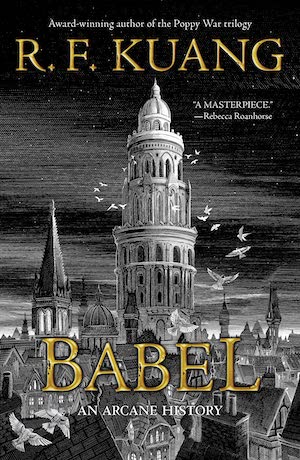
A period piece set in the late 19th century, in which author R.F. Kuang has invented an alternate history of colonialism where the scholars at Oxford harness the power of translated words in silver bars in order to achieve magical effects to benefit the British Empire. The protagonist Robin is a young man adopted from China after the death of his family and brought to study languages in the fabled “Babel” at Oxford University. He’s enthralled by the glamour of the storied institution he has the privilege to study at, but slowly Robin realizes he’s no longer able to ignore the oppression his privilege requires. As Robin learns, Oxford may seem civilized, but sometimes taking a system down calls for bloodshed. After committing and covering up a murder, Robin and the rest of his cohort plunge into outright rebellion. Kuang artfully weaves together real history and political concerns with a magical alternate universe in order to do what the best speculative fiction can, providing a clarifying lens on our own past and present.
Buy the Book

The Arcane Arts

Funny, I was just talking with co-workers about how to stage a cozy murder at UWaterloo. In a purely theoretical sense, if HR is reading.
A non-SF book your article just moved to the top of my TBR: Asimov had a mainstream mystery set at a university, A Whiff of Death. I’ve noticed Asimov gets a lot more … focused? vivid? When he talks about academia and I wonder if that is reflected in this book.
I’ve worked with people who left (escaped?) academe for industry. The company I worked for had a reputation for rather toxic internal politics (if one thinks that corporate America is an apolitical meritocracy has never worked there, just as most of the people who hate the idea of tenure have always worked where they have it), but he said academe was much worse.
Also Magic for Liars by Sarah Gailey, which is also a boarding school rather than higher ed.
Malka Older’s Mossa and Pleiti novellas do a lot of stuff around the university orbiting Jupiter where Pleiti does research.
Fun list! And it feels rare that we get one of these columns written together by two co-authors. Kinda cool. :-)
I like to recommend _The Library at Hellebore_ by Cassandra Khaw whenever murderous academia is discussed. It is only for people who enjoy graphic body horror, but if you do, it’s gruey fun. I loved being steeped in Khaw’s extraordinary vision of all the different ways a body can be monstrous.
[NB for column editors/mods: In the blurb on Bunny, I assume “drinking a bottle of rose” should be “drinking a bottle of rosé.” And I think “and trendy lit ‘it girls” from the brilliant Mona Award” should be “and trendy lit “it girls” {or ‘it girls’} from the brilliant Mona Awad”. Thank you for all of your hard work in making these comments sections safe and the articles wonderful!]
The post has been updated. Thanks!
I’ve read four out of five of the novels on this list (haven’t read any Awad yet). It’s interesting because all four of them are somewhat divisive, in my experience? They’re all trying to do extremely specific things that go beyond the bounds of the dark academia genre, and I admire their ambition!
Still, out of these, the only one that really clicked for me was “A Deadly Education.” Ishiguro is too manipulative of a writer for me, and I’m mixed on Kuang (I kind of felt “Babel” sacrificed its character development for the sake of message, but I thought she did amazing things with “Yellowface.” Need to read more Kuang to break the tie!) “Ninth House” is an weird one. I liked it in a “that was fun, next book please” sort of way, but two of my friends are passionate haters, which I can’t quite wrap my head around. But controversial books are always fun because of the discussions they inspire, so I’m here for it.